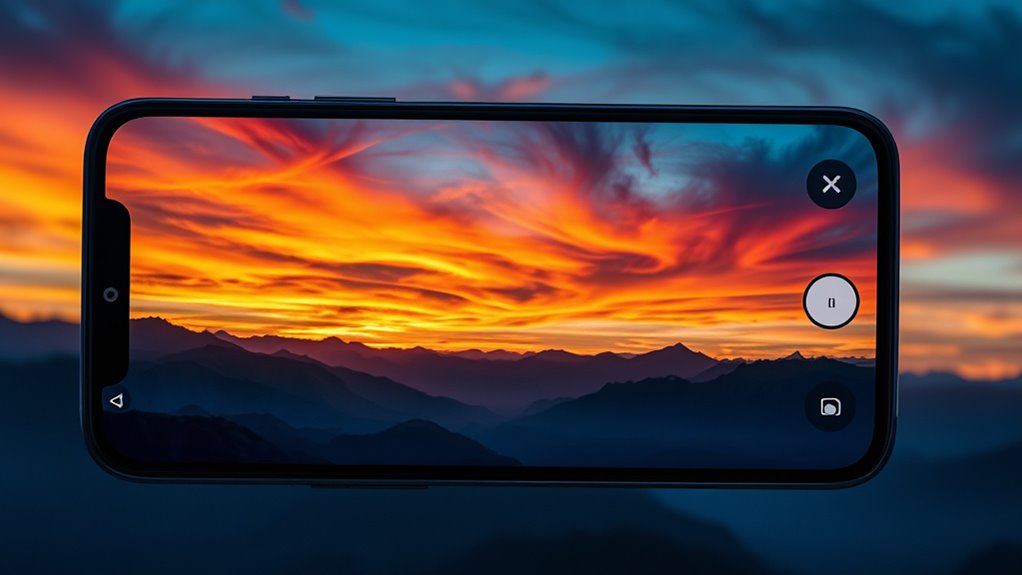

HDR on your smartphone cameras and displays works by combining multiple exposures to capture more details in bright and dark areas, making photos look more vibrant and balanced. Your device also uses advanced screen technologies like OLED or AMOLED to display richer colors and deeper blacks. This results in clearer images and more immersive videos. If you want to discover how HDR can improve your photos and viewing experience, there’s plenty more to explore.

Get the latest gadgets delivered free with Prime
- Fast, free delivery on millions of items
- Prime Video, Amazon Music and more included
- Member-only deals all year
Key Takeaways
- HDR on smartphones combines multiple exposures to capture details in both shadows and highlights.
- It enhances photo quality by producing more natural, vibrant images in high contrast scenes.
- Smartphone displays supporting HDR, like OLED or AMOLED, show richer colors and deeper blacks.
- HDR content on smartphones offers a more immersive viewing experience with improved contrast and color depth.
- Cameras automatically detect scenes suitable for HDR, capturing and merging images seamlessly for balanced photos.

High Dynamic Range (HDR) technology has revolutionized how smartphones capture and display images, allowing you to see more detail in both bright and dark areas. When you use HDR on your smartphone, it intelligently combines multiple exposures to produce a single image that preserves details in shadows and highlights. This feature is a game-changer for your smartphone photography, especially in challenging lighting conditions like sunsets, backlit scenes, or interiors with uneven lighting. By capturing a wider range of luminance levels, HDR ensures your photos look more natural and vibrant, closely resembling what your eyes actually see.
HDR captures more detail in shadows and highlights, making photos look natural and vibrant in challenging lighting conditions.
In terms of display technology, HDR enhances the visual quality of your smartphone’s screen, making videos and photos pop with richer colors and greater contrast. Your device’s display technology determines how well it can reproduce the high dynamic range content. Modern smartphones incorporate advanced display tech, such as OLED or AMOLED panels, that support HDR standards like HDR10 or Dolby Vision. This means when you view HDR content, whether it’s streaming movies or viewing photos, you experience deeper blacks, brighter whites, and a broader spectrum of colors. Your display technology effectively brings out the full potential of HDR, making everything look more lifelike and immersive.
Using HDR in smartphone photography is straightforward. Most smartphones automatically detect when HDR should be used, activating it with a simple tap or in the camera settings. When enabled, your phone captures multiple images at different exposures within a fraction of a second and then merges them seamlessly. This process prevents blown-out highlights or lost shadow details, resulting in a well-balanced photo. You can also manually toggle HDR on or off, giving you control over the final image. This is especially useful in scenes with high contrast, where HDR can dramatically improve the overall quality.
On the display side, HDR content is increasingly common across streaming platforms, apps, and camera previews. When viewing HDR photos or videos on your compatible device, you’ll notice richer colors and more nuanced details. The combination of advanced display technology and HDR content makes your viewing experience more vibrant and true to life. Whether you’re capturing a scenic landscape or watching a movie, HDR enhances the visual depth, making everything appear more dynamic and engaging.
In essence, HDR on smartphones bridges the gap between your camera’s capabilities and your device’s display tech. It allows you to capture stunning images with more detail and display them in a way that faithfully represents real-world lighting and color, elevating both your smartphone photography and overall viewing experience. Understanding display technology further highlights how these features work together to create a more immersive visual experience.
Frequently Asked Questions
How Does HDR Affect Battery Life on Smartphones?
HDR can increase battery consumption because it requires the camera or display to process multiple images or adjust screen brightness more frequently. You might notice shorter battery life when HDR is enabled, especially during extensive use. To optimize power, turn off HDR when it’s unnecessary, and use power-saving modes. This helps you balance the benefits of HDR with better battery life, ensuring your device lasts longer throughout the day.
Can HDR Be Used in Video Recording on Smartphones?
Yes, you can use HDR in video recording on smartphones. It enhances dynamic range, capturing details in both bright and dark areas, and improves color accuracy for more vibrant, true-to-life videos. When enabled, HDR helps your videos look better in challenging lighting conditions, making scenes more balanced and realistic. Keep in mind, recording with HDR may require more processing power and storage, but the result is higher quality footage.
Does HDR Improve Low-Light Photography Significantly?
Yes, HDR considerably improves low-light photography by enhancing Dynamic Range, allowing you to capture details in shadows and highlights more effectively. Your smartphone uses Exposure Blending to combine multiple shots, resulting in a well-balanced image. This process reduces noise and preserves detail in dark areas, making your photos clearer and more vibrant even in challenging lighting conditions. HDR helps you achieve brighter, more detailed photos without overexposing bright spots.
Are There Any Drawbacks to Using HDR All the Time?
Using HDR all the time offers benefits like improved detail and color accuracy, but it also has limitations. You might notice unnatural-looking images or increased noise, especially in scenes with high contrast or movement. Overusing HDR can lead to overprocessed photos that lack authenticity. While HDR enhances your shots, it’s best to use it selectively to avoid these drawbacks and maximize the benefits without sacrificing image quality.
How Does HDR Impact the Overall Image Processing Time?
HDR can increase image processing time, leading to a slight processing delay because your device captures multiple exposures, merges them, and enhances details. This extra processing step improves image quality by balancing highlights and shadows, but it may slow down your camera’s responsiveness. You’ll notice a small delay during HDR shots, yet the resulting images benefit from superior detail and dynamic range, making the extra processing time worthwhile.
Conclusion
Understanding HDR on your smartphone is like revealing a secret to better photos and screens. It helps you capture and view more vibrant, detailed images, even in tricky lighting. Think of HDR as a bridge that connects your camera’s eye to your display’s brilliance, making every shot and scene feel more real. Once you grasp it, you’ll see your photos and videos in a whole new light—like adding color to a black-and-white world.
Fall Picks
fall essentials
As an affiliate, we earn on qualifying purchases.