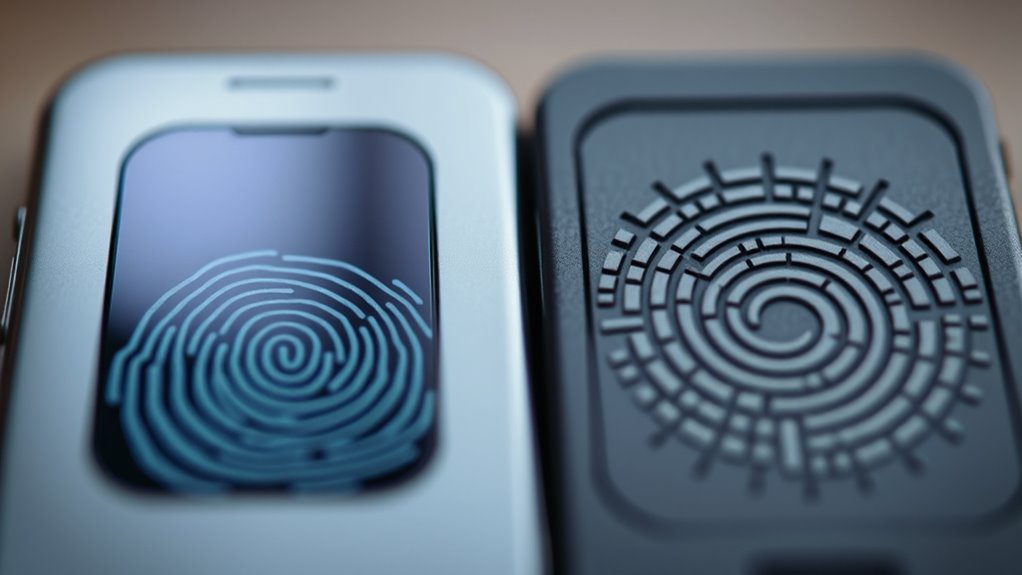

Optical fingerprint scanners use light and a tiny camera to capture 2D images of your fingerprint, making them affordable but sensitive to dirt and moisture. Ultrasonic scanners use sound waves to create detailed 3D images, working well in wet, dirty, or harsh environments and providing better security against spoofing. If you want to learn more about how these technologies compare in speed, durability, and ideal uses, keep exploring the details below.
Key Takeaways
- Optical scanners use light to capture 2D fingerprint images, while ultrasonic scanners use sound waves for 3D imaging.
- Optical scanners are more affordable and common but less effective in dirty or wet conditions.
- Ultrasonic scanners excel in harsh environments, providing reliable recognition with resistance to dirt, water, and scratches.
- Ultrasonic scanners offer higher security through detailed 3D depth sensing, making spoofing more difficult.
- Optical scanners are faster and cost-effective for everyday use, whereas ultrasonic devices are suited for high-security and rugged applications.
How They Capture Fingerprint Data
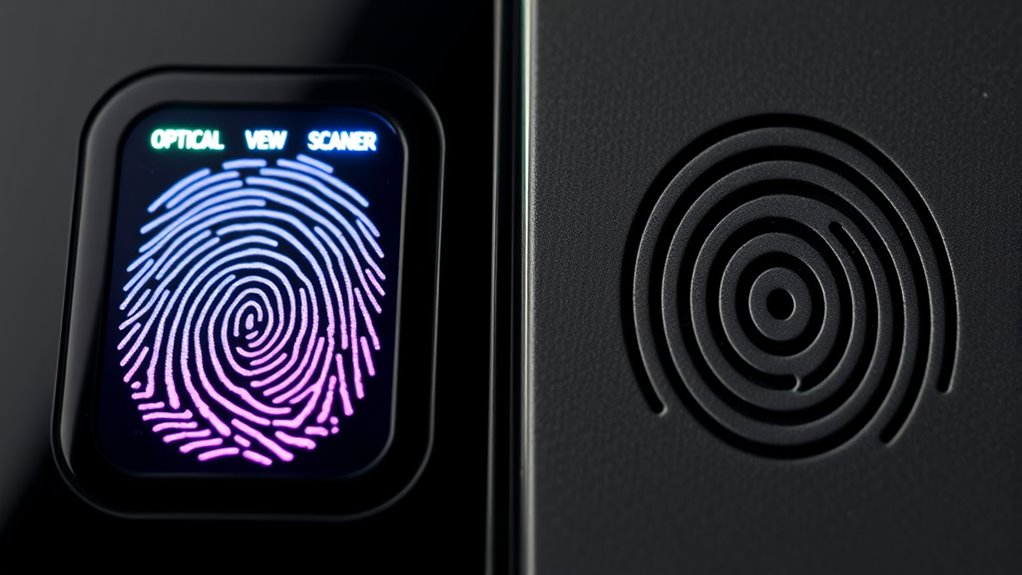
Optical fingerprint scanners capture data by shining light onto your fingerprint and using a tiny camera behind the screen to record a 2D image. When you place your finger on the sensor, LEDs or the phone display illuminate your fingerprint, highlighting ridges and valleys. The camera then captures the reflected light, creating a detailed 2D image of your fingerprint’s surface. This image is processed to extract unique patterns for identification. Optical sensors rely on high-density diodes to capture fine details accurately. However, their effectiveness depends on the cleanliness of the lens and the finger’s condition. Environmental factors like dirt, water, or smudges can interfere with the light reflection, potentially reducing accuracy. Despite these limitations, optical scanners are commonly used due to their simplicity and cost-effectiveness. Understanding the underlying technology helps explain their widespread adoption and potential limitations.
Performance in Different Environments
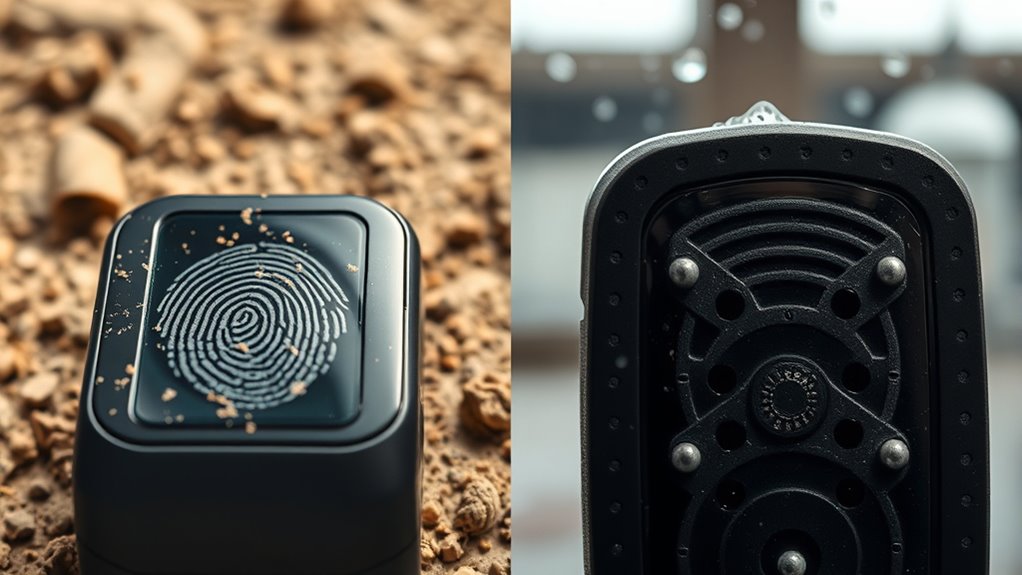
Environmental conditions can considerably impact fingerprint scanner performance, with optical and ultrasonic technologies responding differently. Optical scanners rely on clear images, so dirt, water, or smudges on the sensor or your fingers reduce accuracy. Damp or oily fingers further hinder optical recognition, requiring frequent cleaning and dry conditions. Ultrasonic scanners, however, use sound waves to penetrate the skin’s outer layer, making them less sensitive to dirt, moisture, or skin oils. They perform consistently even in challenging environments, like wet or dirty conditions, since they reflect off deeper skin layers. This resilience makes ultrasonic scanners more reliable in harsh settings. While optical scanners struggle outside controlled environments, ultrasonic technology maintains high accuracy and stability, providing dependable performance regardless of environmental factors. Additionally, Free Floating technology enables ultrasonic scanners to adapt dynamically to different surroundings, further enhancing their robustness.
Speed and Efficiency of Recognition
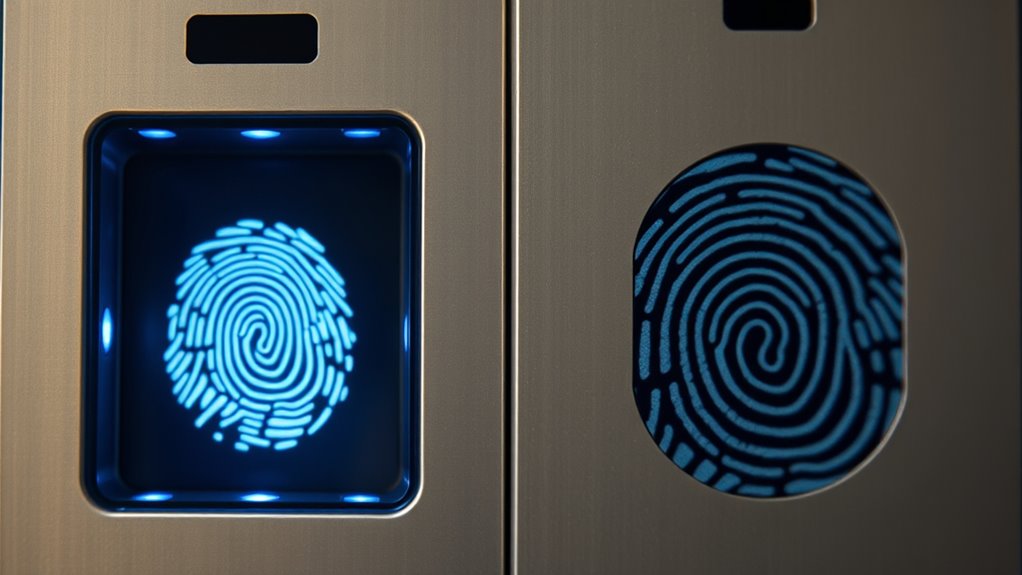
When it comes to recognition speed, optical fingerprint scanners generally outperform ultrasonic ones, thanks to their ability to quickly capture 2D images and process them. They scan fingerprints rapidly, often completing identification in a fraction of a second. You’ll notice that optical sensors typically achieve faster recognition times in direct comparison tests. Ultrasonic scanners tend to be slower due to their 3D image processing, but they still offer reliable performance. Additionally, advancements in technological integration continue to improve the speed and accuracy of ultrasonic scanners.
Security Features and Resistance to Spoofing
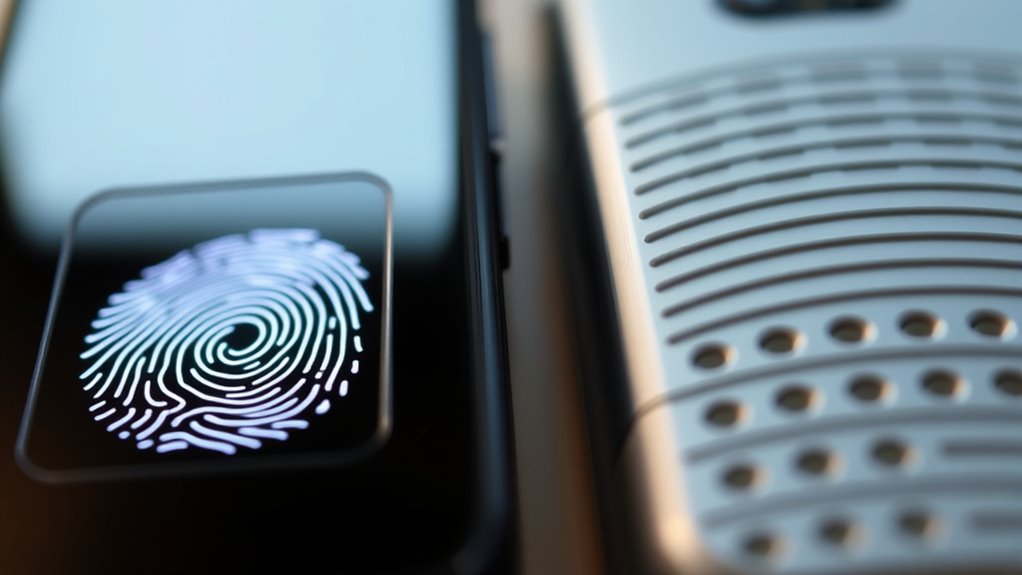
Ultrasonic fingerprint scanners offer a significant security advantage because they create detailed 3D images of your fingerprint, making it much harder for someone to spoof or fake your identity. By capturing depth and ridge details, they can distinguish real fingerprints from fake ones crafted from silicone or paper. This depth sensing adds a layer of protection because superficial reproductions lack the intricate 3D structure of genuine skin. In contrast, optical scanners often rely on 2D images, which can be more easily fooled with high-quality molds or images. Ultrasonic technology’s ability to detect sweat pores and ridges in 3D enhances security, reducing the risk of spoofing and unauthorized access. Additionally, the scan resolution of ultrasonic scanners allows for more precise identification, further strengthening their security features. Overall, ultrasonic scanners provide a more robust defense against fingerprint forgery attempts.
Cost and Market Penetration
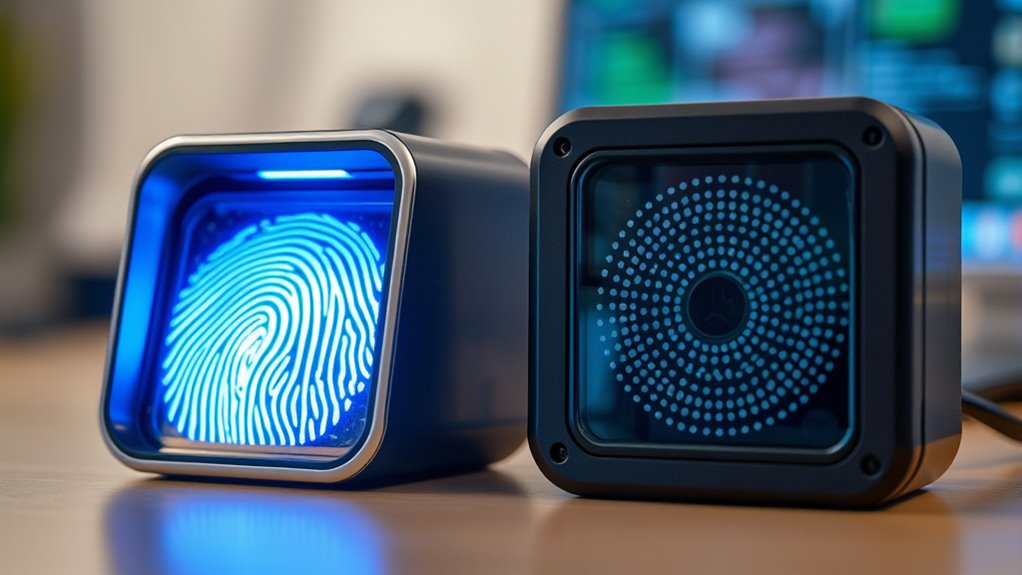
Have you wondered why optical fingerprint scanners are more common in today’s devices? It’s mainly because they cost less and are easier to manufacture, thanks to mature technology and widespread adoption. You’ll find optical scanners in many smartphones and access systems because they’re budget-friendly and reliable for everyday use. Ultrasonic scanners, on the other hand, are more expensive due to their advanced hardware and complex manufacturing process. They’re typically found in high-end models where security and durability matter most. Manufacturing process also influences the overall cost and availability of these scanners in the market.
Maintenance and Physical Durability

Unlike optical fingerprint scanners, ultrasonic sensors are highly resistant to dirt, scratches, and environmental contaminants because their sound wave technology ignores surface imperfections. You won’t need to clean or maintain ultrasonic sensors as frequently, since they don’t rely on a clear lens or camera to capture fingerprint details. This durability makes ultrasonic scanners ideal for harsh environments or frequent use. On the other hand, optical scanners require regular cleaning to keep the camera lens and sensor free of dirt, smudges, or water, which can degrade performance. Ultrasonic sensors maintain high contact sensitivity without needing to lift or clean the sensor often. Additionally, their resistance to environmental factors ensures consistent performance even in challenging conditions. Overall, ultrasonic fingerprint scanners offer better physical durability and lower maintenance needs, especially where exposure to dirt, moisture, or scratches is common.
Suitability for Various Applications
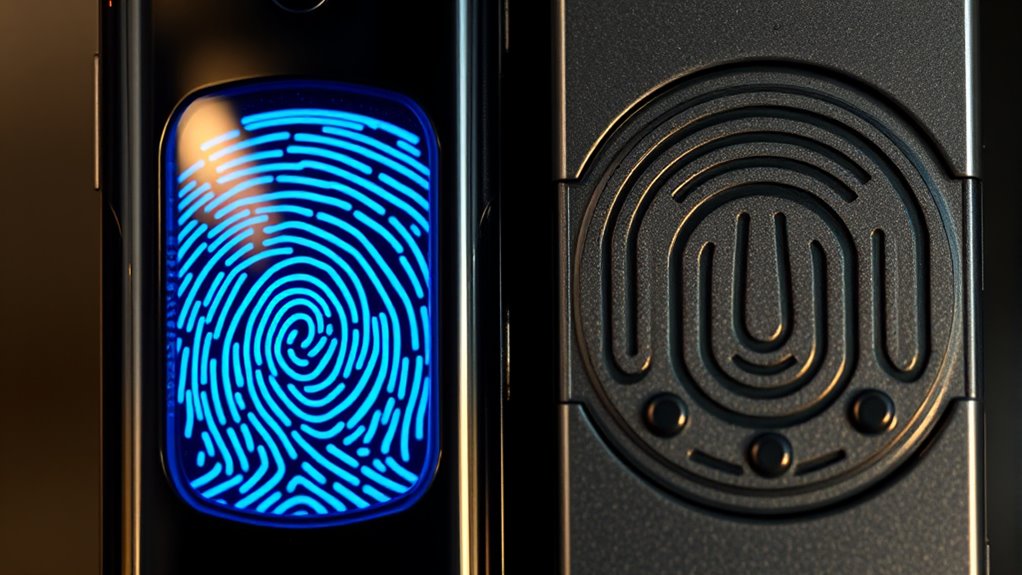
The durability and low maintenance requirements of ultrasonic fingerprint scanners make them well-suited for applications that demand reliability in challenging environments. You’ll find them ideal for secure access in industrial settings, outdoor facilities, or high-traffic areas where dirt, moisture, or scratches are common. They excel in scenarios where environmental conditions are unpredictable, such as wet or oily fingers, because sound waves penetrate skin layers effectively. Additionally, their effectiveness is enhanced by their resistance to common skin irritants and contaminants, making them a preferred choice in hygienic environments.
Future Trends and Technological Developments
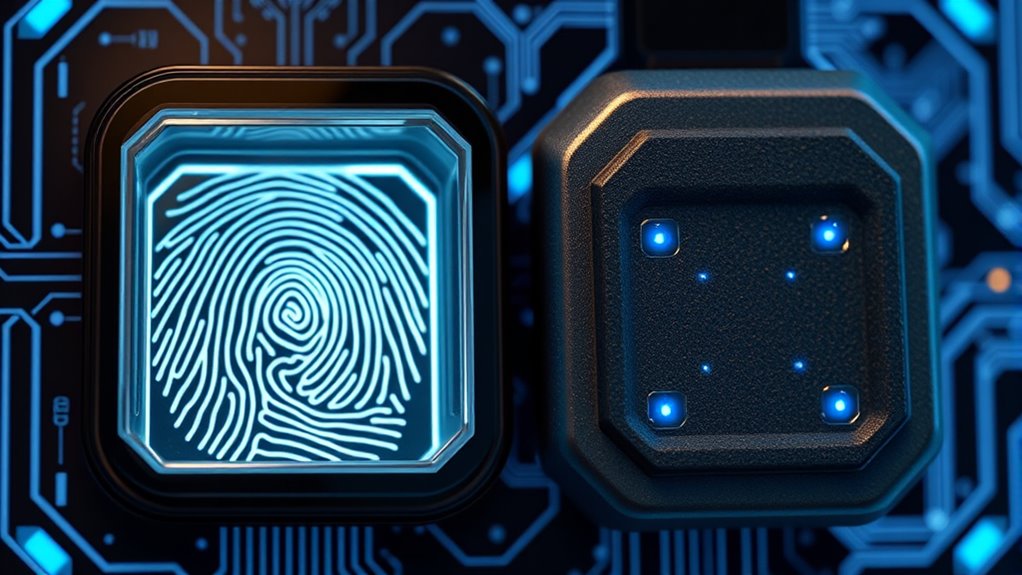
Advancements in fingerprint scanner technology are driving toward faster, more secure, and versatile authentication methods. Expect hybrid systems that combine optical and ultrasonic features to optimize speed and security, adapting to diverse environments. Emerging materials like flexible sensors could enable embedded biometric authentication in wearables and flexible devices. Researchers are exploring AI-driven algorithms to improve accuracy and reduce false positives, even with challenging conditions like dirt or moisture. Future scanners might incorporate multi-modal biometrics, combining fingerprint data with facial recognition or voice analysis for enhanced security. Miniaturization and cost reductions will make advanced fingerprint scanners more accessible across consumer electronics, IoT devices, and security systems. Material innovations will also play a crucial role in expanding the versatility of these technologies. These developments will lead to seamless, reliable authentication experiences, transforming how you access and secure your digital and physical spaces.
Frequently Asked Questions
How Do Optical and Ultrasonic Scanners Affect User Privacy Concerns?
You should know that ultrasonic scanners offer higher privacy because they create 3D fingerprint maps, making it harder for hackers to duplicate your fingerprint. Optical scanners, which produce 2D images, might be more vulnerable to spoofing or theft. Both types store biometric data, so guarantee your device encrypts this info. Using trusted devices and keeping software updated can help protect your fingerprint data and maintain your privacy.
Are Ultrasonic Scanners More Prone to Hardware Malfunctions Than Optical Ones?
They say “A chain is only as strong as its weakest link,” and ultrasonic scanners aren’t necessarily more prone to malfunctions than optical ones. While ultrasonic sensors are durable and resistant to dirt and scratches, they can still face hardware issues like any complex technology. However, their resistance to environmental damage often means fewer malfunctions over time. Overall, both types are reliable, but ultrasonic scanners excel in harsh conditions, reducing potential failures.
Can Ultrasonic Fingerprint Technology Be Integrated With Other Biometric Systems?
Yes, ultrasonic fingerprint technology can be integrated with other biometric systems. You can combine it with facial recognition, iris scanning, or voice authentication to enhance security and user convenience. This integration allows for multi-factor authentication, making systems harder to compromise. By syncing ultrasonic sensors with other biometric modules, you create a more robust, seamless verification process that adapts to various environments and user needs, improving overall security and user experience.
How Does Environmental Cleaning Impact the Longevity of Optical Sensors?
Think of your optical sensor as a delicate garden that needs constant tending. Environmental cleaning keeps it clear of dirt and smudges, but excessive or harsh cleaning can wear down its lens and delicate components over time. You should use gentle cleaning solutions and soft cloths to protect its lifespan. Proper maintenance guarantees your sensor stays sharp and accurate, just like a well-tended garden blooms beautifully for years.
What Are the Environmental Sustainability Implications of Manufacturing Each Scanner Type?
You can impact the environmental sustainability of each scanner type by considering their manufacturing processes. Optical scanners require more materials like LEDs, diodes, and lenses, which can increase resource use and waste. Ultrasonic scanners involve complex electronics and sound wave components, potentially demanding more energy-intensive production. Choosing devices with eco-friendly materials or manufacturers committed to sustainable practices helps reduce environmental impact, regardless of whether you pick optical or ultrasonic technology.
Conclusion
Choosing between optical and ultrasonic fingerprint scanners is like picking the right key for your security lock. Both have their strengths, but understanding their differences helps you make an informed decision. As technology evolves, so does the promise of safer, faster, and more reliable access. Remember, the right scanner isn’t just a tool—it’s the guardian of your digital world, standing watch like a steadfast lighthouse guiding you through the stormy seas of security threats.