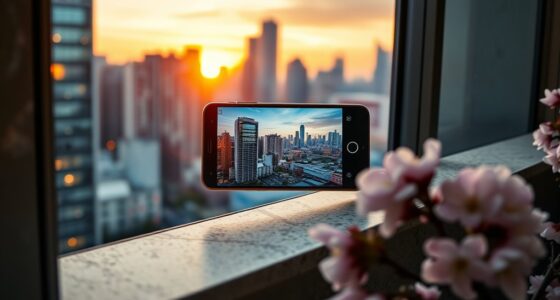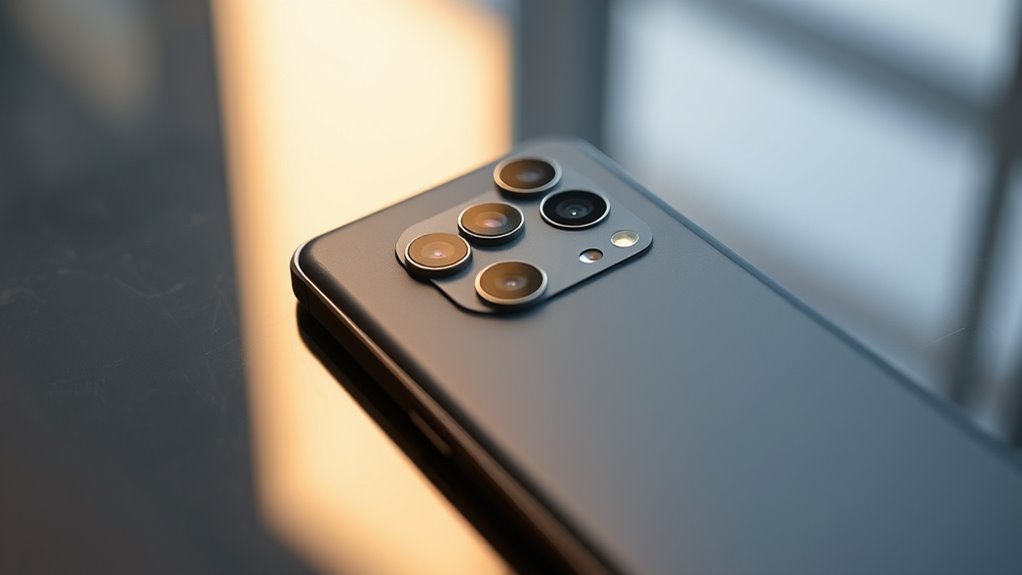

Smartphones with dual or triple cameras use multiple lenses with different optical qualities, like wide-angle or telephoto, to capture various perspectives. The devices combine images from these lenses using advanced software, enhancing details, colors, and sharpness. They also correct distortions and reduce noise, especially in low-light conditions. This synergy between hardware and software creates professional-looking photos effortlessly. Keep exploring to uncover how these systems work together to give you stunning images.
Key Takeaways
- Multiple lenses capture different perspectives, such as wide-angle, telephoto, or low-light, enhancing versatility and image quality.
- Each lens has unique optical traits like focal length and aperture, enabling seamless switching between photo styles.
- Image processing combines data from all lenses to correct distortions, reduce noise, and produce a balanced, high-quality photo.
- Software effects like bokeh and depth mapping merge images for enhanced aesthetic and depth perception.
- Sensor advancements and hardware-software synergy enable detailed, high-quality images across various lighting and scene conditions.

Have you ever wondered how smartphones capture stunning photos with multiple lenses? The secret lies in advanced lens technology combined with sophisticated image processing. Modern dual and triple camera systems don’t just rely on a single lens; instead, they use different lenses to achieve a variety of effects, such as wide-angle shots, telephoto zooms, or enhanced low-light performance. Each lens is designed with specific optical characteristics, allowing your phone to gather more visual information than a single lens could. This multi-lens setup enables your device to adapt to different shooting scenarios, providing versatility and improved image quality.
Smartphones use multiple lenses and advanced processing to capture stunning, versatile photos in any scene.
Lens technology plays a pivotal role in how these systems work. Typically, one lens might be optimized for capturing standard images, while another is designed for wide-angle or telephoto shots. These lenses have unique focal lengths and aperture sizes, which influence how much light they gather and how they frame your subject. The combination of these lenses allows your smartphone to switch between different perspectives seamlessly. When you select a zoom function, for example, the phone uses the telephoto lens if available or digitally enlarges the image captured by the main lens, often enhanced by image processing algorithms to maintain clarity. This clever use of lens technology helps produce sharper, more detailed images across various zoom levels.
Image processing is the backbone that marries the data captured by each lens. Your smartphone’s processor combines the images from multiple lenses, optimizing details, colors, and exposure. Advanced algorithms analyze the different images, correcting distortions, reducing noise, and merging the data to produce a single, high-quality photo. This process is especially essential when taking photos in challenging conditions like low light or high contrast scenes. The image processing software intelligently blends information from each lens, such as combining a bright wide-angle shot with a more detailed telephoto image, resulting in a balanced, well-exposed picture. This integration allows your phone to simulate effects like bokeh or depth mapping, giving images a professional look.
Additionally, the development of sensor technology has significantly enhanced the ability of multi-lens systems to capture more detailed images, especially in low-light conditions. In essence, the harmony between lens technology and image processing is what enables your smartphone to deliver stunning photos with multiple lenses. It’s not just about having more lenses; it’s about how these lenses work together, guided by intelligent software, to capture the world in more detail and clarity than ever before. This synergy empowers you to take versatile, high-quality photos without needing professional equipment, making everyday moments look extraordinary with just a tap on your device.
Frequently Asked Questions
How Do Multi-Camera Systems Improve Low-Light Photography?
Multi-camera systems enhance low-light photography by combining data through sensor fusion, resulting in brighter, clearer images. They use aperture optimization to let in more light, reducing noise and improving detail in dark environments. With multiple lenses capturing different aspects of a scene, you get better exposure and depth. This synergy allows you to take sharper, more vibrant photos even in challenging low-light conditions, making your smartphone photos look professional.
Can I Take 3D Photos With Multi-Camera Smartphones?
Yes, you can take 3D photos with multi-camera smartphones. These devices use depth sensing and multiple lenses to capture different perspectives, which enables 3D imaging. When you take a photo, the phone combines data from various cameras to create a sense of depth, allowing you to produce images that can be viewed in three dimensions. This technology enhances your creative options and provides immersive visual experiences.
Do Multiple Lenses Drain Battery Faster?
Yes, using multiple lenses can drain your battery faster because it increases battery consumption due to additional power needs. However, smartphones use advanced power management techniques to optimize battery life, even with multi-camera systems active. When you take photos or record videos, the phone manages power efficiently, balancing performance and battery life. So, while multiple lenses may impact battery consumption, smart power management helps minimize the effect.
How Do Software Updates Enhance Multi-Camera Features?
Software updates enhance your multi-camera features through software optimization and firmware improvements. These updates refine how the cameras process images, improve focus speed, and enhance low-light performance. They also enable new shooting modes and better image stabilization. By installing these updates, you guarantee your camera system operates more efficiently, giving you higher-quality photos and videos while maintaining battery life. Regular updates keep your multi-camera system current, revealing its full potential.
Are Multi-Camera Setups More Prone to Hardware Issues?
A stitch in time saves nine, and that’s true for multi-camera setups. While they can be more prone to hardware issues due to increased manufacturing complexity, proper care boosts hardware durability. You might notice more potential points of failure, but regular updates and careful handling can keep your cameras functioning smoothly. Remember, investing in quality devices and routine maintenance minimizes risks, ensuring your multi-camera system stays sharp and reliable.
Conclusion
Think of your smartphone’s camera system as a skilled orchestra, each lens playing its part to create a perfect harmony. With dual or triple cameras, you get a symphony of clarity, depth, and versatility, transforming everyday moments into stunning images. As you explore your device’s capabilities, remember that these cameras are like a well-tuned ensemble, working together seamlessly behind the scenes to bring your photos to life—making every shot a masterpiece in the making.