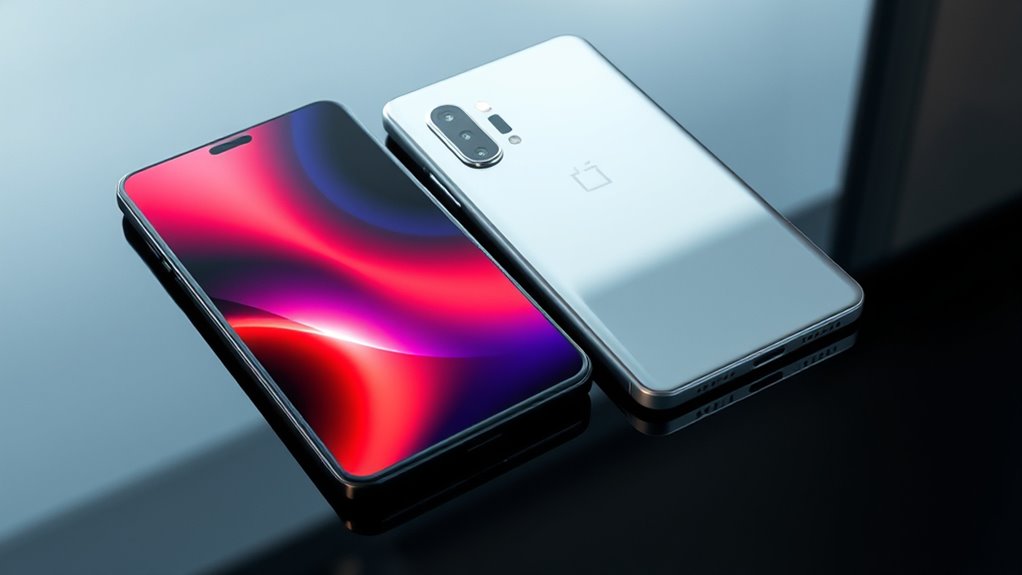

When comparing flagship models from OnePlus and Samsung, you’ll notice distinct design styles—OnePlus with its sleek leather finish and Samsung with its bold, squared look. Both pack powerful Snapdragon chips, offering smooth performance and excellent gaming. Samsung excels in camera quality and vibrant displays, while OnePlus delivers impressive speed, better battery life, and a clean software experience. To discover more about their differences, explore the finer details that make each brand unique.
Key Takeaways
- OnePlus 13 offers flagship features at a lower price with a leather-textured design and faster charging, while Samsung Galaxy S25 Ultra emphasizes premium build and advanced camera capabilities.
- Both devices feature AMOLED displays with high refresh rates; OnePlus focuses on brightness and fluidity, Samsung on color accuracy and saturation.
- Performance is comparable, powered by Snapdragon 8 Elite chips, but OnePlus has slight advantages in touch responsiveness and gaming feel.
- Samsung’s Ultra models typically excel in camera quality, especially zoom and image processing, whereas OnePlus emphasizes color tuning and portrait effects.
- Software experiences differ: OnePlus provides a clean, fast OxygenOS interface, while Samsung offers a feature-rich, customizable One UI.
Design and Build Quality Comparison
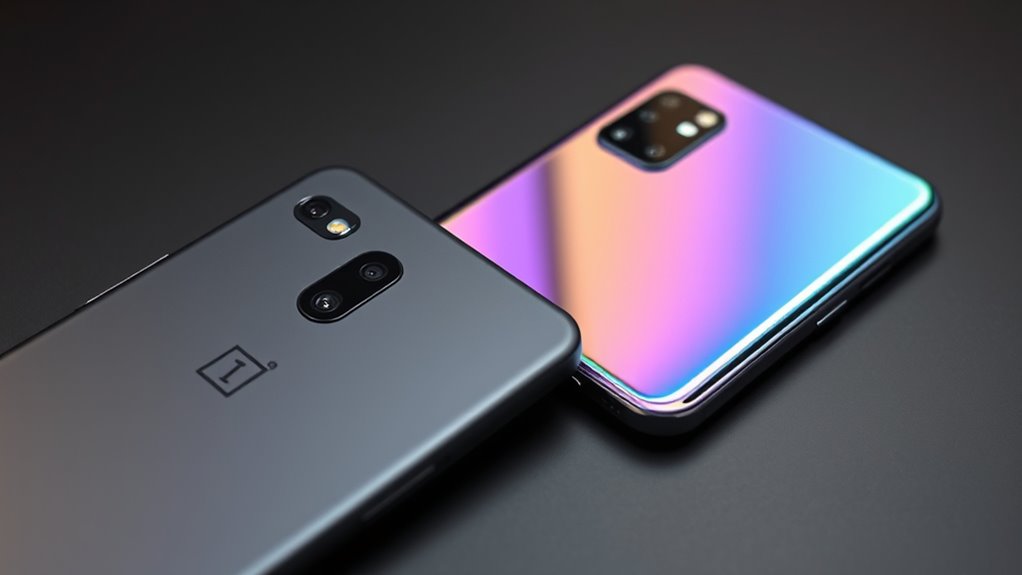
When comparing the design and build quality of the OnePlus 13 and Samsung Galaxy S25 Ultra, it’s clear that each device embraces a distinct aesthetic philosophy. The OnePlus 13 features a unique leather texture with a softer finish, giving it a refined yet understated look that feels comfortable in your hand. It’s lighter despite housing a large 6,000mAh battery, making it easy to carry around. Conversely, the S25 Ultra sports a chiseled, squared-off design that commands attention and feels more substantial in your grip. It exudes a flagship presence with its bold, purposeful appearance. Both phones have nearly identical display sizes, but their design choices reflect different priorities: OnePlus focusing on subtle elegance, Samsung emphasizing a confident, premium build. Incorporating modern tech elements can also enhance durability and user experience, aligning with the latest industry standards.
Performance and Processing Power Analysis
Both the OnePlus 13 and S25 Ultra pack the Snapdragon 8 Elite chip, offering comparable performance levels. You’ll notice that, in real-world use, the differences are minimal, with no significant impact on daily tasks or efficiency. When it comes to gaming, the OnePlus 15 stands out with quicker responsiveness and smoother controls. Additionally, understanding thermal behavior is crucial for managing high-performance devices during intensive tasks.
Snapdragon 8 Elite Power
The Snapdragon 8 Elite Power chip delivers impressive processing capabilities that keep flagship smartphones running smoothly. You’ll notice seamless multitasking and quick app launches, thanks to its efficient architecture. The chip’s performance is optimized for demanding tasks, whether gaming or content creation, providing consistent responsiveness. You won’t experience lag or stuttering, even during intensive use, because of its powerful CPU cores and advanced GPU integration. The chip’s thermal management ensures sustained performance without overheating. While there are slight differences between devices, these are barely noticeable in everyday use. Overall, the Snapdragon 8 Elite Power ensures your phone handles high-performance tasks with ease, delivering the processing power needed for a flagship experience. It’s a robust foundation for smooth, reliable operation. Advanced thermal management further enhances sustained high performance in demanding scenarios, ensuring your device stays cool and responsive during extended use.
Real-World Performance Impact
Despite minor differences in chip optimization, the Snapdragon 8 Elite Power provides consistently smooth performance across both devices in real-world use. You’ll notice no lag during daily tasks, whether multitasking, browsing, or streaming. Apps open instantly, and transitions feel seamless, giving you confidence in their processing power. The OnePlus 13’s optimized touch response ensures sharp, responsive interactions that make navigation effortless. Meanwhile, the S25 Ultra handles demanding apps with ease, maintaining fluidity under load. You’ll experience:
- Effortless multitasking without hiccups or slowdown
- Sharp, responsive touch interactions that feel natural
- Smooth app switching and scrolling, even during intensive tasks
- Flagship-grade performance that adapts well to various usage scenarios
Both phones deliver flagship-grade performance that meets your everyday needs, ensuring you stay productive and entertained without compromise.
Gaming Responsiveness
When gaming on these devices, responsiveness and control are essential, and both the OnePlus 13 and S25 Ultra deliver impressive performance thanks to their Snapdragon 8 Elite processors. You’ll notice fast load times, smooth frame rates, and minimal lag during intense gameplay. The OnePlus 13’s dedicated Touch Response Chip reduces latency, giving you tighter control and quicker reactions, ideal for competitive gaming. Meanwhile, the S25 Ultra’s optimized chipset ensures seamless performance with nearly identical fluidity. Both phones handle demanding titles effortlessly, but the OnePlus 13’s slightly faster response time gives it a slight edge for gamers who prioritize precision and speed. Overall, these devices provide a fluid, responsive gaming experience, making them excellent choices for mobile gaming enthusiasts.
Display Technology and Visual Experience
When comparing display technology, you’ll notice both phones deliver impressive brightness and clarity, making outdoor viewing easy. The color accuracy and saturation are nearly identical, with minor differences that may only matter to enthusiasts. Fluidity and refresh rates enhance your experience, ensuring smooth visuals whether you’re gaming or scrolling through content. Additionally, connected cooking features in smart displays can help optimize your viewing experience by integrating with your kitchen appliances for a smarter lifestyle.
Brightness and Clarity
Both devices excel in delivering bright, clear images, making them perfect for outdoor use or enjoying media on the go. Their high brightness levels ensure you won’t struggle to see content, even in the sun’s harshest rays. Additionally, display calibration plays a crucial role in ensuring color accuracy and consistency across different viewing conditions.
Color Accuracy and Saturation
Although the OnePlus 13 and Samsung Galaxy S25 Ultra deliver high-quality AMOLED panels, subtle differences in color accuracy and saturation can influence your viewing experience. You might notice the S25 Ultra’s slightly cooler tones with a touch more blue saturation, especially in skies. Meanwhile, the OnePlus 13 offers more vibrant, true-to-life colors, thanks to Hasselblad tuning. The table below highlights key differences:
| Feature | OnePlus 13 | S25 Ultra | Commonalities |
|---|---|---|---|
| Color Accuracy | Slightly more natural | Slight blue saturation | Both are calibrated well |
| Saturation | Vibrant, lively | Cooler, more subdued | AMOLED quality maintained |
| Blue Reproduction | Accurate | Slightly enhanced | Excellent for visuals |
| Skin Tone Reproduction | Natural | Slightly cooler | Realistic skin tones |
| Overall Experience | Balanced, true colors | Slightly cooler hue | Flagship-grade displays |
Your viewing experience depends on your color preference, but both screens excel in delivering vivid, high-quality visuals.
Fluidity and Refresh Rate
The fluidity and refresh rate of a smartphone’s display directly impact your overall user experience, especially during fast-paced tasks like gaming or scrolling through content. Higher refresh rates make visuals feel smoother, reducing motion blur and lag. Both the OnePlus 13 and Samsung Galaxy S25 Ultra excel here, with refresh rates of up to 120Hz, providing seamless changes. You’ll notice how scrolling feels incredibly responsive, and gameplay becomes more immersive.
- Experience buttery-smooth visuals that make every swipe effortless
- Feel the difference in fast-paced gaming, where quick reactions matter
- Enjoy sharper, more fluid animations that elevate daily interactions
- A higher refresh rate also helps minimize motion blur, making fast-moving images clearer and more comfortable to view.
Camera Capabilities and Photography Features

When comparing the camera capabilities of the OnePlus 13 and Samsung Galaxy S25 Ultra, you’ll notice that the S25 Ultra holds a slight edge in overall image quality thanks to its advanced sensor and processing algorithms. The S25 Ultra excels in zoom, offering 20x optical zoom for detailed shots from afar. The OnePlus 13, tuned with Hasselblad, delivers vibrant colors and impressive dynamic range, perfect for vivid landscapes. Selfies are sharper on the S25 Ultra, but the OnePlus creates better bokeh effects for portraits. Both phones support versatile photography features, but the table below highlights key differences:
| Feature | OnePlus 13 | S25 Ultra | Winner |
|---|---|---|---|
| Main Camera | Hasselblad tuned, good dynamic range | Advanced sensor, processing | S25 Ultra |
| Zoom Capabilities | 18x digital zoom | 20x optical zoom | S25 Ultra |
| Selfie Camera | Sharp, good bokeh | Slightly sharper | S25 Ultra |
Battery Life and Charging Efficiency

Oneplus 13 stands out with its exceptional battery life and faster charging capabilities, ensuring you’ll spend less time plugged in and more time using your device. Its 6,000mAh battery offers all-day performance, even during heavy use, so you won’t worry about running out of juice. Plus, it supports rapid wired and wireless charging, so you can top up quickly when needed. This means fewer interruptions and more uninterrupted productivity. You’ll appreciate the confidence of knowing your phone keeps up with your busy schedule. reliable endurance is essential for demanding days, giving you peace of mind that your device can handle extended use without fail.
Software Experience and User Interface
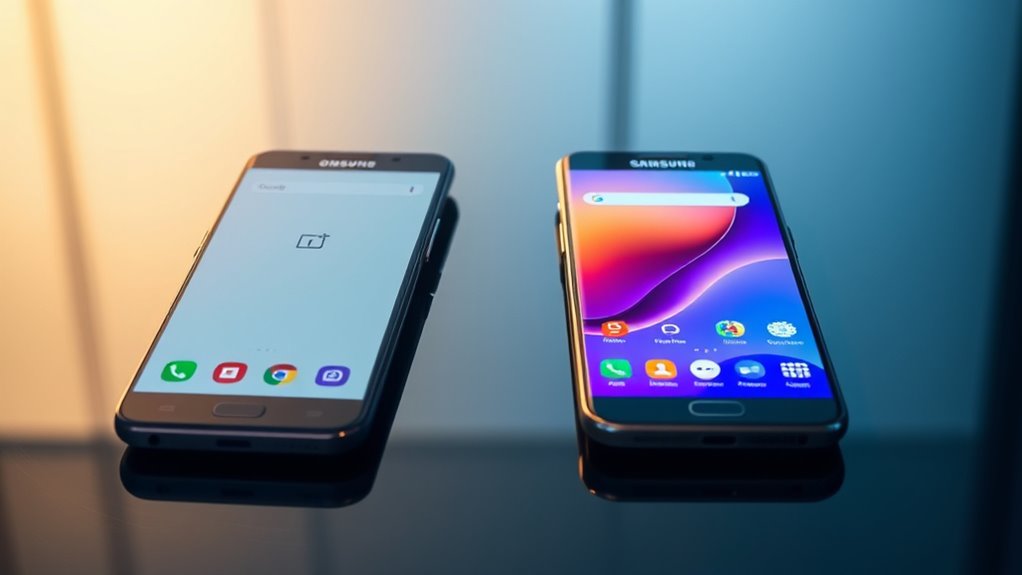
While both devices run on their respective customized Android skins, the software experience on OnePlus 13 emphasizes speed, simplicity, and minimal bloat, making navigation smooth and intuitive. You’ll notice a clean interface with streamlined menus and quick access to essential features. OxygenOS on OnePlus is lightweight, reducing unnecessary background processes that can slow things down. It also offers customization options, like theme adjustments and gesture controls, without overwhelming you. Samsung’s One UI, on the other hand, provides a richer, more feature-packed experience, with a visually distinctive design and extensive options. While it may feel a bit busier, it still maintains smooth performance. Overall, OnePlus’s software feels more straightforward and responsive, whereas Samsung’s UI offers more functionality at the expense of added complexity. Additionally, software customization options allow users to tailor their experience to suit personal preferences, enhancing usability.
Price Point and Value Proposition

Pricing plays a significant role in how you perceive the overall value of these devices. The OnePlus 13 offers flagship features at a much lower price, making it an attractive choice for budget-conscious buyers. Meanwhile, the Samsung Galaxy S25 Ultra commands a premium, reflecting its top-tier status and brand prestige. Additionally, the high refresh rates supported by flagship models contribute to smoother performance, especially in fast-paced scenarios.
- Feel confident knowing you’re getting high-end hardware without breaking the bank with the OnePlus 13
- Experience the status and recognition that comes with owning a Samsung flagship
- Make smarter choices by weighing performance and features against the price you pay
If value matters most, OnePlus delivers incredible hardware for less. But if brand prestige and refinement are your priorities, Samsung’s premium pricing may feel justified.
Unique Features and Innovation

When it comes to innovation, the OnePlus 13 stands out with its distinctive leather-textured back, offering a unique tactile experience that sets it apart from typical glass or metal designs. This material choice not only provides a premium feel but also reduces fingerprints and glare, making it more practical for daily use. Meanwhile, Samsung’s Galaxy S25 Ultra emphasizes its flagship status with a chiseled, squared-off design that exudes robustness and sophistication. Both phones push boundaries in display technology—OnePlus boasts an AMOLED panel with exceptional brightness and fluidity, while Samsung’s screen offers near-identical color accuracy with subtle saturation differences. Additionally, OnePlus introduces faster wired and wireless charging, enhancing convenience. These innovations highlight each brand’s approach: OnePlus focuses on tactile and functional connected equipment, whereas Samsung emphasizes a bold, premium aesthetic.
Overall User Experience and Final Verdict
Overall, the OnePlus 13 delivers an outstanding user experience by combining powerful performance, innovative design, and impressive battery life at a more accessible price point. You’ll enjoy seamless multitasking, smooth graphics, and quick responses, making everyday use effortless. Its lightweight feel and unique leather texture give it a distinctive, premium vibe, while the large AMOLED display immerses you in vibrant visuals. Battery longevity guarantees you stay connected longer without worry, and fast charging gets you back in action swiftly. Additionally, the device’s compact form factor makes it easy to handle and carry around in everyday life.
- Feel confident with a device that balances performance and affordability
- Be impressed by the sleek, innovative design that stands out
- Experience a smooth, responsive interface that keeps up with your busy life
Frequently Asked Questions
How Do the Flagship Cameras Perform in Low-Light Conditions?
In low-light conditions, you’ll find that the S25 Ultra camera performs slightly better with sharper images and better detail, thanks to its marginally improved sensor. However, the OnePlus 13, with Hasselblad tuning, still captures vibrant and dynamic photos, especially with its excellent dynamic range. You’ll notice that both phones handle night shots well, but S25 Ultra edges out slightly for overall clarity and sharpness in dim environments.
Which Device Offers Better Software Customization Options?
You’ll find that Samsung offers more extensive software customization options, giving you greater control over themes, icons, and system settings. Samsung’s One UI provides versatile features like Edge Panels and deeper personalization, while OnePlus’s OxygenOS is sleek and user-friendly but slightly less customizable. If you prioritize extensive customization, Samsung’s flagship is the better choice. However, if you prefer a simpler, near-stock experience, OnePlus’s software still offers plenty of flexibility.
How Do the Devices Compare in Terms of Long-Term Software Updates?
You’ll find that Samsung generally provides longer-term software updates, often supporting devices with up to four years of security patches and OS upgrades. OnePlus offers solid updates, but usually for about three years. If long-term software support matters most to you, Samsung’s commitment makes it a better choice. However, OnePlus still delivers timely updates for several years, keeping your device secure and current without feeling outdated quickly.
Are There Significant Differences in Audio Quality and Speaker Performance?
Think of their audio systems as a symphony; the Samsung Galaxy S25 Ultra delivers richer, more immersive sound with powerful stereo speakers that fill the room. The OnePlus 13 offers clear, balanced audio but lacks the punch and depth of the S25 Ultra. If you crave premium speaker performance, Samsung’s flagship hits the high notes better, making your media experience truly spectacular.
Which Smartphone Has Better Durability and Resistance Features?
You’ll find that Samsung Galaxy S25 Ultra offers better durability and resistance features, thanks to its robust, squared-off design and strong build quality. It typically has an IP68 rating for water and dust resistance, providing peace of mind in harsh environments. While the OnePlus 13 has a lighter, unique leather-textured build, it may not offer the same level of water and dust protection. So, if durability’s your priority, the S25 Ultra is your best choice.
Conclusion
When choosing between OnePlus and Samsung flagships, consider what’s most important to you. Samsung’s display tech boasts a 120Hz refresh rate on their latest models, offering smoother visuals. Meanwhile, OnePlus delivers excellent performance at a more affordable price point, with over 85% of users rating their software experience highly. Ultimately, your decision hinges on whether you prioritize cutting-edge displays or value-packed performance, ensuring you get the most out of your smartphone investment.