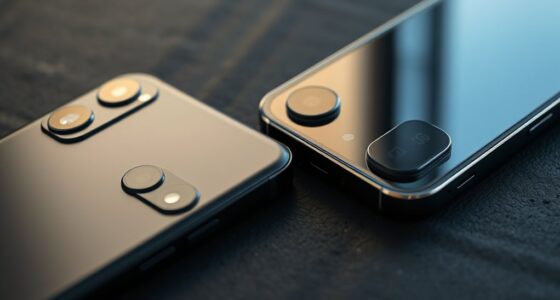
If you’re choosing between an eSIM and a physical SIM, eSIMs are embedded in your device, making them more flexible and space-saving, with easier remote activation and switching carriers via software. Physical SIM cards are removable, compatible with almost all devices, and better in remote areas with limited eSIM support. To understand more about their features, advantages, and practical uses, keep exploring the key differences and trends shaping mobile technology today.

Get the latest gadgets delivered free with Prime
- Fast, free delivery on millions of items
- Prime Video, Amazon Music and more included
- Member-only deals all year
Key Takeaways
- eSIMs are embedded, non-removable chips that save space and enable remote activation, while physical SIMs are removable cards with standard sizes.
- eSIMs allow quick carrier switching and managing multiple profiles via software, unlike physical SIMs that require manual swapping.
- Physical SIMs offer universal compatibility across all devices and regions, whereas eSIM support is mainly on newer, premium devices.
- eSIMs enhance security through embedded hardware and remote management, reducing theft and tampering risks compared to physical SIMs.
- eSIMs are ideal for frequent travelers and compact devices, but physical SIMs remain more reliable in areas with limited eSIM carrier support.
As an affiliate, we earn on qualifying purchases.
Key Differences in Design and Form Factor

The most noticeable difference between eSIMs and physical SIM cards lies in their design and form factor. An eSIM is embedded directly into your device’s motherboard, making it non-removable. It’s tiny, integrated, and doesn’t require a slot or tray. This design saves space inside the device, which is especially beneficial for compact gadgets like smartwatches. On the other hand, a physical SIM is a small, removable plastic card with a chip inside. You insert it into a dedicated tray or slot, and it’s easily swapable between devices. Physical SIMs follow standard sizes like nanoSIM, and their removable nature allows quick changes. While the physical SIM has been the traditional choice, eSIMs offer a sleek, space-efficient alternative that’s built into the device itself. On-device integration is a key feature that enhances device design and functionality.
As an affiliate, we earn on qualifying purchases.
Activation Processes and Network Switching Capabilities

Activating and switching networks on eSIMs is much more streamlined than with physical SIM cards because you can do it entirely through software. You simply scan a QR code or use a carrier app to activate your profile, eliminating the need for physical card handling. Switching carriers is quick and convenient, often completed within minutes via device settings. With a physical SIM, you must physically swap the card, which takes time and effort. Additionally, eSIMs can store multiple profiles, allowing easy management of different networks or numbers. This digital management capability enhances flexibility and reduces the need for multiple devices or visits to stores.
As an affiliate, we earn on qualifying purchases.
Compatibility Across Devices and Usage Contexts

While physical SIM cards are widely compatible with almost all phones, carriers, and feature phones, eSIM adoption remains limited to newer devices released after 2018. You’ll find most modern smartphones, especially flagship models, support eSIM, but many budget phones and older devices do not. If you use basic feature phones or rely on carrier-specific equipment, a physical SIM remains your best option. In regions where eSIM technology is still emerging, carriers may not offer eSIM support, limiting its practical use. Additionally, some devices, like tablets and smartwatches, may only support one type depending on their design and manufacturer. Overall, physical SIMs provide universal compatibility, while eSIMs are primarily suited for newer, more advanced devices and specific usage scenarios. The role of SIM technology continues to evolve, influencing device compatibility and user convenience.
As an affiliate, we earn on qualifying purchases.
Security Features and Risks

Because eSIMs are embedded directly into your device’s hardware, they offer enhanced security compared to physical SIM cards, which can be removed or stolen. With an eSIM, your subscriber profile is stored securely within the device, reducing the risk of theft or loss. Activation and switching profiles require carrier authentication, adding an extra layer of digital security. In contrast, physical SIM cards are vulnerable to theft, tampering, or swapping, which can lead to unauthorized access or SIM swapping fraud. While physical SIMs are more susceptible to damage or loss, eSIMs are inherently more durable and harder to compromise. Additionally, eSIM technology supports remote management, which can streamline device security updates and profile switching. However, managing eSIM profiles remotely introduces privacy considerations, as digital control over your connection depends heavily on secure carrier systems.
User Experience and Convenience Factors

With an eSIM, you get instant connectivity once you activate it, saving you time and hassle. Managing multiple profiles is straightforward through digital tools, making switching between networks quick and easy. In contrast, physical SIM cards require manual insertion and swapping, which can be more time-consuming and less convenient, especially when traveling or switching devices. Additionally, auditory processing techniques can enhance your understanding of sound-based information, further improving your experience with digital connectivity options.
Instant Connectivity Activation
eSIM technology offers a markedly faster and more convenient way to activate connectivity compared to physical SIM cards. With an eSIM, you can activate your service instantly by scanning a QR code or through remote carrier programming, eliminating the need to wait for a physical card to arrive. You can also switch carriers or add new profiles without physically swapping SIMs—just a few taps in your device’s settings or a dedicated app. This streamlined process means you’re connected almost immediately, whether you’re setting up a new device or traveling internationally. No more visits to stores or handling tiny cards. Overall, eSIMs provide a seamless experience, saving you time and effort while keeping you connected without interruption. Additionally, safe backup systems ensure your connectivity remains reliable during outages or emergencies.
Ease of Profile Management
Managing multiple profiles is considerably more straightforward with an eSIM, as you can easily switch between networks and phone numbers through your device’s settings or a dedicated app. You don’t need to physically swap cards or visit a store. Instead, you can download, activate, or delete profiles in minutes. This flexibility makes managing multiple lines simple, especially for frequent travelers or people with work and personal numbers. With a physical SIM, you’re limited to one profile at a time and must swap cards for new networks, which takes time and effort. Additionally, Free Floating technologies enable seamless profile management across devices.
Device Swapping Convenience
Swapping devices becomes much simpler with eSIM technology because you don’t need to physically move or replace a SIM card. Instead, you can activate or transfer your profile digitally, saving time and effort. This process eliminates the need to handle tiny cards or visit stores. You can switch devices quickly by downloading or transferring profiles via software, making upgrades seamless. Plus, with eSIM, you can store multiple profiles, allowing easy management of different numbers or carriers on one device. This flexibility is especially useful when traveling or switching between work and personal lines. Additionally, eSIM technology aligns with European cloud innovation aimed at enhancing digital infrastructure and user convenience.
- No need for physical SIM tray access
- Instant activation without waiting for mail
- Manage multiple profiles on one device
- Effortless device upgrades and replacements
- Ideal for frequent travelers and tech enthusiasts
Limitations and Compatibility Considerations

Although eSIM technology offers many advantages, it currently faces notable limitations related to device compatibility and network support. Not all devices support eSIM, especially older models or budget phones, so you might be limited in your options. Carrier support is also uneven worldwide; some carriers haven’t fully adopted eSIM, or restrict certain features. This can impact sauna building and other home tech integrations, highlighting the importance of reliable connectivity options. This means you may not be able to activate or switch plans easily in all regions. Additionally, some networks may have limited eSIM profiles or restrictions on remote management, affecting flexibility. If you travel frequently or need quick device swaps, these compatibility issues can pose challenges. Until broader adoption occurs, you might find physical SIMs more reliable and universally compatible for your needs.
Impact on Device Manufacturing and Design

The shift from physical SIM cards to eSIM technology considerably influences how devices are designed and manufactured. With eSIMs embedded directly into the motherboard, manufacturers can eliminate SIM trays and slots, allowing for sleeker, more compact designs. This change reduces internal space requirements and simplifies assembly processes. You’ll notice fewer components, which can lower production costs and improve device durability. Additionally, eSIM integration enables more flexible device layouts, supporting features like water resistance and seamless waterproofing. Embedded SIMs also facilitate remote provisioning, making it easier for carriers to manage device connectivity.
- No need for SIM slot manufacturing, reducing complexity
- Increased internal space for batteries or other components
- Enhanced device durability due to fewer external parts
- Design flexibility for thinner, lighter devices
- Simplified assembly and testing processes
Future Trends and Industry Adoption

Industry adoption of eSIM technology is accelerating as more device manufacturers and carriers recognize its benefits for flexibility, space-saving design, and enhanced security. You’ll likely see more smartphones, wearables, and IoT devices integrating eSIMs in the coming years, driven by the demand for sleeker, more versatile products. Carriers are increasingly supporting eSIM profiles remotely, making activation and switching easier for users. Industry forecasts suggest a shift toward eSIM dominance, especially in premium and compact devices. However, widespread adoption depends on carrier infrastructure and regional policies. As the technology matures, expect more seamless experiences, with eSIMs becoming the standard for device connectivity. You’ll benefit from simplified management, faster activation, and a more secure, durable connection, shaping the future of mobile connectivity.
Practical Tips for Choosing Between Esim and Physical SIM

When choosing between an eSIM and a physical SIM, your device’s compatibility plays a key role. If you travel frequently or need to switch carriers often, consider which option offers easier network access in your regions. Assess your device’s support and your travel plans to determine the most practical choice for your needs.
Device Compatibility Requirements
Choosing between an eSIM and a physical SIM depends largely on your device’s compatibility. Not all devices support eSIM technology, especially older models or budget phones. To determine compatibility, check your device’s specifications or settings. For example, newer smartphones from 2018 onward often support eSIM, but many feature phones and older models do not. Additionally, carrier support varies; some carriers haven’t fully adopted eSIM. Confirm your device has an active eSIM profile option if you prefer digital activation. Meanwhile, physical SIMs are universally compatible and easier to swap between devices. Consider these factors before choosing:
- Your device’s manufacturing year and model
- Carrier support for eSIM
- Availability of eSIM profiles on your device
- The need for quick or multiple device swaps
- Budget or regional restrictions
- The device’s compatibility with eSIM technology is crucial for a seamless experience.
Travel and Network Needs
If you travel frequently or plan to visit multiple countries, your network needs become more complex, making the choice between eSIM and physical SIM crucial. With an eSIM, you can easily activate local plans or switch carriers remotely, saving time and avoiding the hassle of physical SIM swaps. This flexibility is especially helpful when crossing borders, as you can add temporary profiles for each destination without waiting for new cards. On the other hand, a physical SIM might be more dependable in remote areas or regions with limited carrier support for eSIM. If you’re often in places with poor internet access, sticking with a physical SIM ensures uninterrupted connectivity. Consider your travel patterns and local carrier support to choose the option that best meets your network needs.
Frequently Asked Questions
Can Older Devices Be Upgraded to Support Esim Technology?
Older devices generally can’t be upgraded to support eSIM technology because the hardware isn’t built for it. If your device was made before 2018, it likely lacks the embedded SIM chip needed for eSIM functionality. To use eSIM, you’ll need a newer device specifically designed with eSIM support. You can’t add eSIM capability through software updates, so upgrading your device is usually necessary.
Are Esims More Cost-Effective Than Physical SIM Cards Long-Term?
You might think eSIMs are more cost-effective long-term, but surprise—it’s not always the case. While they save you from buying new SIM cards and enable quick carrier switches, the initial device costs can be higher, and not all carriers charge less for eSIM plans. Plus, if you need frequent device swaps, physical SIMs might still be cheaper and more straightforward, despite the digital convenience.
How Does Esim Support Multiple Profiles Simultaneously?
You can manage multiple profiles on an eSIM simultaneously because it stores several network configurations within its embedded chip. You simply use your device’s settings or a carrier app to add, switch, or delete profiles easily. This means you don’t need to physically swap SIM cards. Instead, you can activate different profiles for personal, work, or travel use, making switching networks quick and convenient without any hardware changes.
What Happens if an Esim Profile Becomes Corrupted?
If an eSIM profile encounters a hiccup, it’s like a brief pause in your connection. You’ll likely notice a temporary loss of service, but don’t worry—it’s easily fixed. You can simply delete the corrupted profile and reinstall a fresh one through your device or your carrier’s app. Most devices and carriers make recovery straightforward, so you won’t be left disconnected for long.
Are There Privacy Concerns With Remote Esim Management?
Yes, there are privacy concerns with remote eSIM management. When your carrier manages your eSIM profiles remotely, they could potentially access your usage data or track your device’s location. If security measures aren’t strong, hackers might exploit vulnerabilities to access your personal information. You should be aware of how your data is handled and guarantee your carrier uses robust encryption and security protocols to protect your privacy.
Conclusion
Choosing between eSIM and physical SIM isn’t just about convenience; it’s about embracing future technology. While eSIMs offer seamless switching and sleek design, physical SIMs remain reliable and widely compatible. The real truth is that both serve their purpose—adaptability is key. As industries shift, your best bet is to stay informed and flexible, knowing that embracing change often leads to better connectivity and innovation. The future favors those willing to adapt.
Halloween Picks
halloween
As an affiliate, we earn on qualifying purchases.