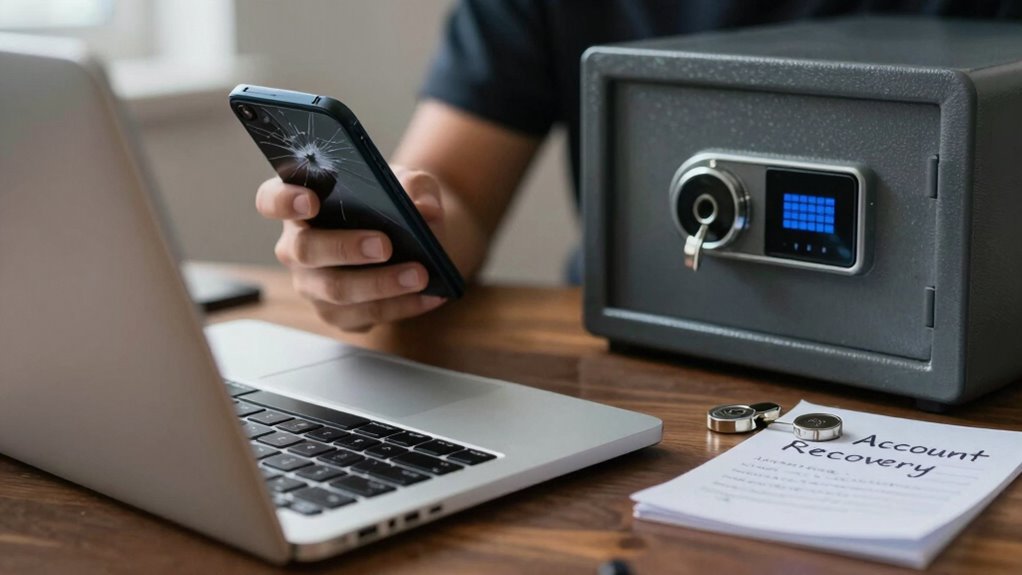

Account recovery is more important than device security alone because it directly safeguards your access to sensitive information even if your device gets lost or hacked. While device security helps protect your physical device, it doesn’t guarantee your account remains safe. Recovery processes, like identity verification and multiple authentication methods, guarantee you can regain control quickly in emergencies. Keep exploring to discover how strengthening your account recovery can keep your digital life secure.

Get the latest gadgets delivered free — and shop member deals
- Fast, free delivery on millions of items
- Access to Prime Big Deal Days deals on October 6–7
- Prime Video, Amazon Music and more included
Key Takeaways
- Account recovery ensures access remains secure even if devices are stolen or compromised.
- Robust recovery processes protect against unauthorized access and data loss.
- Device security alone cannot prevent account hijacking or hacking attempts.
- Multiple recovery methods provide alternative verification channels for quick access restoration.
- Managing recovery options proactively strengthens overall security beyond device protection.
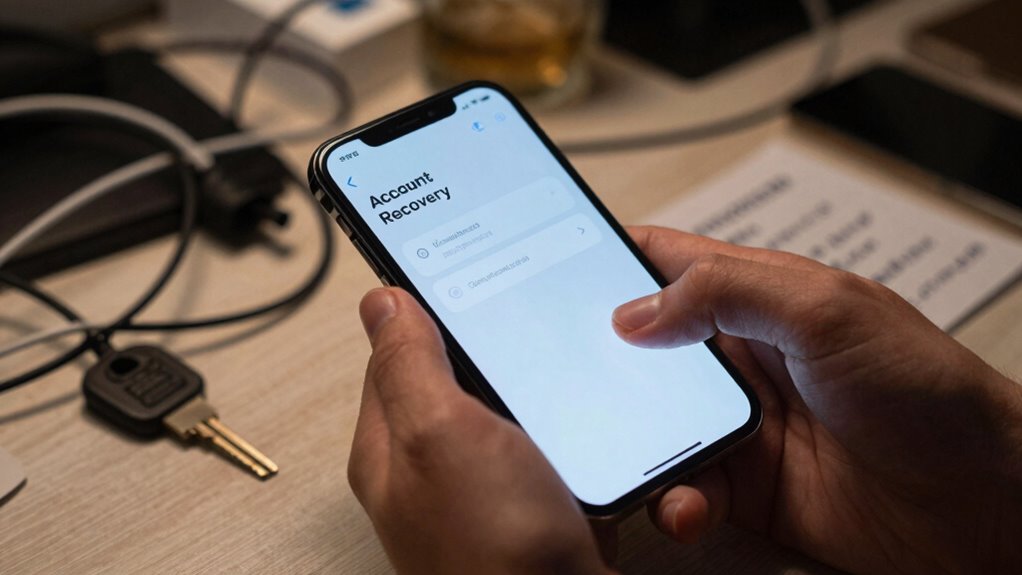
Have you ever lost access to an important account and wished you had a plan in place? It’s a frustrating experience that can leave you feeling vulnerable and unprepared. While securing your device is essential, it’s equally *important* to focus on account recovery processes. If you’re locked out, your first step often involves a password reset, which can be straightforward if you’ve set up recovery options in advance. But if you haven’t, the process can become complicated and stressful. That’s why understanding the importance of account recovery is *crucial*. It’s not just about regaining access but about *making sure* you can do so quickly and securely, minimizing the risk of unauthorized access or data loss.
When you attempt a password reset, the system typically prompts you to verify your identity. This step, known as identity verification, is *essential* because it confirms that you’re the rightful owner of the account. Proper verification methods—such as sending a code to your registered email or phone number—act as safeguards, preventing hackers from hijacking your account. Without robust identity verification, an attacker might exploit weak recovery options to take over your account. So, it’s *important* to keep your recovery information up to date and secure, *making sure* the identity verification process is smooth and reliable when needed.
Account recovery isn’t just about resetting passwords; it’s about establishing a safety net that protects you in emergencies. If your device gets lost, stolen, or compromised, the ability to recover your account quickly can save you from significant inconvenience or damage. Think about it: if an attacker gains access to your device and attempts to log into your accounts, recovery options that rely on secure identity verification can prevent unauthorized access. This is why many services encourage you to set up multiple recovery methods, like backup email addresses or security questions, to *guarantee* you can authenticate your identity through different channels.
Ultimately, focusing solely on device security isn’t enough. Devices can be stolen or hacked, but your accounts can still be protected through well-designed recovery processes. You need to be proactive in managing your recovery options, practicing secure password resets, and verifying your identity whenever possible. This layered approach helps you regain access swiftly and keeps your sensitive information safe, emphasizing that account recovery is a *key* component of your overall security strategy. When you prioritize this, you’re better prepared to handle unexpected access issues and maintain control over your digital life.
multi-factor authentication security key
As an affiliate, we earn on qualifying purchases.
As an affiliate, we earn on qualifying purchases.
Frequently Asked Questions
How Often Should I Update My Account Recovery Options?
You should update your account recovery options at least every six months to guarantee your password strength stays high and your recovery methods are current. Regular updates help protect you from phishing awareness threats, preventing hackers from exploiting outdated info. Consider reviewing and updating your recovery email, phone number, and security questions whenever you notice changes in your contact details or after a security incident to keep your account safe.
Can Account Recovery Prevent All Types of Hacking?
Think of your account as a fortress. While strong walls like password complexity and biometric verification help, account recovery is the secret passage you hold to regain access if attacked. It can’t prevent all hacking attempts, but it guarantees you can get back in if your defenses are breached. Regularly updating recovery options keeps that passage secure, making sure you’re never locked out when you need access most.
What Are the Best Methods for Secure Account Recovery?
You should use multi-layered methods for secure account recovery, like strong, unique passwords with high complexity. Enable two-factor authentication to add extra security. Be cautious of social engineering attempts—never share recovery info or codes. Regularly update your recovery options and verify them. These practices help prevent unauthorized access and guarantee you can regain control quickly if needed, making your account much more secure.
How Do Recovery Options Differ Across Platforms?
Like a modern-day Hercules facing different labors, you’ll find recovery options vary across platforms. Some prioritize password resets, sending you email or SMS links, while others rely on backup codes you’ve previously saved. Apple, Google, and Microsoft each have unique methods—Apple uses trusted devices, Google offers multiple verification steps, and Microsoft combines email, phone, and security questions. Knowing these differences helps you act swiftly when access is compromised.
Is Two-Factor Authentication Enough for Account Security?
Two-factor authentication is a good step, but it’s not enough by itself. You should also focus on password complexity to make your accounts harder to break. Adding biometric verification, like fingerprint or facial recognition, provides extra security. Combining these measures guarantees your account stays protected even if one layer is compromised. Remember, strong recovery options are essential, because if you lose access, they’re your best backup to regain control quickly.
As an affiliate, we earn on qualifying purchases.
Conclusion
Remember, recovery reigns supreme over device defense alone. Don’t delay in designing decisive, dependable disaster plans; device defenses diminish danger, but account access assures assurance. Prioritize proactive protection—prepare, prevent, and prevail. With quick, quality account recovery options, you’ll confidently conquer cyber threats, control chaos, and carry on with certainty. Because in today’s digital domain, your account’s accessibility is the ultimate armor—assure it, always.
As an affiliate, we earn on qualifying purchases.
As an affiliate, we earn on qualifying purchases.
Fall Picks
fall essentials
As an affiliate, we earn on qualifying purchases.