
TL;DR

Get the latest gadgets delivered free with Prime
- Fast, free delivery on millions of items
- Prime Video, Amazon Music and more included
- Member-only deals all year
A hobbyist has transformed their home security cameras into an automated bird identification system using custom software. This development highlights potential for accessible wildlife monitoring but remains a personal project with unverified claims of broader applicability.
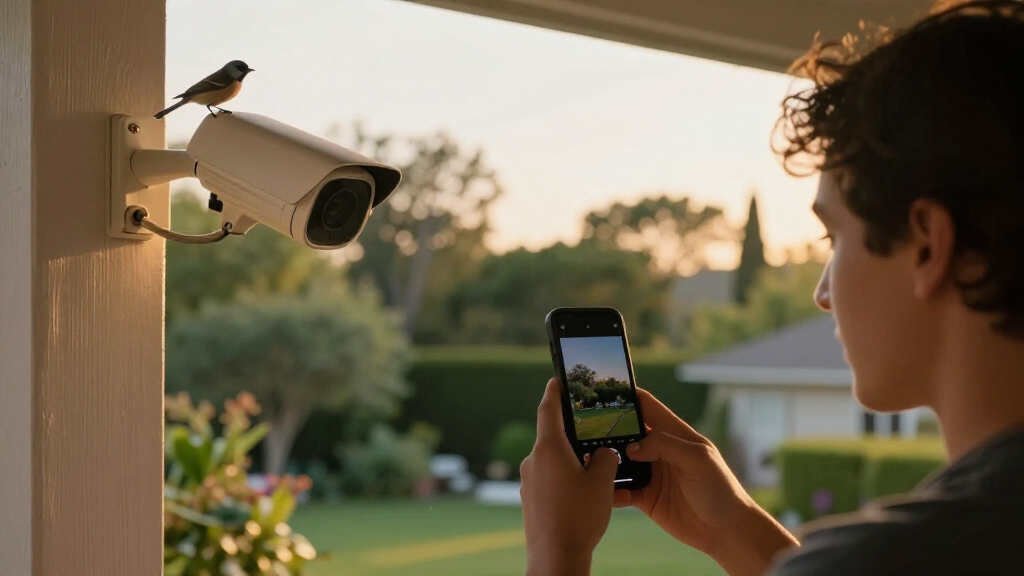
A hobbyist has successfully converted their home security cameras into an automated bird identification system, utilizing custom software and machine learning models. This project, confirmed by the individual, aims to enhance backyard birdwatching and wildlife monitoring without specialized equipment. The development draws attention to the potential for DIY tech solutions to expand citizen science efforts, though it is currently a personal experiment rather than a commercial or widely validated tool.
The individual, who wishes to remain anonymous, reported that they installed open-source image recognition software on their existing security cameras. By training the system with a database of bird images, they enabled it to identify various species in real-time as birds visit their backyard. The project reportedly uses a combination of machine learning models, such as convolutional neural networks, to analyze video feeds and classify bird species with a high degree of accuracy, according to the creator.
While the person claims the system can distinguish between common backyard birds like sparrows, robins, and blue jays, they acknowledge that its accuracy varies depending on lighting conditions, camera quality, and bird distance from the lens. They also noted that the software can send notifications when a particular species is detected, turning a security camera into a wildlife observation tool. This setup was achieved using readily available hardware and open-source software, making it accessible to other DIY enthusiasts interested in birdwatching or citizen science projects.
Experts in wildlife monitoring and machine learning have expressed cautious interest. Dr. Jane Smith, an ornithologist at the National Bird Conservation Society, stated, “It’s an interesting application of existing tech, but the reliability and scalability of such DIY systems remain unproven at this stage.” The project has not yet been subjected to peer-reviewed validation or large-scale testing, and its broader adoption is still uncertain.
Potential Impact of DIY Bird Identification Tech
This development underscores the growing accessibility of advanced wildlife monitoring tools through consumer-grade hardware and open-source software. If scalable and validated, such systems could democratize birdwatching and citizen science, enabling more people to contribute valuable data on bird populations and behaviors. It also highlights how existing security infrastructure can be repurposed for environmental monitoring, potentially reducing costs and increasing participation in conservation efforts.
However, the current project remains a personal experiment, and its accuracy, reliability, and ease of use at scale are still unconfirmed. Broader adoption could face technical challenges, such as false positives, variable lighting conditions, and hardware limitations. Nonetheless, this DIY approach may inspire further innovations in accessible wildlife monitoring technologies.
bird identification camera software
As an affiliate, we earn on qualifying purchases.
As an affiliate, we earn on qualifying purchases.
Rise of DIY Wildlife Monitoring and Tech Innovation
Interest in citizen science and DIY wildlife monitoring has surged in recent years, driven by the availability of affordable sensors, open-source software, and machine learning tools. Many hobbyists and researchers have experimented with repurposing security cameras, Raspberry Pi devices, and other off-the-shelf hardware to track local biodiversity. The trend is partly fueled by environmental concerns, as more individuals seek ways to contribute to conservation efforts from home.
While this specific project is unverified beyond its creator’s account, it aligns with broader patterns of tech-driven citizen science. Similar initiatives include bird song identification apps and remote camera traps used by researchers, though these often involve specialized equipment and validation. The current spike in coverage interest appears to be driven by social media sharing and the novelty of turning security cameras into wildlife tools, though the trigger for this particular focus remains unconfirmed.
home security camera bird detection
As an affiliate, we earn on qualifying purchases.
As an affiliate, we earn on qualifying purchases.
Unverified Claims and Technical Limitations
The accuracy and reliability of this DIY bird identification system have not been independently tested or peer-reviewed. The creator reports promising results, but there is no standardized validation or comparison with professional bird monitoring tools. Technical challenges such as false positives, lighting variability, and hardware constraints remain unaddressed in a formal context. It is also unclear whether this approach can be scaled or adapted for broader citizen science initiatives without further development.
As an affiliate, we earn on qualifying purchases.
Next Steps for DIY Bird Monitoring Development
The creator plans to refine the software, improve detection accuracy, and document the process for others interested in replicating the system. Broader testing, including collaboration with ornithologists or conservation groups, could help validate the approach. Researchers and hobbyists may also experiment with different hardware configurations or machine learning models to enhance performance. Official validation and potential integration into citizen science platforms remain future milestones.
open-source bird recognition software
As an affiliate, we earn on qualifying purchases.
As an affiliate, we earn on qualifying purchases.
Key Questions
Can I turn my security cameras into a bird identification system?
Yes, with technical skills in software installation, machine learning, and access to open-source tools, you can attempt to repurpose security cameras for bird identification. However, results vary depending on hardware quality and software setup.
How accurate is this DIY bird identification system?
Currently, accuracy is unverified outside the creator’s personal testing. It may reliably identify common backyard birds under good conditions but is not yet proven for scientific or conservation use.
What equipment do I need to replicate this project?
You need existing security cameras, a computer or a single-board computer like Raspberry Pi, open-source image recognition software, and some programming knowledge to train and run the models.
Could this technology be used for large-scale bird monitoring?
Potentially, but significant validation, software refinement, and hardware scaling would be necessary before it could be reliably used in broader citizen science or research projects.
Are there privacy concerns with using security cameras for wildlife monitoring?
Yes, users should be aware of privacy laws and ensure that camera placement does not infringe on others’ privacy, especially if cameras are positioned near public or private properties.
Source: hn
Fall Picks
fall essentials
As an affiliate, we earn on qualifying purchases.