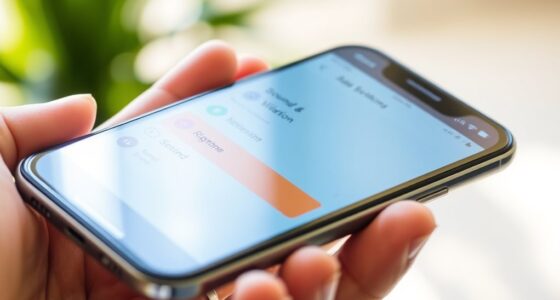

To make your phone easier for older family members, customize accessibility settings like increasing font size, boosting contrast, and enabling screen readers such as VoiceOver or TalkBack. You can activate voice assistants like Siri or Google Assistant for hands-free control of calls, messages, and apps. Adjust touch sensitivity and add assistive features to simplify navigation. These tweaks enhance usability and confidence, and if you keep exploring, you’ll discover more ways to tailor the device to their needs.

Get the latest gadgets delivered free — and shop member deals
- Fast, free delivery on millions of items
- Access to Prime Big Deal Days deals on October 6–7
- Prime Video, Amazon Music and more included
Key Takeaways
- Enable voice commands for hands-free operation, allowing easy calling, messaging, and app access.
- Adjust accessibility settings like larger text, high contrast, and screen readers for better readability.
- Use magnification gestures and customize touch sensitivity to simplify navigation and interaction.
- Choose simple, intuitive controls and minimize clutter to enhance overall usability for older users.
- Protect privacy and security while making small adjustments to boost confidence and independence.
As smartphones become essential tools for staying connected, making them user-friendly for older family members is more important than ever. You want them to enjoy the benefits of technology without frustration or confusion. One of the easiest ways to do this is by setting up voice commands. Voice commands allow your loved ones to perform tasks hands-free, which can be particularly helpful if they have trouble navigating small icons or touchscreens. Encourage them to use voice assistants like Siri, Google Assistant, or Alexa, depending on the device. Show them how to activate these features and demonstrate simple commands, such as making calls, sending messages, or opening apps. This makes using the phone more intuitive and less intimidating.
Beyond voice commands, exploring accessibility settings on their phones can significantly improve their experience. Most smartphones come with built-in accessibility options designed specifically for users with visual, hearing, or motor impairments. For example, increasing text size and contrast can make reading easier. Enabling screen readers, like VoiceOver on iPhones or TalkBack on Android devices, provides spoken feedback about what’s on the screen, so they don’t have to interpret small text or complex icons. You can also adjust touch sensitivity or add assistive touch features that create virtual buttons for common actions, reducing frustration with precise taps. Learning about accessibility features can help you customize the device to better suit their needs. Additionally, understanding how emerging trends in digital publishing influence these features can help you stay informed about new tools and updates that can further enhance usability.
Setting up these accessibility features doesn’t have to be complicated. Spend some time navigating through the phone’s settings menu together. Show them where to find the accessibility options and help them customize these features to their preferences. For instance, you might increase the font size for better readability or activate magnification gestures so they can zoom in on parts of the screen easily. Being aware of user interface design principles can help you choose the most effective adjustments to improve their overall experience. Incorporating security and privacy considerations when configuring these settings can also help protect their personal information while making the device more usable. Knowing that simple, intuitive controls can make a significant difference in usability will help you focus on features that truly empower your family member’s independence. These small adjustments can make a big difference in usability, helping your family member feel more confident and independent.
smartphone accessibility features for seniors
As an affiliate, we earn on qualifying purchases.
As an affiliate, we earn on qualifying purchases.
Frequently Asked Questions
How Do I Customize Notifications for Seniors?
To customize notifications for seniors, start by selecting custom notification sounds that are loud and distinctive, making alerts easy to recognize. Manage notification frequency by turning off unnecessary alerts or setting them to only appear for important messages. You can do this in your phone’s settings under notifications. Simplifying this process helps seniors stay informed without feeling overwhelmed, ensuring they don’t miss critical updates.
What Are the Best Apps for Senior Safety?
The best apps for senior safety include those that keep emergency contacts easily accessible and provide fall detection features. Apps like Safe365 and Life360 allow seniors to quickly alert loved ones if they need help. Additionally, fall detection apps automatically notify emergency contacts if a fall occurs, offering peace of mind. These tools help guarantee your family member’s safety, making it easier for you to stay connected and responsive.
How Can I Extend Battery Life for Older Phones?
You can extend your older phone’s battery life by enabling battery optimization and power saving modes. Adjust screen brightness, turn off unused Wi-Fi and Bluetooth, and close background apps to conserve energy. Limiting notifications and reducing screen timeout duration also help. Regularly update your device’s software, as updates often include battery improvements. These simple steps guarantee your phone lasts longer, keeping your loved ones connected and safe.
Are There Voice Command Tips for Seniors?
Wouldn’t it be great if your loved ones could navigate their phones hands-free? You can help by teaching them voice command shortcuts, which simplify tasks and boost speech recognition accuracy. Encourage clear, slow speech for better results, and remind them to speak directly into the microphone. Regular practice makes commands more natural, and they’ll appreciate how much easier it is to make calls, send messages, or find information with just their voice.
How to Troubleshoot Common Accessibility Issues?
To troubleshoot accessibility issues, start by adjusting font size for easier reading and increasing screen brightness if the display appears dim. Check your device’s accessibility settings to verify these options are enabled. If text remains hard to see, consider resetting your display settings or updating your device software. Restarting the phone can also resolve temporary glitches. These simple steps make your device more user-friendly for older family members.
voice assistant devices for elderly
As an affiliate, we earn on qualifying purchases.
As an affiliate, we earn on qualifying purchases.
Conclusion
Think of your phone as a trusted lighthouse guiding your older loved ones safely through digital waters. By making adjustments, you’re turning the beacon brighter and easier to see, ensuring they navigate with confidence. Just as a lighthouse offers steady guidance amidst shifting tides, your thoughtful tweaks provide reassurance and independence. With patience and care, you’re helping them sail smoothly through the vast digital ocean, discovering new horizons with each step.
large font smartphones for seniors
As an affiliate, we earn on qualifying purchases.
As an affiliate, we earn on qualifying purchases.
screen reader apps for Android and iPhone
As an affiliate, we earn on qualifying purchases.
As an affiliate, we earn on qualifying purchases.
Evergreen bestsellers Picks
bestsellers
As an affiliate, we earn on qualifying purchases.