

TL;DR
Open a free Amazon Business account
Business pricing, bulk buying and tax-exempt orders.
As an affiliate, we earn on qualifying purchases.
SpaceX’s Falcon 9 rocket launched from the West Coast, deploying additional Starlink satellites to enhance global internet coverage. The launch is confirmed and in progress, with details still emerging.
SpaceX’s Falcon 9 rocket successfully launched from the West Coast today, deploying a batch of Starlink satellites to expand the company’s global broadband network. The launch, confirmed by SpaceX officials, is part of the company’s ongoing effort to increase satellite coverage worldwide, which matters for improving internet access in remote and underserved areas.
The launch took place at approximately 10:30 a.m. local time from Vandenberg Space Force Base in California. According to SpaceX, the rocket carried around 60 Starlink satellites into orbit, marking another step in the company’s plan to deploy thousands of satellites for its broadband service. The launch was confirmed by SpaceX via its official channels, and the rocket successfully delivered the payload to its designated orbit.
Initial tracking reports indicate that the satellites are now in their designated orbits, with SpaceX stating that deployment was successful and that the satellites will undergo orbit-raising maneuvers over the coming days. The launch is part of SpaceX’s Starlink Phase 2 deployment, which aims to expand coverage and increase bandwidth for users across North America, Europe, and other regions.
Why This Launch Accelerates Global Internet Expansion
This launch is significant because it demonstrates SpaceX’s ongoing commitment to expanding its Starlink constellation, which aims to provide high-speed internet access worldwide, including in remote and underserved areas. The deployment of additional satellites enhances network capacity, reduces latency, and supports future service improvements. It also underscores SpaceX’s ability to conduct frequent launches, maintaining its position as a leader in commercial spaceflight and satellite internet deployment.

Starlink Mini Kit – Portable Satellite Internet System with Built-in WiFi Router, Compact Travel Dish, High-Speed Low-Latency Internet for RV, Camping, Remote Work & Off-Grid Use
- Portable Satellite Internet System: Ideal for travel and remote use
- Compact and Lightweight Design: Fits in backpacks and vehicles easily
- Built-in Wi-Fi Router: Simplifies setup for multiple devices
As an affiliate, we earn on qualifying purchases.
As an affiliate, we earn on qualifying purchases.
Recent Developments in SpaceX’s Starlink Deployment Strategy
Over the past year, SpaceX has launched multiple batches of Starlink satellites, steadily increasing the constellation size. The company has received regulatory approval for further satellite deployments and has been actively testing service in various regions. This launch continues a series of West Coast missions, which are crucial for reaching markets in North America and Europe. The ongoing deployment aligns with SpaceX’s broader goal to provide global internet coverage with a constellation expected to total over 12,000 satellites eventually.
“This launch represents another important step in our mission to deliver reliable, high-speed internet to every corner of the globe. We’re proud of our team’s continued progress.”
— Gwynne Shotwell, President and COO of SpaceX

Mini Satellite Dish Made for SpaceX Starlink Service – 4th Gen Portable Antenna with Advanced Phase Array Technology – High-Speed Internet Kit for RV, Camping, Remote Work, and Off-Grid Living
- Bundle Includes: Starlink Mini Kit with Wi-Fi System
- High-Speed Internet Access: Global satellite network for rural areas
- Portable and Compact: All-in-one design for easy transport
As an affiliate, we earn on qualifying purchases.
As an affiliate, we earn on qualifying purchases.
Unconfirmed Details About Satellite Operations and Coverage
While the launch has been confirmed successful and satellites are in orbit, it is not yet clear when they will become fully operational or how quickly coverage will expand in specific regions. Technical details about the satellites’ orbit-raising maneuvers and the precise coverage timelines remain to be confirmed by SpaceX in the coming days.
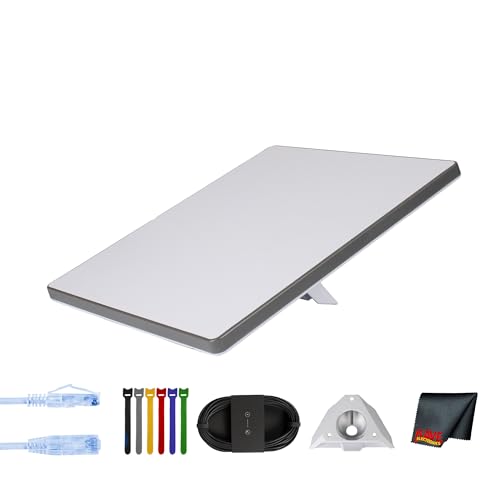
Starlink Mini Kit – Compact Dual-Band AC Wi-Fi Router and Satellite Dish System – High-Speed Portable Internet for and Mobile Use- Bundle (White)
- Bundle Includes: Wi-Fi system, cables, cleaning cloth
- High-Speed Satellite Internet: Global, low-latency connectivity
- Ideal for Remote Areas: No wired infrastructure needed
As an affiliate, we earn on qualifying purchases.
As an affiliate, we earn on qualifying purchases.
Next Steps for Satellite Deployment and Service Expansion
SpaceX plans to conduct orbit-raising maneuvers over the next few days, followed by testing and activation of the satellites. The company will then begin integrating the new satellites into its existing network, gradually expanding coverage and bandwidth. Further launches are expected in the coming months to continue building out the constellation, with updates on coverage and service quality likely to follow.
Starlink Mini Kit – Compact Dual-Band AC Wi-Fi Router and Satellite Dish System – High-Speed Portable Internet for and Mobile Use- Bundle (White)
- Bundle Includes: Wi-Fi system, cables, cleaning cloth
- High-Speed Satellite Internet: Global, low-latency connectivity
- Ideal for Remote Areas: No wired infrastructure needed
As an affiliate, we earn on qualifying purchases.
As an affiliate, we earn on qualifying purchases.
Key Questions
When will the new Starlink satellites become operational?
It is expected that the satellites will reach their operational orbit within the next few days, after orbit-raising maneuvers are completed. Full service activation depends on testing and integration processes.
How many satellites are being launched in this batch?
This launch carried approximately 60 Starlink satellites, consistent with previous deployments.
What regions will benefit most from this launch?
The primary focus is on expanding coverage in North America and Europe, with ongoing efforts to reach underserved areas globally.
Are there any technical issues reported with this launch?
No, the launch was confirmed successful by SpaceX, and all satellites are now in orbit as planned.
When will SpaceX conduct the next satellite launch?
Specific dates for upcoming launches have not been announced, but SpaceX has indicated plans for continued deployment over the next several months.
Source: google-trends
Summer Picks
summer essentials
As an affiliate, we earn on qualifying purchases.