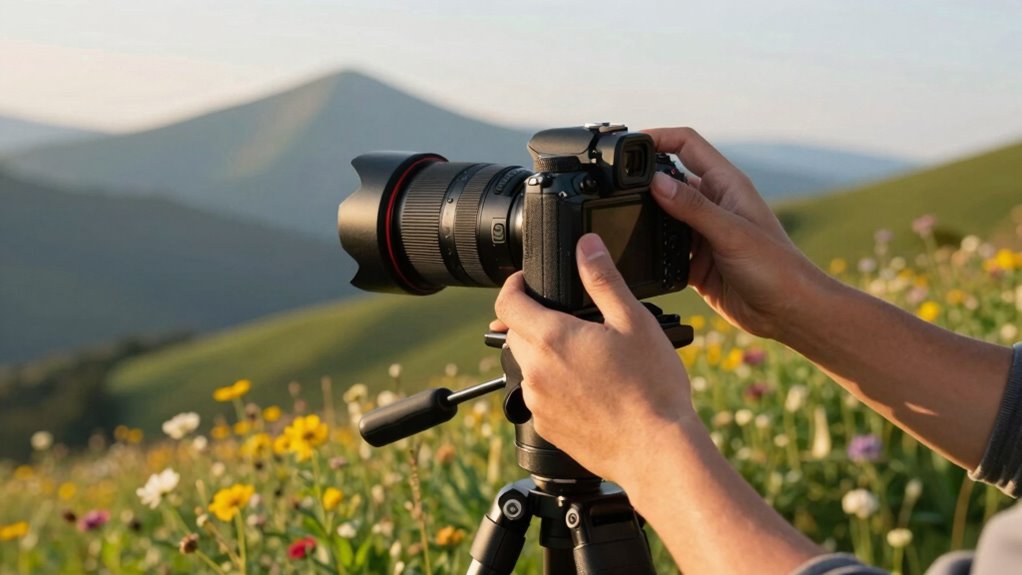

To improve your results quickly, establish consistent routines that make photography second nature. Focus on mastering lighting techniques by experimenting with natural and artificial sources, and learn to manipulate shadows and highlights for depth. Guide your subjects with thoughtful posing, paying attention to details like posture and expression. Regularly review your shots to identify strengths and weaknesses, and set clear goals for each session. Keep practicing these habits, and you’ll discover even more ways to elevate your skills along the way.

Get the latest gadgets delivered free with Prime
- Fast, free delivery on millions of items
- Prime Video, Amazon Music and more included
- Member-only deals all year
Key Takeaways
- Develop consistent shooting routines to build intuition and refine techniques through regular practice.
- Experiment with natural and artificial lighting to understand and manipulate light for better images.
- Plan and guide subjects with thoughtful posing to achieve natural, flattering compositions quickly.
- Analyze each shot to identify strengths and areas for improvement, enhancing skills over time.
- Set clear goals for each session to focus efforts and stay current with trends and new photography tools.
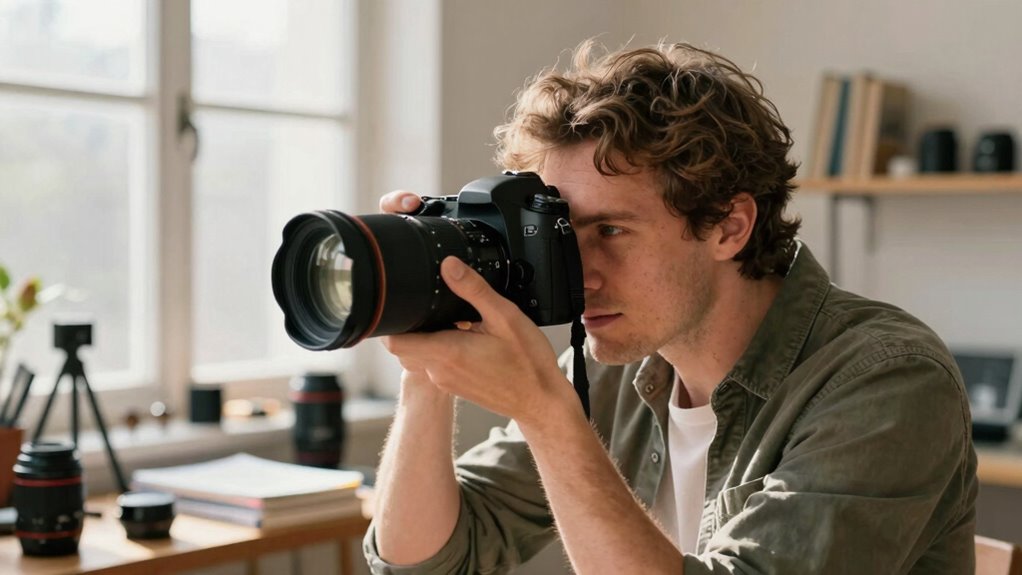
Mastering your camera habits can dramatically accelerate your photography progress. When you develop consistent routines, you become more intuitive behind the camera, and your images improve faster. One of the most effective habits is honing your understanding of lighting techniques. Instead of relying on automatic settings, you start analyzing how light falls on your subject, whether it’s natural sunlight or artificial sources. You experiment with different angles, times of day, and intensities to see what produces the most compelling results. Over time, you learn to manipulate shadows and highlights intentionally, which adds depth and mood to your photos. This active engagement with lighting transforms your shots from basic snapshots into expressive images.
Developing consistent lighting techniques transforms simple snapshots into expressive, compelling images.
Alongside lighting, adopting thoughtful posing strategies makes a huge difference. Instead of letting your subjects pose randomly or stiffly, you plan and guide them to create more natural, flattering compositions. You learn to communicate clearly, giving gentle directions that help subjects relax and find their best angles. You also pay attention to details like their posture, hand placement, and facial expressions, which can elevate the overall impact. By practicing these posing strategies regularly, you develop an eye for what works and can quickly make adjustments on the spot. This results in portraits that feel genuine and vibrant, not staged or awkward.
Developing a habit of reviewing your photos critically is also vital. After each shoot, take time to analyze what worked and what didn’t. Do you notice patterns in the lighting conditions that produce better images? Are there poses that flatter your subjects more? This reflection helps you refine your approach and avoid repeating mistakes. Additionally, establishing a routine of shooting often, whether daily or weekly, guarantees continuous learning. The more you practice, the more natural it becomes to incorporate lighting techniques and posing strategies seamlessly into your workflow. Furthermore, understanding the emerging trends in digital publishing can help you stay current with new tools and techniques that enhance your photographic storytelling.
Finally, setting clear goals for each session keeps you focused. Decide beforehand whether you want to master natural light, experiment with creative poses, or improve your composition skills. When you approach each shoot with purpose, your habits become more intentional, speeding up your learning curve. Over time, these disciplined practices turn into second nature, making your photography more confident, creative, and consistent. Essentially, by cultivating smart camera habits—especially in lighting techniques and posing strategies—you shortcut the learning process and see faster, more impressive results.
natural and artificial lighting photography kit
As an affiliate, we earn on qualifying purchases.
As an affiliate, we earn on qualifying purchases.
Frequently Asked Questions
How Quickly Can Camera Habits Improve My Photography Skills?
You can see improvements in your photography skills within weeks by focusing on camera ergonomics and aperture control. As you practice, you’ll develop muscle memory for handling your camera comfortably and efficiently. Experimenting with aperture settings lets you understand depth of field and lighting. Consistently applying these habits speeds up your progress, making you more confident and skilled behind the lens in a short amount of time.
Do These Habits Apply to All Types of Photography?
Yes, these habits apply broadly across all photography types. By consistently practicing lighting techniques and composition tips, you’ll see improvements whether you’re shooting portraits, landscapes, or street scenes. Developing good camera habits helps you quickly adapt to different settings and subjects, ensuring your photos are well-lit and visually appealing. These foundational skills build versatility and confidence, making your photography more professional and impactful across various genres.
What’s the Best Way to Stay Consistent With Camera Habits?
To stay consistent with your camera habits, set a dedicated schedule for practicing lighting techniques and composition tips daily or weekly. Use reminders or keep a journal of your progress, focusing on applying these habits in each shoot. Review your work regularly, identify areas for improvement, and challenge yourself with new lighting setups or compositions. This discipline helps embed your habits, ensuring steady growth and consistent results.
Are There Specific Camera Settings I Should Focus On?
You should focus on mastering manual focus and adjusting white balance to improve your results quickly. Manual focus gives you control over sharpness, especially in tricky lighting or moving subjects, while setting the white balance guarantees colors look natural. Practice switching between Auto and Manual modes, and tweak white balance settings for different environments. Consistently using these settings helps you develop better camera habits and achieves more professional-looking photos.
How Do I Track My Progress With New Camera Habits?
You can track your progress by reviewing your photos regularly, paying attention to how well your lighting techniques and composition rules improve over time. Keep a photo journal to compare shots, noting changes in lighting, framing, and subject placement. Set goals for each shoot, then reflect on whether you achieved them. This active review helps you see growth, adjust your habits, and build confidence in your camera skills.
professional portrait posing guide
As an affiliate, we earn on qualifying purchases.
As an affiliate, we earn on qualifying purchases.
Conclusion
By adopting consistent camera habits, you’ll see rapid improvement in your results. For example, a hobbyist photographer who commits to daily practice and reviews their shots learns faster and captures more striking images. Remember, small daily efforts compound over time. Keep experimenting, analyzing your work, and refining your techniques. Soon, your improved habits will become second nature, making each shot better than the last and accelerating your growth as a photographer.
camera review and analysis software
As an affiliate, we earn on qualifying purchases.
As an affiliate, we earn on qualifying purchases.
As an affiliate, we earn on qualifying purchases.
Halloween Picks
halloween
As an affiliate, we earn on qualifying purchases.