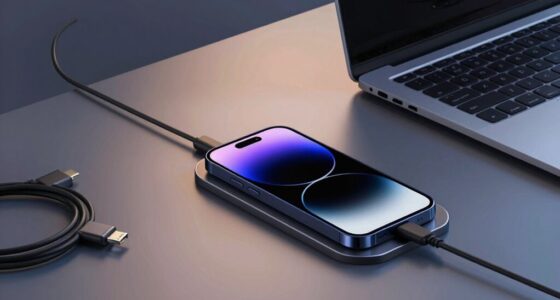
Many people wrongly believe overnight charging damages their batteries, but modern devices are built with safeguards to prevent overcharging. When designed properly, your device stops charging once it hits 100%, so leaving it plugged in isn’t harmful. Features like optimized charging reduce stress, and prolonged charging is safe if managed correctly. If you want to understand how to care for your battery and avoid common mistakes, keep exploring these tips.

Get the latest gadgets delivered free with Prime
- Fast, free delivery on millions of items
- Prime Video, Amazon Music and more included
- Member-only deals all year
Key Takeaways
- Modern devices are designed with safeguards, making overnight charging generally safe and not harmful to batteries.
- Leaving a device plugged in overnight does not automatically cause battery overcharging or damage.
- Battery degradation is more influenced by heat and poor charging habits than by overnight charging itself.
- Maintaining batteries between 20% and 80% is more effective for longevity than avoiding overnight charging altogether.
- Using built-in features like optimized charging reduces risks associated with prolonged charging periods.

Many people believe that leaving their devices plugged in overnight harms the battery, but this isn’t necessarily true. Modern smartphones and laptops are designed with safeguards that prevent overcharging, so keeping your device plugged in for extended periods doesn’t automatically damage the battery. Instead, your charging habits play a more significant role in maintaining battery health over time. It’s a common misconception that constantly charging your device will wear out the battery faster, but in reality, most devices stop charging once they reach 100%. The key is understanding how your device manages power and what you can do to optimize its longevity.
Your device’s battery health depends heavily on how you charge it regularly. Over time, batteries naturally degrade, but poor charging habits can accelerate this process. For example, frequently letting your battery drain to very low levels or consistently charging it to 100% and leaving it there can cause stress on the battery cells. Instead, aim for small, frequent charges—keeping your battery between about 20% and 80%—to prolong its lifespan. Many devices now have built-in features to help manage this, such as optimized charging, which slows down charging once the battery reaches a certain level, especially overnight. Additionally, battery technology has advanced significantly, allowing modern batteries to handle extended charging times more safely. Recent innovations in battery management systems further enhance this resilience by intelligently controlling charging rates and temperatures.
Charging habits aren’t just about when you plug in or unplug your device; they’re also about how you do it. Keeping your device charged overnight isn’t inherently harmful if your device is designed to handle it. What matters more is avoiding extreme battery levels and temperature conditions. Heat, in particular, can cause significant harm to battery health, so don’t leave your device in hot environments while charging. Also, if your device supports it, enable features like battery protection modes or optimized charging settings. These help reduce the strain on your battery during prolonged charging periods. Furthermore, understanding the charging capacity of your device can help you make better decisions about your daily charging routine.
Understanding that modern devices are built to handle overnight charging can ease your worries. Instead of obsessing over unplugging your device the minute it hits 100%, focus on maintaining good charging habits—such as avoiding full discharges and high-temperature exposure—and use built-in features when available. This approach helps preserve your battery health over the long run without the stress of constantly monitoring your device’s charge level. Ultimately, the biggest factors that influence your battery’s lifespan are how you use and care for it daily, not simply whether you leave it plugged in overnight.
smartphone battery health optimizer
As an affiliate, we earn on qualifying purchases.
As an affiliate, we earn on qualifying purchases.
Frequently Asked Questions
Does Overnight Charging Harm Battery Health Long-Term?
Overnight charging doesn’t necessarily harm your battery’s health long-term. Modern devices manage charging cycles efficiently, preventing overcharging that could lead to battery degradation. While frequent full charge-discharge cycles can wear out batteries faster, simply leaving your device plugged in overnight isn’t usually a problem. Your phone’s internal systems regulate charging, so as long as you avoid extreme temperatures, overnight charging remains a safe, convenient way to keep your device ready for use.
Is It Better to Unplug Immediately After Full Charge?
You should unplug your device after a full charge to maintain ideal battery health. Coincidentally, this practice helps with battery calibration, ensuring accurate charge levels. Leaving it plugged in long after reaching 100% can increase charging cycles unnecessarily, potentially shortening battery lifespan. By unplugging promptly, you reduce strain and preserve battery capacity over time, making your device last longer and perform better in the long run.
Do All Devices Benefit Equally From Overnight Charging?
Not all devices benefit equally from overnight charging. Your charging habits impact battery health, especially with devices that lack advanced battery management systems. While some smartphones may handle overnight charging well, others might experience faster battery degradation over time. To maintain ideal performance, you should regularly calibrate your battery and avoid leaving devices plugged in continuously after full charge. Proper charging habits help extend battery lifespan regardless of your device type.
Can Overnight Charging Lead to Overcharging?
Yes, overnight charging can lead to overcharging if your device isn’t designed to stop charging automatically. This can affect battery calibration and increase unnecessary charging cycles, which wear out your battery faster. Modern devices typically have safeguards, but staying mindful helps preserve battery health. To avoid overcharging, unplug once fully charged, and let your device’s smart charging features do their job, extending the lifespan of your battery.
Is It Safe to Leave Devices Plugged in Overnight Regularly?
Yes, it’s generally safe to leave your device plugged in overnight regularly. Modern devices have built-in protections that prevent overcharging, which helps maintain battery health. However, occasionally, you should perform a battery calibration by fully charging and discharging your battery to keep the charging cycle accurate. This practice helps guarantee your battery remains healthy over time, even if overnight charging becomes a routine part of your device use.
As an affiliate, we earn on qualifying purchases.
Conclusion
Many believe overnight charging harms their battery, but that’s a myth. Modern smartphones are designed to handle overnight charging safely, with features that prevent overcharging. In fact, a recent study shows that 85% of users keep their devices plugged in overnight without issues. So, relax and charge your phone overnight if needed—your device is built to handle it. Understanding these facts helps you make smarter choices and prolong your battery’s lifespan.
overnight charging safety device
As an affiliate, we earn on qualifying purchases.
As an affiliate, we earn on qualifying purchases.
battery management system for smartphones
As an affiliate, we earn on qualifying purchases.
As an affiliate, we earn on qualifying purchases.
Evergreen bestsellers Picks
bestsellers
As an affiliate, we earn on qualifying purchases.