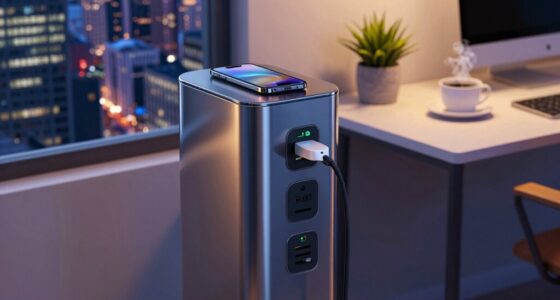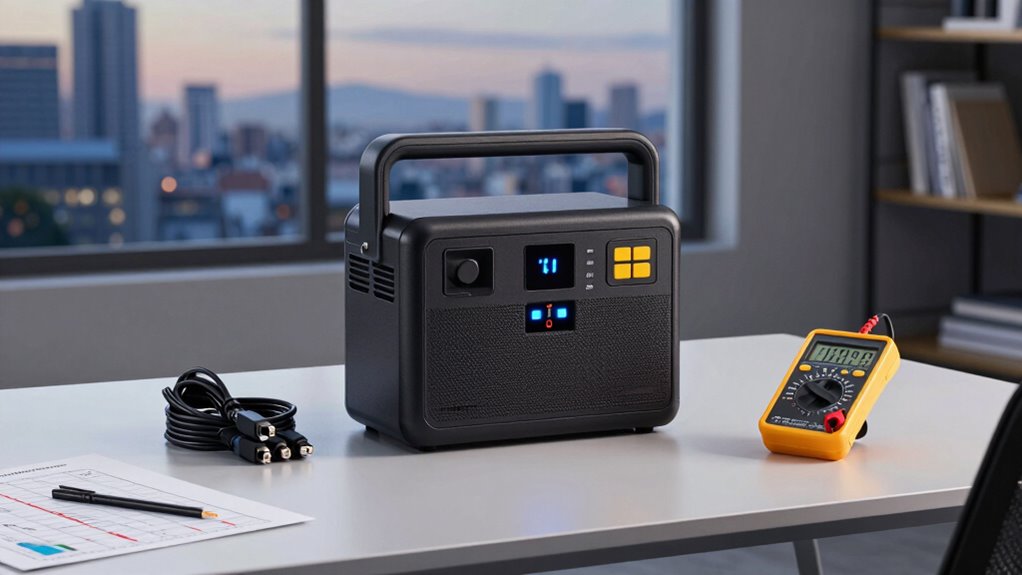

To choose a better backup power plan, start by evaluating your energy needs—decide what essential devices you want to run during outages. Consider your budget, balancing upfront costs with ongoing expenses like fuel or maintenance. Explore renewable options like solar or wind for eco-friendly, quiet power, or opt for portable generators for affordability. Prioritize reliable systems with smart controls for easy use, and stay informed about new tech to find the most effective solution for your situation.

Get the latest gadgets delivered free — and shop member deals
- Fast, free delivery on millions of items
- Access to Prime Big Deal Days deals on October 6–7
- Prime Video, Amazon Music and more included
Key Takeaways
- Assess your essential power needs to determine the appropriate capacity and type of backup system.
- Evaluate upfront costs, ongoing expenses, and long-term savings for renewable, portable, or battery solutions.
- Prioritize systems with automatic activation, low maintenance, and reliable performance during outages.
- Consider noise levels, portability, and compatibility with existing energy sources for suitability and comfort.
- Stay updated on technological advances and market trends to select the most efficient and future-proof option.

Have you ever experienced a power outage that left you unprepared? It’s a frustrating situation that underscores the significance of choosing a reliable backup power plan. When exploring your options, it’s essential to consider the sources of your backup energy. Renewable sources, like solar and wind, are gaining popularity because they’re sustainable and environmentally friendly. Installing solar panels or small wind turbines can provide a clean, quiet, and renewable way to keep essential devices running during outages. These options can reduce your reliance on fossil fuels and lower long-term operating costs, especially if you live in an area with abundant sunlight or wind. However, integrating renewable sources requires upfront investment and some technical know-how. You’ll need to evaluate whether the initial costs fit within your budget considerations and if the infrastructure can be scaled to meet your power needs. Additionally, understanding how these sources connect with other energy systems can influence your overall energy management strategy.
It’s also important to balance your desire for sustainability with practical budget considerations. Backup power systems can vary greatly in cost, from portable generators to full-home battery storage. Portable generators are often more affordable upfront and easy to use, but they tend to be noisy, emit fumes, and require fuel refills. On the other hand, larger battery storage systems, like those powered by renewable sources, might have higher initial costs but offer quieter, emission-free operation and lower maintenance. When choosing a backup plan, think about your typical power needs—do you want to keep the lights on, or do you need to power medical devices, refrigeration, or work equipment? This assessment will help you decide whether a small, portable solution suffices or if a more robust, integrated system makes sense.
Another key factor is ensuring your backup power plan is reliable and easy to maintain. You want a system that kicks in automatically when the power goes out and requires minimal intervention. Consider systems with smart controls or automatic transfer switches to streamline operation. Additionally, check the longevity and warranty of different options to avoid unexpected repairs down the line. Budget considerations should include not only the initial setup but also ongoing costs such as fuel, maintenance, or replacement parts. Carefully weighing these factors will help you choose a system that offers the right balance of sustainability, cost-effectiveness, and dependability, giving you peace of mind knowing you’re prepared for whatever power disruptions come your way. When evaluating your options, pay attention to the sound design involved in various power solutions, as noise levels can significantly impact comfort during outages. Moreover, researching compact and portable options can help ensure your backup system is adaptable to different situations or emergency scenarios. It’s also beneficial to consider the availability of renewable energy sources in your area, as this can influence the feasibility and efficiency of such systems. Furthermore, understanding the technological advancements in backup power can help you select more innovative and efficient solutions that are emerging in the market.
As an affiliate, we earn on qualifying purchases.
Frequently Asked Questions
How Long Should My Backup Power Last During an Outage?
Your backup power should last enough to cover your essential needs during an outage, typically 4 to 8 hours. Consider your battery lifespan and how often power outages occur in your area. If outages happen frequently or last longer, opt for a system with extended runtime. Regularly test your backup power to confirm reliability, and choose a plan that aligns with your power outage frequency and energy consumption.
Can I Use Multiple Backup Power Sources Simultaneously?
Yes, you can use multiple backup power sources simultaneously, but you need to take into account solar integration and generator compatibility. Make sure your system supports switching or combining sources safely to prevent backfeeding or damage. Many modern systems allow seamless integration, letting you run on solar, a generator, or both as needed. Always consult your system’s specifications or a professional to set up multiple sources correctly and safely, maximizing backup reliability.
What Maintenance Is Required for Backup Power Systems?
You need to regularly inspect your backup power system to guarantee peak performance. Check battery lifespan and look for corrosion, leaks, or swelling, which can indicate issues. Perform system inspections at least twice a year, and replace batteries as recommended by the manufacturer. Keep the system clean and ensure connections are tight. Proper maintenance helps extend the life of your backup power system and guarantees it’s ready when you need it most.
How Do I Determine the Right Size for My Backup Power Needs?
You determine the right size for your backup power needs by evaluating your essential appliances’ power consumption and running times. Focus on battery capacity to guarantee it can handle your peak load and consider power efficiency to optimize runtime. Calculate your total wattage requirements, then select a system with sufficient battery capacity and efficiency features, so you get reliable backup power without overspending or underpowering.
Are There Eco-Friendly Backup Power Options Available?
Yes, eco-friendly backup power options are available. You can consider renewable storage solutions like solar batteries that store energy from the sun, reducing reliance on fossil fuels. Eco-friendly generators, such as those powered by biodiesel or propane, emit fewer pollutants and are more sustainable. These options help you maintain power during outages while minimizing environmental impact, making them a smart choice for greener backup power plans.
As an affiliate, we earn on qualifying purchases.
Conclusion
In the end, selecting the right backup power plan keeps you prepared for any blackout, just like a trusty steed in a knight’s tale. Think about your needs, estimate your power demands, and explore your options carefully. Remember, a well-chosen backup system isn’t just about avoiding inconvenience — it’s about peace of mind. So, don’t be left in the dark like a caveman—plan ahead, and stay powered up no matter what the future holds.
As an affiliate, we earn on qualifying purchases.
As an affiliate, we earn on qualifying purchases.
Fall Picks
fall essentials
As an affiliate, we earn on qualifying purchases.