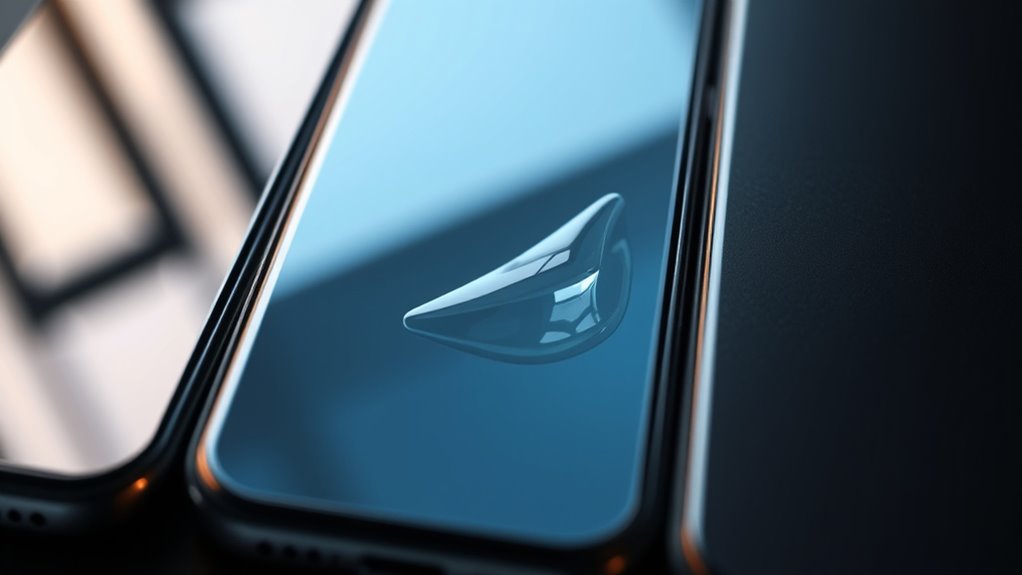

When choosing between tempered glass, liquid, and film protectors, consider your needs for durability, clarity, and ease of installation. Tempered glass offers excellent scratch resistance and keeps your screen looking sharp, but can shatter under heavy impact. Liquid protectors provide a seamless feel and strong chemical bonding, while films are flexible and shatter-proof but may slightly reduce clarity. If you want to explore which option suits your style best, keep going for a closer look.
Key Takeaways
- Tempered glass offers high scratch resistance and permanent protection with high clarity, but can shatter upon severe impacts.
- Liquid protectors provide seamless, invisible coverage, maintaining screen responsiveness and clarity, but may need reapplication over time.
- Film protectors are flexible and shatter-proof, suitable for curved screens, but generally less durable and may slightly reduce touch sensitivity.
- Manufacturing processes influence each protector’s durability, installation ease, and visual quality, guiding the best choice based on user needs.
- Tempered glass is ideal for impact resistance, liquid protectors excel in maintaining clarity and seamlessness, while films prioritize flexibility and shatter resistance.
Material Composition and Manufacturing Technologies
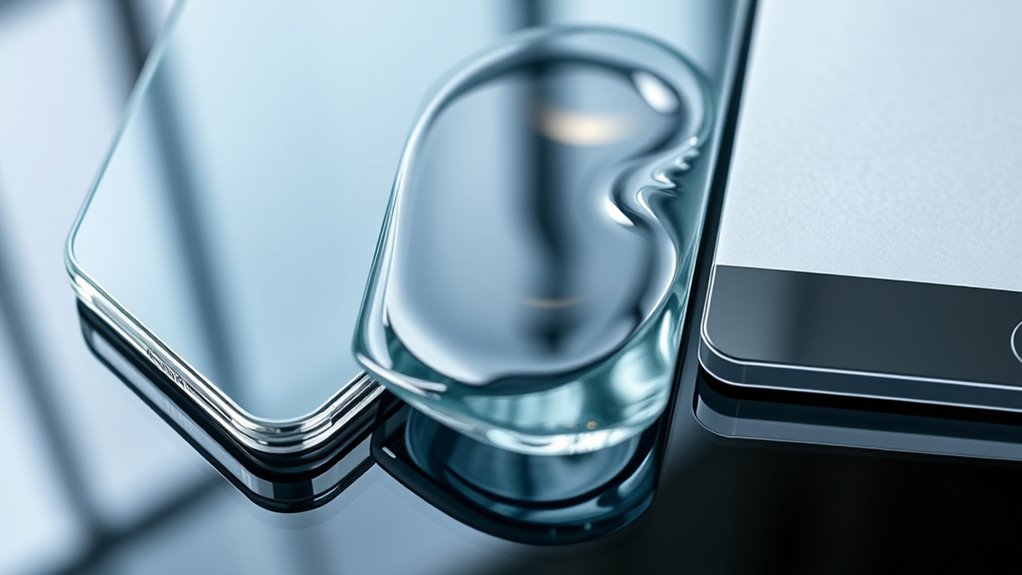
Understanding the material composition and manufacturing technologies of screen protectors is essential for choosing the right product. Tempered glass protectors are made by heating glass to extreme temperatures and then rapidly cooling it, creating a compression layer that makes it tough. They often contain aluminosilicate to boost strength. Liquid protectors use nano-coating technology with silicone dioxide (SiO2), forming chemical bonds with the screen surface for a seamless, invisible layer. Film protectors are crafted from polymers like TPU, TPE, or polyurethane, offering flexibility and shatter resistance. Liquid protectors include layers of absorbent silicone, PET film, and oleophobic coatings to repel oils. Each type’s manufacturing process influences its protective qualities, installation ease, and visual clarity, helping you choose the most suitable option based on your needs. Moreover, manufacturing techniques significantly impact the durability and clarity of each protector type.
Durability, Impact Resistance, and Application Processes
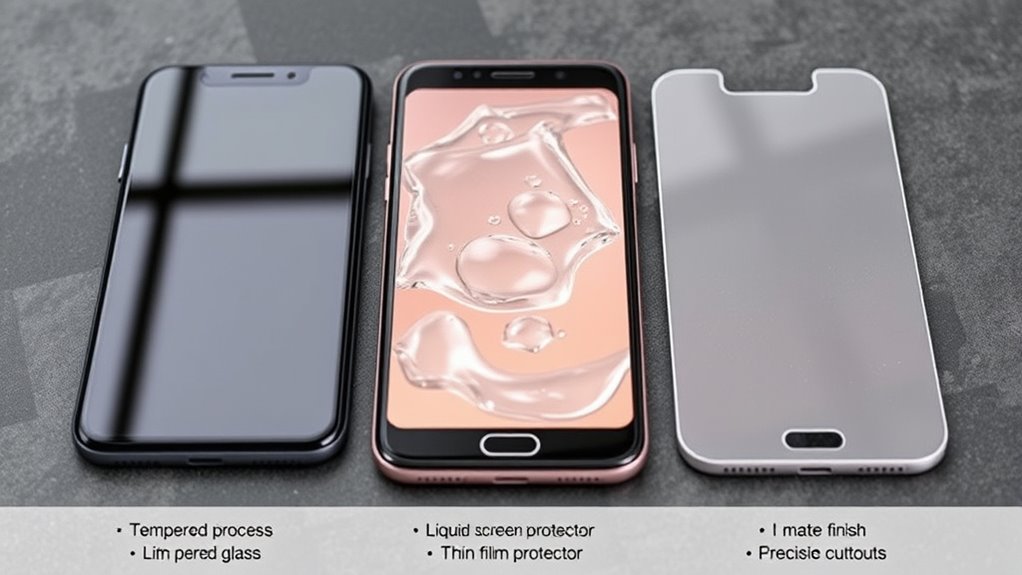
When choosing a screen protector, durability and impact resistance are crucial factors to take into account. Tempered glass offers strong scratch resistance with a 9H rating, but it can shatter under severe impacts. Liquid protectors provide scratch resistance and are about four times stronger than your screen, yet they don’t absorb heavy drops well. Film protectors are flexible and shatter-proof but tend to be less durable overall.
Consider these points:
- Tempered glass is rigid, easy to align, and provides permanent protection.
- Liquid protectors are simple to apply, bubble-free, and ideal for curved screens.
- Films are lightweight, flexible, but may require careful installation to avoid bubbles.
- To ensure long-term safety, it’s important to choose reliable, safe protective options aligned with your needs.
Touch Sensitivity, Visual Clarity, and Maintenance

Touch sensitivity and visual clarity are essential factors when choosing a screen protector, as they directly impact your user experience. Liquid protectors excel here, offering near-invisible layers that preserve your screen’s responsiveness and provide a silky, smooth feel. They often feel smoother than tempered glass because of their nano-coating technology, maintaining high touch sensitivity. Tempered glass also preserves responsiveness thanks to its manufacturing process, ensuring your taps and swipes remain precise. In contrast, film protectors might slightly reduce touch sensitivity depending on their thickness and material. For visual clarity, tempered glass provides HD transparency and won’t attract dust or fingerprints over time. Liquid protectors maintain excellent clarity due to their slim, invisible layer but may accumulate dust or smudges if the coating degrades. Maintenance generally involves reapplication for liquids, while glass offers permanent protection. Additionally, the contrast ratio of the protector can influence how well the display performs in various lighting conditions, affecting overall viewing quality.
Frequently Asked Questions
How Do Screen Protectors Affect Device Resale Value?
You’ll find that your device’s resale value can drop if the screen protector shows signs of wear or damage. Buyers often prefer phones with pristine screens, so removing or replacing old protectors before selling can boost appeal. High-quality protectors like tempered glass tend to leave fewer residue marks, helping your device look well-maintained. Ultimately, keeping your screen protector in good condition or removing it can positively influence your resale price.
Are Liquid Protectors Safe for All Screen Types and Coatings?
Liquid protectors are generally safe for most screen types and coatings, but you should check your device’s manufacturer recommendations first. They bond chemically without adding bulk or affecting sensitive coatings like oleophobic layers. However, if your screen has特殊 coatings or features, it’s best to consult the manufacturer to guarantee compatibility. Proper application avoids damage, and regular reapplication maintains protection without risking screen integrity.
Can Multiple Protectors Be Layered for Enhanced Protection?
You can layer multiple protectors, but it often isn’t necessary or recommended. Combining a liquid protector with tempered glass might boost scratch resistance, yet it can compromise touch sensitivity or cause bubbles. Conversely, stacking film protectors may offer extra shatter-proofing but can reduce clarity and flexibility. Typically, choosing one high-quality protector suited to your needs provides better protection than layering, which might lead to issues rather than added safety.
How Environmentally Friendly Are the Materials Used in Protectors?
You might find that tempered glass protectors are more environmentally friendly because they’re durable and last longer, reducing waste. Liquid protectors use nano-coatings and silicones, which can be harder to recycle and may contain chemicals that impact the environment. Film protectors are lightweight and often made from polymers like TPU or PU, but they’re less durable, leading to more frequent replacements and waste. Overall, tempered glass tends to be the greener choice.
Do Screen Protectors Interfere With Biometric Sensors Like Fingerprint Scanners?
Think of your biometric sensors as sensitive musicians, and the screen protector as a soundproof shield. Tempered glass usually doesn’t interfere because it’s thin and clear, allowing fingerprint scanners to perform their solo. Liquid protectors, with their ultra-slim nano-coatings, also tend to keep sensors responsive. However, thicker film protectors might muffle the signals, making it harder for your phone to recognize your fingerprint quickly.
Conclusion
Choosing the right screen protector depends on your priorities. Tempered glass offers great durability and clarity, while liquid protectors provide flexible, easy-to-apply coverage. Films are budget-friendly but less sturdy. Remember, don’t put all your eggs in one basket; weigh what’s most important—whether impact resistance, touch sensitivity, or cost. Ultimately, picking the right protector is about finding the best fit for your lifestyle—so don’t wait until trouble strikes!