Choosing the right power bank capacity depends on your device use and lifestyle. For most smartphones, 10,000mAh can charge 2-3 times, which suits daily needs and keeps weight manageable. If you travel or use multiple devices, consider 20,000mAh or more for extended power. Faster charging also matters, so look for models with quick-charge features. To find the perfect fit for your routines, explore the key factors you’ll need to think about.
Key Takeaways
- Match capacity to your daily device usage; 10,000mAh powers smartphones 2-3 times, suitable for moderate use.
- For travel or multiple devices, consider 20,000mAh or more for longer-lasting power.
- Higher capacity offers faster charging and more recharges but increases size and weight.
- Balance capacity with portability based on your lifestyle and how often you need device recharges.
- Choose a power bank supporting fast-charging to reduce recharging time and improve efficiency.
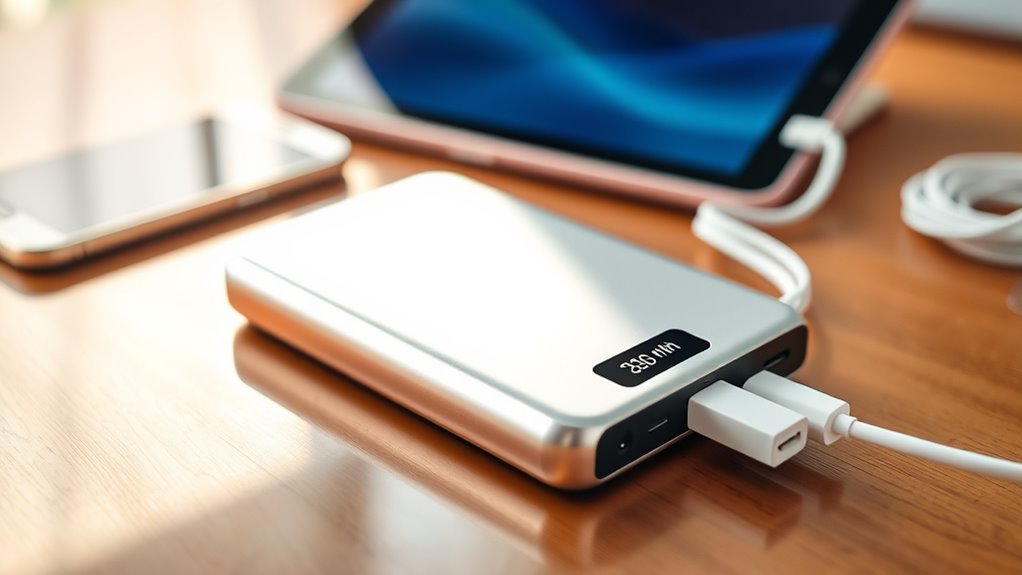
Ever wonder how to choose the right power bank for your needs? It all comes down to understanding capacity and how it impacts your device’s battery life and charging speed. When you’re on the go, you want a power bank that can keep your devices powered without weighing you down or slowing you down. The capacity, measured in milliamp-hours (mAh), determines how much energy the power bank can store, which directly affects how many times it can recharge your smartphone or other gadgets. If you need a quick boost, a power bank with a higher capacity can deliver more power in less time, enhancing your charging speed. Conversely, if portability is your priority, a smaller capacity might be more suitable, even if it means fewer charges per trip.
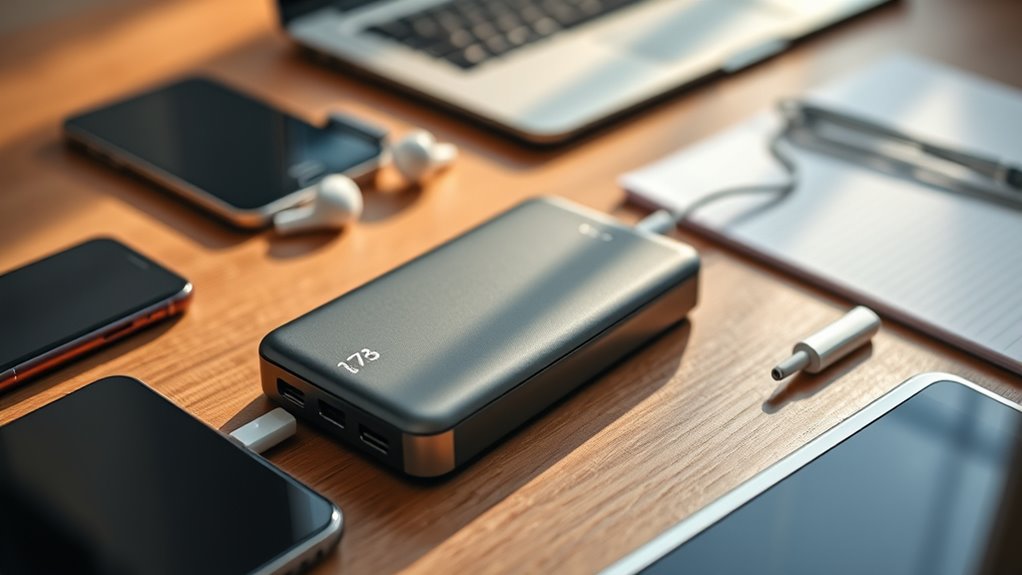
Choosing the right capacity depends on your device usage patterns. For instance, if you’re someone who relies heavily on your phone throughout the day for work, navigation, or media, you’ll want a power bank that can provide multiple charges. Typically, a 10,000mAh power bank can recharge most smartphones about two to three times, which is enough for a busy day. If you travel frequently or have multiple devices like tablets or portable gaming consoles, consider a larger capacity, such as 20,000mAh or more. These larger power banks can deliver more energy, but keep in mind they tend to be bulkier and heavier, which might impact portability.
Choose a power bank with enough capacity to meet your daily device usage needs.
Battery life isn’t just about capacity—how quickly your power bank charges your device matters, too. Charging speed varies depending on the power bank’s output and the device’s compatibility. Some power banks support fast-charging technology, which can markedly reduce the time it takes to recharge your device. This is especially useful if you’re in a rush or need to top up your device quickly. When shopping, look for specifications like output wattage or support for fast-charging standards such as Power Delivery (PD). A high-capacity power bank with fast-charging capabilities offers a great balance: it can store enough energy to keep you going longer and deliver that energy rapidly to minimize downtime.
In the end, the best power bank for you strikes a balance between capacity, size, and charging speed. Think about how often you’ll need to recharge your devices, how many devices you’ll carry, and how quickly you want them to charge. With a clear understanding of these factors, you’ll be better equipped to select a power bank that fits your lifestyle and keeps your devices powered up whenever you need them.
Frequently Asked Questions
Can a Higher Mah Power Bank Damage My Device?
A higher mAh power bank won’t damage your device if it’s compatible, but it can affect your device’s power bank lifespan. Using a power bank with a much higher capacity than your device needs might cause unnecessary wear over time, although it’s generally safe. Confirm your device is compatible with the power bank’s output to prevent issues, and choose the right capacity to optimize both safety and longevity.
How Does Capacity Affect Charging Speed?
Imagine your power bank is a trusty steed. Higher capacity doesn’t necessarily mean faster charging; instead, it influences charging efficiency and battery longevity. A larger Mah may slow down the initial power transfer, but it sustains charges longer. To get faster charging, focus on power output (Wattage) and device compatibility. Remember, a balance between capacity and efficiency ensures your device charges swiftly without compromising battery health.
Are There Safety Concerns With Large Capacity Power Banks?
Yes, there are safety concerns with large capacity power banks. Higher capacity batteries can overheat or malfunction if not properly designed, risking battery safety. To address this, manufacturers follow capacity regulations to ensure safety standards are met. Always choose power banks from reputable brands that comply with safety certifications, and avoid overcharging or exposing your device to extreme temperatures to minimize risks.
How Often Should I Recharge My Power Bank?
You should recharge your power bank before it hits empty—think of it as a nutritional snack for your device. To maximize battery longevity, aim for a recharge frequency every few months if unused, and after each heavy use. Don’t wait until it’s completely drained; frequent partial recharges actually extend your power bank’s life. Keep it topped off, and it’ll be ready whenever you need it—no surprise power outages allowed.
Do All Devices Charge Equally From the Same Power Bank?
Not all devices charge equally from the same power bank. Compatibility depends on your device’s charging port type and power requirements. Some devices need specific connectors or higher power outputs, which not all power banks supply. Check if your device supports fast charging or particular port types like USB-C or Lightning. Using a compatible power bank guarantees efficient, safe charging tailored to your device’s needs.
Conclusion
Now that you know how much capacity you need, you can choose a power bank that fits your lifestyle. Whether you’re charging your phone, tablet, or multiple devices, select a capacity that keeps you connected, powered up, and ready to go. Remember, the right capacity isn’t just about numbers—it’s about peace of mind, convenience, and staying connected. Make your choice confidently, charge worry-free, and keep your devices alive wherever life takes you.