When choosing a phone case, consider your priorities. Silicone offers a soft, grip-friendly, shock-absorbing option but tends to attract dirt and can stretch over time. Hard plastic is impact-resistant, durable, and easy to clean, giving a sleek look. Other materials like TPU and leather balance flexibility, style, and protection, but each has its trade-offs. If you want to understand how each material performs in daily use, there’s more to explore.
Open a free Amazon Business account
Business pricing, bulk buying and tax-exempt orders.
As an affiliate, we earn on qualifying purchases.
Key Takeaways
- Silicone cases are soft, flexible, and shock-absorbent but tend to attract dust and may stretch over time.
- Hard plastic cases are rigid, impact-resistant, and resistant to scratches but offer less shock absorption.
- TPU combines flexibility and shock protection; it’s stylish and versatile but can yellow with UV exposure.
- Leather cases provide a luxurious, stylish look but require regular maintenance and are less impact-resistant.
- Material choice affects durability, style, grip, ease of cleaning, and overall protection for daily phone use.

EVEO Screen Cleaner Spray - Large Screen Cleaner Bottle - TV Screen Cleaner, Computer Screen Cleaner, for Laptop, Phone, Ipad - Computer Cleaning kit Electronic Cleaner (1 Pack)
- Versatile Electronic Screen Cleaner: Suitable for TVs, laptops, phones, and tablets
- Effective Streak-Free Cleaning: Removes dust, fingerprints, and smudges
- Gentle on Sensitive Screens: Safe for LCD, LED, OLED, CRT screens
As an affiliate, we earn on qualifying purchases.
Material Properties and Durability
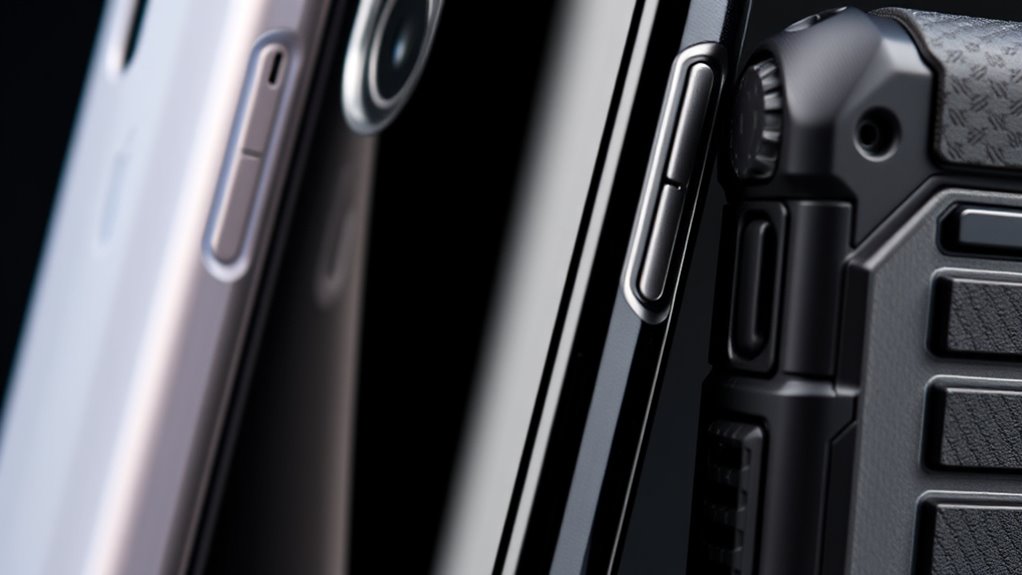
Understanding the properties and durability of phone case materials helps you choose the right option for your needs. Silicone cases are soft and rubbery, offering excellent grip and shock absorption. However, they attract dust, lint, and grime easily, making cleaning a hassle. Over time, heavy use can cause them to stretch or warp, losing their shape. Hard plastic cases, usually made from polycarbonate, are rigid and impact-resistant. They resist scratches and maintain their appearance longer, but they’re less flexible and offer minimal shock absorption unless combined with other materials. TPU cases strike a balance, providing flexibility and good shock protection, though they can yellow with UV exposure. Leather and other materials add luxury and style but may require more care, often sacrificing some durability for aesthetic appeal. Additionally, material composition influences how each case performs under different conditions, affecting its longevity and protective qualities.

iO CLEAN Screen Cleaner Spray (16oz - 473ml) – Best Large Cleaning Kit
- Versatile Device Compatibility: Works on all electronic screens and devices
- Gentle, Advanced Formula: Removes dust, fingerprints, grime without scratches
- Protective, Streak-Free Shine: Leaves screens smudge-free and like new
As an affiliate, we earn on qualifying purchases.
Aesthetic Appeal and Style Options
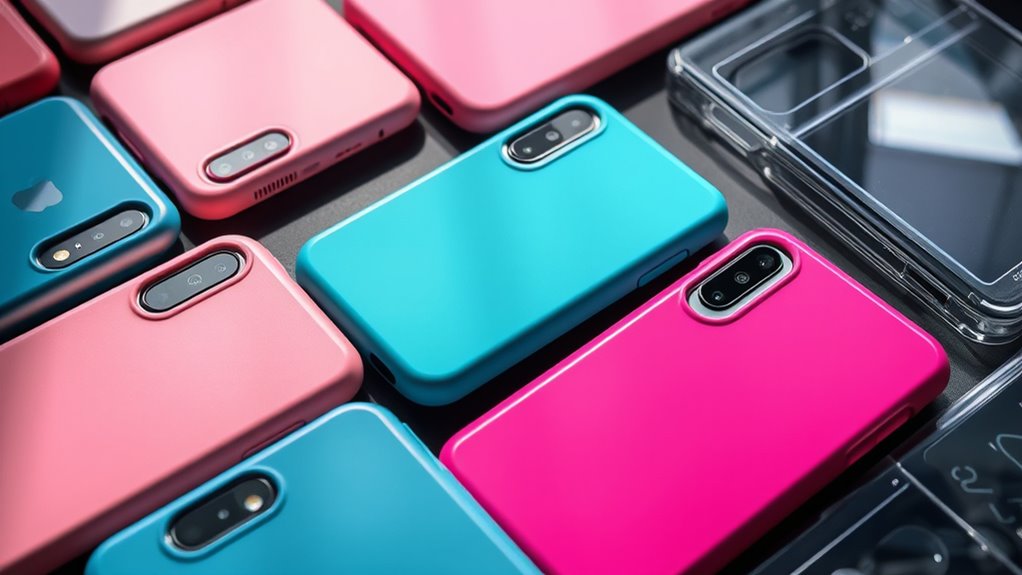
Aesthetic appeal and style options play a crucial role in choosing a phone case that reflects your personality. Your choice impacts how your phone looks and feels daily. Silicone cases offer vibrant colors and soft textures, making them fun and comfortable. Hard plastic cases come in sleek, glossy, or printed designs, providing a modern look. TPU cases blend flexibility with style, often featuring textured or transparent finishes. Leather cases exude luxury and sophistication, while acrylic and other materials showcase unique, eye-catching designs. Here’s a quick comparison: Material versatility can influence the overall aesthetic and functionality of your phone case.
Practical Considerations for Everyday Use

When choosing a phone case for daily use, practicality often outweighs style alone. You want something that protects your phone, is easy to clean, and fits your routine. Silicone cases provide a good grip and comfort, reducing slips, but attract dust and grime quickly. Hard plastic cases are impact-resistant and simple to maintain, resisting scratches well. TPU cases offer a balance of flexibility and shock absorption, making them versatile for everyday bumps. Leather cases add a touch of elegance but need regular care to stay pristine. Consider these practical factors:
- Grip and comfort during regular handling
- Resistance to scratches and dirt
- Flexibility and shock absorption
- Ease of cleaning and maintenance
- The importance of material durability in daily protection
Your choice depends on what matters most for your daily needs.

Miracase for iPhone 17 Case 6.3'', Full-Body Bumper Military Drop Protection Outdoor Phone case with Built-in Glass Screen &Camera Control,Easy Installation,No Gap,Compatible with MagSafe,Black
- Built-in 9H Glass Screen Protector: Scratch and crack resistant, bubble-free
- Military-Grade Drop Protection: Tested to withstand 8000 drops, full-body rugged design
- Enhanced Camera Control & Protection: Unique lens and button protection for full coverage
As an affiliate, we earn on qualifying purchases.
Frequently Asked Questions
Which Phone Case Material Offers the Best Overall Protection?
You should choose TPU for the best overall protection. It balances flexibility, shock absorption, and durability, which helps protect your phone from drops and impacts. Unlike silicone, it resists warping and doesn’t attract as much dirt, and it offers better shock dispersion than hard plastic. If you want a versatile, protective case that handles daily bumps well, TPU is your best bet for all-encompassing protection.
Are Silicone Cases Safe for Long-Term Use?
Silicone cases are like a cozy sweater for your phone—soft, flexible, and comfortable. They’re generally safe for long-term use, offering good shock absorption to protect your device from drops. However, they can attract dust and grime, making cleaning a chore. Over time, heavy use might cause stretching or warping. So, while they’re safe, you’ll need to clean them regularly to keep your phone snug and secure.
How Do Case Materials Affect Wireless Charging Compatibility?
Your phone case material substantially impacts wireless charging. Silicone and TPU cases, being non-metallic and relatively thin, generally work well, allowing signals to pass through easily. Hard plastic cases also usually don’t interfere, but thicker or textured designs might block signals. Metal or cases with metal components, however, can hinder or completely prevent wireless charging. Always check compatibility, especially with thicker or hybrid cases, to guarantee smooth wireless charging.
Can Certain Materials Cause Phone Overheating?
Think of your phone as a delicate firefly, easily overheated if trapped in the wrong environment. Certain materials, like thick silicone or dense plastics, can trap heat and cause your device to overheat. Hard plastics, especially if poorly ventilated, may insulate heat, while softer materials tend to dissipate it better. Choose a case that breathes, allowing heat to escape, so your phone stays cool and happy.
Are Eco-Friendly or Biodegradable Options Available Among These Materials?
Yes, eco-friendly and biodegradable phone cases are available. You can choose options made from plant-based bioplastics, bamboo, cork, or recycled materials that break down more easily in the environment. These cases often provide good protection and style, while reducing your carbon footprint. By selecting biodegradable materials, you help lessen plastic pollution and support sustainable practices, making your phone accessory both functional and environmentally responsible.
Conclusion
Choosing the right phone case is like picking the perfect outfit—you want it to reflect your style and withstand daily wear. Silicone offers a flexible, cushioned feel, while hard plastic provides a sleek, sturdy shield. Consider your lifestyle and aesthetic preferences to find the best fit. Remember, the right case is your phone’s armor, guarding it like a knight’s shield—ready for whatever daily adventures come your way.
College move-in / dorm season Picks
dorm essentials
As an affiliate, we earn on qualifying purchases.