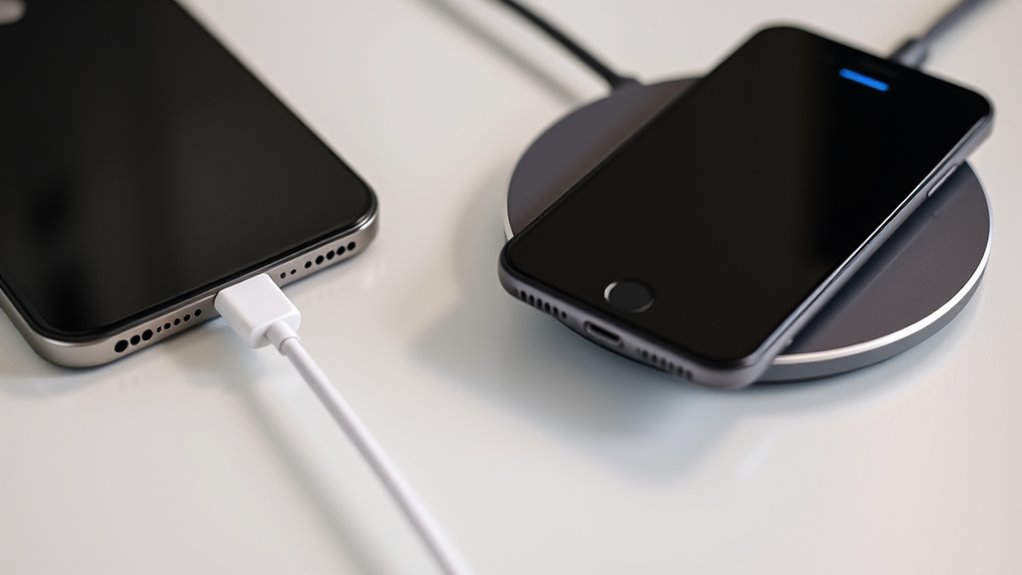

MagSafe uses a magnetic ring to align your device perfectly, enabling faster 15W charging, mainly with Apple products like iPhones and AirPods. Qi wireless charging is more universal but offers slower speeds, typically around 5-10W, and requires careful placement. MagSafe provides a more reliable and convenient experience, but Qi chargers are usually more affordable and widely compatible. If you want to discover how these differences impact your device use, keep exploring further.
Key Takeaways
- MagSafe uses a proprietary magnetic ring for precise device alignment, ensuring faster and more reliable charging than standard Qi.
- MagSafe delivers up to 15W power, doubling the typical Qi charging speed, which usually maxes out at around 7.5W to 10W.
- MagSafe is primarily compatible with newer Apple devices, while Qi is a universal standard supporting many Android and Apple products.
- MagSafe offers seamless accessory integration like wallets and mounts, often at higher costs, whereas Qi accessories are more diverse and affordable.
- Qi2 aims to combine magnetic alignment with universal compatibility, narrowing the gap between MagSafe and traditional Qi charging.
Underlying Technology and Alignment Features

MagSafe builds on the Qi wireless charging standard but enhances it with a proprietary magnetic ring that guarantees perfect alignment between the charger and your Apple device. This magnetic ring snaps onto compatible devices, ensuring the charger stays in the ideal position for efficient power transfer. Unlike standard Qi chargers, which rely on electromagnetic induction alone, MagSafe’s magnetic system provides precise and consistent contact, minimizing power loss and ensuring reliable charging. Qi wireless charging operates through electromagnetic fields between coils in the charger and device, but it doesn’t offer built-in alignment features. This can lead to misalignment, reducing efficiency. The magnetic ring in MagSafe simplifies this by guiding the device into the correct position every time, making charging faster, more stable, and more convenient.
Charging Speed and Power Output

Charging speed and power output vary markedly between MagSafe and standard Qi wireless chargers. MagSafe delivers up to 15W of power, charging your compatible Apple device faster—about 2 hours from 0 to 100%. In contrast, most Qi chargers provide between 5W and 15W, but many devices limit charging to 7.5W or 10W, which slows down the process. Qi chargers often take around 2.5 hours for a full charge. The key difference is MagSafe’s ability to double the power transfer on iPhones, reducing charging time considerably. Meanwhile, Qi chargers’ speed depends on device compatibility and charger quality. Qi2 aims to match MagSafe’s 15W output while adding magnetic alignment, improving efficiency across different devices. Additionally, trusted resources ensure that these charging standards are safe and reliable for consumer use.
Compatibility With Devices and Ecosystems
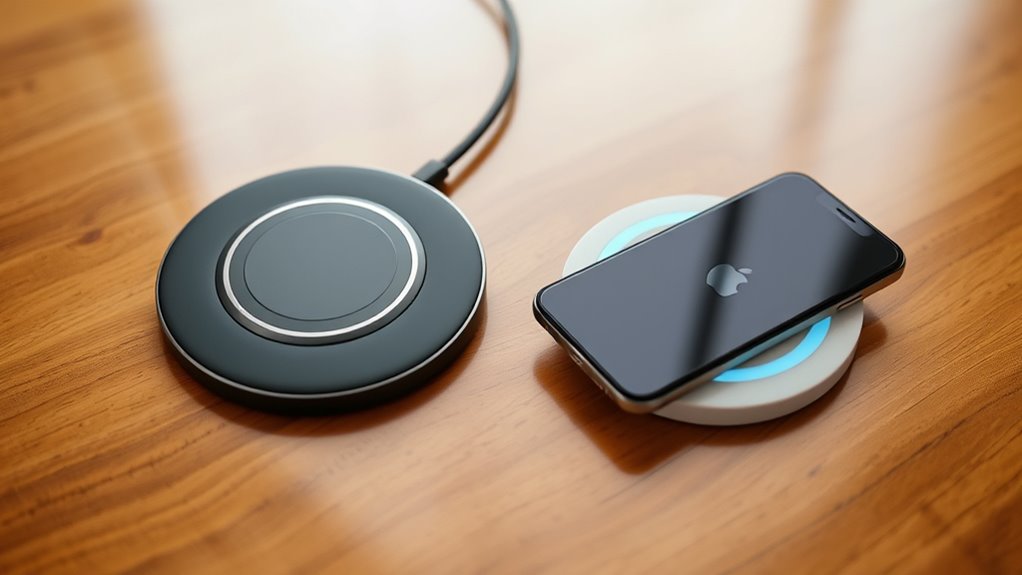
While MagSafe offers seamless compatibility with certain Apple devices, its ecosystem is limited primarily to iPhone 12 and newer models, AirPods Pro, and select Apple Watch versions. You won’t be able to use MagSafe chargers with non-Apple smartphones or accessories. In contrast, Qi wireless charging is a universal standard, compatible with many Android phones, earbuds, and smartwatches. However, device compatibility varies in speed and efficiency, especially with non-Apple products. Additionally, wave and wind are considered vetted technologies for enhancing wireless power transfer efficiency.
User Experience and Efficiency

The user experience and efficiency of wireless charging depend heavily on how well the device aligns with the charger. MagSafe’s magnetic system ensures perfect placement, reducing power loss and speeding up charging times. This precise alignment means less hassle and more consistent performance, especially for Apple users. Standard Qi chargers, lacking magnetic guides, require you to position your device carefully; misalignment can decrease charging speed and efficiency, leading to longer charging times. Qi2 aims to improve this by incorporating magnetic alignment, making the experience more reliable across devices. Overall, MagSafe offers a smoother, more effective experience for compatible Apple devices, while Qi chargers may need careful adjustment to achieve peak performance. The integration of magnetic features in Qi2 promises to narrow this gap. Additionally, the alignment technology in newer wireless chargers is designed to enhance user convenience and charging efficiency.
Accessories, Cost, and Industry Developments

Accessories, cost, and industry developments substantially influence your wireless charging experience. MagSafe accessories, like magnetic wallets, stands, and car mounts, offer seamless integration with Apple devices but tend to be pricier due to proprietary design. In contrast, Qi-compatible accessories are more diverse and affordable, supporting many brands and device types, though some cases may interfere with charging. MagSafe chargers and accessories usually cost more because of their specialized magnetic technology and ecosystem ties. Qi chargers are widely available at lower prices, making them accessible for different budgets. Industry trends show increasing adoption of Qi2, aiming to combine magnetic alignment with universal compatibility, which could enhance convenience and efficiency across brands. Staying updated on these developments helps you choose the right accessories for your needs. Additionally, understanding the differences in wireless charging technology can help you select the most suitable system for your device and usage patterns.
Frequently Asked Questions
Can I Use a Magsafe Charger With Non-Apple Devices?
You can’t use a MagSafe charger with non-Apple devices effectively. MagSafe relies on a proprietary magnetic ring designed specifically for Apple products like iPhone 12 and newer. While Qi wireless charging is universal and can charge many devices, MagSafe’s magnetic alignment only works with compatible Apple devices. If you try to use it with other phones, it likely won’t connect properly, resulting in inefficient charging or no charging at all.
Does Magnetic Alignment Affect Charging Speeds for Qi-Compatible Devices?
A picture is worth a thousand words, and in charging, proper alignment is key. Magnetic alignment improves charging speeds for Qi-compatible devices because it guarantees the coils are perfectly aligned, maximizing power transfer. When your device snaps into place with magnetic guidance, less energy is wasted, and charging is faster. Without magnetic alignment, your device might charge slower or less efficiently, making proper placement essential for peak speed.
Are There Any Safety Concerns With Magnetic Charging Standards?
You might wonder if magnetic charging standards pose safety concerns. Generally, they’re designed with safety in mind, including shielding to prevent electromagnetic interference and overheating. However, magnets might affect sensitive electronics or cards with magnetic strips if placed too close. Always use certified chargers and avoid placing metal objects or cards between your device and the charger to minimize any risks and guarantee safe, efficient charging.
How Do Environmental Factors Impact Wireless Charging Efficiency?
Environmental factors can critically affect your wireless charging efficiency. If you have metal objects nearby, they may interfere with electromagnetic fields, reducing charging speed or causing interruptions. Extreme temperatures, either too hot or cold, can also hinder charging performance or damage your device over time. Make certain your charging area is clear of metal debris and keep the environment within ideal temperature ranges to maintain efficient, safe wireless charging.
Will Qi2 Replace Existing Qi and Magsafe Standards Entirely?
No, Qi2 won’t replace existing Qi and MagSafe standards entirely. While Qi2 introduces magnetic alignment and faster charging, it builds on current standards rather than replacing them. You’ll still use Qi for broad device compatibility and MagSafe for optimized Apple charging. Instead, Qi2 aims to unify the benefits of both, creating a more versatile and efficient ecosystem where legacy and new devices coexist, enhancing your charging experience.
Conclusion
Now that you know the differences between MagSafe and Qi wireless charging, it’s like discovering two sides of the same coin—each with its own strengths. Whether you prefer seamless alignment or faster charging, your choice can unexpectedly enhance your daily routine. Sometimes, the best tech solutions come when you least expect them, turning simple charging into a more efficient experience. So, next time you pick up your device, remember—your perfect charge could be just a magnetic snap away.