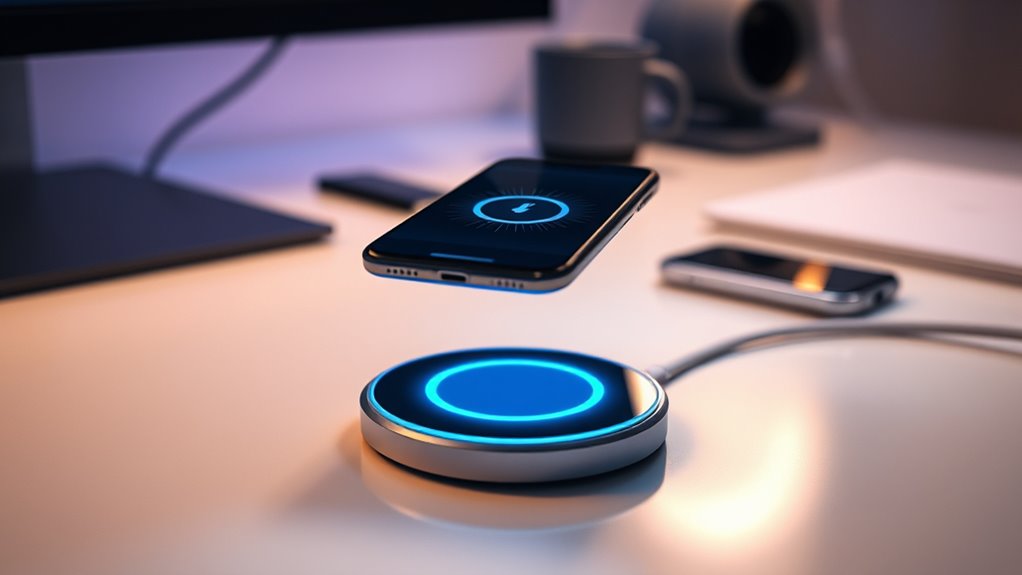

Wireless charging works by using electromagnetic resonance between coils to transfer power without direct contacts. When you place your device on a compatible pad, magnetic fields generate energy that your device captures and converts into electricity. It’s designed to be safe by following strict standards, with features like shielding and temperature controls. If you want to understand how these systems operate and stay safe, there’s more to explore below.
Open a free Amazon Business account
Business pricing, bulk buying and tax-exempt orders.
As an affiliate, we earn on qualifying purchases.
Key Takeaways
- Wireless charging uses electromagnetic resonance between aligned coils to transfer power without physical contact.
- It operates via inductive or resonant technology, enabling device charging over short to moderate distances.
- Safety measures like shielding, regulation, and compliance ensure electromagnetic emissions stay within safe limits.
- Proper alignment and tuning maximize efficiency and safety during wireless power transfer.
- It is widely used in smartphones, furniture, and vehicles, with ongoing innovations improving speed and range.
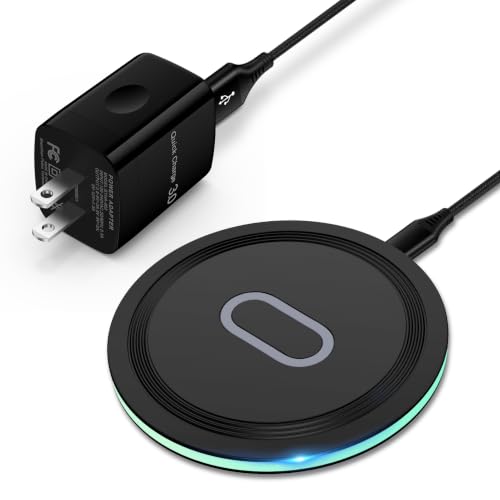
Wireless Charger Samsung Fast Charging Pad for Samsung Galaxy S26/S25 Ultra/S24 FE/S23 Ultra/S22/S21/Z Flip 8 7 6 5,15W Wireless Charging Station Charger Mat and QC Adapter for Google Pixel 10 9 8a
- Fast Wireless Charging: Up to 15W for Samsung devices
- Wide Compatibility: Supports various Samsung, Google, and Apple devices
- Stable Power Supply: Includes QC 3.0 18W adapter
As an affiliate, we earn on qualifying purchases.
As an affiliate, we earn on qualifying purchases.
Principles Behind Wireless Power Transfer

Wireless power transfer works by using electromagnetic resonance to send energy between two coils that are tuned to the same frequency. When the transmitter coil is powered, it generates an oscillating electromagnetic field. If the receiver coil is tuned to the same resonant frequency, it captures this energy efficiently. The receiver coil then converts the electromagnetic field back into electrical current, which charges your device’s battery. No physical connection is needed, making the process seamless and convenient. The effectiveness of this transfer depends on how well the coils are aligned and their distance apart. When properly tuned and positioned, electromagnetic resonance allows for efficient power transfer over short distances, making wireless charging practical for everyday devices. Proper alignment is crucial for maximizing charging efficiency and safety.
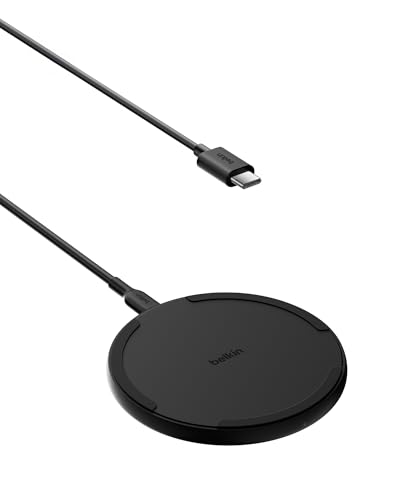
Belkin 15W Wireless Charging Pad with 5ft Cable, Qi Charger for iPhone 17
- Universal Wireless Charging: 15W for Samsung, 7.5W for iPhone
- Case Compatible Safe Charging: Works through cases up to 5mm thick
- Includes 5ft USB-C Cable: Power with included cable and LED indicator
As an affiliate, we earn on qualifying purchases.
As an affiliate, we earn on qualifying purchases.
Different Technologies in Wireless Charging

Different technologies enable wireless charging to work over various distances and with different levels of convenience. Inductive charging is the most common, using tightly coupled coils for quick power transfer over short distances—usually up to 20mm. Resonant charging extends this range, allowing devices to be charged from about 50mm away, thanks to coils tuned to the same resonant frequency. RF (radio frequency) charging offers the greatest spatial freedom, transmitting energy up to a meter away with transmitters and receivers optimized for larger distances. Each technology suits different needs: inductive for smartphones, resonant for larger surfaces or multiple devices, and RF for remote or embedded applications. These options give you flexibility based on your device and charging environment. Understanding the different wireless charging technologies helps in selecting the right solution for various situations.

USB Charger Hub ASOMETECH 100W 8-Port Desktop Multiple USB Charging Station
- High Power Output: 100W total power for multiple devices
- Supports 9 Devices Simultaneously: Includes fast charging and standard ports
- Fast Charging Protocols: Supports PD2.0, PD3.0, and Quick Charge 3.0
As an affiliate, we earn on qualifying purchases.
As an affiliate, we earn on qualifying purchases.
How Inductive and Resonant Charging Operate

Inductive and resonant charging work by transferring energy through electromagnetic fields generated between coils. In inductive charging, your device’s receiver coil is placed very close to the charging pad’s transmitter coil, which creates a magnetic field when alternating current flows through it. This magnetic field induces a current in your device’s coil, converting it back into electrical power for your battery. Resonant charging operates similarly but allows for a greater distance and wider surface coverage by tuning both coils to the same resonant frequency. The oscillating electromagnetic field efficiently transfers energy without physical contact. While inductive charging is suitable for short-range applications, resonant charging provides more flexibility, letting your device move within a limited area while still charging effectively. Resonant technology enhances convenience by enabling devices to charge over larger areas with less precise alignment.

MyMAX – Type C 1300mA Super-Fast Qi Wireless Charging Receiver and Adapter Compatible with Google Pixel, Samsung, LG, and Other USB-C Android Phones (Long Version, Plastic Toothpick)
- Fastest Qi Receiver: 5V/1300mA high current output
- High Charging Efficiency: Over 73% efficiency with larger copper coil
- Low Heat Emission: Prevents overheating during charging
As an affiliate, we earn on qualifying purchases.
As an affiliate, we earn on qualifying purchases.
Ensuring Safety in Wireless Charging Devices
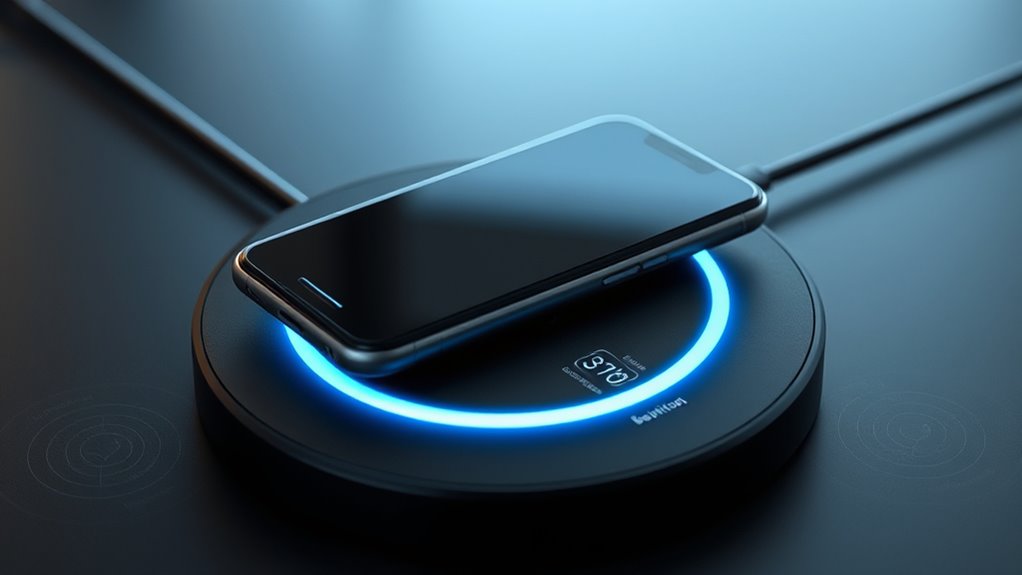
To guarantee safety in wireless charging devices, manufacturers design systems that minimize risks associated with electromagnetic fields and electrical contacts. They ensure electromagnetic emissions stay within international safety standards, preventing harmful exposure. Devices are built with shielding and filtering to reduce electromagnetic interference and protect nearby electronics. The charging pads and devices are engineered with temperature sensors to prevent overheating, which could damage batteries or cause safety hazards. Additionally, wireless chargers use precise alignment and power regulation to avoid excessive energy transfer. No exposed electrical contacts reduce shock risks, and compliance with safety regulations ensures safe operation during regular use. Moreover, incorporating electromagnetic compatibility measures helps prevent interference with other electronic devices, ensuring safe and reliable operation for users. Overall, these measures help maintain user safety while providing the convenience of wireless charging.
Practical Uses and Future Trends

Have you noticed wireless charging becoming more common in everyday devices? It’s already transforming how you power up your gadgets. Expect to see it integrated into more areas, like cars, public spaces, and even furniture. As technology advances, you’ll benefit from faster, more efficient charging methods and increased device compatibility. Wireless charging is also expanding into new sectors, including medical devices and industrial equipment, reducing clutter and improving convenience. Future trends include:
Wireless charging is transforming everyday devices with faster, more versatile, and seamless power options.
- Smart furniture with built-in charging stations
- Enhanced charging speeds and longer ranges
- Integration with IoT devices for seamless power management
- Wireless power transfer for electric vehicles
- Development of universal standards for broader compatibility
These innovations will make wireless charging more accessible, efficient, and versatile, changing how you interact with your devices daily. Additionally, advancements in wireless power transfer technology are paving the way for more flexible and widespread use across various industries.
Frequently Asked Questions
Can Wireless Charging Damage My Device’s Battery Over Time?
Wireless charging won’t damage your device’s battery over time if you use quality chargers and follow proper guidelines. Modern devices have built-in protections to prevent overcharging and overheating. Just avoid leaving your device on the charger for extended periods after it’s fully charged, and don’t use damaged or incompatible chargers. With correct use, wireless charging is safe and won’t negatively impact your battery’s longevity.
Are There Risks of Electromagnetic Interference With Other Electronic Devices?
Yes, there are some risks of electromagnetic interference with other electronic devices. You might notice disruptions in nearby gadgets like pacemakers, hearing aids, or Wi-Fi signals if the wireless charger isn’t properly designed or positioned. To stay safe, always use certified chargers, keep devices at an appropriate distance, and follow manufacturer guidelines. By taking these precautions, you can enjoy the convenience of wireless charging without compromising your device or others around you.
How Do I Optimize Alignment for Faster Charging?
To optimize alignment for faster wireless charging, make certain your device’s receiver coil lines up directly with the charger’s transmitter coil. Keep your device centered on the charging pad and avoid shifting it during charging. Remove any metal objects or cases that could interfere. Maintaining close proximity and proper positioning ensures efficient energy transfer, reducing charging time and improving overall performance.
Is Wireless Charging Safe for Children and Pets?
Think of wireless charging like a gentle, invisible river flowing safely around your children and pets. The electromagnetic fields are low power, much like a soft breeze, so there’s little risk of harm. Devices and chargers follow strict safety standards, ensuring no harmful radiation or overheating. As long as you keep devices away from direct contact with little ones or pets during charging, it’s a safe, hassle-free way to power up your gadgets.
Will Wireless Charging Work Through Thick or Unusual Materials?
Wireless charging generally won’t work through thick or unusual materials. These materials can block or weaken the electromagnetic field needed for energy transfer, especially if they’re dense, metal, or highly insulating. You should keep your device close to the charger, with minimal barriers. Thick cases or unusual objects can reduce efficiency or prevent charging entirely, so make sure your device stays aligned and free of obstructions for maximum results.
Conclusion
Wireless charging is transforming how you power your devices, offering convenience and flexibility. With over 200 million wireless chargers sold worldwide by 2023, the technology’s popularity is skyrocketing. Rest assured, safety standards are strict, making it a secure option for everyday use. As this technology advances, expect even faster, more efficient charging solutions integrated into your daily life, making charging effortless and seamless without the hassle of cords.
College move-in / dorm season Picks
dorm essentials
As an affiliate, we earn on qualifying purchases.