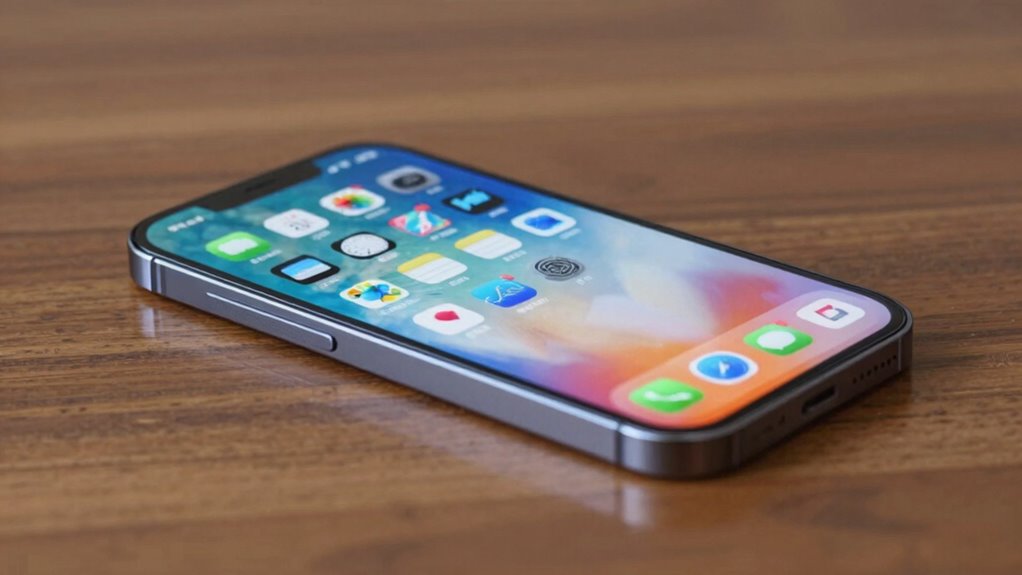

A smartphone feels fast in daily use when its hardware, like a powerful processor and high-speed storage, work together smoothly. Optimized software and regular updates keep it responsive, while enough RAM helps with multitasking. Efficient management of background processes and a clutter-free environment also play a role. When these elements align, your device responds quickly to your actions. Keep exploring to discover more ways to boost your phone’s speed and performance.
Key Takeaways
- Fast app launch times depend on high-speed storage and efficient software optimization.
- A powerful processor and optimized hardware-software integration enhance responsiveness.
- Adequate RAM allows smooth multitasking without lag.
- Regular software updates maintain system efficiency and speed.
- A clutter-free device with well-managed background processes ensures quick performance.
In today’s fast-paced world, a smartphone’s speed can make or break your daily experience. When your device responds quickly, you can seamlessly switch between apps, get tasks done faster, and stay connected without frustration. But what truly makes a smartphone feel fast? It all comes down to several key factors—starting with app launch times and multitasking efficiency. If your apps open instantly and you can juggle multiple tasks smoothly, your phone feels swift and responsive. Conversely, if there’s lag or delays, it drags down your overall experience, making even simple actions feel sluggish.
App launch times are crucial because they set the tone for how your device performs in real-world use. When you tap an app, you want it to open immediately, not after a noticeable wait. Faster app launch times often mean that the device’s processor, storage, and software are optimized. A powerful processor handles tasks more efficiently, reducing the time it takes for apps to load. Faster storage, like SSDs or high-speed flash memory, ensures that data retrieval is quick, minimizing delays when opening apps or switching between them. Software optimization also plays a vital role; well-designed, lightweight operating systems and apps that are optimized for your device hardware contribute significantly to speed. Additionally, hardware-software integration ensures smooth communication between components, further enhancing responsiveness. Proper software updates also help maintain and improve overall device speed over time. Maintaining a clutter-free storage environment can also prevent unnecessary slowdowns, ensuring your device remains optimized for speed.
Multitasking efficiency is another vital aspect of a fast-feeling smartphone. When you can switch effortlessly between multiple apps without experiencing lag or crashes, it creates a sense of fluidity. This is supported by ample RAM, which allows your device to hold multiple apps open simultaneously without slowing down. The way your device manages background processes also impacts multitasking; better resource management means your apps stay responsive even when you’re running several at once. Additionally, features like split-screen mode or quick app switching enhance multitasking capabilities, making your device feel quicker because you spend less time waiting for things to load or refresh. Efficient background process management and efficient resource allocation further contribute to this responsiveness.

SSK 128GB Dual USB C Flash Drive,2-in-1 Type C+ USB A 3.2 Gen2 Solid State Thumb Drive,Speed Up to 550MB/s Memory Stick Data Storage for iPhone 15,Thunderbolt 3, Android Phone,Tablet,Laptop
Dual Drive USB C + USB A: Equipped with an USB-C port and USB-A 3.2 port,the Dual USB…
As an affiliate, we earn on qualifying purchases.
As an affiliate, we earn on qualifying purchases.
Frequently Asked Questions
How Does App Optimization Affect Perceived Smartphone Speed?
App optimization directly impacts your perceived smartphone speed by ensuring smooth interactions and quick load times, enhancing your overall user experience. When apps are well-optimized, they require less of your hardware’s resources, making your device feel faster and more responsive. Efficient app performance reduces lag and delays, allowing your hardware to work more effectively. This seamless performance boosts your satisfaction, making your smartphone feel quicker during daily tasks and multitasking.
Can Software Updates Improve a Slow Phone’s Responsiveness?
Think of your phone as a garden. Software updates are like tending to it, pruning overgrown branches, and nourishing the soil. They can boost responsiveness by fixing bugs and optimizing performance. But, if your battery health is poor or your user habits involve constant multitasking, the garden still struggles to flourish. Regular updates, combined with good habits, help keep your phone responsive and feeling fast.
What Role Does Background App Management Play in Speed?
Background app management plays a vital role in your phone’s speed by freeing up RAM and reducing processor load. When you close unnecessary apps, your device can focus on active tasks, improving responsiveness. Keep an eye on battery health, as poor battery performance can slow processes, and a high screen refresh rate demands more power, which can affect speed. Managing these factors guarantees your phone feels faster and more responsive in daily use.
How Does Storage Type Influence Daily Performance?
Your smartphone’s storage type greatly influences daily performance because storage technology determines how quickly data retrieves. Faster storage options like UFS or NVMe SSDs enable quicker data retrieval, making apps launch faster and multitasking smoother. Conversely, slower storage, like eMMC, causes delays and sluggish responses. Upgrading to a device with advanced storage technology guarantees you experience snappy performance, especially when opening apps or switching between tasks.
Does Network Connectivity Impact Overall Smartphone Responsiveness?
Network connectivity greatly impacts your smartphone’s responsiveness. When network latency is low, your device responds quickly to actions like loading webpages or streaming videos. Strong signal strength guarantees stable connections, reducing delays and buffering. Conversely, poor signal or high latency causes lag, slow downloads, and delays in app responses. Staying in areas with good coverage and using fast networks like 4G or 5G keeps your phone feeling snappy and responsive throughout the day.

SHOWPIN Precision Computer Screwdriver Kit: 122PCS Laptop Screwdriver Sets
122 in 1 Precision Screwdriver Set: This precision screwdriver set contains 101 precision bits and 21 auxiliary tools—screwdriver…
As an affiliate, we earn on qualifying purchases.
As an affiliate, we earn on qualifying purchases.
Conclusion
Ultimately, a smartphone that feels fast in daily use is like a well-choreographed dance — every step seamless and in sync. When your device responds quickly, multitasks smoothly, and keeps up with your pace, it becomes a natural extension of you. Remember, it’s not just about raw power but how effortlessly it moves through your day. A fast smartphone is your reliable partner, turning the chaos of constant notifications into a harmonious rhythm.

Samsung Galaxy S26 Ultra, Unlocked Android Smartphone, 512GB, Black
PRIVACY DISPLAY: Automatically hide your screen from those beside you. The built-in privacy display can be preset¹ to…
As an affiliate, we earn on qualifying purchases.
As an affiliate, we earn on qualifying purchases.
![MixPad Free Multitrack Recording Studio and Music Mixing Software [Download]](https://m.media-amazon.com/images/I/71ltIxIuz1L._SL500_.jpg)
MixPad Free Multitrack Recording Studio and Music Mixing Software [Download]
Create a mix using audio, music and voice tracks and recordings.
As an affiliate, we earn on qualifying purchases.
As an affiliate, we earn on qualifying purchases.