
TL;DR

Get the latest gadgets delivered free with Prime
- Fast, free delivery on millions of items
- Prime Video, Amazon Music and more included
- Member-only deals all year
A report by Bosscher describes using a $10 OpenStick as a quiet, low-power Debian home server with 512 MB of RAM and four ARM cores. The listed services include DNS filtering, monitoring, RSS, bookmarks and a Telegram-connected AI agent; the account is a personal setup, not an independent performance test.
In a personal report, Bosscher describes running a collection of self-hosted services on a $10 OpenStick, a small, passively cooled device with 512 MB of RAM and four 1 GHz ARM Cortex-A53 cores. The setup uses Debian and low-memory tools for DNS filtering, service monitoring, RSS reading and other tasks, showing how a very limited device can serve as an entry-level homelab rather than a general-purpose server.
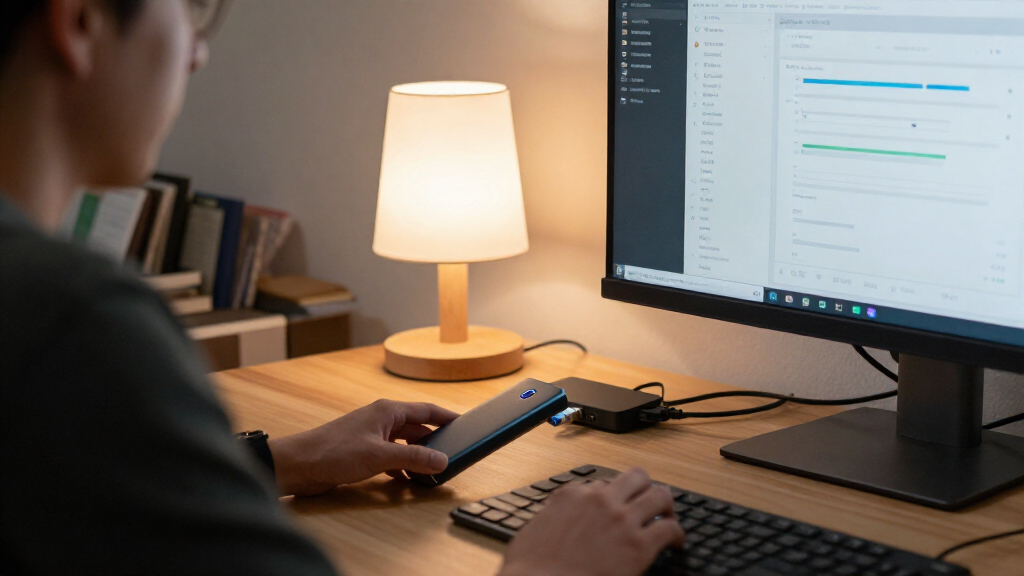
Bosscher says the OpenStick cost $10 including shipping and has 4 GB of eMMC storage, Wi-Fi, a 4G modem and GPS. The author reports about 450 MB of usable memory and describes the device as silent because it is passively cooled. After an installation process the author calls involved, the stick runs Debian, with systemd for services and scheduling and Podman for containers.
The software list is selected around low memory use. Bosscher reports that an AdGuard Home setup uses about 40 MB of RAM, while Beszel, used for resource graphs and alerts, uses about 20 MB across its agent and server. Other listed tools include Gatus for checking whether services respond, Dozzle for viewing container logs, Fusion for RSS feeds and Shiori for bookmarks and saved web pages. The source gives approximate memory figures for several applications; they are the author’s reported figures, not standardized benchmarks.
Bosscher also runs Zeroclaw, an AI agent connected through Telegram, and says it uses about 3 MB of memory while idle. The author gave it access to the OpenStick itself, describing that access as effectively a root shell, but says it cannot access anything beyond that device. A Cloudflare Tunnel is used to make services reachable without exposing ports directly, according to the report. The source does not provide a full configuration, measured power draw or independent verification of the setup.
Small Hardware, Useful Services
The report offers a practical example of how modest hardware can handle a narrow set of always-on home services without the noise or resource demands of a larger server. DNS filtering, uptime checks and remote status queries are tasks that can remain useful even when a device has little memory, provided the software is chosen and configured to fit.
For readers considering self-hosting, the account also highlights trade-offs: the hardware is inexpensive, but installation takes effort and its 512 MB memory limit constrains what can run together. Services hosted at home may also depend on network access and the security of remote connections. Bosscher presents the arrangement as a personal project and does not claim it replaces a more capable server for heavier workloads.
Products Worth Considering

Samsung Galaxy Tab A11+ 8GB RAM, 256GB Storage, Gray

Logitech MX Ergo S Advanced Wireless Trackball Mouse USB-C – Graphite

Bose QuietComfort True Wireless Earbuds with Active Noise Cancellation, Bluetooth 5.3, USB-C Charging, IPX4, Black
As an affiliate, we earn on qualifying purchases.
From Novelty Stick to Debian Server
Bosscher says the purchase began as a novelty: a $10 device that seemed interesting despite specifications the author acknowledges are limited. The value, in the author’s account, comes from running Debian and selecting small services rather than expecting desktop-class performance. The report contrasts Zeroclaw with the author’s earlier experience running OpenClaw on a Kubernetes cluster, which Bosscher says used more than 1 GB of memory and caused update and workflow problems.
The software choices also reflect a preference for compact alternatives to larger monitoring stacks. Bosscher says Grafana and related tools felt excessive for this setup, while Beszel provided a simpler way to view system activity and receive alerts. The author notes that Dozzle overlaps with Beszel in some areas, but is preferable for inspecting Podman logs. These are the author’s judgments based on this particular setup, not comparisons from controlled tests.
“For 10 dollars you basically get a home server with minimal power usage and zero noise!”
— Bosscher
Limits of the Reported Setup
The source is a first-person account, and it does not identify the OpenStick’s exact model or provide a publication date in the supplied material. It also does not state how many services were running simultaneously during the reported memory observations, provide sustained-load results, or measure power use. The reported 60% of DNS queries blocked refers to Bosscher’s own AdGuard Home use after adding blocklists; the report does not give the measurement period or a comparison baseline.
Security and reliability details are also limited. Bosscher acknowledges that DNS filtering cannot block every unwanted request and describes Cloudflare Tunnel as a way to expose services without opening ports, while mentioning a privacy trade-off. The material does not document a full threat model, backup plan, or independent assessment of the tunnel and agent configuration.
Further Changes to the Setup
Bosscher says a future Zeroclaw version may add richer message support for Telegram, with the author’s proposed change available to track through a pull request. The source does not give a release date or confirm that the change has shipped. The author also says Dozzle could be removed if memory becomes tight, reflecting the ongoing need to balance convenience against the device’s limited capacity.
No broader product announcement or follow-up test is described in the report. The next useful evidence would be measured power consumption, memory use under simultaneous workloads, and details on how the services are secured and backed up. Until then, the OpenStick’s capabilities are best understood as Bosscher’s experience with one configuration, rather than a guarantee of results for every unit or installation.
Key Questions
What is an OpenStick in this report?
It is a small computer Bosscher says cost $10 including shipping. The reported specifications include 512 MB of RAM, four 1 GHz ARM Cortex-A53 cores and 4 GB of eMMC storage.
Which services does Bosscher run on it?
The report lists tools for DNS filtering, monitoring, service checks, container logs, RSS feeds, bookmarks and remote access, along with the Zeroclaw AI agent. Examples include AdGuard Home, Beszel, Gatus, Dozzle, Fusion and Shiori.
Can the device run demanding workloads?
The source does not test demanding workloads. Its 512 MB of RAM and 4 GB of storage make capacity a clear constraint, and Bosscher presents it as a device for lightweight home services rather than as a high-performance server.
How does the AI agent access the homelab?
Bosscher says Zeroclaw communicates through Telegram and has access to the OpenStick itself, described as effectively a root shell. The author says the agent has no access beyond that device; the report does not provide a full security review.
Are the memory and blocked-query figures independent measurements?
No independent testing is included. The application memory estimates and the reported 60% of DNS queries blocked are observations from Bosscher’s setup; the source does not specify a measurement period or comparison baseline for the query figure.
Source: blog.bosscher.ch