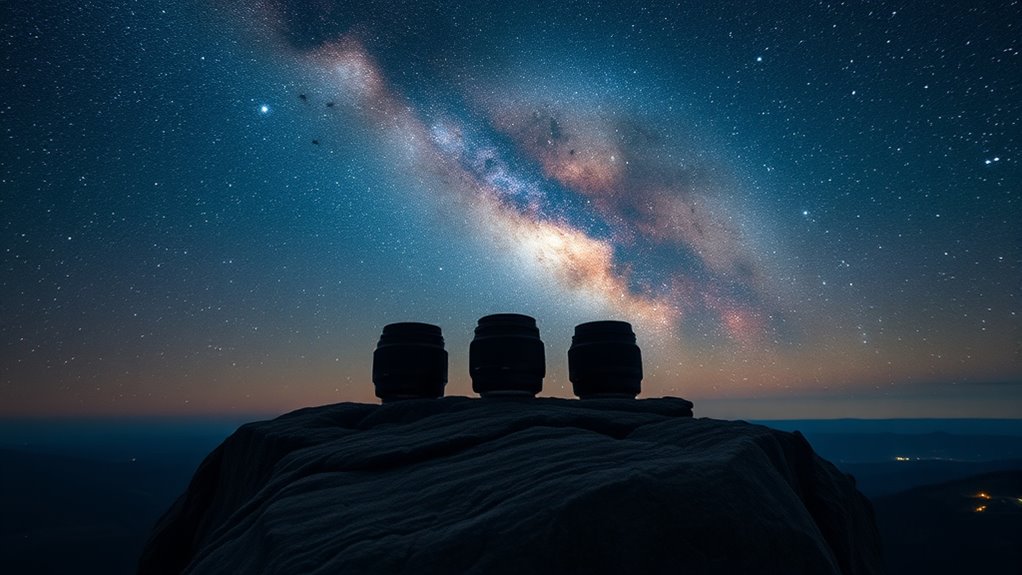

When I set out to capture the stunning Milky Way, I’ve found that the VILTROX 75mm f/1.2 EF PRO lens offers incredible low-light performance. For a lighter option, the Sony E 16mm F2.8 is compact and perfect for broad vistas. If I want an ultra-wide perspective, the AstrHori 6mm F2.8 Circular Fisheye lens delivers a unique view. These lenses make a significant difference in the night sky’s beauty, and there’s more to explore about optimizing your astrophotography gear.
Key Takeaways
- The VILTROX 75mm f/1.2 EF PRO offers a fast f/1.2 aperture, ideal for capturing faint stars and Milky Way details.
- The Sony E 16mm F2.8 is compact and lightweight, perfect for expansive night sky scenes with its short focus distance.
- The AstrHori 6mm F2.8 provides a 220° ultra-wide field and large F2.8 aperture, great for creative astrophotography projects.
- Lenses with larger apertures (f/1.4, f/2.8) enable shorter exposures, reducing star trails and improving image quality in low light.
- Manual focus lenses allow precise control in low-light conditions, essential for achieving sharp images of the night sky.
VILTROX 75mm f/1.2 EF PRO Lens for Sony E-Mount

If you’re a passionate astrophotographer looking to capture the stunning beauty of the Milky Way, the VILTROX 75mm f/1.2 EF PRO lens for Sony E-mount is an excellent choice. This lens boasts a fast f/1.2 aperture, perfect for low-light conditions, allowing me to shoot with higher shutter speeds and lower ISO settings. With 16 lens elements, including high-refractive index lenses, I’ve seen sharp, detailed images even at maximum aperture. The fast autofocus system is a game-changer, ensuring precise focus during those magical moments. Plus, the on-body switch lets me switch quickly between manual and autofocus modes.
Best For: Astrophotographers and videographers seeking a high-performance lens for low-light shooting conditions.
Pros:
- Fast f/1.2 aperture enables excellent low-light performance and creative depth of field control.
- Sharp, detailed images due to advanced lens design with 16 elements, including high-refractive index lenses.
- Quick and precise autofocus with an on-body switch for easy toggling between manual and autofocus modes.
Cons:
- The lens may be heavier compared to other alternatives, affecting portability.
- Limited to Sony E-mount cameras, which may not be suitable for users with other camera systems.
- Higher price point may not fit within all budgets.
Sony E 16mm F2.8 Wide-Angle Prime Lens (SEL16F28)
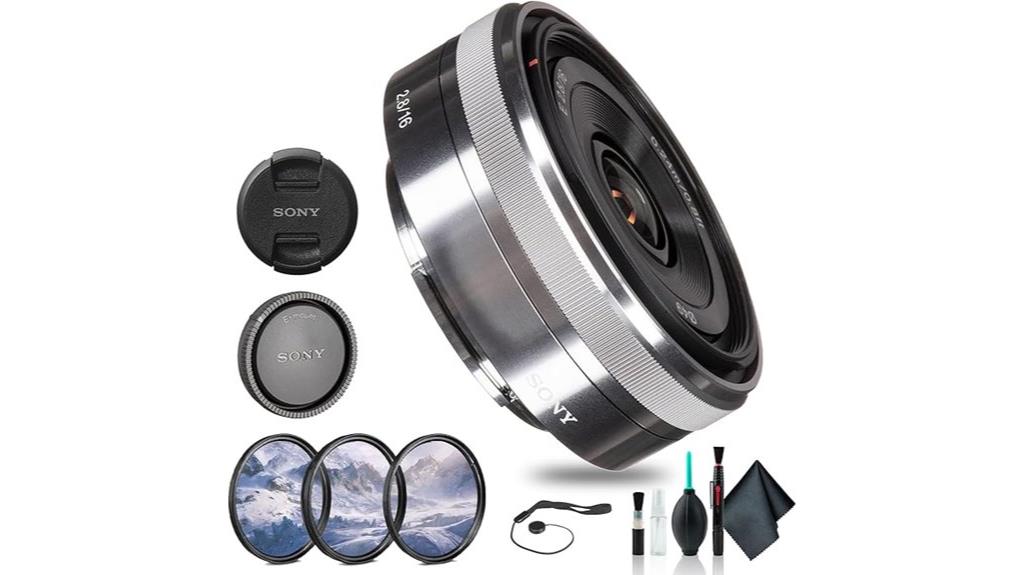
The Sony E 16mm F2.8 Wide-Angle Prime Lens (SEL16F28) is perfect for photographers seeking a compact, lightweight solution for capturing stunning Milky Way images. Weighing just 67 grams and measuring only 22.5 mm, it’s incredibly portable for travel and everyday photography. The high-quality optics ensure sharpness and rich colors, while the short minimum focus distance of 0.24 meters allows for creative close-ups. Plus, it’s compatible with optional conversion lenses, expanding your creative options. With its responsive autofocus, I find it effortlessly handles both stills and videos, making it an essential tool for capturing the night sky.
Best For: Photographers looking for a lightweight and compact wide-angle lens that excels in travel, landscape, and astrophotography.
Pros:
- High-quality optics provide sharpness, contrast, and natural color rendering.
- Extremely lightweight and portable, making it ideal for travel and everyday use.
- Compatible with optional conversion lenses for enhanced creative possibilities.
Cons:
- Limited zoom range as a prime lens may not suit all shooting styles.
- Some users may find the maximum aperture of F2.8 limiting in low-light situations.
- The pancake design may feel less robust compared to larger, more traditional lenses.
AstrHori 6mm F2.8 Circular Fisheye Lens for Nikon Z Mount
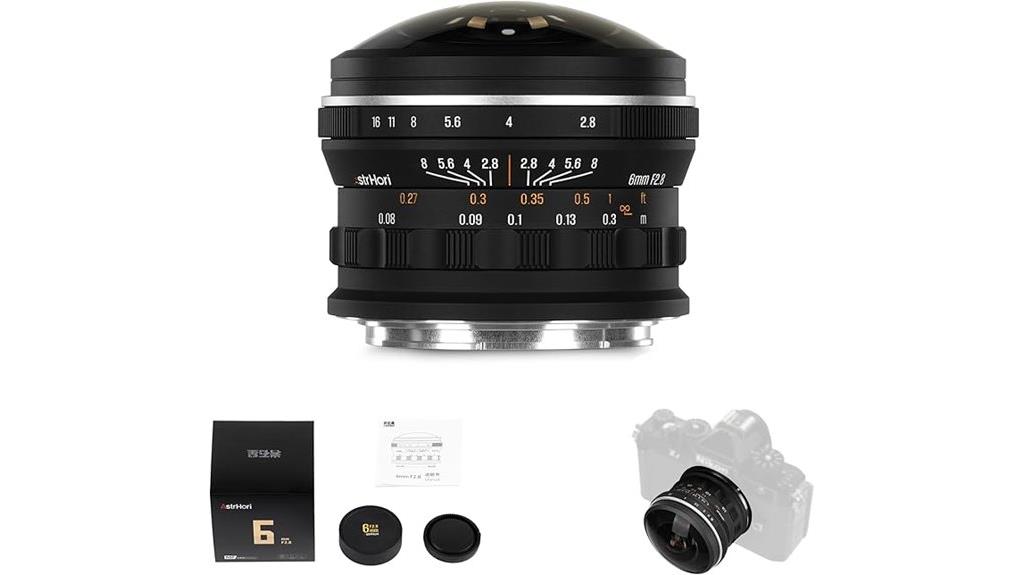
For those seeking an ultra-wide perspective in Milky Way photography, the AstrHori 6mm F2.8 Circular Fisheye Lens for Nikon Z Mount stands out with its impressive 220° field of view. This lens captures complete circular images, making it perfect for stunning landscapes and creative portraits. With a large F2.8 aperture, it excels in low-light conditions, ideal for night skies. Its durable, compact design makes it travel-ready, while manual focus gives me precise control over my shots. Whether I’m shooting for artistic projects or VR content, this lens delivers unique perspectives that truly enhance my storytelling capabilities.
Best For: Photographers and videographers looking to achieve unique, ultra-wide perspectives in landscapes, astrophotography, and creative projects.
Pros:
- 220° ultra-wide field of view provides immersive visuals and complete circular images.
- Large F2.8 aperture excels in low-light conditions, making it ideal for night photography.
- Compact and durable design ensures portability for outdoor adventures and travel photography.
Cons:
- Manual focus may require a learning curve for users accustomed to autofocus lenses.
- Limited compatibility as it is specifically designed for Nikon Z mount cameras.
- Potential for edge distortion may not be suitable for all types of photography, depending on creative intent.
Factors to Consider When Choosing Wide-Field Lenses for Milky Way Photography
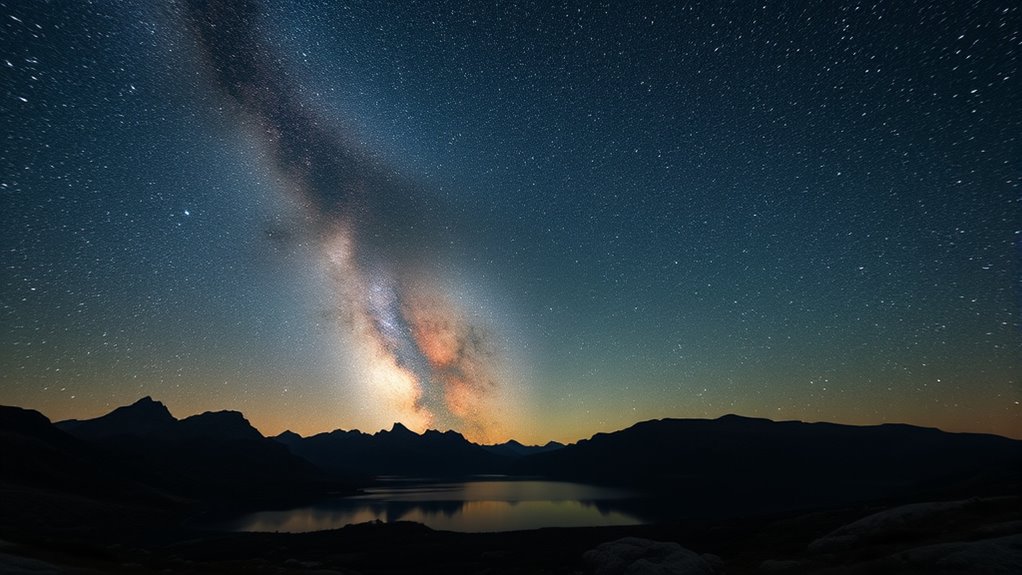
When I choose a wide-field lens for Milky Way photography, there are several key factors I consider. The aperture size can make a huge difference in capturing those faint stars, while focal length affects the composition. I also pay attention to lens distortion and whether I prefer autofocus or manual focus for the best results.
Aperture Size Importance
While capturing the stunning beauty of the Milky Way, choosing a lens with the right aperture size is essential. A larger aperture, like f/1.4 or f/2.8, lets in more light, which is vital for revealing faint stars in low-light conditions. This advantage also means I can use shorter exposure times, reducing the risk of star trails caused by Earth’s rotation. On the other hand, lenses with higher f-numbers, such as f/4, limit light entry and require longer exposures, increasing the chance of star movement. For Milky Way photography, a fast aperture enhances brightness and detail, making it especially important in dim environments or when I want to minimize post-processing. Choosing wisely here can truly elevate my astrophotography experience.
Focal Length Considerations
Choosing the right focal length is essential for capturing the Milky Way’s beauty in all its glory. When I’m out shooting, I typically reach for wide-field lenses between 14mm and 24mm. Shorter focal lengths, like 14mm or 16mm, let me fit more of the galaxy into the frame, perfect for expansive night sky scenes. However, if I want a more detailed shot, I might opt for a 24mm lens, which offers a zoomed-in perspective but requires careful composition. Remember, the focal length I choose directly impacts my scene’s scale. So, whether I’m aiming for a sweeping sky or a tighter focus on the stars, picking the right focal length is key to my Milky Way photography.
Lens Distortion Effects
Although wide-field lenses are fantastic for capturing the Milky Way, they can also introduce lens distortion that affects your images. I’ve noticed that ultra-wide-angle lenses often create considerable barrel distortion, especially at the edges of the frame. This distortion can curve stars and celestial objects, making them look elongated or misshapen. To preserve the natural appearance of star fields, I recommend choosing lenses with aspherical elements and specialized optical designs, as they minimize distortion effectively. If you do encounter distortion, correcting it in post-processing can markedly enhance the sharpness of your Milky Way panorama. Understanding a lens’s distortion characteristics is essential for selecting the right one to achieve accurate and aesthetically pleasing shots of our galaxy.
Autofocus vs. Manual Focus
Lens distortion isn’t the only factor to contemplate when selecting a wide-field lens for Milky Way photography; autofocus and manual focus options play a significant role too. I’ve found that manual focus allows for precise adjustments in the low-light conditions typical of astrophotography, where autofocus often struggles. Autofocus systems can hunt or fail to lock onto distant stars, making manual focus a more reliable choice. By setting and locking focus at infinity, I ensure consistent sharpness across multiple shots. Since night sky scenes are static, I don’t need autofocus with tracking. Many astrophotographers, myself included, prefer manual focus for the control it offers, allowing for fine-tuning without the risk of incorrect focus points or autofocus hunting.
Build Quality and Portability
When I head out for Milky Way photography, the build quality and portability of my wide-field lens are vital. A durable build helps guarantee my lens withstands harsh outdoor conditions and frequent handling during those late-night shoots. I prefer lenses made from metal or high-quality plastic, as they offer stability and longevity in rugged environments. Compact and lightweight designs make it much easier to carry my gear to remote locations. Plus, smaller form factors fit nicely in my travel kit, reducing bulk. Robust focusing mechanisms and sealed components are also essential, as they help maintain performance in unpredictable weather. Overall, having a lens that’s both sturdy and portable makes a world of difference in my astrophotography adventures.
Optical Performance Evaluations
To capture the breathtaking beauty of the Milky Way, I focus on the optical performance of my wide-field lenses, considering several critical factors. I always look for lenses with wide apertures, ideally f/2.8 or larger, to gather enough light in dark conditions. Sharpness across the frame, especially at the edges, is essential for capturing detailed star fields without distortion. Low chromatic aberration is vital for accurate star colors and undistorted views. I prefer high-quality optics with aspherical elements to reduce spherical aberrations, ensuring clearer images. Finally, I pay attention to reduced flare and ghosting, as these factors help maintain contrast and clarity against bright celestial elements, ultimately enhancing my Milky Way photography experience.
Frequently Asked Questions
What Aperture Size Is Best for Milky Way Photography?
I’ve found that an aperture of f/2.8 or wider works best for Milky Way photography. This larger aperture lets in more light, which is essential for capturing the faint details of the stars and the galaxy. If you can go even wider, like f/1.8 or f/1.4, that’s even better! It helps reduce noise and enhances the overall clarity of the night sky. Trust me, you’ll see the difference in your shots!
How Does Lens Distortion Affect Night Sky Images?
Lens distortion can really mess with your night sky images, but don’t let that scare you off! I’ve noticed that barrel distortion can cause stars near the edges to warp, creating a wavy effect. This can distract from the beauty of the Milky Way. However, using software to correct distortion helps maintain the integrity of your shots. So, embrace the challenge—your images can still shine bright with a little extra work!
Can I Use a Telephoto Lens for Milky Way Shots?
Yes, you can use a telephoto lens for Milky Way shots, but it’s not ideal. I’ve tried it, and while you can zoom in on specific areas of the sky, you’ll miss out on the vastness of the scene. Telephoto lenses can capture details, but they often require longer exposures, risking star trails. For the best results, I recommend wide-angle lenses that let you take in the full beauty of the night sky.
What Is the Significance of Focal Length in Astrophotography?
Focal length in astrophotography is like the lens of a telescope—it determines how much of the night sky you can capture. Shorter focal lengths let me sweep across vast scenes, perfect for wide shots of the Milky Way. Longer focal lengths zoom in on specific celestial objects, but they can limit my field of view. I’ve learned that choosing the right focal length shapes my entire composition and enhances the overall impact of my images.
How Do I Prevent Star Trails in Long Exposures?
To prevent star trails in long exposures, I keep my shutter speed short. I usually stick to the 500 rule—dividing 500 by my lens’ focal length gives me the maximum exposure time in seconds. I also use a sturdy tripod and remote shutter release to minimize camera shake. If I want to go longer, I’ll try stacking multiple shorter exposures in post-processing to achieve the same effect without trails.
Conclusion
In summary, each of these lenses offers a unique lens through which to capture the breathtaking beauty of the Milky Way. Whether you choose the VILTROX for its creamy bokeh, the compact Sony for its portability, or the expansive AstrHori for its creative perspective, you can’t go wrong. Just remember, the right lens can turn a simple night sky into a canvas of stars, painting your photography with the magic of the cosmos. Happy shooting!