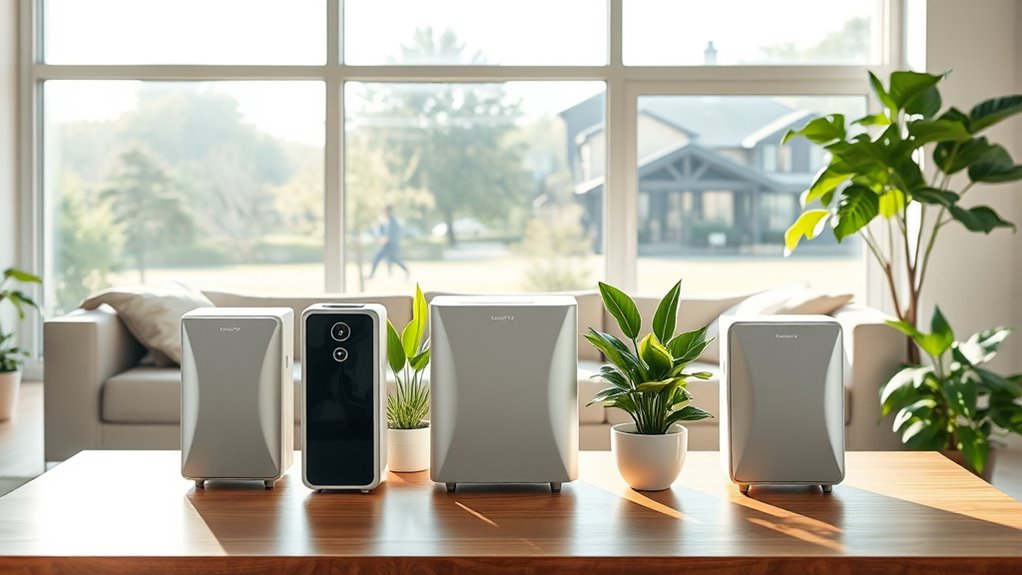

If you’re struggling with allergies, whole-house air purifiers can be a game changer. Models like the DBFIT HEPA AP300 and LEVOIT Core 600S-P efficiently tackle allergens in large spaces. WINIX purifiers are great for odor control, while LEVOIT’s designs ensure thorough coverage. I’ve discovered that selecting the right unit can drastically improve air quality. Want to find out which air purifiers are best-suited for your home? Let’s explore more about their features and benefits.
Key Takeaways
- Whole-house air purifiers like LEVOIT Core 600S-P cover large areas, efficiently purifying spaces up to 3,000 sq. ft. in minutes.
- True HEPA filters capture 99.97% of allergens, while activated carbon layers eliminate odors and VOCs for cleaner air.
- Smart features such as app control and real-time air quality sensors optimize performance and convenience in managing indoor air quality.
- Regular maintenance, including filter replacements every 3-6 months, is essential for sustained efficiency and allergen removal.
- Noise levels below 30 dB and sleep modes ensure a peaceful environment, making air purifiers suitable for bedrooms and resting areas.
DBFIT HEPA Double-Sided Air Purifier for Large Rooms (AP300)

If you’re someone who suffers from allergies, the DBFIT HEPA Double-Sided Air Purifier (AP300) could be your best ally. This purifier covers up to 3,000 sq. ft., revitalizing 533 sq. ft. in just 10 minutes. Its double-sided design accelerates purification, making it perfect for my bedroom or office, especially with pets around. The dual-layer filters capture 99.97% of allergens, and the activated carbon filter eliminates odors. I love the whisper-quiet operation during sleep mode, ensuring my rest isn’t disturbed. Plus, its modern look and essential oil diffuser add a pleasant touch to my space. It’s a game changer for my air quality!
Best For: Those suffering from allergies or living in environments with pets, looking for an efficient and quiet air purification solution.
Pros:
- Double-sided air intake accelerates purification, effectively cleaning larger spaces quickly.
- Whisper-quiet operation in sleep mode allows for undisturbed rest during the night.
- Modern design with optional essential oil diffuser enhances the ambiance of any room.
Cons:
- Filter replacements are necessary every 3-6 months, which can add to the overall cost.
- Initial investment may be higher compared to basic air purifiers.
- Large size may not be suitable for smaller rooms or limited spaces.
WINIX 5510 Air Purifier for Large Rooms

The WINIX 5510 Air Purifier is an excellent choice for anyone struggling with allergies in larger living spaces, as it effectively covers areas up to 1,881 square feet. I love how quickly it cleans the air—940 square feet in just 30 minutes! Its True HEPA filter captures 99.99% of allergens, while the washable pre-filter keeps maintenance simple. I appreciate the PlasmaWave technology, which neutralizes pollutants without harmful ozone. Plus, the app support lets me control it remotely. Overall, I’ve noticed a significant improvement in air quality, making it easier to breathe comfortably at home.
Best For: Those with allergies or respiratory issues looking for an effective air purification solution in large living spaces.
Pros:
- Equipped with a True HEPA filter that captures 99.99% of allergens, improving air quality significantly.
- Fast purification capabilities, cleaning large areas quickly (e.g., 940 sq ft in 30 minutes).
- Washable pre-filter and app support for convenient maintenance and remote control.
Cons:
- May be overkill for smaller rooms, where a less powerful purifier could suffice.
- Initial investment can be higher compared to basic air purifiers.
- Some users may find the app functionality unnecessary if they prefer manual controls.
WINIX 5520 Air Purifier for Large Rooms
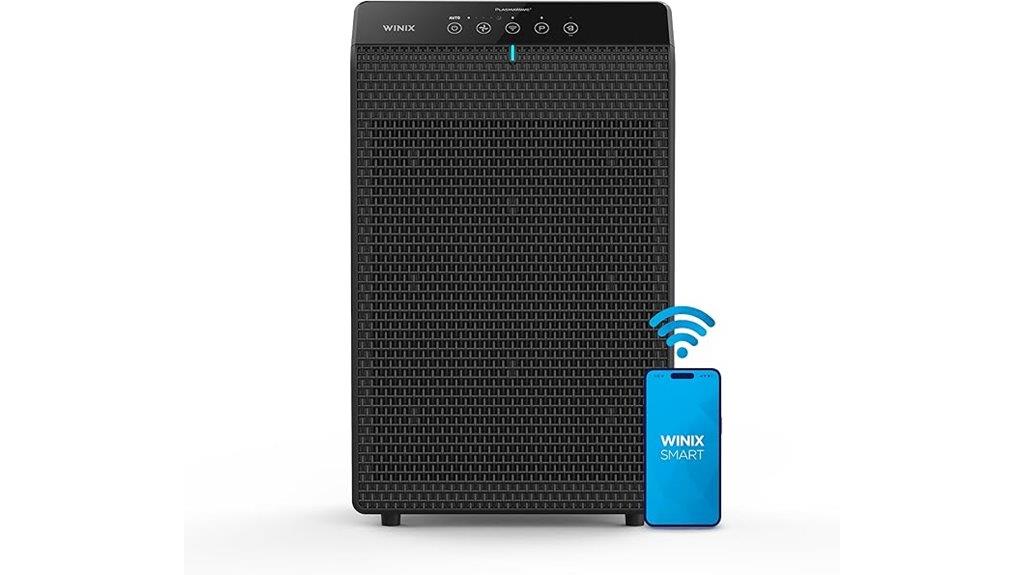
For anyone grappling with allergies, the WINIX 5520 Air Purifier offers an impressive solution, especially in larger living spaces. It effectively cleans areas up to 1,882 sq ft in just an hour, ensuring rapid purification when I need it most. The True HEPA filter captures 99.99% of allergens, while the advanced odor control carbon filter handles pesky household smells. I appreciate the air quality monitor that adjusts the settings automatically, optimizing performance and energy use. Plus, with washable filters, maintenance is a breeze. This purifier truly enhances my indoor air quality, making my home a healthier place to breathe.
Best For: Individuals or families dealing with allergies or respiratory issues, especially in larger living spaces.
Pros:
- Effective coverage for large areas up to 1,882 sq ft, ensuring rapid air purification.
- Advanced filtration system with True HEPA and carbon filters, capturing 99.99% of allergens and reducing odors.
- User-friendly design with washable filters, making maintenance easy and cost-effective.
Cons:
- Initial cost may be higher compared to basic air purifiers.
- Size may be larger than typical purifiers, requiring more space in a room.
- Noise level could be noticeable on higher settings, potentially disruptive for light sleepers.
LEVOIT Air Purifier for Large Rooms (Core 600S-P)

Looking to improve your indoor air quality, especially in large spaces? The LEVOIT Air Purifier (Core 600S-P) is perfect for rooms up to 2,933 sq ft. With a CADR of 391 CFM, it cleans 606 sq ft every 12.4 minutes! Its 3-in-1 HEPA-grade filter captures 99.97% of allergens like pollen and pet dander. Plus, with features like Auto Mode and QuietKEAP Technology, it adjusts fan speeds automatically while remaining whisper-quiet. You can control it via the VeSync app or with voice commands, making it convenient for any lifestyle. Trust me; your air quality will thank you!
Best For: Those seeking an effective air purification solution for large spaces up to 2,933 sq ft, such as open floor plans or high-ceiling rooms.
Pros:
- Powerful purification: Cleans 606 sq ft every 12.4 minutes with a CADR of 391 CFM, ensuring quick air quality improvement.
- Smart features: Auto Mode adjusts fan speed based on real-time air quality, and the VeSync app allows for remote control and voice command capabilities.
- Whisper-quiet operation: QuietKEAP Technology maintains noise levels as low as 26dB, making it ideal for peaceful sleeping environments.
Cons:
- Requires genuine filters: Only Levoit filters (model LRF-C601-WUS) are compatible for optimal performance, limiting filter options.
- Higher upfront cost: The advanced features and large coverage area may come at a premium price compared to smaller purifiers.
- Size and weight: Its design for large spaces may make it less portable or suitable for smaller rooms.
LEVOIT Air Purifier for Home (Core300-P)
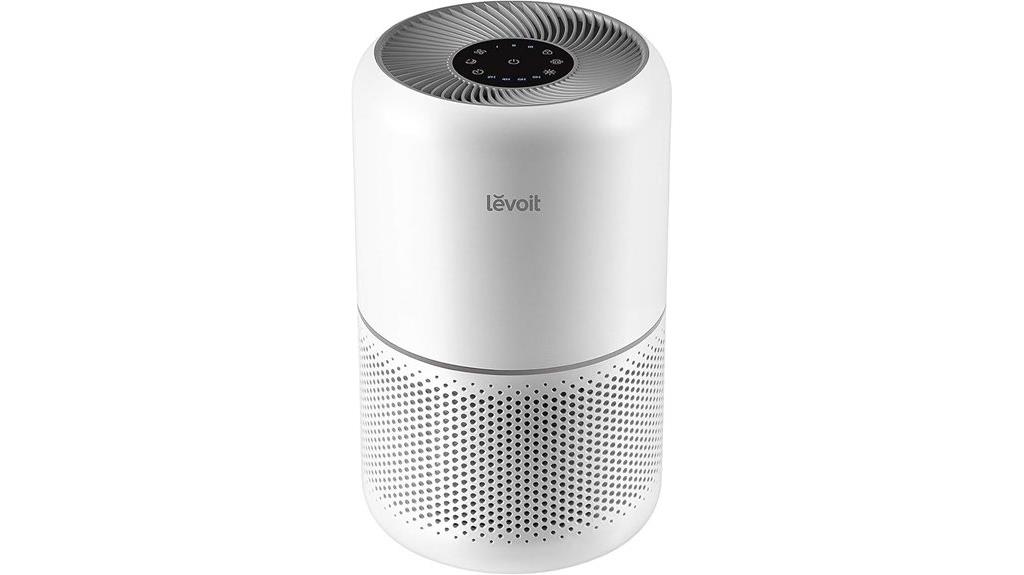
If you’re searching for an effective solution to alleviate allergy symptoms in your home, the LEVOIT Core 300-P Air Purifier could be the perfect fit. This compact unit covers up to 1,073 ft², making it ideal for bedrooms or offices. With a powerful 56W motor and impressive CADR ratings—143 CFM for smoke and 167 CFM for pollen—it ensures rapid air purification. The 3-in-1 HEPA-grade filter tackles dust, odors, and allergens, enhancing indoor air quality. Plus, its Sleep Mode operates quietly at night, allowing you to breathe easy while you rest. Trust me, this purifier is a game changer for allergy sufferers!
Best For: Allergy sufferers, pet owners, and anyone seeking cleaner air in their home or office.
Pros:
- Powerful purification: High CADR ratings for smoke, dust, and pollen ensure rapid air cleaning.
- Compact design: Fits easily in various spaces without taking up much room.
- Quiet operation: Sleep Mode allows for peaceful use during the night.
Cons:
- Filter replacement required: Genuine Levoit filters must be purchased separately for optimal performance.
- Limited coverage: Best for rooms up to 1,073 ft²; may not be sufficient for very large spaces.
- No smart features: Lacks advanced technology like app control or air quality sensors.
Factors to Consider When Choosing Whole-House Air Purifiers for Allergies
When I’m choosing a whole-house air purifier for allergies, I consider several key factors. Room size coverage and filtration system efficiency are vital for effective performance, along with noise levels that won’t disrupt my daily life. I also think about smart features and the ease of maintenance, including how often I’ll need to replace filters.
Room Size Coverage
Choosing the right whole-house air purifier for allergies involves understanding room size coverage, as it’s essential that the device can effectively manage the air quality in your space. Make sure the purifier’s maximum coverage area matches or exceeds the size of your home or the specific rooms you want to purify. Larger areas typically need a higher Clean Air Delivery Rate (CADR) for efficient air cleaning. If you have an open floor plan, look for units with strong airflow capacity to circulate air effectively. Some systems integrate with your HVAC, but they must be rated for your total square footage. Ultimately, consider ceiling height; higher ceilings mean more air volume that needs to be purified.
Filtration System Efficiency
Understanding filtration system efficiency is essential for effectively combating allergies in your home. I always look for high-efficiency filters, like HEPA, since they capture 99.97% of airborne particles as small as 0.3 microns, including pollen, dust, and pet dander. Multi-layer filtration systems with activated carbon also help improve odor and VOC removal, enhancing my indoor air quality. When choosing a purifier, I pay attention to its CADR (Clean Air Delivery Rate), which indicates how quickly it can purify the air in my space. I’ve learned that regular maintenance and timely filter replacements are critical to maintaining efficiency and preventing allergen buildup. Combining true HEPA with pre-filters and activated carbon offers all-encompassing protection for my whole house.
Noise Level Considerations
Since noise levels can considerably impact your comfort, I always consider how loud an air purifier might be before making a decision. Air purifiers are measured in decibels (dB), and I find that quieter models, operating between 15-30 dB, are perfect for bedrooms and sleep environments. I pay attention to fan speed, as higher settings usually produce more noise that could disrupt my rest or concentration. I also look for features like brushless motors and advanced noise reduction technologies, which can reduce sound by over 95%. For sensitive spaces, purifiers with sleep modes that lower noise levels and turn off indicator lights are essential. Choosing models with adjustable, low-noise settings really helps me maintain a peaceful atmosphere.
Smart Features Availability
When it comes to selecting a whole-house air purifier for allergies, the availability of smart features plays a crucial role in enhancing convenience and efficiency. Many models now offer app control and remote monitoring, allowing me to operate the purifier from anywhere. I really appreciate real-time air quality sensors that automatically adjust fan speed based on pollution levels, ensuring ideal performance. Plus, I love the hands-free control through voice commands using platforms like Amazon Alexa or Google Assistant. Scheduling options and customizable modes let me maximize air purification during specific times, while integration with home automation systems helps manage overall air quality and sends alerts for filter replacements. These features truly make maintaining clean air easier and more efficient.
Maintenance and Filter Replacement
Maintaining a whole-house air purifier is essential for guaranteeing it effectively captures allergens, and I can’t stress enough how important regular filter replacement is. Typically, you should change the filters every 3 to 6 months to keep your air quality superior. If your purifier has washable pre-filters, make sure to vacuum or rinse them periodically; this helps prolong the primary filters’ lifespan and guarantees ideal airflow. I also love that many models include filter change indicators, reminding me when it’s time for a replacement. Always use manufacturer-recommended filters for compatibility and performance. Neglecting these maintenance tasks can lead to reduced air quality, increased allergen buildup, and a less efficient device, which isn’t something I want in my home.
Frequently Asked Questions
How Often Should I Replace the Filters in My Air Purifier?
I typically replace the filters in my air purifier every 3 to 6 months, depending on usage and air quality. If I notice a decline in performance or it’s running continuously, I might change them sooner. Always check the manufacturer’s recommendations as well; they can provide specific guidance. Keeping an eye on the filters helps ascertain my air stays clean and fresh, which is essential for my health and comfort.
Can Air Purifiers Reduce Pet Dander Allergies Effectively?
Imagine a knight in shining armor battling the dragon of pet dander. That’s what air purifiers do for allergy sufferers like me. They effectively reduce pet dander allergies by trapping allergens and improving air quality. I’ve noticed fewer sneezes and a clearer throat since I started using one. If you’re struggling with pet allergies, investing in a good air purifier could be your magical sword against that pesky foe!
Do Air Purifiers Consume a Lot of Electricity?
Air purifiers don’t consume a lot of electricity, especially when you compare them to other appliances. I’ve noticed that my energy bill barely changes after I run mine continuously. Most models are designed to be energy-efficient, so they can clean the air without breaking the bank. If you’re worried about costs, look for units with an Energy Star rating—they’re even better at keeping energy usage low while providing great air quality.
Are Air Purifiers Noisy During Operation?
Air purifiers can be noisy during operation, but it really depends on the model. I’ve noticed that some units are quieter than others, especially the ones that use advanced technology. I usually keep mine on a lower setting at night to minimize noise, and it works just fine. If you’re sensitive to sound, I’d recommend looking for models specifically labeled as “quiet” or “whisper-quiet.” They can really make a difference!
Can I Use an Air Purifier While Sleeping?
Absolutely, I use my air purifier while sleeping every night. For instance, when I had a cold, I noticed I slept more soundly with it running, as it filtered out dust and allergens that would’ve otherwise disturbed my rest. The gentle hum actually became a comforting background noise, helping me drift off. So, if you’re concerned about allergies or air quality, running an air purifier at night can definitely improve your sleep quality.
Conclusion
In the quest for clean air, think of these air purifiers as your trusty knights, battling the dragons of allergens lurking in your home. Each one brings unique strengths to the table, ready to protect your sanctuary from dust, pollen, and pet dander. By choosing the right purifier, you’re not just investing in equipment; you’re securing a healthier future for you and your family. So, armor up and breathe easier today—your lungs will thank you!