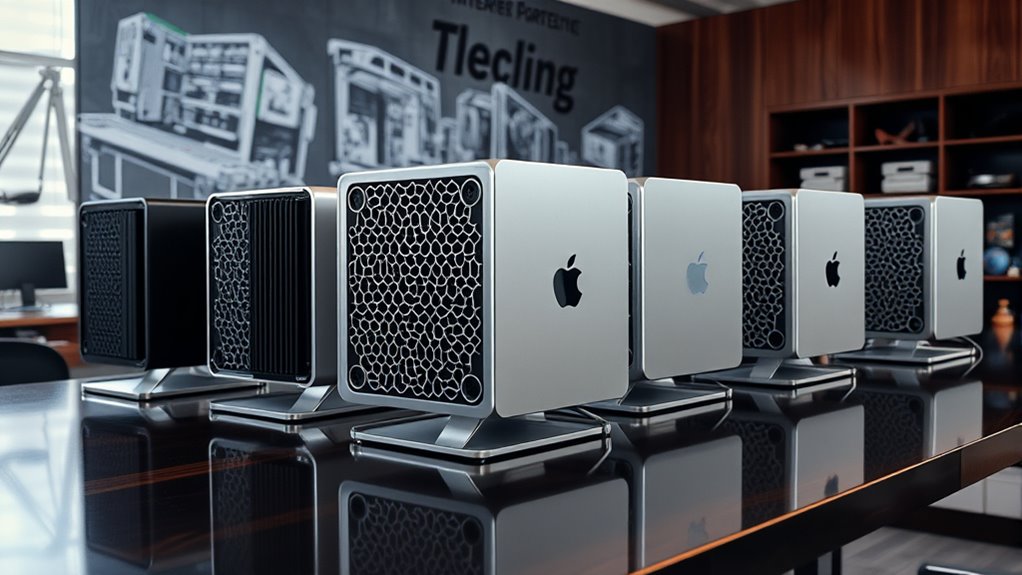

Choosing the right Mac for enterprise IT deployments in 2026 involves balancing performance, scalability, and manageability. The Apple Mac Studio with M5 Max stands out for its raw power, ideal for demanding workflows, while the Mac mini with M4 Pro offers a compact, cost-effective solution for smaller deployments. Larger organizations might lean toward the MacBook Pro 16″ M5 Max for mobility combined with high performance or the MacBook Pro 14″ M5 Pro for a more portable, yet capable setup. The main tradeoffs involve choosing between raw power, portability, and cost—especially as enterprise needs grow more complex. Continue reading for a detailed breakdown of each option to find the best fit for your deployment strategy.

Get the latest gadgets delivered free with Prime
- Fast, free delivery on millions of items
- Prime Video, Amazon Music and more included
- Member-only deals all year
Complete the kit



Key Takeaways
- High-performance M5 Max chips dominate the top-tier options for demanding enterprise workloads.
- Portability versus raw power is a key decision, with MacBook Pros offering mobility and Mac Studio and Mac mini providing desktop power.
- Memory capacity varies significantly; larger RAM configurations are essential for large-scale virtualizations and intensive tasks.
- Pricing reflects performance and features, making budget considerations critical for scaling deployments.
- Device management and compatibility are crucial, especially when deploying across large enterprise networks.
| Apple 2026 Mac Studio Desktop Computer with M5 Max Chip |  | Best Overall for Enterprise IT Deployments | Processor: M5 Max chip | Memory: Up to 128GB | Memory Bandwidth: 614GB/s | VIEW ON AMAZON | See Our Full Breakdown |
| Apple MacBook Pro Laptop with M5 Max, 14.2-inch Display, 64GB RAM, 2TB SSD, Silver |  | Best for Mobile Power Users in Enterprise Settings | Processor: M5 Max, 18-core CPU, 40-core GPU | Display: 14.2-inch Liquid Retina XDR | Memory: 64GB Unified Memory | VIEW ON AMAZON | See Our Full Breakdown |
| Apple 14-inch MacBook Pro with M5 Pro Chip, 48GB RAM, 1TB SSD, Space Black |  | Best for Creative and Technical Mobile Professionals | Display: 14-inch | Processor: Apple M5 Pro Chip with 15-core CPU and 16-core GPU | Memory: 48GB Unified Memory | VIEW ON AMAZON | See Our Full Breakdown |
| Apple MacBook Pro 16″ M5 Pro with 18-Core CPU, 20-Core GPU, 64GB RAM, 1TB SSD | | Best for Demanding Content Creation and Heavy Multitasking | Display: 16-inch | Processor: M5 Pro with 18-core CPU | Graphics: 20-core GPU | VIEW ON AMAZON | See Our Full Breakdown |
| Apple MacBook Pro 16.2-inch Laptop with M5 Max, 18-core CPU, 40-core GPU, 128GB RAM, 2TB SSD, Space Black |  | Best for High-End Enterprise Power Users and Content Creators | Display: 16.2-inch Liquid Retina XDR | CPU: M5 Max, 18-core | GPU: 40-core | VIEW ON AMAZON | See Our Full Breakdown |
| Apple 2024 Mac mini Desktop Computer with M4 Pro Chip, 24GB Memory, 512GB SSD, Gigabit Ethernet |  | Best Compact Power for Enterprise Deployments | Processor: M4 Pro chip | CPU: 12-core | GPU: 16-core | VIEW ON AMAZON | See Our Full Breakdown |
| Apple MacBook Pro with M5 Max, 14-inch, 128GB RAM, 2TB SSD, Space Black |  | Best for Demanding Mobile Power Users | Display: 14.2-inch Liquid Retina XDR | CPU: M5 Max, 18-core | GPU: 40-core | VIEW ON AMAZON | See Our Full Breakdown |
| Apple 16-Inch MacBook Pro Laptop Early 2026 with M5 Max Chip, 128GB RAM, 2TB SSD, Silver |  | Best for Creative Powerhouses and Heavy Workflows | Display: 16-inch Retina display | CPU: M5 Max, 18-core | GPU: 40-core | VIEW ON AMAZON | See Our Full Breakdown |
| Apple 2026 MacBook Pro Laptop with M5 Pro Chip, 14.2-inch Liquid Retina XDR Display, 24GB RAM, 2TB SSD, Space Black |  | Best for Mid-Range Power and Portability | Display: 14.2-inch Liquid Retina XDR | CPU: M5 Pro, 18-core | GPU: 20-core | VIEW ON AMAZON | See Our Full Breakdown |
| Apple 2026 Mac mini with M5 Pro Chip and AppleCare+ (3 Years) |  | Best for Cost-Effective Enterprise AI and Multi-Display Setups | Processor: M5 Pro chip | Ports: Three Thunderbolt 5, HDMI, 2.5Gb Ethernet | Memory Bandwidth: 307GB/s | VIEW ON AMAZON | See Our Full Breakdown |
| mac pro for enterprise it deployment | Memory | Storage | Display | Processor |
|---|---|---|---|---|
| Apple 2026 Mac Studio Desktop | Up to 128GB | Up to 2x faster storage | — | M5 Max chip |
| Apple MacBook Pro Laptop with | 64GB Unified Memory | 2TB SSD | 14.2-inch Liquid Retina XDR | M5 Max, 18-core CPU, 40-core GPU |
| Apple 14-inch MacBook Pro with | 48GB Unified Memory | 1TB SSD | 14-inch | Apple M5 Pro Chip with 15-core CPU and 16-core GPU |
| Apple MacBook Pro 16" M5 Pro w | 64GB unified memory | 1TB SSD | 16-inch | M5 Pro with 18-core CPU |
| Apple MacBook Pro 16.2-inch La | 128GB Unified Memory | 2TB SSD | 16.2-inch Liquid Retina XDR | — |
| Apple 2024 Mac mini Desktop Co | 24GB | 512GB SSD | — | M4 Pro chip |
| Apple MacBook Pro with M5 Max | 128GB | 2TB SSD | 14.2-inch Liquid Retina XDR | — |
| Apple 16-Inch MacBook Pro Lapt | 128GB | 2TB SSD | 16-inch Retina display | — |
| Apple 2026 MacBook Pro Laptop | 24GB | 2TB SSD | 14.2-inch Liquid Retina XDR | — |
| Apple 2026 Mac mini with M5 Pr | — | — | — | M5 Pro chip |
More Details on Our Top Picks
Apple 2026 Mac Studio Desktop Computer with M5 Max Chip
The Mac Studio with M5 Max stands out for its combination of raw power, compact design, and extensive connectivity—making it ideal for enterprise IT environments that require dedicated high-performance workstations. Unlike the MacBook Pro 16″, which offers portability at the expense of desk space and potentially higher costs for mobility, the Mac Studio provides a more stationary yet versatile solution for demanding workflows like AI, 3D rendering, and media processing. Its extensive port selection, including Thunderbolt 5, and support for multiple displays, ensures it integrates well into complex enterprise setups. The tradeoff is its fixed form factor and limited upgradeability, which may be less appealing for organizations seeking long-term hardware flexibility. This model makes the most sense for IT departments looking for dedicated, high-power desktops that don’t compromise on connectivity or noise levels.
Pros:- Exceptional performance for AI, rendering, and media workflows
- Extensive connectivity options including Thunderbolt 5 and multiple displays
- Compact, quiet, and desk-friendly design
Cons:- High cost for top configurations with limited upgradeability
- No integrated display or expandability options
Best for: Enterprise IT teams deploying dedicated, high-performance workstations in office environments.
Not ideal for: Organizations needing portable solutions or frequent hardware upgrades, as the Mac Studio is designed for static deployment with limited upgrade paths.
- Processor:M5 Max chip
- Memory:Up to 128GB
- Memory Bandwidth:614GB/s
- Storage:Up to 2x faster storage
- Ports:Four Thunderbolt 5, two USB-C, two USB-A, HDMI, SDXC card slot, headphone jack
- Wireless:Wi-Fi 7, Bluetooth 6
Our verdict“A powerful, reliable desktop choice for enterprise deployments where dedicated performance and connectivity are priorities.”
Apple MacBook Pro Laptop with M5 Max, 14.2-inch Display, 64GB RAM, 2TB SSD, Silver
This MacBook Pro with M5 Max offers a compelling mix of portability and high performance, making it suitable for enterprise professionals who need to work remotely or across multiple locations. Its 14.2-inch Liquid Retina XDR display provides stunning visuals, surpassing the smaller MacBook Pro 14″ in screen quality and brightness, which can enhance productivity in visual tasks. The high-core count M5 Max CPU and 64GB RAM support demanding multitasking and AI workloads while maintaining a compact footprint. Nevertheless, its premium price and weight make it less ideal for users who prioritize mobility over performance or are constrained by budget. Its limited upgrade options post-purchase are a consideration for organizations looking for future-proof devices. This pick makes sense for enterprise users who need a portable yet powerful device with excellent connectivity and display quality.
Pros:- High-core count M5 Max chip for demanding workloads
- Stunning Liquid Retina XDR display with high brightness
- Excellent connectivity including SDXC and multiple Thunderbolt ports
Cons:- Premium price point limits accessibility for some organizations
- Heavy and less portable compared to smaller laptops
- Limited upgradeability after purchase
Best for: Enterprise professionals requiring high-performance mobile devices for demanding tasks on the go.
Not ideal for: Teams seeking scalable or easily upgradable hardware, as the MacBook Pro’s components are largely fixed after purchase.
- Processor:M5 Max, 18-core CPU, 40-core GPU
- Display:14.2-inch Liquid Retina XDR
- Memory:64GB Unified Memory
- Storage:2TB SSD
- Battery Life:All-day
- Ports:Three Thunderbolt 5, MagSafe 3, SDXC, HDMI, headphone jack
Our verdict“An outstanding mobile workstation for enterprise users who need top-tier performance combined with portability.”
Apple 14-inch MacBook Pro with M5 Pro Chip, 48GB RAM, 1TB SSD, Space Black
The MacBook Pro with M5 Pro delivers a balanced mix of power and portability, making it suitable for enterprise teams focused on creative workflows, coding, or data analysis. Its 15-core CPU and 16-core GPU within the M5 Pro chip provide ample processing for multitasking and AI tasks, rivaling the MacBook Pro 16″ in performance but in a smaller form factor. The 48GB RAM supports heavy multitasking, and the 1TB SSD ensures fast data access. The sleek Space Black design adds a professional aesthetic. The main tradeoff is its limited display size, which might hinder detailed visual work compared to larger models, and its price can be a barrier for some budget-conscious departments. This device suits those who need a portable yet capable machine for demanding tasks outside the office.
Pros:- Powerful M5 Pro chip with high CPU and GPU cores
- Large 48GB RAM supports heavy multitasking
- Fast 1TB SSD for storage and data transfer
Cons:- High price for a 14-inch device
- Limited to 14-inch display size, less suited for detailed visual tasks
- No significant upgrade paths post-purchase
Best for: Creative teams and technical professionals needing high performance in a portable form factor.
Not ideal for: Organizations requiring large screen real estate or upgrade flexibility, as the model’s portability limits expansion options.
- Display:14-inch
- Processor:Apple M5 Pro Chip with 15-core CPU and 16-core GPU
- Memory:48GB Unified Memory
- Storage:1TB SSD
- Design:Space Black
- Power Adapter:70W USB-C
Our verdict“A portable powerhouse for enterprise professionals who prioritize mobility without sacrificing high-end performance.”
Apple MacBook Pro 16″ M5 Pro with 18-Core CPU, 20-Core GPU, 64GB RAM, 1TB SSD
The MacBook Pro 16″ with M5 Pro offers a significant upgrade in screen size and raw power, making it a compelling choice for enterprise teams involved in intensive content creation, 3D work, or complex multitasking. Its 18-core CPU and 20-core GPU surpass smaller models like the MacBook Pro 14″ in performance, especially for graphics-heavy workloads. The 64GB RAM supports extensive multitasking, and the 1TB SSD ensures quick data access. However, its size and weight reduce portability, and its high price might be prohibitive for some organizations. This device excels in scenarios where a large display and maximum processing power are essential, but it is less suited for mobile or space-constrained environments.
Pros:- High-performance CPU and GPU for demanding tasks
- Large 16-inch display ideal for detailed visual work
- 64GB RAM supports extensive multitasking
Cons:- Heavy and less portable than smaller laptops
- High cost may limit deployment in budget-sensitive environments
- Limited upgrade options after purchase
Best for: Enterprise creative teams and power users needing a large, high-performance laptop for demanding workflows.
Not ideal for: Organizations prioritizing lightweight, portable devices or seeking scalable upgrade options, as the 16″ model is bulky and fixed in configuration.
- Display:16-inch
- Processor:M5 Pro with 18-core CPU
- Graphics:20-core GPU
- Memory:64GB unified memory
- Storage:1TB SSD
Our verdict“A robust, large-screen laptop suited for intensive creative and professional workflows in enterprise settings.”
Apple MacBook Pro 16.2-inch Laptop with M5 Max, 18-core CPU, 40-core GPU, 128GB RAM, 2TB SSD, Space Black
The MacBook Pro 16.2″ with M5 Max pushes the boundaries of portable enterprise computing with its massive 128GB of RAM, high-end CPU and GPU, and 16.2-inch Liquid Retina XDR display. It is tailored for demanding AI workloads, extensive multitasking, and content creation, matching or exceeding the performance of the MacBook Pro 14.2″ in raw processing power. Its connectivity options, including multiple Thunderbolt 5 ports, support complex setups. The main tradeoff is its weight and cost—it’s a substantial investment that may not suit every organization. Its default 128GB RAM is excellent for heavy multitasking but limits upgrade options, making it better suited for long-term deployment rather than future expansion.
Pros:- Massive 128GB RAM supports intensive multitasking
- Exceptional display with high brightness and contrast
- High-core CPU and GPU for demanding workloads
Cons:- Very high price, potentially limiting widespread deployment
- Heavy and less portable for mobile work
- Limited RAM upgradeability post-purchase
Best for: Enterprise users needing maximum on-device memory and power for AI, content creation, or large-scale multitasking.
Not ideal for: Teams on a tight budget or those needing ultraportable devices, as the high price and weight reduce flexibility.
- Display:16.2-inch Liquid Retina XDR
- CPU:M5 Max, 18-core
- GPU:40-core
- Memory:128GB Unified Memory
- Storage:2TB SSD
- Ports:Three Thunderbolt 5, MagSafe 3, SDXC, HDMI, headphone jack
Our verdict“A top-tier, high-performance laptop best suited for enterprise environments that demand maximum memory and processing power in a portable package.”
Apple 2024 Mac mini Desktop Computer with M4 Pro Chip, 24GB Memory, 512GB SSD, Gigabit Ethernet
This Mac mini stands out for delivering high performance in a tiny footprint, making it ideal for enterprise environments where space is at a premium. Unlike the Mac Studio, which offers even more power but is bulkier and pricier, the Mac mini provides a compelling balance of speed and size. Its M4 Pro chip with a 12-core CPU and 16-core GPU handles demanding tasks efficiently, though its storage capacity is limited to 512GB, which could require external solutions for larger data needs. The multitude of ports ensures versatile connectivity, but the absence of dedicated graphics options limits its suitability for GPU-intensive workloads. This option suits organizations needing a compact, powerful device for server rooms or workstations that don’t require heavy graphics processing. It’s less ideal for teams needing extensive onboard storage or high-end GPU capabilities.
- Powerful M4 Pro chip with 12-core CPU
- Small, space-efficient design
- Multiple connectivity options
- Seamless Apple ecosystem integration
- Limited storage beyond 512GB
- No dedicated graphics card
Pros:- Compact size fits easily in tight spaces
- Handles demanding workloads efficiently
- Versatile port selection for connectivity
Cons:- Limited to 512GB storage, requiring external drives for larger needs
- No dedicated graphics option for GPU-heavy tasks
Best for: Enterprises needing a small, powerful server or workstation for space-constrained environments
Not ideal for: Teams requiring extensive onboard storage or high-end GPU performance for graphics-intensive tasks
- Processor:M4 Pro chip
- CPU:12-core
- GPU:16-core
- Memory:24GB
- Storage:512GB SSD
- Ports:Thunderbolt, HDMI, Gigabit Ethernet, USB-C, headphone jack
Our verdict“This Mac mini fits well in enterprise settings where space efficiency and solid performance are priorities, but not for heavy GPU or storage demands.”
Apple MacBook Pro with M5 Max, 14-inch, 128GB RAM, 2TB SSD, Space Black
This 14-inch MacBook Pro with the M5 Max chip is tailored for professionals who need top-tier mobile performance, surpassing the M4-based Mac mini in raw power and display quality. Compared to the 16-inch MacBook Pro, it’s more portable but sacrifices some screen real estate, making it ideal for frequent travelers or remote workers. Its 18-core CPU and 40-core GPU deliver exceptional speed for AI, video editing, and complex workflows, while the 128GB RAM ensures heavy multitasking. The high-resolution Liquid Retina XDR display offers stunning visuals, but the premium price and weight could be considerable downsides for some users. This pick makes the most sense for mobile enterprise teams or power users who need high-end performance on the go. It’s less suitable for organizations that prefer larger screens or are less concerned about portability.
- High-performance M5 Max chip
- Exceptional Liquid Retina XDR display
- Massive 128GB RAM for multitasking
- Fast charging with included 140W adapter
- Premium price point
- Heavy and less portable for frequent travel
Pros:- Top-tier M5 Max chip with AI acceleration
- Stunning high-brightness display
- Large 128GB RAM for heavy multitasking
- Fast charging capability
Cons:- High cost may limit widespread deployment
- Heavy and bulky for some users
Best for: Mobile enterprise professionals needing maximum power in a portable form factor
Not ideal for: Organizations that prefer larger screens or less weight for daily use
- Display:14.2-inch Liquid Retina XDR
- CPU:M5 Max, 18-core
- GPU:40-core
- Memory:128GB
- Storage:2TB SSD
- Battery Life:All-day
Our verdict“This model is best suited for demanding users who require high performance and mobility, though its cost and weight are considerations for broader enterprise rollout.”
Apple 16-Inch MacBook Pro Laptop Early 2026 with M5 Max Chip, 128GB RAM, 2TB SSD, Silver
This 16-inch MacBook Pro with the M5 Max offers a larger display for professionals who need extensive screen real estate and processing power. Compared to the 14-inch version, it provides a bigger workspace, which benefits creative workflows like video editing or CAD. Its high-end M5 Max chip ensures rapid rendering and AI performance, while the 128GB RAM supports massive multitasking. The 2TB SSD speeds up workflows significantly, especially when working with large files. However, its size and weight make it less suited for frequent travel, and the high price may restrict deployment in cost-sensitive enterprise settings. This makes the most sense for creative teams or power users who prioritize screen size and raw performance. It’s less ideal for mobile teams or organizations with strict portability needs.
- Powerful M5 Max chip
- Large 16-inch display with rich color
- Massive 128GB RAM
- Fast 2TB SSD storage
- Heavy and bulky for portable use
- Premium price can be a barrier
Pros:- Massive processing power with M5 Max chip
- Large, color-rich 16-inch display
- High RAM capacity for extensive multitasking
- Fast storage speeds for large files
Cons:- Bulky and heavy for portable use
- High investment cost
Best for: Creative teams and demanding workflows requiring extensive screen space and processing power
Not ideal for: Teams needing lightweight, portable devices for frequent travel
- Display:16-inch Retina display
- CPU:M5 Max, 18-core
- GPU:40-core
- Memory:128GB
- Storage:2TB SSD
- Weight:4.8 lbs
Our verdict“This MacBook Pro excels in demanding creative environments where size and power are prioritized over portability and cost.”
Apple 2026 MacBook Pro Laptop with M5 Pro Chip, 14.2-inch Liquid Retina XDR Display, 24GB RAM, 2TB SSD, Space Black
The 14-inch MacBook Pro with the M5 Pro chip offers a balanced mix of power and portability, suitable for enterprise users who need capable performance without the bulk of larger models. It surpasses the M4-based models in AI and processing capabilities, making it a solid choice for demanding tasks, yet remains more portable than its 16-inch counterpart. The high-quality Liquid Retina XDR display ensures sharp visuals, while the 24GB RAM and 2TB SSD provide ample speed and storage for most enterprise workflows. Its comprehensive port selection, including Thunderbolt 5 and SDXC, enhances connectivity. However, the premium price and limited battery info may concern cost-conscious or mobile-focused organizations. This makes the most sense for enterprise professionals who require a portable yet powerful device for demanding tasks. It’s less suitable for organizations prioritizing larger screens or needing extended battery life details upfront.
- Strong M5 Pro chip with AI capabilities
- High-quality Liquid Retina XDR display
- Versatile port options including SDXC
- Fast SSD storage
- Premium price point
- Limited battery life data
Pros:- Powerful M5 Pro chip with AI features
- High-quality, bright display
- Multiple versatile ports including SDXC
- Fast SSD storage speeds
Cons:- High cost may limit large-scale deployment
- Limited info on battery longevity
Best for: Enterprise professionals needing a portable yet powerful device with flexible connectivity
Not ideal for: Organizations seeking longer battery life or larger screens for extended use
- Display:14.2-inch Liquid Retina XDR
- CPU:M5 Pro, 18-core
- GPU:20-core
- Memory:24GB
- Storage:2TB SSD
- Connectivity:Wi-Fi 7, Bluetooth 6, Thunderbolt 5, HDMI, SDXC
Our verdict“Ideal for enterprise users who need a balance of portability and high-end processing power, with a premium price to match.”
Apple 2026 Mac mini with M5 Pro Chip and AppleCare+ (3 Years)
This Mac mini with the M5 Pro chip and extended AppleCare+ coverage offers a compelling option for enterprise deployments emphasizing affordability and flexibility. Compared to the MacBook Pro series, it provides similar processing power in a smaller, more affordable package, but it’s less portable and lacks the integrated display. Its support for up to three external displays and multiple ports makes it suitable for AI, server, or multi-screen workstations. The inclusion of AppleCare+ adds value for long-term maintenance, though the base storage options and overall expandability are more limited than the larger laptops. This pick makes the most sense for enterprise environments needing powerful compute in a compact, fixed-position device. It’s less ideal for mobile or high-storage needs.
- Powerful M5 Pro chip suitable for AI and multitasking
- Supports up to three external displays
- Multiple high-speed ports including Thunderbolt 5
- Extended three-year warranty coverage with AppleCare+
- Limited onboard storage options
- Not portable for mobile workflows
Pros:- Compact size with robust performance
- Supports multiple external displays
- Extended warranty coverage via AppleCare+
- Multiple fast connectivity options
Cons:- Limited internal storage options
- Less suitable for mobile workflows
Best for: Enterprise deployments requiring a compact, multi-display capable workstation with extended warranty
Not ideal for: Organizations needing portable devices or extensive onboard storage
- Processor:M5 Pro chip
- Ports:Three Thunderbolt 5, HDMI, 2.5Gb Ethernet
- Memory Bandwidth:307GB/s
- Storage Speed:Up to 2x faster
- Supports:Up to three external displays
- Warranty:3 years with AppleCare+
Our verdict“A cost-effective, versatile desktop for enterprise AI and multi-monitor setups that emphasizes stability and expandability over mobility.”

How We Picked
I evaluated these products based on their performance capabilities, scalability, manageability features, and overall value for enterprise IT environments. Devices with the latest chipsets, high RAM options, and robust connectivity options ranked higher, as they better support demanding workflows and large-scale deployments. Durability, ease of integration into existing infrastructure, and total cost of ownership also played key roles. The ranking prioritizes devices that balance power with manageability, ensuring they meet the needs of enterprise IT teams deploying at scale.| mac pro for enterprise it deployment | Processor | Ports |
|---|---|---|
| Apple 2026 Mac Studio Desktop | M5 Max chip | Four Thunderbolt 5, two USB-C, two USB-A, HDMI, SDXC card slot, headphone jack |
| Apple MacBook Pro Laptop with | M5 Max, 18-core CPU, 40-core GPU | Three Thunderbolt 5, MagSafe 3, SDXC, HDMI, headphone jack |
| Apple 14-inch MacBook Pro with | Apple M5 Pro Chip with 15-core CPU and 16-core GPU | — |
| Apple MacBook Pro 16" M5 Pro w | M5 Pro with 18-core CPU | — |
| Apple MacBook Pro 16.2-inch La | — | Three Thunderbolt 5, MagSafe 3, SDXC, HDMI, headphone jack |
| Apple 2024 Mac mini Desktop Co | M4 Pro chip | Thunderbolt, HDMI, Gigabit Ethernet, USB-C, headphone jack |
| Apple MacBook Pro with M5 Max | — | — |
| Apple 16-Inch MacBook Pro Lapt | — | — |
| Apple 2026 MacBook Pro Laptop | — | — |
| Apple 2026 Mac mini with M5 Pr | M5 Pro chip | Three Thunderbolt 5, HDMI, 2.5Gb Ethernet |
Factors to Consider When Choosing Mac Pro For Enterprise It Deployments
When selecting a Mac for enterprise IT deployments, it’s vital to consider several factors beyond raw specs. Scalability, device management capabilities, and future-proofing often outweigh initial costs. Understanding these factors can prevent costly missteps and ensure your deployment remains smooth and secure as your organization grows.Performance and Scalability
High-performance chips like the M5 Max are essential for demanding enterprise tasks such as virtualizations, large data processing, or multimedia rendering. Scalability comes from options like increased RAM and storage, which enable handling larger workloads without bottlenecks. Choosing a device with upgrade options or high base specs can extend its useful life across multiple projects or teams.
Device Management and Security
Enterprise deployments require robust management tools and security features. Features like Apple Business Manager integration and remote management capabilities streamline device provisioning and updates. Devices that support comprehensive management protocols reduce operational overhead and improve security posture, critical in large-scale deployments.
Connectivity and Expansion
Ensuring compatibility with existing enterprise infrastructure involves checking ports, networking options, and support for peripherals. Devices with multiple Thunderbolt, USB-C, and Ethernet options provide flexibility for connecting to enterprise networks and peripherals. Consider future expansion needs to avoid bottlenecks or costly upgrades later.
Total Cost of Ownership
While initial purchase price is a factor, ongoing costs like maintenance, support, and upgrades influence long-term value. Devices with higher durability and enterprise support options may cost more upfront but can save money and hassle over time. Carefully weigh the initial investment against expected lifespan and support services.
Portability vs. Power
Deciding between portable MacBooks and stationary desktops depends on your team’s mobility needs. MacBook Pros excel in remote or on-the-go work, while Mac Studio or Mac mini are better suited for fixed office setups. Consider your deployment environment to match device form factors with operational workflows.
Frequently Asked Questions
Can these Macs be managed easily at scale in an enterprise environment?
Yes, most of these Macs support Apple Business Manager and enterprise management tools like Jamf, making large-scale deployment and management feasible. They enable remote configuration, security enforcement, and software updates, reducing IT overhead and maintaining security standards across all devices.
Are these Macs compatible with existing enterprise software and infrastructure?
All these options run macOS, which is widely supported by enterprise software. Compatibility with existing infrastructure depends on network protocols and peripheral support, which are generally strong in recent models. For specialized enterprise applications, confirm compatibility before deploying large batches.
Which Mac should I choose for a mixed environment with both power users and mobile staff?
The MacBook Pro 16″ M5 Max offers high performance alongside portability, making it suitable for both power users and mobile teams. For strictly stationary roles, the Mac Studio or Mac mini provide desktop power at a lower cost. Balance your needs based on mobility requirements and workload demands.
How future-proof are these Mac models for expanding enterprise needs?
Devices with the latest M5 Max and M5 Pro chips offer significant future-proofing thanks to their advanced architecture and high RAM options. They are designed to handle upcoming software updates and increasing workload demands, but staying within the Apple ecosystem ensures ongoing support and compatibility for years to come.
What is the best way to manage device security across a large deployment?
Implementing centralized management tools like Apple Business Manager along with MDM solutions such as Jamf ensures consistent security policies, remote management, and swift updates. Regular security audits and firmware updates are critical, especially when deploying devices across multiple locations or teams.
Conclusion
For large enterprises prioritizing raw power and scalability, the Mac Studio with M5 Max offers unmatched performance, making it the best overall choice. Smaller organizations or teams needing mobility should consider the MacBook Pro 16″ M5 Max for its combination of power and portability. Budget-conscious deployments will find the Mac mini with M4 Pro provides excellent value, while those seeking ease of management may prefer models with comprehensive enterprise support. For beginners or teams with less demanding needs, starting with a mid-range MacBook Pro can be a practical entry point.
Halloween Picks
halloween
As an affiliate, we earn on qualifying purchases.