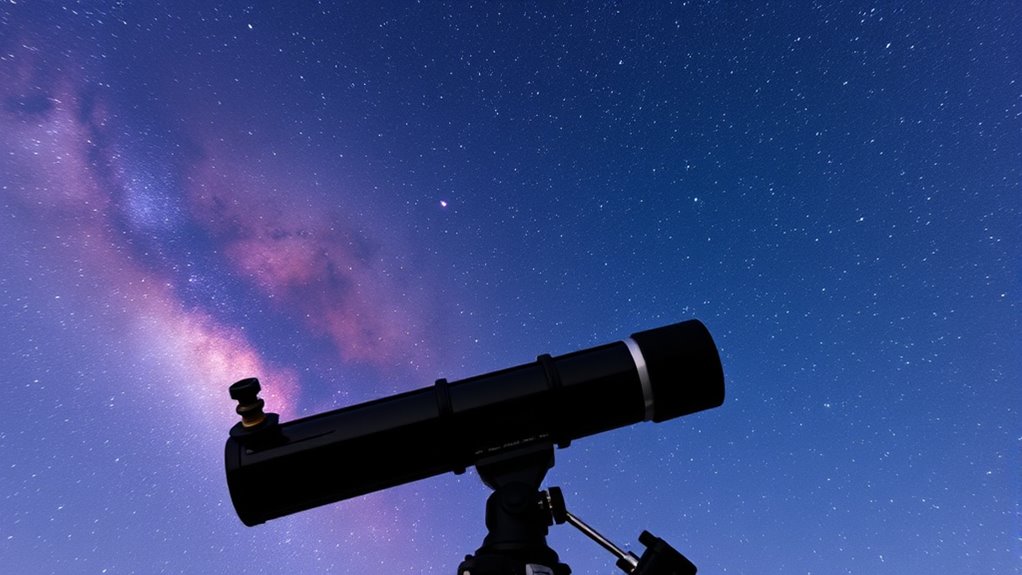

For astrophotographers seeking high-quality images, 130mm triplet apo refractors strike a balance between aperture size and optical performance. The SVBONY SV555 APO stands out as the best overall choice, offering excellent color correction and sharp images. Meanwhile, the Explore Scientific FCD100 Series provides superb optical quality for dedicated astrophotographers, though at a higher price point. Another contender, the SVBONY SV550 80mm Triplet, offers a more budget-friendly option with solid performance. Buyers face tough tradeoffs between price, build quality, and optical perfection. Continue reading as I break down each model’s strengths and weaknesses to help you find the perfect fit.

Get the latest gadgets delivered free with Prime
- Fast, free delivery on millions of items
- Prime Video, Amazon Music and more included
- Member-only deals all year
Complete the kit



Key Takeaways
- The best overall 130mm triplet apo refractor combines excellent optical performance with reliable build quality, exemplified by the SVBONY SV555.
- Price varies significantly; budget options like the SVBONY SV550 series still deliver good performance but lack some premium features.
- Optical quality, such as lens ED glass and flat field correction, is the main differentiator among models aimed at astrophotography.
- Additional accessories like field flatteners and filters can greatly enhance image quality but add to the overall cost.
- The choice depends heavily on your experience level, with beginners benefiting from more affordable, easy-to-use options, while advanced users prioritize optical perfection.


| 130mm triplet apo refractors for astrophotography | Aperture | Weight | Focal Ratio | Focal Length |
|---|---|---|---|---|
| SVBONY SV550 Telescope | 80mm | — | F6 | — |
| Explore Scientific FCD100 Seri | — | 7 pounds | f/6 | 480mm |
| SVBONY SV550 80mm Triplet Apoc | 80mm | 3.75 kg | — | 480mm |
| SVBONY SV555 APO Astrophotogra | — | 3.8kg | — | Variable (F4.5-F22) |
| SVBONY SV550 Telescope 80mm F6 | 80mm | — | F6 | — |
| SVBONY SV550 80 Triplet APO Te | 80mm | 3.75 kg (8.27 lbs) | — | F6 |
| SVBONY SV550 80ED F6 Triplet A | 80mm | 8.27 lbs | F6 | — |
| SVBONY SV550 AP0 80mm ED F6 Tr | 80mm | Lightweight, specific weight not provided | F6 | — |
More Details on Our Top Picks
SVBONY SV550 Telescope, 80ED F6 Triplet Apochromatic Refractor OTA, SV405CC Cooled Astrophotography Camera, SV905C Guide Camera, SV106 Guide Scope with Helical Focuser Finder, SV209 Field Flattener
This all-in-one package stands out for those wanting a ready-to-shoot astrophotography setup without sourcing accessories separately. The SVBONY SV550 combines a high-quality 80mm F6 triplet APO with dedicated cameras and guiding gear, offering a seamless imaging experience. Compared to the Explore Scientific FCD100, which provides excellent optical quality but requires buyers to assemble a guide scope and camera setup, this kit simplifies the process with integrated accessories. However, its complexity could pose a hurdle for complete beginners, and the overall price may be higher than purchasing components individually. This package is best suited for amateur astronomers eager to start astrophotography with minimal fuss but ready for some setup learning curve.
Pros:- Includes dedicated astrophotography and guiding cameras for a complete setup
- High-quality triplet APO optics reduce chromatic aberration for sharp images
- Compact and versatile with accessories designed for deep-sky imaging
Cons:- Setup can be complex for users unfamiliar with multiple components
- No detailed information on included accessories’ compatibility or upgrade paths
Best for: Amateur astrophotographers seeking an all-in-one package with guiding and imaging equipment
Not ideal for: Beginners who prefer a more straightforward optical-only telescope without integrated cameras
- Aperture:80mm
- Focal Ratio:F6
- Optics Type:Triplet Apochromatic Refractor
- Camera:SV405CC Cooled Color Astrophotography Camera
- Sensor:IMX294 CMOS, 4/3 format
- Guide Camera:SV905C, 1.23MP CMOS
- Guide Scope:SV106 with Helical Focuser
- Field Flattener:SV209
Our verdict“This kit is ideal for dedicated astrophotographers who want an integrated imaging system but are prepared for a steeper setup process.”
Explore Scientific FCD100 Series 80mm Air-Spaced Apochromatic Triplet Refractor Telescope for Astrophotography
The Explore Scientific FCD100 excels at delivering crisp, high-contrast images thanks to its ED glass and multi-layer coatings, making it ideal for astrophotographers who want excellent optical quality in a portable form. Unlike the SVBONY offerings, which often include accessories, this telescope emphasizes optical performance with a focus on visual clarity and detailed imaging of moons, planets, and deep sky objects. Its manual focus system, however, might frustrate those who prefer electronic focusing or quick adjustments. While it lacks a mount or tripod, its lightweight build makes it easy to pair with a variety of stable mounts. This refractor caters well to intermediate users who prioritize optical excellence over integrated guide systems.
Pros:- High-contrast, detailed views with ED glass and multi-layer coatings
- Portable and lightweight, easy to mount on various tripods
- Excellent for planetary, lunar, and deep-sky imaging
Cons:- Manual focusing can be less convenient for quick adjustments
- Requires additional mount, camera, and accessories for astrophotography
Best for: Intermediate astrophotographers wanting a portable, high-contrast optical instrument for visual and astrophotography use
Not ideal for: Beginners seeking a fully integrated imaging package or those requiring motorized focus
- Objective Lens Diameter:80mm
- Focal Length:480mm
- Focal Ratio:f/6
- Mount:Vixen-style dovetail
- Focus Type:Manual
- Weight:7 pounds
- Coating:Enhanced Multi-Layer Coatings
- Additional Features:Air-Spaced Triplet
Our verdict“This telescope is best for users who prioritize optical quality and portability over integrated imaging features.”
SVBONY SV550 80mm Triplet Apochromatic Refractor Telescope Kit
The SVBONY SV550 kit offers a lightweight, portable solution with high-quality triplet APO optics, making it attractive for those who need a mobile setup for astrophotography. Its true-to-life color and high contrast outperform many similarly priced options, especially when paired with additional accessories like the included field flattener. Compared to larger setups like the Explore Scientific FCD100, this kit sacrifices some aperture size but gains in ease of transport and quick setup. However, the need for extra accessories, such as a mount and camera, means it’s not a standalone solution. This pick makes the most sense for enthusiasts who want a compact yet capable astrophotography rig that can fit into a backpack.
Pros:- Lightweight and compact, ideal for travel or fieldwork
- High-quality APO optics provide sharp, color-accurate images
- Includes accessories like a field flattener and camera rotator
Cons:- Requires additional purchase of mount and camera for full astrophotography
- Setup may be complex for newcomers unfamiliar with accessories
Best for: Travelers or hobbyists seeking a portable, high-performance 80mm triplet refractor for astrophotography
Not ideal for: Deep-sky imagers or those who want an all-in-one kit with integrated cameras and guiding
- Aperture:80mm
- Focal Length:480mm
- Optical Structure:Triplet APO
- Glass Type:S-FPL51 ED
- Weight:3.75 kg
- Additional Accessories:Field Flattener, Camera Rotator
Our verdict“This telescope suits active astrophotographers who prioritize portability without sacrificing optical quality.”
SVBONY SV555 APO Astrophotography Refractor Telescope
The SVBONY SV555 stands out for its Petzval triplet lens design, delivering exceptionally flat, sharp images across full-frame sensors—ideal for serious deep-sky astrophotography. Its adjustable aperture from F4.5 to F22 provides flexibility for different targets and exposure settings, a feature less common in typical 80mm scopes. The built-in electronic autofocus (EAF) enhances focusing precision, especially useful for capturing faint nebulae or galaxies. Comparing to the SV550, the SV555’s adjustable aperture and autofocus give it a more specialized edge, though at a slightly higher weight and complexity. This model is best for astrophotographers who need a dedicated, high-performance optical tube with advanced focusing capabilities.
Pros:- Petzval triplet lens ensures flat, sharp images ideal for full-frame sensors
- Adjustable aperture from F4.5 to F22 for versatile imaging conditions
- Includes electronic autofocus for precise focusing
Cons:- Heavier weight may limit portability
- Requires additional mount and camera for complete setup
Best for: Experienced astrophotographers requiring a flat-field, full-frame compatible refractor for deep-sky projects
Not ideal for: Beginners or visual astronomers who do not need motorized focus or variable aperture
- Optical Tube Length:24.3cm
- Objective Lens Diameter:5.4cm
- Focal Length:Variable (F4.5-F22)
- Full-Frame Compatibility:Yes
- Mount Kit:Included with EAF adapter
- Focus Type:Manual with EAF
- Weight:3.8kg
Our verdict“This refractor is perfect for advanced astrophotographers seeking flat-field, full-frame imaging with flexible exposure options.”
SVBONY SV550 Telescope 80mm F6 APO Triplet Refractor OTA Bundle with SV209 Field Flattener
The SV550 Bundle emphasizes stability and image quality, offering an 80mm F6 APO triplet refractor paired with a robust, hollow dovetail plate and a flat field mirror compatible with full-frame cameras. Its magnesium alloy construction reduces weight significantly, making it easier to handle in the field. While similar in optical quality to the SV550 kit, this bundle enhances stability and ease of use, especially for longer exposures. Compared to the Explore Scientific FCD100, which is slightly more versatile optically, this setup’s lightweight build and included flat field component make it appealing for those focused on deep sky projects requiring a stable platform. Setup complexity remains, but the overall value for dedicated deep-sky imaging is high.
Pros:- High-quality APO triplet lens offers sharp, true-color images
- Lightweight magnesium alloy reduces overall weight and improves portability
- Includes a flat field mirror compatible with full-frame sensors
Cons:- Setup may be complex for those new to astrophotography accessories
- Limited information on mount compatibility or upgrade options
Best for: Astrophotographers seeking a lightweight, stable, and high-quality optical system for deep sky imaging
Not ideal for: Beginners or users desiring an all-in-one kit with cameras and guiding components included
- Aperture:80mm
- Focal Ratio:F6
- Type:APO Triplet
- Focusing Material:Magnesium alloy
- Dovetail Plate:180mm hollow
- Included Accessories:SV209 Field Flattener, M63 extension, M48 adapter
- Back Focal Length:55mm
Our verdict“This refractor bundle is well-suited for dedicated deep-sky astrophotographers who value stability and portability in a high-quality optical tube.”
SVBONY SV550 80 Triplet APO Telescope Kit
The SVBONY SV550 80mm Triplet APO Telescope Kit stands out for combining high-quality optics with a portable design, making it ideal for astrophotographers who value flexibility. Compared with the SVBONY SV550 80ED F6 Triplet, this kit includes accessories like a field flattener and mini guide scope, which streamline imaging workflows. Its lightweight build (3.75 kg) enhances transportability, yet the included accessories can complicate setup for newcomers. While the high-quality S-FPL51 low-dispersion glass produces sharp, true-to-life images, the inverted image when used with an eyepiece may require additional correction. This pick makes the most sense for astrophotographers who need a compact, all-in-one package for both visual and imaging tasks, especially when mobility is a priority.
Pros:- High-quality triplet APO optics for sharp, true-to-life images
- Lightweight and portable for travel and field use
- Includes a field flattener and guide scope to facilitate astrophotography
Cons:- Inverted image when used with an eyepiece, requiring correction
- Set up and handling require some familiarity with astrophotography accessories
Best for: Amateur astrophotographers seeking a portable, versatile system for both visual observation and astrophotography
Not ideal for: Users requiring a more rigid, fully integrated mount setup or those preferring minimal accessories for simple operation
- Aperture:80mm
- Focal Length:F6
- Weight:3.75 kg (8.27 lbs)
- Optical Structure:Triplet APO
- Glass Type:S-FPL51 low-dispersion ED glass
- Included Accessories:SV209 1.0x Flattener, SV165 Mini Guide Scope
Our verdict“This kit is best suited for astrophotographers who prioritize mobility and a complete package for versatile observing and imaging.”
SVBONY SV550 80ED F6 Triplet Apochromatic Refractor Telescope with SV209 Field Flattener and UV IR Filter
The SVBONY SV550 80ED F6 Triplet APO offers a lightweight and portable setup with advanced features, making it apt for dedicated astrophotographers. Compared to the SVBONY SV550 80 Triplet APO Kit, it emphasizes a more streamlined optical design with the focus on a high-contrast, chromatic aberration-minimized image. The inclusion of a UV/IR filter enhances image clarity, especially for astroimaging, but the lack of a dedicated mount or tripod means users must invest separately for a complete system. Its F6 focal ratio ensures bright, detailed images of deep-sky objects, yet installation of accessories can challenge beginners. This model suits those comfortable with assembling their imaging setup but wanting high-quality optics without excessive bulk.
Pros:- High-quality triplet APO optics deliver sharp, high-contrast images
- Lightweight at 8.27 lbs, easy to carry for fieldwork
- Includes a UV/IR filter for improved planetary and deep-sky imaging
Cons:- Requires a separate mount and camera for full astrophotography operation
- Installation of accessories may be complex for newcomers
Best for: Intermediate astrophotographers who want a high-performance, portable optical tube with some integrated accessories
Not ideal for: Beginners or those seeking an all-in-one package with included mount or simplified setup
- Aperture:80mm
- Focal Ratio:F6
- Weight:8.27 lbs
- Optical Design:Triplet apochromatic
- Included Accessories:SV209 field flattener, UV IR filter
- Focus Mount:2.5-inch magnesium alloy dual-speed (1:10)
Our verdict“This refractor is well-suited for astrophotographers who balance portability with the need for a high-quality, upgradeable imaging system.”
SVBONY SV550 AP0 80mm ED F6 Triplet Apochromatic Refractor OTA
The SVBONY SV550 AP0 80mm ED F6 Triplet Refractor emphasizes optical excellence with minimal chromatic aberration, making it ideal for astrophotographers focused on deep-sky imaging. Its use of S-FPL51 ED glass and a triplet design provides bright, high-contrast images that excel at revealing galaxy details. Compared to the SV550 80ED F6 Triplet, this model offers a more refined optical assembly, though it lacks a built-in mount or tripod, requiring users to source their own. The magnesium alloy dual-speed focus enhances focusing precision, but setup may overwhelm beginners unfamiliar with mounting and accessory integration. This refractor favors experienced users aiming for top-tier optical quality in a lightweight form.
Pros:- Exceptional triplet APO optics reduce chromatic aberration
- Bright, detailed images suitable for galaxy and nebula imaging
- Lightweight magnesium focus mount enhances portability
Cons:- No included mount or tripod, requiring additional purchase
- Setup may be complex for less experienced users
Best for: Experienced astrophotographers seeking high-contrast, low-aberration optics for detailed deep-sky imaging
Not ideal for: Beginners or hobbyists who prefer an all-in-one solution or minimal setup complexity
- Aperture:80mm
- Focal Ratio:F6
- Optical Design:Triplet Apochromatic
- Glass Type:S-FPL51 ED glass
- Focus Mount:2.5-inch magnesium alloy dual-speed
- Weight:Lightweight, specific weight not provided
Our verdict“This refractor is best for those with some astrophotography experience who demand the highest optical quality for deep-sky targets.”

How We Picked
I evaluated these 8 options based on their optical performance, build quality, ease of use, and value for astrophotography. Priority was given to models with superior color correction, minimal aberrations, and flat fields suitable for deep-sky imaging. I also considered user feedback, compatibility with common astrophotography accessories, and overall reputation within the astrophotography community. These factors ensured the ranking reflects real-world utility, whether for amateur hobbyists or dedicated astrophotographers looking for premium quality.| 130mm triplet apo refractors for astrophotography | Focal Ratio |
|---|---|
| SVBONY SV550 Telescope | F6 |
| Explore Scientific FCD100 Seri | f/6 |
| SVBONY SV550 80mm Triplet Apoc | — |
| SVBONY SV555 APO Astrophotogra | — |
| SVBONY SV550 Telescope 80mm F6 | F6 |
| SVBONY SV550 80 Triplet APO Te | — |
| SVBONY SV550 80ED F6 Triplet A | F6 |
| SVBONY SV550 AP0 80mm ED F6 Tr | F6 |
Factors to Consider When Choosing 130mm Triplet Apo Refractors For Astrophotography
Choosing a 130mm triplet apo refractor for astrophotography involves balancing optical quality, cost, and usability. Understanding key factors can help you avoid common pitfalls and select a model that matches your skill level and imaging ambitions.Optical Quality and Glass Type
Optical performance hinges on lens glass and design. ED (extra-low dispersion) glass minimizes chromatic aberration, crucial for sharp, color-accurate images. Triplet designs often outperform doublets in correction, but quality varies between brands and models. Remember, a high-quality lens can be more forgiving with less perfect mounts or less stable setups, making it a wise investment for serious astrophotographers.
Field Flatness and Image Correction
Deep-sky astrophotography demands a flat field to avoid star distortions at the edges of your images. Many models include a field flattener, which can be a game-changer for achieving pinpoint stars across the frame. Skipping this accessory might save money upfront but could result in time-consuming post-processing corrections or subpar images.
Build Quality and Durability
Robust construction ensures the telescope withstands frequent use and transportation. Metal tubes and quality focuser mechanisms reduce flexure and vibration, leading to more precise focusing. Cheaper models might use plastic components, which can degrade over time or introduce instability, impacting image sharpness during long exposures.
Accessories Compatibility and Expansion
Consider how well the refractor pairs with your existing gear—mounts, cameras, and filters. Compatibility with accessories like field flatteners, reducers, or focal extenders can significantly improve imaging results. Investing in a model with good accessory support might cost more initially but pays off in flexibility and image quality over time.
Budget versus Performance Tradeoffs
Higher-priced models typically offer superior optics, better build quality, and more features like integrated focusers or better coatings. However, budget-friendly options can still produce excellent images with proper technique and additional accessories. Be mindful that saving money upfront might mean sacrificing some optical perfection or durability, which could impact your long-term satisfaction and results.
Frequently Asked Questions
Is a 130mm triplet apo refractor suitable for deep-sky astrophotography?
Yes, a 130mm triplet apo refractor is well-suited for deep-sky imaging, especially when equipped with a field flattener. Its combination of aperture and optical quality allows for capturing faint nebulae, galaxies, and star clusters with good detail. However, ensuring proper exposure, tracking, and post-processing is essential to maximize its potential. Investing in a stable mount and calibration tools will further enhance your astrophotography results with this size of refractor.
How important is a field flattener for astrophotography with these telescopes?
A field flattener is often critical for achieving sharp, pinpoint stars across the entire image frame. Without it, star distortions near the edges are common, especially with larger sensors. Many dedicated astrophotography models include a flattener as part of the package or as an optional accessory. Using a quality flattener can significantly reduce post-processing time and improve overall image quality, making it a worthwhile investment for serious imaging projects.
Should I prioritize a higher-priced model for better optical performance?
Generally, investing in a higher-priced model means better optical correction, more durable construction, and additional features like integrated focusers or premium coatings. These enhancements can lead to noticeably sharper, more accurate images, especially during extended imaging sessions. However, budget options can still deliver good results if you are willing to optimize your setup and invest in accessories like filters and flatteners. The decision depends on your long-term goals and willingness to invest in quality gear.
Can a beginner comfortably use these telescopes for astrophotography?
Many 130mm triplet apo refractors are suitable for beginners, especially models with user-friendly features like smooth focusers and good mount compatibility. Their relatively compact size makes setup easier, and their optical correction helps produce clear images without extensive post-processing. However, beginners should be prepared to learn about proper polar alignment, exposure settings, and calibration. Starting with a well-documented model and gradually upgrading accessories can make the learning curve more manageable.
What additional accessories are recommended for maximizing performance?
Key accessories include a high-quality field flattener, a reliable mount with tracking capabilities, and filters like IR/UV or light pollution filters. A good camera adapter and a focused motor system can also improve focusing precision. Investing in these tools helps leverage the full potential of your telescope, resulting in sharper images and more consistent results. Keep in mind that compatibility and quality of accessories directly influence your overall imaging success.
Conclusion
For general use and excellent value, the SVBONY SV555 APO offers a balanced mix of performance and affordability, making it ideal for enthusiasts and advanced amateurs. Those seeking the highest optical quality and willing to invest more should consider the Explore Scientific FCD100 Series, suitable for dedicated astrophotographers aiming for professional results. Beginners will benefit from more straightforward, budget-friendly options like the SVBONY SV550 series, which provide a solid foundation without overwhelming complexity. If durability and expandability are priorities, select a model with robust construction and good accessory support. Ultimately, your choice depends on your goals, budget, and experience level, but these options collectively cover a broad spectrum of astrophotography needs in 2026.
As an affiliate, we earn on qualifying purchases.Fall Picks
fall essentials