

When searching for the best Xiaomi smartphones, most buyers face a tricky balance between raw performance and battery longevity. My top overall pick is the Xiaomi 17T Pro 5G, which stands out for its Leica triple camera and premium build quality that rivals more expensive competitors. For those prioritizing pure speed over photography, the Xiaomi POCO F7 Ultra 5G offers a flagship-grade processor at a mid-range price point, though it sacrifices some camera versatility. Meanwhile, the Xiaomi Redmi Note 15 Pro remains the safest choice for general users who want a reliable daily driver without overspending on features they rarely use. The main tradeoff in this lineup is often between display technology and battery capacity, as larger screens frequently demand more power. Read on to see which specific model aligns with your usage habits and budget constraints.

Get the latest gadgets delivered free with Prime
- Fast, free delivery on millions of items
- Prime Video, Amazon Music and more included
- Member-only deals all year
Complete the kit



Key Takeaways
- The Xiaomi 17T Pro 5G defines the new standard for camera quality in this lineup, outperforming others in low-light scenarios.
- Budget models like the Xiaomi Redmi 15C 4G have improved significantly in build quality, though they still lag in software support duration.
- Gaming performance is no longer exclusive to the POCO series, as the Xiaomi 15T 5G now includes advanced cooling systems previously reserved for gaming phones.
- 5G connectivity has become standard across most mid-range Redmi Note models, making 4G-only variants less viable unless you are on an extremely tight budget.
- Battery life varies drastically between the 6.67-inch and 6.83-inch screen models, with smaller displays often delivering better endurance despite similar battery sizes.
| Xiaomi Redmi Note 15 Pro 4G LTE 256GB, 8GB RAM, 6.67-Inch 120Hz AMOLED, 200MP Camera, Dual SIM, Unlocked, Black |  | Best for Battery Life and Main-Camera Detail | Display: 6.67-inch AMOLED, 2400 × 1080, up to 120Hz | Processor: Octa-core, up to 2.2GHz | Memory and storage: 8GB RAM, 256GB storage | VIEW LATEST PRICE | See Our Full Breakdown |
| Xiaomi Redmi Note 15 5G Unlocked Smartphone, 256GB, 8GB RAM, 6.77-inch AMOLED, 120Hz, 108MP Camera, Dual SIM, Black |  | Best Value 5G All-Rounder | Display: 6.77-inch AMOLED, 2392 × 1080, up to 120Hz | Processor: Snapdragon 6 Gen 3, octa-core, up to 2.4GHz | Memory and storage: 8GB RAM, 256GB storage | VIEW LATEST PRICE | See Our Full Breakdown |
| Xiaomi POCO X8 Pro Max 5G Smartphone, 256GB Storage, 12GB RAM, 6.83-inch AMOLED Display, Dual SIM, Unlocked, Black |  | Best for Performance and Fast Charging | Display: 6.83-inch AMOLED, 2772 × 1280, up to 120Hz | Processor and cooling: MediaTek Dimensity 9500s, 3nm; POCO 3D IceLoop cooling | Memory and storage: 12GB RAM, 256GB storage; no microSD slot | VIEW LATEST PRICE | See Our Full Breakdown |
| Xiaomi Redmi 15 5G NFC 256GB, 8GB RAM, Dual SIM, Titan Gray |  | Best for a Big Screen and Expandable Storage | Display: 6.9-inch FHD+, 2340 × 1080, up to 144Hz | Processor: Snapdragon 6s Gen 3, octa-core, up to 2.3GHz | Memory and storage: 8GB RAM, 256GB storage | VIEW LATEST PRICE | See Our Full Breakdown |
| Xiaomi 15T 5G Unlocked Smartphone, 512GB, 12GB RAM, Gray |  | Best for Camera Versatility and Built-In Storage | Display: 6.83-inch AMOLED, 2772 × 1280, up to 120Hz | Processor: MediaTek Dimensity 8400-Ultra | Memory and storage: 12GB RAM, 512GB storage; no microSD support | VIEW LATEST PRICE | See Our Full Breakdown |
| Xiaomi POCO F7 Ultra 5G, 256GB, 12GB RAM, Dual SIM, Unlocked (Yellow) |  | Best for Flagship Performance | Display: 6.67-inch WQHD+ Flow AMOLED, 3200 × 1440, up to 120Hz | Processor: Snapdragon 8 Elite | RAM and storage: 12GB RAM, 256GB storage | VIEW LATEST PRICE | See Our Full Breakdown |
| Xiaomi Redmi Note 15 Pro+ 5G, 512GB, 12GB RAM, Dual SIM, Glacier Blue | 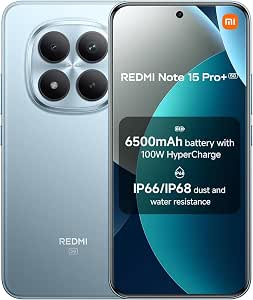 | Best for Battery Life and Big-Screen Use | Display: 6.83-inch CrystalRes AMOLED, 2772 × 1280, up to 120Hz | Processor: Snapdragon 7s Gen 4, octa-core up to 2.7GHz | RAM and storage: 12GB RAM, 512GB storage | VIEW LATEST PRICE | See Our Full Breakdown |
| Xiaomi Redmi Note 14 Pro+ 5G Unlocked Dual SIM, 256GB, 8GB RAM, Midnight Black |  | Best for Fast Charging in a Midrange Phone | Display: 6.67-inch CrystalRes AMOLED, 2712 × 1220, up to 120Hz | Processor: Snapdragon 7s Gen 3 | RAM and storage: 8GB RAM, 256GB storage | VIEW LATEST PRICE | See Our Full Breakdown |
| Xiaomi Redmi Note 14 Pro+ 5G, 512GB, 12GB RAM, Dual SIM, Frost Blue |  | Best for High Built-In Storage | Display: 6.67-inch CrystalRes AMOLED, 2712 × 1220, up to 120Hz | Processor: Snapdragon 7s Gen 3, octa-core up to 2.5GHz | RAM and storage: 12GB RAM, 512GB storage | VIEW LATEST PRICE | See Our Full Breakdown |
| Xiaomi Redmi 15C 4G Unlocked Smartphone, 128GB, 4GB RAM, Moonlight Blue |  | Best for Expandable Storage and Headphone Users | Display: 6.9-inch DotDisplay, 720 × 1600, up to 120Hz | Processor: MediaTek Helio G81, octa-core at 2.0GHz | RAM and storage: 4GB RAM, 128GB storage | VIEW LATEST PRICE | See Our Full Breakdown |
| Xiaomi Poco X7 Pro 5G |  | Best Performance Value | Display: 6.67-inch CrystalRes AMOLED, 120Hz | Processor: MediaTek Dimensity 8400-Ultra | RAM / Storage: 12GB RAM / 512GB Storage | VIEW LATEST PRICE | See Our Full Breakdown |
| Xiaomi 17T Pro 5G |  | Best Premium Camera System | Display: 6.83-inch AMOLED, 144Hz | Processor: MediaTek Dimensity 9500 | RAM / Storage: 12GB RAM / 512GB Storage | VIEW LATEST PRICE | See Our Full Breakdown |
| Xiaomi Redmi Note 15 4G LTE |  | Best Budget Entry | Display: 6.77-inch AMOLED, 120Hz | Processor: MediaTek Helio G100-Ultra | RAM / Storage: 6GB RAM / 128GB Storage | VIEW LATEST PRICE | See Our Full Breakdown |
| Xiaomi Redmi Note 15 Pro 5G |  | Best Durability and Camera Resolution | Display: 6.83-inch AMOLED, 120Hz | Processor: MediaTek Dimensity 7400-Ultra | RAM / Storage: 8GB RAM / 256GB Storage | VIEW LATEST PRICE | See Our Full Breakdown |
| Xiaomi smartphone | Display | Processor | Battery and charging | Rear cameras |
|---|---|---|---|---|
| Xiaomi Redmi Note 15 Pro 4G LT | 6.67-inch AMOLED, 2400 × 1080, up to 120Hz | Octa-core, up to 2.2GHz | 6,500mAh; 45W charging; up to 18W reverse charging | 200MP main with OIS, 8MP ultra-wide, 2MP macro |
| Xiaomi Redmi Note 15 5G Unlock | 6.77-inch AMOLED, 2392 × 1080, up to 120Hz | Snapdragon 6 Gen 3, octa-core, up to 2.4GHz | 5,520mAh; 45W wired charging; 18W reverse charging | 108MP main, 8MP ultra-wide |
| Xiaomi POCO X8 Pro Max 5G Smar | 6.83-inch AMOLED, 2772 × 1280, up to 120Hz | — | 8,500mAh; 100W HyperCharge; up to 27W reverse charging | 50MP main with OIS, 8MP ultra-wide |
| Xiaomi Redmi 15 5G NFC 256GB | 6.9-inch FHD+, 2340 × 1080, up to 144Hz | Snapdragon 6s Gen 3, octa-core, up to 2.3GHz | — | — |
| Xiaomi 15T 5G Unlocked Smartph | 6.83-inch AMOLED, 2772 × 1280, up to 120Hz | MediaTek Dimensity 8400-Ultra | 5,500mAh; 67W wired charging; adapter not included | 50MP main with OIS, 50MP telephoto, 12MP ultra-wide |
| Xiaomi POCO F7 Ultra 5G | 6.67-inch WQHD+ Flow AMOLED, 3200 × 1440, up to 120Hz | Snapdragon 8 Elite | 5300mAh typical; 120W wired and 50W wireless charging | 50MP main with OIS, 50MP telephoto, 32MP ultra-wide |
| Xiaomi Redmi Note 15 Pro+ 5G | 6.83-inch CrystalRes AMOLED, 2772 × 1280, up to 120Hz | Snapdragon 7s Gen 4, octa-core up to 2.7GHz | 6500mAh; 100W HyperCharge; up to 22.5W reverse charging | 200MP main with OIS, 8MP ultra-wide |
| Xiaomi Redmi Note 14 Pro+ 5G U | 6.67-inch CrystalRes AMOLED, 2712 × 1220, up to 120Hz | Snapdragon 7s Gen 3 | 5110mAh typical; 120W HyperCharge; 120W charger included | 200MP main with OIS, 8MP ultra-wide, 2MP macro |
| Xiaomi Redmi Note 14 Pro+ 5G | 6.67-inch CrystalRes AMOLED, 2712 × 1220, up to 120Hz | Snapdragon 7s Gen 3, octa-core up to 2.5GHz | 5110mAh typical; 120W HyperCharge; charger included | 200MP main with OIS, 8MP ultra-wide, 2MP macro |
| Xiaomi Redmi 15C 4G Unlocked S | 6.9-inch DotDisplay, 720 × 1600, up to 120Hz | MediaTek Helio G81, octa-core at 2.0GHz | 6000mAh; 33W charging | — |
| Xiaomi Poco X7 Pro 5G | 6.67-inch CrystalRes AMOLED, 120Hz | MediaTek Dimensity 8400-Ultra | — | — |
| Xiaomi 17T Pro 5G | 6.83-inch AMOLED, 144Hz | MediaTek Dimensity 9500 | — | — |
| Xiaomi Redmi Note 15 4G LTE | 6.77-inch AMOLED, 120Hz | MediaTek Helio G100-Ultra | — | — |
| Xiaomi Redmi Note 15 Pro 5G | 6.83-inch AMOLED, 120Hz | MediaTek Dimensity 7400-Ultra | — | — |
More Details on Our Top Picks
Xiaomi Redmi Note 15 Pro 4G LTE 256GB, 8GB RAM, 6.67-Inch 120Hz AMOLED, 200MP Camera, Dual SIM, Unlocked, Black
I’d choose the Redmi Note 15 Pro 4G for its unusual combination of a 6,500mAh battery and a stabilized 200MP main camera. The large battery is better suited to long days away from a charger than the Redmi Note 15 5G’s 5,520mAh cell, while optical image stabilization can help reduce blur in handheld shots. Its 120Hz AMOLED screen also gives scrolling a smoother feel than a basic 60Hz panel.
The tradeoff is connectivity: this model is 4G LTE only, while the Redmi Note 15 5G adds 5G and a newer listed processor. U.S. network support is also limited to T-Mobile-based carriers, and the second SIM slot is shared with microSD. I’d put this ahead for battery and camera resolution, but not for buyers who want broader carrier choice or 5G.
Pros:- 6,500mAh battery with 45W charging and up to 18W reverse charging
- 200MP main camera with optical image stabilization
- 6.67-inch 120Hz AMOLED display with Gorilla Glass Victus 2
- IP65 dust and water resistance
Cons:- 4G LTE only, unlike the Redmi Note 15 5G
- U.S. carrier support is limited to T-Mobile-based networks
- Hybrid second slot requires choosing between a second SIM and microSD
Best for: T-Mobile-network users who prioritize long battery life, a high-resolution stabilized main camera, and a smooth AMOLED screen.
Not ideal for: Buyers who need 5G, use Verizon or AT&T in the U.S., or want a dedicated microSD slot alongside dual SIMs.
- Display:6.67-inch AMOLED, 2400 × 1080, up to 120Hz
- Processor:Octa-core, up to 2.2GHz
- Memory and storage:8GB RAM, 256GB storage
- Rear cameras:200MP main with OIS, 8MP ultra-wide, 2MP macro
- Battery and charging:6,500mAh; 45W charging; up to 18W reverse charging
- Connectivity:4G LTE; U.S. listing specifies T-Mobile-based networks
- SIM and expansion:Dual SIM; hybrid second slot supports SIM or microSD
- Software and resistance:HyperOS based on Android 14; IP65
Our verdict“Choose the Redmi Note 15 Pro 4G if battery endurance and a stabilized high-resolution camera matter more than 5G.”
Xiaomi Redmi Note 15 5G Unlocked Smartphone, 256GB, 8GB RAM, 6.77-inch AMOLED, 120Hz, 108MP Camera, Dual SIM, Black
The Redmi Note 15 5G is the balanced pick for buyers who want modern connectivity without moving to a performance-focused POCO. Its Snapdragon 6 Gen 3, 8GB RAM, and 256GB storage make a practical everyday combination, while the 6.77-inch 120Hz AMOLED screen gives videos and scrolling plenty of room. Compared with the Redmi Note 15 Pro 4G, this model adds 5G and IP66 protection, but gives up the Pro’s 200MP camera and larger battery.
The 108MP main camera and 8MP ultra-wide cover more situations than a single rear lens, and 45W charging helps limit time plugged in. However, the 5,520mAh battery is smaller than the Redmi Note 15 Pro 4G’s, and U.S. compatibility is listed for T-Mobile-related networks rather than all carriers. There’s also no headphone jack, and microSD shares the hybrid SIM slot. I’d favor it for 5G flexibility within that carrier limit, not for maximum battery life.
Pros:- 5G connectivity with a Snapdragon 6 Gen 3 processor
- 6.77-inch 120Hz AMOLED display
- 108MP main and 8MP ultra-wide rear cameras
- 5,520mAh battery, 45W charging, and IP66 protection
Cons:- U.S. compatibility is listed for T-Mobile-based networks and should be checked before purchase
- No headphone jack
- Hybrid SIM slot is shared with microSD expansion
Best for: Everyday users on T-Mobile, Mint, or Tello who want 5G, a large AMOLED screen, and a useful main-plus-ultra-wide camera setup.
Not ideal for: People using other U.S. carrier networks, wired-headphone users, or buyers who need the longest battery life in this group.
- Display:6.77-inch AMOLED, 2392 × 1080, up to 120Hz
- Processor:Snapdragon 6 Gen 3, octa-core, up to 2.4GHz
- Memory and storage:8GB RAM, 256GB storage
- Rear cameras:108MP main, 8MP ultra-wide
- Battery and charging:5,520mAh; 45W wired charging; 18W reverse charging
- Connectivity:5G, 4G LTE, Wi-Fi, Bluetooth
- SIM and expansion:Dual SIM; hybrid second slot supports nano SIM or microSD
- Software and resistance:Xiaomi HyperOS 2 based on Android 14; IP66
Our verdict“Pick the Redmi Note 15 5G for a well-rounded 5G phone if your carrier is supported and you don’t need the Pro 4G’s bigger battery.”
Xiaomi POCO X8 Pro Max 5G Smartphone, 256GB Storage, 12GB RAM, 6.83-inch AMOLED Display, Dual SIM, Unlocked, Black
The POCO X8 Pro Max is the performance-led choice here, pairing a Dimensity 9500s with 12GB of RAM and a dedicated 3D IceLoop cooling system. That setup is more compelling for demanding apps and sustained gaming than the Redmi Note 15 5G’s Snapdragon 6 Gen 3. Its 6.83-inch 1.5K AMOLED display also offers more resolution and screen area than the Redmi Note 15 Pro 4G’s 6.67-inch FHD+ panel.
Battery capacity is a defining advantage: 8,500mAh and 100W charging make this the strongest pick for users who want fewer charging stops and fast top-ups. The 50MP stabilized main camera is more modest on paper than the Redmi Note 15 Pro 4G’s 200MP unit, and this POCO has no microSD slot. U.S. compatibility is described as T-Mobile-network support, so I’d check coverage before buying. It suits power users better than shoppers seeking expandable storage or broad carrier support.
Pros:- Dimensity 9500s processor, 12GB RAM, and 3D IceLoop cooling
- 6.83-inch 1.5K AMOLED display with up to 120Hz refresh rate
- 8,500mAh battery with 100W charging and up to 27W reverse charging
- Dual nano SIM or nano SIM plus eSIM support
Cons:- No microSD card slot
- U.S. carrier compatibility is listed for T-Mobile-based networks
- 50MP main camera has lower listed resolution than the Redmi Note 15 Pro 4G’s 200MP camera
Best for: Mobile gamers and heavy app users who want a fast processor, high-refresh 1.5K display, very large battery, and rapid charging.
Not ideal for: Buyers who need microSD expansion, rely on a non-T-Mobile U.S. carrier, or prioritize maximum camera resolution over processing power.
- Display:6.83-inch AMOLED, 2772 × 1280, up to 120Hz
- Processor and cooling:MediaTek Dimensity 9500s, 3nm; POCO 3D IceLoop cooling
- Memory and storage:12GB RAM, 256GB storage; no microSD slot
- Rear cameras:50MP main with OIS, 8MP ultra-wide
- Battery and charging:8,500mAh; 100W HyperCharge; up to 27W reverse charging
- SIM:Dual nano SIM, or nano SIM plus eSIM
- Wireless connectivity:5G, 4G LTE, Wi-Fi 7, Bluetooth 6.0, NFC
- U.S. carrier note:Listing states compatibility with T-Mobile-based carriers; regional and carrier support may vary
Our verdict“Choose the POCO X8 Pro Max if performance, battery capacity, and charging speed outweigh expandable storage and broad U.S. carrier support.”
Xiaomi Redmi 15 5G NFC 256GB, 8GB RAM, Dual SIM, Titan Gray
I’d point big-screen users toward the Redmi 15 5G. Its 6.9-inch display is the largest in this group, and the listed 144Hz refresh rate exceeds the 120Hz panels on the Redmi Note 15 5G and POCO X8 Pro Max. The more distinctive practical advantage is storage: a microSD card can add capacity up to 2TB, unlike the POCO X8 Pro Max, which has no expansion slot.
The 7,000mAh battery should suit long stretches of video, browsing, or travel, though the listing doesn’t provide a charging speed. Its Snapdragon 6s Gen 3 and 50MP camera make this a less performance- and photography-focused option than the POCO X8 Pro Max or Redmi Note 15 Pro 4G. IP64 offers dust and splash resistance, not the stronger IP66 rating listed for the Redmi Note 15 5G. I’d choose it for screen size, endurance, and expandable storage, while checking carrier support: U.S. use is listed for T-Mobile, Mint, and compatible networks.
Pros:- 6.9-inch FHD+ display with up to 144Hz refresh rate
- 7,000mAh battery
- Expandable storage up to 2TB via microSD
- 5G, NFC, dual SIM, and a 3.5mm headphone jack
Cons:- Large display makes it less suited to one-handed use
- Hybrid SIM slot means microSD expansion uses the second SIM position
- U.S. compatibility is limited to T-Mobile, Mint, and compatible networks
Best for: Users who watch video or read on a large screen and want a high-capacity battery plus microSD expansion.
Not ideal for: Buyers who want a compact phone, a higher-tier processor, a multi-camera setup, or U.S. carrier support beyond the listed T-Mobile-compatible networks.
- Display:6.9-inch FHD+, 2340 × 1080, up to 144Hz
- Processor:Snapdragon 6s Gen 3, octa-core, up to 2.3GHz
- Memory and storage:8GB RAM, 256GB storage
- Expandable storage:Up to 2TB via microSD
- Cameras:50MP rear main camera with auxiliary lens; 8MP front camera
- Battery:7,000mAh
- Connectivity and SIM:5G, NFC; dual Nano SIM with hybrid second slot for SIM or microSD
- Software and resistance:Xiaomi HyperOS based on Android 15; IP64
Our verdict“Choose the Redmi 15 5G if a very large high-refresh screen, long battery capacity, and microSD expansion matter more than camera versatility or compact handling.”
Xiaomi 15T 5G Unlocked Smartphone, 512GB, 12GB RAM, Gray
The Xiaomi 15T earns its place as the camera-focused premium option in this set. Its Leica-branded rear system includes a 50MP main camera with OIS, 50MP telephoto, and 12MP ultra-wide, giving it more framing flexibility than the two-camera Redmi Note 15 5G. The 12GB RAM and 512GB storage also make it the clear choice for buyers who keep many apps, photos, and videos on the phone; the POCO X8 Pro Max has 12GB RAM but only 256GB storage.
The 6.83-inch 120Hz AMOLED screen and Dimensity 8400-Ultra round out a capable everyday package, while 67W charging is faster on paper than the Redmi Note 15 5G’s 45W. There are meaningful purchase caveats: no U.S. warranty, no included power adapter, and listed U.S. compatibility excludes several major networks. There’s also no microSD slot, so storage cannot be expanded. I’d favor it for camera range and built-in capacity, not for buyers who need local warranty coverage or flexible carrier support.
Pros:- Leica triple rear camera system with main-camera OIS and a dedicated telephoto camera
- 512GB storage and 12GB RAM
- 6.83-inch 120Hz AMOLED display with Dolby Vision and HDR10+
- 5,500mAh battery with 67W wired charging
Cons:- No U.S. warranty
- Listed U.S. compatibility excludes several carriers, including Verizon and AT&T
- Power adapter is not included and there is no microSD slot
Best for: Photography-minded users on a listed compatible network who want a telephoto camera, generous built-in storage, and 12GB RAM.
Not ideal for: Buyers who need a U.S. warranty, rely on Verizon or AT&T, expect an included charger, or want microSD expansion.
- Display:6.83-inch AMOLED, 2772 × 1280, up to 120Hz
- Processor:MediaTek Dimensity 8400-Ultra
- Memory and storage:12GB RAM, 512GB storage; no microSD support
- Rear cameras:50MP main with OIS, 50MP telephoto, 12MP ultra-wide
- Front camera:32MP
- Battery and charging:5,500mAh; 67W wired charging; adapter not included
- SIM and network:Dual nano-SIM and eSIM; 5G; listed as compatible with T-Mobile, Mint, and Tello
- Warranty:No U.S. warranty
Our verdict“Choose the Xiaomi 15T for its telephoto-equipped camera system and 512GB storage if its carrier limits and lack of U.S. warranty work for you.”
Xiaomi POCO F7 Ultra 5G, 256GB, 12GB RAM, Dual SIM, Unlocked (Yellow)
The POCO F7 Ultra is the performance-first pick here: its Snapdragon 8 Elite and sharp 6.67-inch WQHD+ AMOLED screen suit demanding games, fast multitasking, and detailed video. Compared with the Redmi Note 14 Pro+ 5G, it steps up to a flagship processor and adds 50MP telephoto coverage, giving it more headroom and camera flexibility than a midrange-focused phone. Its 120W wired and 50W wireless charging also give buyers more charging options than the Redmi models in this group. The tradeoffs are its 256GB fixed storage, with no microSD slot, and limited US network compatibility: the listing specifies T-Mobile and compatible networks. I’d pick it for speed and versatility, not for broad carrier support or expandable storage.
Pros:- Snapdragon 8 Elite processor is suited to demanding games and multitasking.
- WQHD+ AMOLED display supports refresh rates up to 120Hz.
- 50MP triple rear camera system includes a telephoto camera and OIS.
- Supports 120W wired and 50W wireless charging.
Cons:- US carrier compatibility is limited to T-Mobile and compatible networks according to the listing.
- No microSD card slot, and the listed configuration has 256GB storage.
- Box contents list only the phone and USB cable.
Best for: Mobile gamers and power users who want flagship-class processing, a high-resolution screen, and both wired and wireless fast charging.
Not ideal for: US buyers on AT&T or Verizon, or anyone who needs microSD expansion or more than 256GB of built-in storage.
- Display:6.67-inch WQHD+ Flow AMOLED, 3200 × 1440, up to 120Hz
- Processor:Snapdragon 8 Elite
- RAM and storage:12GB RAM, 256GB storage
- Rear cameras:50MP main with OIS, 50MP telephoto, 32MP ultra-wide
- Battery and charging:5300mAh typical; 120W wired and 50W wireless charging
- SIM and expansion:Dual SIM; no microSD card slot
- Durability:IP68 water and dust resistance
- Connectivity:5G, 4G LTE, Wi-Fi 6, Bluetooth 5.4, NFC
Our verdict“Choose the POCO F7 Ultra if you want the strongest performance and charging flexibility in this group and your carrier is compatible.”
Xiaomi Redmi Note 15 Pro+ 5G, 512GB, 12GB RAM, Dual SIM, Glacier Blue
The Redmi Note 15 Pro+ 5G suits buyers who put long runtimes and a generous screen ahead of flagship processing. Its 6,500mAh battery, 100W charging, and 6.83-inch 1.5K AMOLED display make it a strong fit for streaming, navigation, and extended days away from an outlet. It also offers 512GB of storage, double the capacity of the listed POCO F7 Ultra, though the POCO has the more powerful Snapdragon 8 Elite processor and wireless charging. The Redmi’s Snapdragon 7s Gen 4 is better framed as a capable everyday platform than a gaming-focused flagship chip. Its 200MP stabilized main camera and unusually high dust and water resistance ratings add appeal, but US carrier support is restricted to T-Mobile and compatible networks, and storage cannot be expanded.
Pros:- 6500mAh battery pairs with 100W charging for substantial capacity and quick top-ups.
- Large 6.83-inch AMOLED display has a resolution of 2772 × 1280 and refreshes up to 120Hz.
- 200MP main camera includes optical image stabilization.
- 512GB storage and 12GB RAM provide room for apps and media.
Cons:- Snapdragon 7s Gen 4 is a lower performance tier than the POCO F7 Ultra’s Snapdragon 8 Elite.
- US compatibility is limited to T-Mobile, Mint, Tello, or networks using T-Mobile, according to the listing.
- No microSD card slot.
Best for: Frequent travelers and heavy streamers who want a large display, long battery capacity, and ample built-in storage.
Not ideal for: Buyers seeking flagship gaming performance, wireless charging, microSD expansion, or US service on a carrier outside the listed T-Mobile-compatible networks.
- Display:6.83-inch CrystalRes AMOLED, 2772 × 1280, up to 120Hz
- Processor:Snapdragon 7s Gen 4, octa-core up to 2.7GHz
- RAM and storage:12GB RAM, 512GB storage
- Rear cameras:200MP main with OIS, 8MP ultra-wide
- Battery and charging:6500mAh; 100W HyperCharge; up to 22.5W reverse charging
- SIM:Dual SIM: nano SIM + nano SIM or nano SIM + eSIM
- Durability:IP66/IP68/IP69/IP69K dust and water resistance; Gorilla Glass Victus 2
- Operating system:HyperOS based on Android 14
Our verdict“Pick the Redmi Note 15 Pro+ if battery capacity, a large screen, and 512GB storage matter more than flagship-level processing.”
Xiaomi Redmi Note 14 Pro+ 5G Unlocked Dual SIM, 256GB, 8GB RAM, Midnight Black
The Redmi Note 14 Pro+ 5G offers a balanced midrange package for buyers who value a bright, fast-refreshing screen and very quick wired top-ups. Its 120W charging and included charger are practical advantages, while the 200MP main camera with OIS gives the camera hardware a strong headline feature. Compared with the newer Redmi Note 15 Pro+ 5G, this model has a smaller 5,110mAh battery and half the listed storage, but its Snapdragon 7s Gen 3 and 6.67-inch display may suit buyers who prefer a more compact handset. It also lacks the newer model’s high-capacity battery and extensive durability ratings. The fixed 256GB storage and T-Mobile-network-only US compatibility narrow its appeal, so I’d check both carrier support and storage needs before choosing it.
Pros:- 120W HyperCharge and an included charger support quick wired charging.
- 200MP main camera includes optical image stabilization.
- 6.67-inch AMOLED display supports 120Hz, Dolby Vision, and HDR10+.
- Dual SIM support and 5G connectivity.
Cons:- 256GB storage cannot be expanded with a microSD card.
- US compatibility is limited to T-Mobile, Mint, Tello, and other T-Mobile network carriers according to the listing.
- Its 5110mAh battery is smaller than the Redmi Note 15 Pro+ 5G’s 6500mAh battery.
Best for: Buyers who want a 120Hz AMOLED screen, stabilized high-resolution main camera, and fast charging without needing 512GB storage.
Not ideal for: People who need a large battery, expandable storage, broad US carrier compatibility, or the larger screen and storage of the Redmi Note 15 Pro+.
- Display:6.67-inch CrystalRes AMOLED, 2712 × 1220, up to 120Hz
- Processor:Snapdragon 7s Gen 3
- RAM and storage:8GB RAM, 256GB storage
- Rear cameras:200MP main with OIS, 8MP ultra-wide, 2MP macro
- Front camera:20MP
- Battery and charging:5110mAh typical; 120W HyperCharge; 120W charger included
- SIM and expansion:Dual SIM; no microSD card slot
- Connectivity:5G, 4G LTE, Bluetooth 5.4, Wi-Fi 6/6E
Our verdict“Choose this Redmi Note 14 Pro+ if fast wired charging and a strong main camera matter more than maximum battery life or storage.”
Xiaomi Redmi Note 14 Pro+ 5G, 512GB, 12GB RAM, Dual SIM, Frost Blue
This 512GB Redmi Note 14 Pro+ 5G takes the same core approach as its 256GB sibling but gives buyers more room for photos, video, and apps, along with 12GB of RAM. The shared 200MP OIS camera, 120Hz AMOLED screen, and 120W charging make it a well-equipped everyday phone; the included charger means fast charging does not depend on buying a separate compatible adapter. Compared with the Redmi Note 15 Pro+ 5G, it has a smaller 5,110mAh battery and older Snapdragon 7s Gen 3, but it retains fast 120W charging and offers substantial fixed storage. The lack of microSD expansion means choosing the capacity carefully matters. US carrier compatibility is also limited to T-Mobile and its listed partners, which can rule it out before its hardware is relevant.
Pros:- 512GB storage and 12GB RAM accommodate large app and media libraries.
- 200MP main camera has optical image stabilization.
- 120Hz AMOLED display supports Dolby Vision and HDR10+.
- 120W charging is supported and a charger is included.
Cons:- No microSD card slot, so storage cannot be expanded.
- US carrier support is limited to T-Mobile, Mint, Tello, and their network partners according to the listing.
- The Redmi Note 15 Pro+ 5G offers a larger battery and a newer listed processor.
Best for: Media-heavy users who want 512GB of built-in storage, 12GB RAM, and fast charging in a midrange Xiaomi phone.
Not ideal for: Buyers who need microSD expansion, a larger battery, newer processing hardware, or US service outside T-Mobile-compatible networks.
- Display:6.67-inch CrystalRes AMOLED, 2712 × 1220, up to 120Hz
- Processor:Snapdragon 7s Gen 3, octa-core up to 2.5GHz
- RAM and storage:12GB RAM, 512GB storage
- Rear cameras:200MP main with OIS, 8MP ultra-wide, 2MP macro
- Front camera:20MP
- Battery and charging:5110mAh typical; 120W HyperCharge; charger included
- SIM and expansion:Dual SIM; no microSD card slot
- Connectivity:5G, 4G LTE, Bluetooth 5.4, Wi-Fi 6/6E
Our verdict“Pick this configuration if you want the Redmi Note 14 Pro+ feature set with more built-in storage and memory.”
Xiaomi Redmi 15C 4G Unlocked Smartphone, 128GB, 4GB RAM, Moonlight Blue
The Redmi 15C is the practical, lower-spec choice for buyers who value a large battery, expandable storage, and a traditional headphone jack more than 5G or sharp display detail. Its 6,000mAh battery, microSD slot, and 3.5mm jack make it more accommodating for long days and offline music libraries than the Redmi Note 14 Pro+ models, which lack card expansion. Its 6.9-inch screen reaches 120Hz, but the listed 720 × 1600 resolution is a major step down from their 2712 × 1220 AMOLED panels. The 4GB RAM and Helio G81 also place it well below the POCO F7 Ultra for demanding apps and games. I’d treat this as a basic 4G phone, not a budget substitute for the performance or display quality of the other picks.
Pros:- 6000mAh battery provides substantial listed capacity.
- Includes a microSD slot alongside 128GB of built-in storage.
- Has a 3.5mm headphone jack and dual Nano SIM slots.
- Display supports refresh rates up to 120Hz.
Cons:- 720 × 1600 resolution is much lower than the AMOLED displays on the Redmi Note 14 Pro+ models.
- 4GB RAM and the Helio G81 make it a less suitable choice for demanding apps and games than the POCO F7 Ultra.
- No NFC, and US compatibility is limited to T-Mobile, Mint, or Tello using a previously activated SIM according to the listing.
Best for: Basic-phone buyers who want long battery capacity, a headphone jack, and microSD expansion for music and other files.
Not ideal for: Gamers, frequent video streamers, 5G users, or anyone who needs NFC or a high-resolution AMOLED display.
- Display:6.9-inch DotDisplay, 720 × 1600, up to 120Hz
- Processor:MediaTek Helio G81, octa-core at 2.0GHz
- RAM and storage:4GB RAM, 128GB storage
- Rear camera:50MP main camera with auxiliary lens
- Battery and charging:6000mAh; 33W charging
- SIM and expansion:Dual Nano SIM; one microSD slot
- Operating system:Xiaomi HyperOS based on Android 15
- Other features:4G LTE, 3.5mm headphone jack, IP64, no NFC
Our verdict“Choose the Redmi 15C for battery capacity, headphone use, and expandable storage, not for display sharpness or high-performance apps.”
Xiaomi Poco X7 Pro 5G
The Poco X7 Pro stands out for its aggressive balance of power and capacity. While the Xiaomi 17T Pro offers superior camera hardware, the X7 Pro delivers the Dimensity 8400-Ultra chipset at a fraction of the cost, making it ideal for gamers who prioritize frame rates over zoom capabilities. The 12GB RAM and 512GB storage combination ensures multitasking remains smooth without the need for cloud subscriptions. However, the tradeoff is clear: the camera system lacks the telephoto versatility found in premium models, and the build feels less refined than the flagship alternatives. 90W charging mitigates the large battery size, allowing for quick top-ups during short breaks.Pros:- Powerful Dimensity 8400-Ultra processor handles heavy gaming and multitasking with ease.
- Generous 12GB RAM and 512GB storage eliminate the need for memory expansion.
- 90W HyperCharge rapidly refills the massive 6000mAh battery.
Cons:- Camera system lacks a dedicated telephoto lens for distant subjects.
- US compatibility is strictly limited to T-Mobile and its MVNOs.
- No microSD slot means storage capacity is fixed at purchase.
Best for: Mobile gamers and power users who need high storage and fast charging without paying flagship prices.
Not ideal for: Photographers who require optical zoom or users on Verizon/AT&T networks due to limited US carrier support.
- Display:6.67-inch CrystalRes AMOLED, 120Hz
- Processor:MediaTek Dimensity 8400-Ultra
- RAM / Storage:12GB RAM / 512GB Storage
- Battery:6000mAh with 90W charging
- Camera:50MP Main (OIS) + 8MP Ultra-wide
- Durability:IP68 Water and Dust Resistance
Our verdict“This pick makes the most sense for gamers who want flagship-level processing power and massive storage without the flagship price tag.”
Xiaomi 17T Pro 5G
The Xiaomi 17T Pro is the clear choice for those who prioritize photography over raw gaming benchmarks. Its Leica triple camera system, featuring a 50MP periscope telephoto lens, offers optical zoom capabilities that the Poco X7 Pro simply cannot match. The 7,000mAh battery is larger than most competitors, supported by 100W wired and 50W wireless charging, providing flexibility that budget models lack. However, this premium hardware comes with significant logistical hurdles. The international model lacks US warranty support, and the Dimensity 9500 processor, while powerful, is paired with a software experience that may require more tweaking for US users compared to the more streamlined global variants.Pros:- Versatile Leica camera setup includes a rare periscope telephoto lens for zoom shots.
- Massive 7,000mAh battery supports both fast wired and convenient wireless charging.
- Premium 144Hz AMOLED display offers smoother scrolling than standard 120Hz panels.
Cons:- No US warranty means repairs must be handled through international channels.
- Limited carrier compatibility restricts use to T-Mobile and specific MVNOs.
- Higher price point places it firmly in the premium segment.
Best for: Photography enthusiasts who need optical zoom and wireless charging, and are comfortable managing international warranty issues.
Not ideal for: Users who require local US warranty support or those on carriers other than T-Mobile and its partners.
- Display:6.83-inch AMOLED, 144Hz
- Processor:MediaTek Dimensity 9500
- RAM / Storage:12GB RAM / 512GB Storage
- Camera:50MP Main, 50MP Periscope Tele, 12MP Ultra-wide
- Battery:7,000mAh with 100W wired / 50W wireless
- Connectivity:5G, Dual Nano SIM, eSIM
Our verdict“This model is better suited to creative professionals who demand top-tier camera versatility and wireless convenience, provided they accept the lack of US warranty.”
Xiaomi Redmi Note 15 4G LTE
The Redmi Note 15 4G serves as an accessible entry point into the Xiaomi ecosystem. While it lacks 5G connectivity, the 6.77-inch AMOLED display with 120Hz refresh rate provides a visual experience that rivals more expensive models. The 108MP main camera captures high-resolution images, though the 6GB RAM limits heavy multitasking compared to the Poco X7 Pro. The 6000mAh battery ensures all-day endurance, but the 18W charging speed is significantly slower, requiring longer periods plugged in. This device is best viewed as a reliable daily driver for users who do not need 5G speeds or high-end gaming performance, offering solid build quality and IP64 resistance at a lower cost.Pros:- Large 120Hz AMOLED display offers vivid colors and smooth navigation.
- High-resolution 108MP camera captures detailed photos in good lighting.
- IP64 rating provides protection against dust and minor splashes.
Cons:- Lacks 5G connectivity, limiting future-proofing for network upgrades.
- 6GB RAM may struggle with heavy multitasking or demanding games.
- Slow 18W charging speed extends downtime compared to faster competitors.
Best for: Budget-conscious users who prioritize screen quality and battery life over 5G connectivity or high-end processing power.
Not ideal for: Power users who multitask heavily or need fast charging, as the 6GB RAM and slow charging can be bottlenecks.
- Display:6.77-inch AMOLED, 120Hz
- Processor:MediaTek Helio G100-Ultra
- RAM / Storage:6GB RAM / 128GB Storage
- Battery:6000mAh with 18W charging
- Camera:108MP Main + 2MP Depth
- Durability:IP64 Dust and Splash Resistance
Our verdict“This option stands out for first-time smartphone buyers who want a premium-looking screen and long battery life without the complexity of 5G.”
Xiaomi Redmi Note 15 Pro 5G
The Redmi Note 15 Pro 5G distinguishes itself with exceptional ruggedness. Its IP69K rating and 2.5-meter drop resistance far exceed the IP68 protection of the Poco X7 Pro, making it suitable for harsher environments. The 200MP main camera with OIS allows for significant cropping without losing detail, a feature the Redmi Note 15 4G lacks. However, the 45W charging is slower than the X7 Pro’s 90W, and the Dimensity 7400-Ultra is less powerful for gaming. This phone balances high-resolution photography and physical resilience, appealing to users who break phones or need robust protection, but it sacrifices some charging speed and peak performance for that durability.Pros:- Extreme durability with IP69K rating and certified drop resistance.
- 200MP main camera allows for detailed zoom and cropping via software.
- Balanced 8GB RAM and 256GB storage provide ample room for apps and photos.
Cons:- 45W charging is slower than the 90W offered by the Poco X7 Pro.
- No microSD slot restricts storage expansion options.
- Processor is adequate for daily use but less powerful for intensive gaming.
Best for: Outdoor workers or active users who need a phone that can withstand drops, water jets, and dust exposure.
Not ideal for: Gamers seeking the highest possible frame rates or users who prioritize the fastest possible charging speeds.
- Display:6.83-inch AMOLED, 120Hz
- Processor:MediaTek Dimensity 7400-Ultra
- RAM / Storage:8GB RAM / 256GB Storage
- Battery:6580mAh with 45W charging
- Camera:200MP Main (OIS) + 8MP Ultra-wide
- Durability:IP69K and 2.5m Drop Resistance
Our verdict“This pick makes the most sense for rugged users who want high-resolution photography and superior physical protection in a 5G package.”

How We Picked
To determine the best Xiaomi smartphones for 2027, I evaluated each device based on four core pillars: performance consistency, display quality, camera versatility, and long-term software viability. I prioritized phones that maintain stable frame rates during sustained gaming sessions rather than those that only spike in benchmark tests. Display brightness and color accuracy were weighed heavily, as these directly impact daily usability outdoors and for media consumption. Camera evaluation focused on processing speed and low-light capabilities rather than just megapixel counts, ensuring that high-resolution sensors actually translate to usable images.
Ranking logic also considered the tradeoffs inherent in each price tier. A budget phone is not compared directly against a flagship; instead, it is judged on how well it delivers core functions within its cost bracket. Devices that offered superior build materials or faster charging speeds than their direct competitors received higher rankings. I also factored in real-world durability and heat management, as these often determine user satisfaction after the first few months of ownership.
Factors to Consider When Choosing Best Xiaomi Smartphones
Choosing the right Xiaomi device requires looking beyond spec sheets to understand how hardware translates to daily experience. These factors will help you avoid common pitfalls and select a phone that fits your lifestyle.Understanding the Redmi vs. POCO vs. Xiaomi Number Series
Xiaomi segments its lineup clearly, and misunderstanding this hierarchy leads to poor buying decisions. The Redmi Note series generally targets mainstream users who value battery life and balanced performance, making it ideal for social media and casual gaming. The POCO series is engineered for enthusiasts who prioritize processor speed and display refresh rates, often at the expense of camera polish or build materials like plastic backs. The Xiaomi Number series (like the 15T or 17T) represents the premium tier, focusing on camera innovation, premium materials, and faster charging. If you buy a POCO phone for its camera, you will likely be disappointed, whereas buying a Redmi for heavy gaming may result in thermal throttling. Matching the series to your primary use case is the single most important step in this selection process.
The Reality of Display Technology and Battery Tradeoffs
Most buyers assume a larger screen always means a better experience, but in the Xiaomi ecosystem, this often comes at a cost. AMOLED displays with 120Hz refresh rates, found on models like the Redmi Note 15 Pro, provide vibrant colors and smooth scrolling but consume more power than LCD panels. When a large 6.83-inch AMOLED display is paired with a mid-range battery, you might find yourself charging twice a day. Conversely, some 5G models with slightly smaller screens or more efficient processors deliver two days of usage. Check the battery capacity in milliamp-hours (mAh) relative to the screen size and resolution. A 5,000mAh battery on a 1080p screen will almost always outlast a 5,000mAh battery on a 1.5K or 2K screen. Prioritize screen quality if you watch a lot of video; prioritize battery efficiency if you are away from outlets for long periods.
Camera Megapixels vs. Sensor Quality and Processing
Marketing materials often highlight 200MP cameras, but high megapixel counts do not guarantee better photos. In many mid-range Xiaomi phones, the 200MP sensor uses pixel binning to create a 12.5MP or 50MP image, which can introduce noise and detail loss in low light. The Xiaomi 17T Pro stands apart because its Leica partnership focuses on color science and dynamic range rather than sheer resolution. For most users, a 50MP main sensor with optical image stabilization (OIS) produces more consistent results than a 200MP sensor without OIS. Pay attention to the aperture size and whether the phone includes a dedicated ultrawide lens. A phone with a mediocre main camera but a good ultrawide and macro setup is often more versatile than one with a single high-res lens. Look for reviews that discuss night mode performance, as this is where the gap between budget and premium sensors becomes obvious.
Software Support and Update Longevity
One of the biggest risks in buying a budget smartphone is the lack of long-term software support. Xiaomi has improved its update policies, but there is still a clear distinction between tiers. Premium devices like the Xiaomi 15T and 17T Pro typically receive four years of OS updates and five years of security patches. Mid-range Redmi Note models usually offer three years of OS updates, while entry-level Redmi and POCO X series may only get two years. This impacts your security and access to new Android features. If you plan to keep your phone for more than three years, investing in the premium tier is cost-effective in the long run. For those who upgrade every two years, the shorter support window of a budget model is less of a concern, allowing you to save money upfront without significant downside.
Charging Speeds and Power Delivery Standards
Xiaomi is known for rapid charging, but the actual experience depends on the charger included in the box and the phone’s battery chemistry. Many models support 67W or 120W charging, but using a third-party charger may default to a slower 18W speed. The Xiaomi POCO F7 Ultra and other high-performance models benefit significantly from proprietary fast-charging protocols that can replenish 50% of the battery in under 15 minutes. However, extremely fast charging can generate heat, which may degrade battery health faster over time if not managed properly. Consider whether you need ultra-fast charging or if a standard 33W charger that keeps the device cool overnight is sufficient. If you rely on your phone heavily during the day, the ability to grab a quick top-up is a tangible quality-of-life feature that outweighs the marginal cost of a more expensive model with this capability.
Frequently Asked Questions
Is the Redmi Note series better than the POCO X series for general use?
For general daily use, the Redmi Note series is typically the better choice due to its more balanced feature set, including better cameras and often superior build quality. The POCO X series prioritizes processor speed, making it ideal for gaming, but it often cuts corners on camera sensors and uses plastic housings. If your primary activities involve social media, photography, and video streaming, the Redmi Note offers a more polished and reliable experience. However, if you play graphic-intensive games regularly, the POCO X series will provide smoother frame rates and better thermal management. It ultimately comes down to whether you value versatility and aesthetics (Redmi) or raw performance (POCO).
Do I really need 5G on a Xiaomi smartphone in 2027?
While 5G is becoming standard, it is not strictly necessary for every user. If you live in an area with robust 5G coverage and download large files or stream high-definition video on the go, 5G offers tangible speed benefits. However, 5G modems can consume more battery power than 4G LTE chips, potentially reducing your daily endurance. Budget models like the Xiaomi Redmi 15C 4G are still viable if you primarily use Wi-Fi and do not require the highest data speeds. If you plan to keep your phone for several years, choosing a 5G model like the Redmi Note 15 5G ensures future-proofing as networks continue to expand and eventually phase out 4G infrastructure in some regions.
Why is the POCO F7 Ultra recommended for gamers but not photographers?
The Xiaomi POCO F7 Ultra is equipped with a flagship-grade processor and advanced vapor chamber cooling, allowing it to sustain high performance during long gaming sessions without throttling. This makes it a standout for gamers who need consistent frame rates in titles like Genshin Impact or Call of Duty Mobile. However, its camera system usually lacks the advanced image processing and optical stabilization found in the Xiaomi 17T series. Photographers may find its low-light performance and color accuracy inferior to premium models. The POCO series is designed to maximize performance per dollar, often sacrificing camera versatility to keep the price competitive, so it is a specialized tool rather than an all-rounder.
Is it worth paying extra for the ‘Pro’ or ‘Pro+’ variants of the Redmi Note?
Paying extra for Pro or Pro+ variants is generally worth it if you value camera quality and charging speed. The standard Redmi Note models often use mid-range sensors and slower charging, while the Pro versions include optical image stabilization, larger main sensors, and faster power delivery. The Pro+ models typically add premium materials like glass backs and even faster charging. If you are a casual user who mostly browses the web and checks email, the standard model is sufficient. But if you take photos frequently or need your phone charged quickly between meetings, the premium tier delivers significantly better quality-of-life features that justify the price difference over a two-year ownership period.
How does the Xiaomi 17T Pro compare to other flagship Android phones?
The Xiaomi 17T Pro competes directly with other flagship Android phones by offering a Leica-tuned camera system and premium build materials at a lower price point than Samsung or Google equivalents. While it may not have the same level of long-term software support or ecosystem integration as some competitors, its hardware specifications, including the AMOLED display and processor speed, are on par with top-tier devices. The main tradeoff is often in the user interface, as MIUI/HyperOS can feel more cluttered than stock Android. For users who prioritize camera quality and hardware value over a minimalist software experience, the 17T Pro is a compelling alternative to more expensive flagships, offering similar performance in a more affordable package.
Conclusion
Selecting the best Xiaomi smartphone depends entirely on your specific priorities and budget. For the best overall experience, the Xiaomi 17T Pro 5G is the clear winner, combining Leica optics with premium hardware that satisfies both photographers and power users. If you are on a tight budget but still want a reliable device, the Xiaomi Redmi 15C 4G offers surprising value, though you should be prepared for slower performance and limited updates. For gamers and enthusiasts, the Xiaomi POCO F7 Ultra 5G provides the raw power needed for demanding applications, making it the best performance-focused choice. Beginners or those seeking a balanced daily driver should look at the Redmi Note 15 Pro, which offers a sweet spot of battery life, display quality, and camera capability without overwhelming complexity. Finally, if you need maximum storage and multitasking power for work, the Xiaomi 15T 5G with its high RAM and storage configuration is the most capable option in the lineup. Match these recommendations to your daily habits to make the most of your investment.