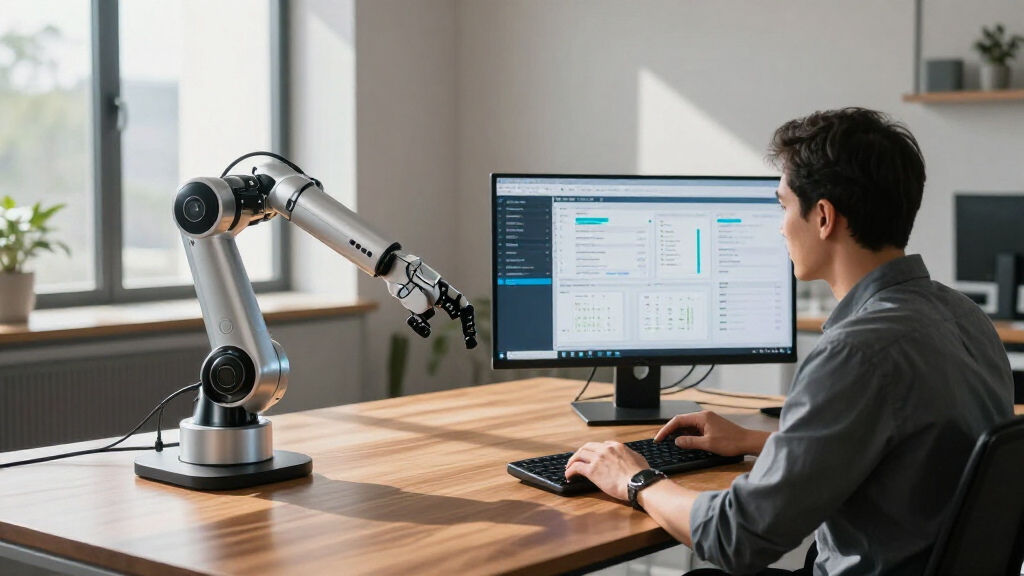

📊 Full opportunity report: The Evolution Of AI In Business: Beyond Assistance To Execution on ThorstenMeyerAI.com — validation score, market gap, and execution plan.
Open a free Amazon Business account
Business pricing, bulk buying and tax-exempt orders.
Create a free accountAs an affiliate, we earn on qualifying purchases.
TL;DR
OpenAI has publicly described a transition in enterprise AI from helping workers to directly executing tasks. This development signals a potential shift in how AI is integrated into business operations, but concrete deployment details are not yet available.
OpenAI has publicly framed a shift in enterprise artificial intelligence, moving from systems that assist workers to those capable of directly executing business tasks. This change, announced in August 2026, suggests a potential evolution in AI deployment, with systems possibly taking on more active roles in workflows, though specific implementations or case studies have not been disclosed. For a detailed analysis, see the original analysis.
According to the published framing by OpenAI, enterprise AI is transitioning from functions such as drafting, summarizing, and answering questions to more autonomous roles in task execution. The available material emphasizes this conceptual shift but does not include deployment figures, customer examples, or independent measurements of outcomes. It remains unclear whether this new approach involves fully autonomous AI actions or supervised automation, as the technical specifics and safeguards are not detailed. This transition is discussed in detail in the original analysis.
OpenAI’s framing indicates that AI systems could interpret requests, select appropriate tools, and complete steps across various business systems, resembling workflow automation but with enhanced language reasoning capabilities. For more insights on how enterprises are deploying AI, see the original analysis.
Implications of AI Moving from Assistance to Execution
This development could significantly alter how companies incorporate AI into their operations. Moving from assistance to execution may reduce manual handoffs, shorten processing times, and allow employees to focus on higher-level decision-making. However, it also raises operational risks, including the potential for incorrect actions that could affect customer data, financial records, or compliance. The absence of detailed safeguards or verification processes in the available material means that the actual impact and safety measures remain uncertain.

AI Agents and AI Automation with n8n: The Complete Beginner’s Guide, Build Agentic AI Systems Step by Step
As an affiliate, we earn on qualifying purchases.
As an affiliate, we earn on qualifying purchases.
Background on AI’s Evolving Role in Business
Over recent years, enterprise AI has primarily been used for support functions such as document drafting, internal search, and meeting summaries, which keep humans in the decision loop. The recent framing by OpenAI suggests a move toward more autonomous systems capable of executing defined tasks within workflows. While automation has traditionally involved rule-based or software-driven processes, the new approach emphasizes natural language understanding and reasoning, potentially broadening AI’s operational scope. No specific products or deployment milestones have been announced, and the transition remains at the conceptual stage.
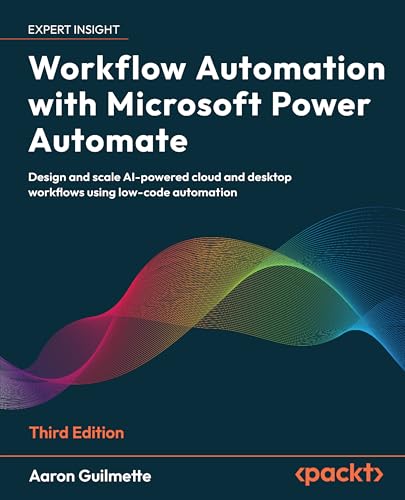
Workflow Automation with Microsoft Power Automate: Design and scale AI-powered cloud and desktop workflows using low-code automation
As an affiliate, we earn on qualifying purchases.
As an affiliate, we earn on qualifying purchases.
Unconfirmed Aspects of AI Execution in Business
It is not yet clear which companies are testing or deploying execution-oriented AI systems, what specific tasks they perform, or how often human oversight is involved. Details about the technical architecture, safeguards, and measurable outcomes remain undisclosed. The claims are based on OpenAI’s framing rather than verified case studies or independent evaluations, so the actual scope and safety of these systems are still uncertain.

The AI Execution System: Finish More Work in 90 Minutes a Day Without Burnout, Overthinking, or Distractions
As an affiliate, we earn on qualifying purchases.
As an affiliate, we earn on qualifying purchases.
Expected Developments and Evidence to Watch For
Future steps will likely include the release of case studies, pilot results, or deployment metrics from OpenAI or its enterprise partners. Watch for reports on task completion rates, error patterns, operational costs, and safety measures. The industry will also seek independent assessments of these systems’ effectiveness and risks before widespread adoption occurs. Clarification on which actions AI can take autonomously and how accountability is managed will be crucial in assessing the real-world impact of this shift.

Agentic Artificial Intelligence: Harnessing AI Agents to Reinvent Business, Work and Life
As an affiliate, we earn on qualifying purchases.
As an affiliate, we earn on qualifying purchases.
Key Questions
What exactly does ‘AI execution’ mean in this context?
It refers to AI systems performing defined business tasks, such as updating records, sending communications, or completing workflow steps, potentially without human intervention. The precise scope and autonomy level are not yet clarified by OpenAI.
Are companies already using AI to fully automate tasks?
There is no confirmed evidence of widespread deployment or fully autonomous AI task execution in enterprises. The current framing is conceptual, with no specific case studies or operational data available.
What safeguards are being proposed for AI-driven task execution?
OpenAI has not disclosed detailed safeguards or safety protocols. It remains unclear what controls, permissions, or review processes would be implemented to prevent errors or unintended consequences.
When might we see concrete examples of AI execution in business?
Next steps likely include pilot projects, case studies, or product announcements from OpenAI or enterprise partners, expected in the coming months as the concept transitions toward practical deployment.
Source: ThorstenMeyerAI.com
College move-in / dorm season Picks
dorm essentials
As an affiliate, we earn on qualifying purchases.