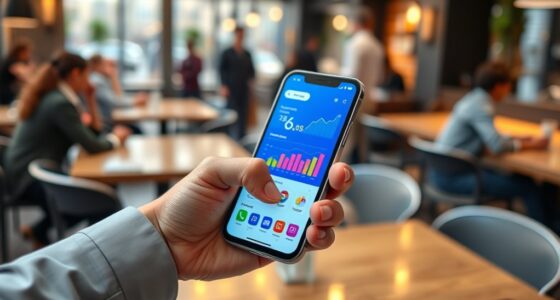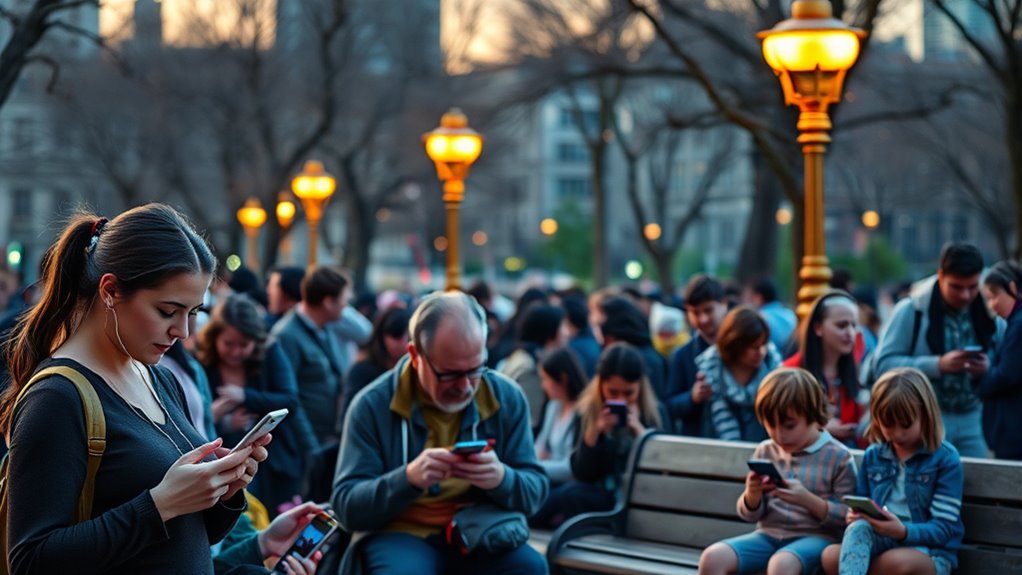

Smartphones can make you feel more connected by allowing instant sharing, video calls, and constant contact with loved ones. But if overused, they might isolate you, replacing face-to-face interactions with superficial online exchanges, leading to loneliness. Striking a balance is key—using devices intentionally helps strengthen genuine relationships instead of replacing them. To understand how to navigate this dual impact and foster healthier social habits, explore more about the social effects of smartphones.

Get the latest gadgets delivered free — and shop member deals
- Fast, free delivery on millions of items
- Access to Prime Big Deal Days deals on October 6–7
- Prime Video, Amazon Music and more included
Key Takeaways
- Smartphones enhance social bonds through instant sharing and real-time communication, fostering feelings of closeness and intimacy.
- Overuse can lead to social isolation and superficial interactions, reducing meaningful face-to-face connections.
- Digital intimacy offers emotional support but may substitute genuine interactions, risking loneliness despite online presence.
- Balancing smartphone use with in-person interactions promotes healthier social relationships and emotional well-being.
- Mindful usage strategies, like setting boundaries and prioritizing real-world contact, help maximize social benefits and reduce loneliness.

Have smartphones truly transformed the way we connect and communicate? It’s a question many of us ponder as we scroll through endless feeds and message friends across distances. On one hand, smartphones have brought digital intimacy to new heights, allowing you to share moments instantly, maintain long-distance relationships, and feel closer to loved ones no matter where they are. With the tap of a screen, you can see a loved one’s smile, hear their voice, or send a quick message that keeps your bond alive. These devices create a sense of closeness that wasn’t possible before, especially when face-to-face interactions aren’t feasible. However, this constant connectivity also has a dark side. While digital intimacy can strengthen relationships, it can sometimes replace real-world interactions, leading to social isolation. You might find yourself more engaged online than in person, substituting virtual interactions for genuine human connection. This shift can make you feel more alone, even amid a sea of online friends and followers.
The paradox of smartphones lies in their ability to both foster and hinder social bonds. When used thoughtfully, they keep you connected with friends and family, sharing updates, photos, and heartfelt conversations. But if you’re not careful, you might fall into the trap of superficial interactions that lack emotional depth. As your reliance on digital communication increases, you may start to feel a disconnect from real-world experiences. Social isolation becomes a real concern when smartphone use replaces face-to-face encounters, leaving you feeling lonely despite being constantly connected online. It’s easy to get caught up in the illusion of being social without truly engaging in meaningful ways. You might scroll through social media for hours, yet still feel a sense of emptiness or detachment from the people around you. Recognizing the impact of digital intimacy on social well-being can help you make more intentional choices.
Understanding this balance is essential. Smartphones aren’t inherently good or bad; it’s how you use them that makes the difference. If you’re aware of the potential for digital intimacy to sometimes substitute real interactions, you can take steps to prioritize in-person relationships. Set boundaries on your screen time, dedicate moments for face-to-face conversations, and recognize when your virtual interactions aren’t enough. The goal is to leverage smartphones as tools that enhance your social life, not replace it. By doing so, you can enjoy the benefits of digital intimacy without falling into the trap of social isolation. Ultimately, your awareness and intentional use of these devices will determine whether they bring you closer to others or push you further into loneliness.
smartphone screen time management tools
As an affiliate, we earn on qualifying purchases.
As an affiliate, we earn on qualifying purchases.
Frequently Asked Questions
How Do Smartphones Affect Face-To-Face Communication Skills?
Smartphones can weaken your face-to-face communication skills by distracting you from nonverbal cues and digital etiquette. When you’re glued to your device, you might miss facial expressions, gestures, or tone of voice that convey meaning. This habit can lead to less meaningful conversations and reduced empathy. To improve, practice mindful phone use during interactions, focus on your conversation partner, and prioritize eye contact and active listening.
Can Smartphones Help Reduce Feelings of Loneliness?
Smartphones can help reduce your feelings of loneliness by enabling virtual friendships and maintaining connections with loved ones, even when you’re apart. They give you instant access to support networks and community groups, which can lessen social isolation. However, while they foster digital bonds, it’s important to balance online interactions with in-person relationships to truly feel connected and avoid feeling more alone.
What Are the Privacy Concerns Related to Smartphone Use?
Did you know that over 80% of smartphone users worry about data privacy? Your privacy concerns are valid, especially with surveillance concerns rising as companies collect vast amounts of data. You risk sensitive information being accessed or misused, leading to potential identity theft or privacy breaches. Always stay cautious, use strong passwords, and review app permissions to protect your personal data from unauthorized surveillance or exploitation.
How Do Smartphones Influence Mental Health Over Time?
Smartphones can negatively influence your mental health over time by fostering digital addiction and encouraging social comparison. You might find yourself constantly checking your device, which increases stress and anxiety. Comparing your life to curated posts can lead to feelings of inadequacy and low self-esteem. To protect your mental health, set boundaries on screen time and focus on real-life connections instead of endless scrolling.
Are There Differences in Social Impact Across Age Groups?
You notice that smartphones impact different age groups uniquely. Younger users often bridge digital divides easily, fostering social connections and sharing experiences. Older generations might face generational gaps, feeling more isolated or overwhelmed by rapid tech changes. As you navigate this landscape, you see that these differences influence social interactions, with younger people more adept at leveraging smartphones for connection, while older users may need support to bridge these social and technological divides.
As an affiliate, we earn on qualifying purchases.
Conclusion
Like a double-edged sword, smartphones can be your bridge or your barrier. You hold the power to build bridges that connect you to others or walls that isolate you. If you choose to wield this tool with awareness, it becomes a lantern guiding you through the darkness of loneliness. Remember, you’re the captain of your social ship—navigate wisely, so your device becomes a vessel of connection, not an anchor of solitude.
smartphone usage boundary reminders
As an affiliate, we earn on qualifying purchases.
As an affiliate, we earn on qualifying purchases.
online-offline social connection devices
As an affiliate, we earn on qualifying purchases.
As an affiliate, we earn on qualifying purchases.
Evergreen bestsellers Picks
bestsellers
As an affiliate, we earn on qualifying purchases.