Over the past decade, you’ve seen smartphones evolve with stunning bezel-less, foldable displays that maximize immersive visuals and versatility. Hardware improvements now deliver laptop-like performance, with ultra-fast processors and tiny batteries that charge in minutes. Camera systems have become multi-lens marvels, powered by AI for professional-quality photos. Enhanced security like facial recognition keeps your device safe. To discover how these innovations continue to reshape your smartphone experience, keep exploring what’s next.

Get the latest gadgets delivered free with Prime
- Fast, free delivery on millions of items
- Prime Video, Amazon Music and more included
- Member-only deals all year
Key Takeaways
- The shift to bezel-less, seamless displays, including foldable screens, revolutionized device design and user immersion.
- Transition from LCD to OLED, AMOLED, and micro-LED screens enhanced visual quality and color accuracy.
- High-performance processors and ultra-fast batteries enabled smartphones to rival laptops in multitasking and demanding tasks.
- Multi-lens camera systems with AI-driven computational photography transformed mobile photography quality.
- Advanced biometric security and 5G connectivity significantly improved device safety, speed, and seamless media sharing.
As an affiliate, we earn on qualifying purchases.
Evolution of Display Technologies and Design Innovations
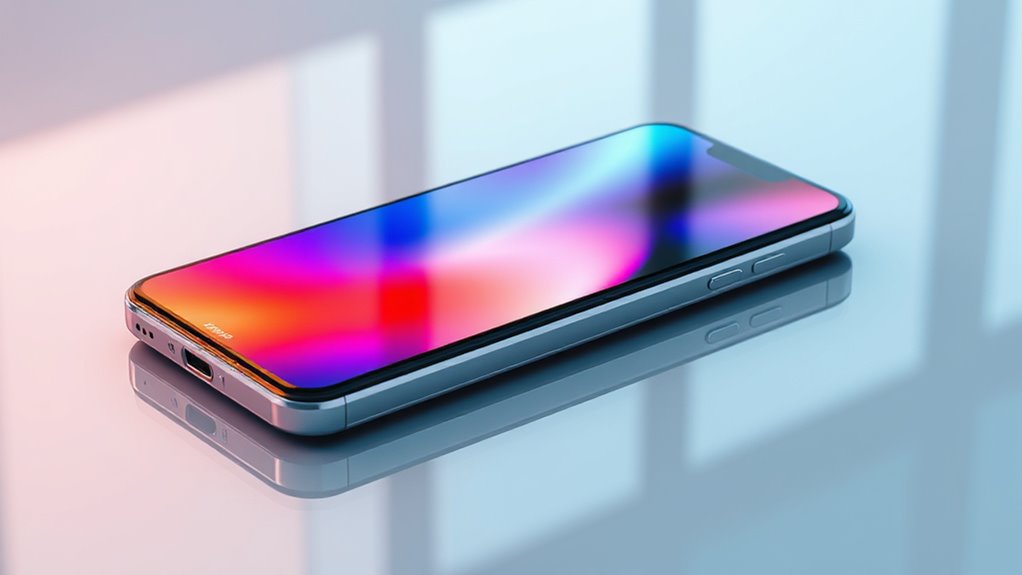
Since the mid-2010s, smartphone display technology has undergone a remarkable transformation, shifting from thick bezels and small screens to sleek, seamless designs. You now enjoy expansive, bezel-less displays that blend seamlessly into the device’s frame. The progression from LCD to OLED, then AMOLED and micro-LED screens, means brighter images, more accurate colors, and better power efficiency. Foldable displays open new possibilities, letting you switch between phone and tablet modes for multitasking. Lighter, stronger materials improve durability and portability without adding bulk. Display technology continues to evolve rapidly, providing even more immersive visual experiences. Screen sizes continue to grow, providing a richer media experience without increasing the device’s footprint. These innovations make your smartphone more immersive, stylish, and versatile, reflecting a clear focus on aesthetics and usability.
As an affiliate, we earn on qualifying purchases.
Breakthroughs in Mobile Performance and Hardware Capabilities
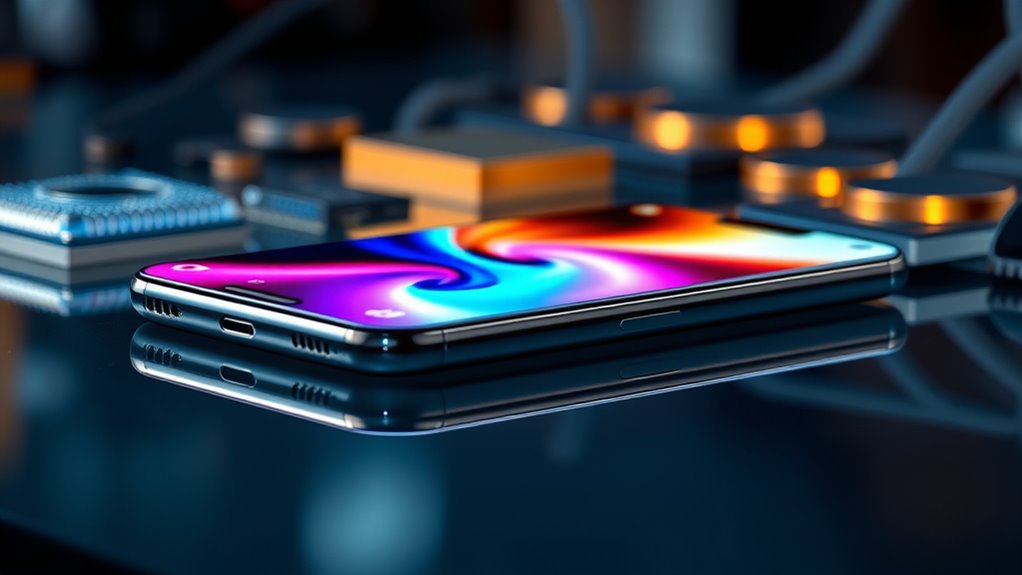
Recent advancements in mobile hardware have pushed smartphones to perform at levels that rival laptops, enabling you to multitask seamlessly, play demanding games, and run sophisticated AI applications on the go. Modern processors like Apple’s A-series, Qualcomm Snapdragon, and Google Tensor deliver impressive speed and efficiency, making heavy tasks feel effortless. Enhanced multitasking features and AI-driven tools, such as real-time translation and image enhancement, improve your user experience. Some phones now include modular components, letting you customize hardware to extend capabilities. Ultra-fast nano-tech batteries, capable of full charges in under a minute, keep you powered longer. Pressure-sensitive screens offer differentiated controls, enhancing gaming and navigation. These innovations ensure your device handles intensive workloads while maintaining sleek, lightweight designs. Additionally, innovative European cloud servers are supporting the development of smarter, more interconnected mobile applications, driving further breakthroughs in smartphone technology.
multi-lens smartphone camera systems
As an affiliate, we earn on qualifying purchases.
As an affiliate, we earn on qualifying purchases.
Advances in Mobile Photography, Software, and Security

Mobile photography has transformed how you capture and share moments, thanks to multi-lens setups that include wide, ultra-wide, telephoto, and macro options. AI-driven computational photography now enhances photos automatically, making professional-quality images accessible to everyone. You can use attachable lenses or smart cameras with object recognition for even better results. Software updates improve your experience through personalized AI, facial recognition, and voice commands, making your device smarter and more intuitive. With 5G, streaming and sharing photos happen instantly, while cloud integration lets you access your media anywhere. Biometric security has advanced from simple fingerprint scans to ultrasonic sensors and facial recognition, providing safer, faster device access. These innovations make your smartphone a powerful tool for photography, seamless software interaction, and secure, effortless access.
5G smartphones with AI photography
As an affiliate, we earn on qualifying purchases.
As an affiliate, we earn on qualifying purchases.
Frequently Asked Questions
How Have Foldable Screens Impacted Smartphone Durability and User Experience?
Foldable screens have improved user experience by offering larger displays without increasing device size, making media, gaming, and multitasking more enjoyable. You benefit from seamless, bezel-less designs that feel modern and lightweight. Although durability has improved with stronger materials, you should still handle foldables carefully, as they remain more delicate than traditional screens. Overall, foldables enhance versatility and engagement, but require mindful usage to maximize longevity.
What Role Does AI Play in Enhancing Mobile Security Beyond Biometrics?
You might be surprised to learn that AI now detects over 99% of security threats before they reach your device. It enhances mobile security by analyzing patterns to identify suspicious behavior, preventing malware, and blocking phishing attempts in real time. AI also manages app permissions dynamically and predicts potential vulnerabilities, making your smartphone smarter and safer without sacrificing usability. This proactive approach keeps your data protected around the clock.
How Are Modular Components Transforming Smartphone Customization and Longevity?
Modular components let you personalize your smartphone and extend its lifespan. You can easily swap out parts like batteries, cameras, or storage, saving money and reducing electronic waste. This flexibility means your device stays up-to-date with the latest tech without needing a full replacement. Plus, you can tailor your phone to your needs, whether for gaming, photography, or durability, making your device more versatile and longer-lasting.
What Are the Environmental Benefits of Recent Sustainable Smartphone Innovations?
Imagine holding a sleek, eco-friendly smartphone that’s built to last, reducing electronic waste. Recent sustainable innovations cut down on harmful materials, making your device easier to repair and upgrade. This means fewer gadgets end up in landfills, helping protect our planet. Plus, energy-efficient batteries and biodegradable components lower your carbon footprint. By choosing these innovations, you’re actively supporting a cleaner, greener future while enjoying cutting-edge tech.
How Will Emerging Display Technologies Redefine Future Smartphone Designs?
Emerging display technologies will redefine your smartphone design by enabling seamless, foldable, and ultra-light devices with vibrant, high-contrast visuals. You’ll see larger screens without increasing size, making media consumption and gaming more immersive. Flexible and transparent displays could lead to innovative form factors, such as foldables or rollable screens. These advancements will make your device more durable, energy-efficient, and adaptable, opening new possibilities for user interaction and sleek, futuristic aesthetics.
Conclusion
Over the last decade, you’ve seen how smartphone breakthroughs transform your daily life, from stunning displays to powerful cameras. Imagine capturing every moment in vivid detail with a device that’s both sleek and secure. For instance, a traveler using facial recognition for quick airport check-ins or editing photos instantly on a high-performance phone shows how these innovations make your experience seamless. These advancements continue to shape a smarter, more connected world just for you.
Halloween Picks
halloween
As an affiliate, we earn on qualifying purchases.