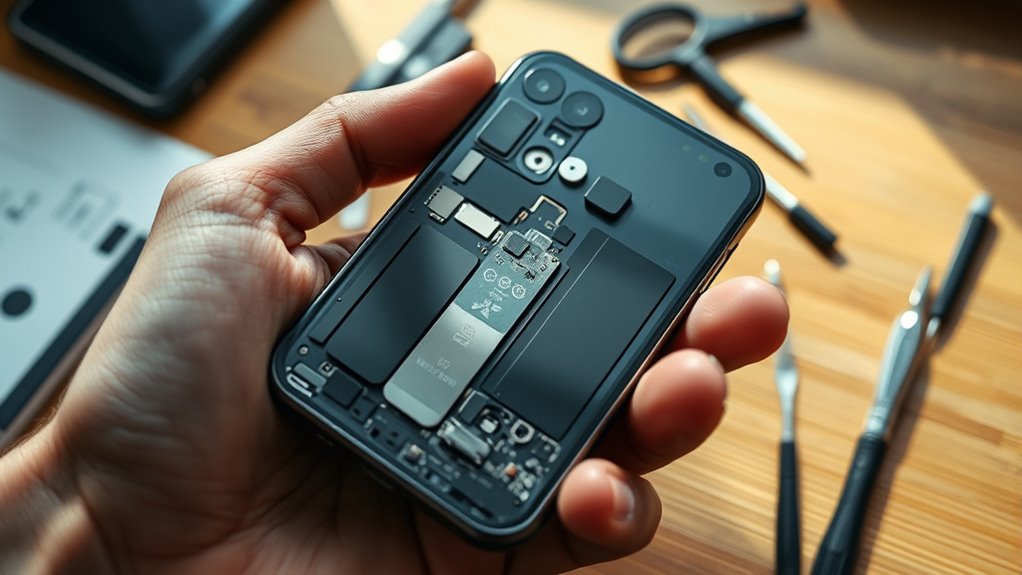

New laws around the right to repair aim to make fixing your smartphone easier and more affordable. They require manufacturers to provide access to repair tools, spare parts, and official guides, so you won’t have to rely solely on expensive service centers. This means you can replace batteries or fix minor issues yourself, extending your device’s lifespan and reducing waste. If you keep exploring, you’ll discover how these laws could truly empower you as a smartphone owner.
Key Takeaways
- New laws may require manufacturers to provide repair tools, parts, and guides, making DIY smartphone repairs easier.
- Consumers could independently replace batteries and fix common issues, reducing reliance on authorized service centers.
- Enhanced repair rights can extend device lifespan, decreasing electronic waste and promoting sustainability.
- Affordable and accessible repairs could lower overall ownership costs and improve device longevity.
- A more open repair environment empowers consumers, increases transparency, and fosters competitive repair markets.
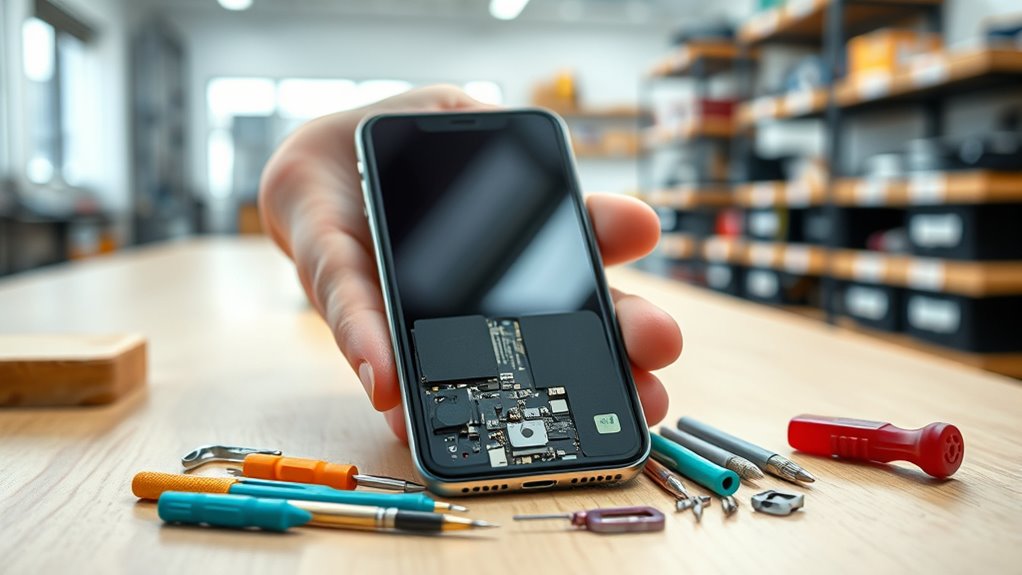
Have you ever wondered why repairing your own devices often feels impossible? It’s frustrating to see your phone or tablet become sluggish or unresponsive and realize that fixing it isn’t as simple as popping into a shop or following a few online guides. One major reason is repair accessibility. Many devices are designed with proprietary parts, glued shut, or sealed tight to prevent easy repairs. As a result, even basic tasks like battery replacement can turn into a costly or complex ordeal. This limited repairability forces you to rely on manufacturer-approved service centers, often at premium prices, and leaves you feeling powerless when your device malfunctions.
But new laws are aiming to change that. The right to repair movement is gaining momentum, pushing for legislation that mandates manufacturers provide consumers and independent repair shops with the necessary tools, parts, and information needed to fix devices easily. Imagine being able to replace your phone’s battery at home without voiding the warranty or spending hours in a store. Better repair accessibility means you regain control over your devices, saving money and reducing electronic waste. It’s about empowering you to extend the lifespan of your gadgets, rather than tossing them out and buying new ones prematurely.
When it comes to battery replacement, these laws could make a significant difference. Currently, many smartphones have batteries that are glued in or require specialized tools to remove. Manufacturers often make it difficult to replace the battery yourself, discouraging DIY repairs. With improved repair accessibility, you might receive official guides, spare parts, and compatible tools that make swapping out the battery straightforward and safe. This not only saves you money but also reduces environmental impact, since fewer devices end up in landfills. Plus, it helps prevent you from being locked into expensive repair services, giving you the freedom to take care of your devices on your own terms. Additionally, promoting repair transparency can help consumers make informed choices and avoid unnecessary replacements.
These legal changes aim to foster a more competitive and transparent repair ecosystem. Instead of being forced into costly repair centers or replacing entire devices for minor issues, you could fix problems quickly and affordably. In the long run, this shifts the power back to consumers, making smartphone ownership less of a gamble and more of a manageable, sustainable experience. The right to repair laws are about ensuring that you have the resources and rights to maintain your devices, whether it’s replacing a worn-out battery or fixing a cracked screen. Ultimately, it’s about making repairs accessible and giving you back control over your technology.
Frequently Asked Questions
How Will Repair Laws Affect Smartphone Prices Long-Term?
Repair laws will likely lower smartphone prices long-term by reducing cost implications for repairs and encouraging market competition. When repair becomes easier and more affordable, manufacturers might face pressure to keep prices competitive. You could see more affordable options and better service choices as companies compete to offer the best repair experience. Overall, these laws can help you save money and promote innovation in the industry, benefiting consumers like you over time.
What Brands Are Most Likely to Comply With New Repair Laws?
Interestingly, brands like Apple and Samsung are most likely to comply with new repair laws because of their brand compliance and growing pressure for transparency. Their repair policy differences already show a willingness to adapt, especially as consumer demand for repairability rises. You’ll probably find these brands offering more accessible parts and repair options, aligning with legal requirements and maintaining their reputation for customer service.
Will Warranties Be Voided if I Repair My Phone Myself?
No, your warranty won’t automatically be voided if you repair your phone yourself. However, warranty compliance depends on whether your DIY repair follows manufacturer guidelines and doesn’t cause further damage. Some brands have DIY repair restrictions, so if your repair damages the device or isn’t authorized, it could invalidate your warranty. Always check your warranty terms and follow proper procedures to ensure your repairs don’t affect your coverage.
How Can Consumers Verify if Repairs Are Officially Authorized?
Your smartphone’s future depends on it! To verify if repairs are authorized, check for official repair certifications and make certain the technician uses authorized parts. Look for official logos or seals from the manufacturer, and ask for proof of certification. Reputable repair shops often display their credentials. By doing this, you guarantee your phone gets quality repairs, avoiding potential damage from unverified fixes that could turn your device into a paperweight.
What Training or Resources Will Be Available for Independent Repair Shops?
You’ll find that repair training programs and resources are becoming more accessible for independent repair shops. Manufacturers, industry groups, and local organizations are offering thorough repair training sessions, online tutorials, and detailed manuals. These resources help you stay updated on the latest repair techniques and guarantee quality work. As laws promote resource availability, you’ll have better access to the tools and knowledge needed to confidently repair smartphones, supporting your business growth and customer trust.
Conclusion
So, with these new laws, will you finally have the power to fix your own devices or choose who repairs them? The right to repair could give you more control, affordability, and sustainability. Don’t you want to be able to maintain your smartphone without unnecessary hurdles? As laws evolve, it’s up to you to decide whether to embrace this change and reclaim your ownership rights or stay dependent on manufacturers. Are you ready to take back control of your devices?