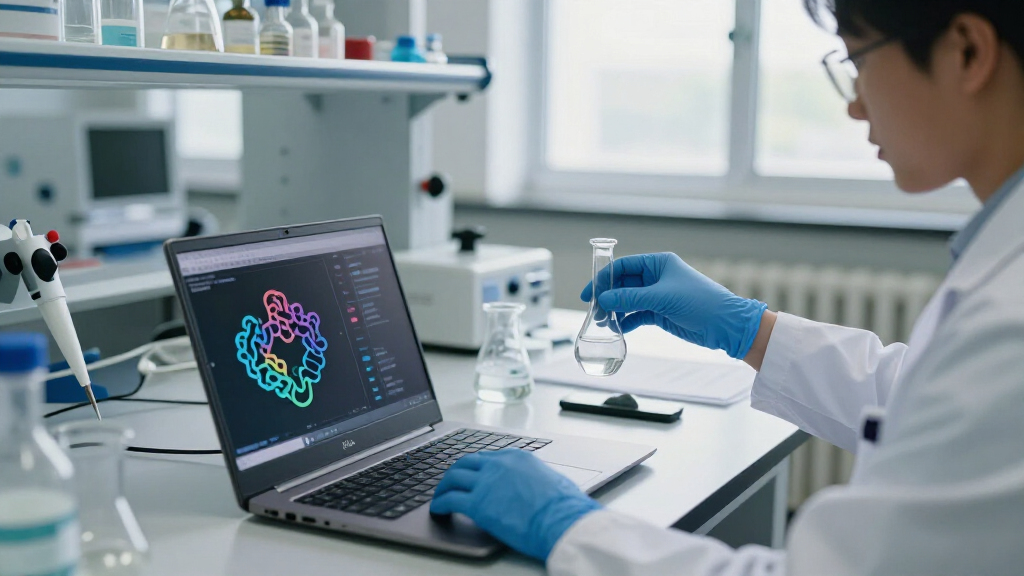

🔍 Read the full analysis: Did Claude Make A Biology Breakthrough? A Scientist Says He Studied The Enzymes For Years on ThorstenMeyerAI.com

Get the latest gadgets delivered free — and shop member deals
- Fast, free delivery on millions of items
- Access to Prime Big Deal Days deals on October 6–7
- Prime Video, Amazon Music and more included
TL;DR
A Yahoo Tech headline links an Anthropic biology claim involving Claude to a scientist who says he studied the enzymes for four years. The article body and supporting research details are unavailable, so the enzymes, Claude’s role, and whether the work overlaps or establishes a new finding cannot be verified.
A Yahoo Tech headline says a scientist had studied enzymes for four years, raising a question about prior work related to an Anthropic biology claim involving Claude, as discussed in the original analysis. The article body was unavailable for verification, leaving unclear which enzymes or findings are at issue and what Claude reportedly contributed.
The available information establishes only that the headline connects Anthropic and Claude with a claimed biology advance and refers to a scientist who says he studied the enzymes for four years. The scientist is not identified in the material provided, and no direct statement, institution, research paper or experimental result is included. The four-year period is attributed to the headline’s account; its dates and scope are unknown.
There is no description of Anthropic’s specific claim, the enzyme or enzymes involved, or the task Claude performed. The material does not say whether the model proposed a hypothesis, analyzed data, helped design an experiment or contributed in another way. It also gives no information about laboratory validation, peer review, publication, or a public response from Anthropic or the scientist.
Those gaps mean the headline cannot establish that the two bodies of work produced the same finding, that Anthropic overlooked earlier research, or that Claude’s work was a breakthrough. It also does not show that Anthropic claimed to discover the enzymes themselves. The report’s framing raises a question about research history and novelty; it does not resolve that question or document a formal dispute.
Why Prior Enzyme Research Matters
The claim matters because scientific advances depend not only on what was found, but also on what was already known and how the new result was established. If the scientist’s earlier work concerns the same enzymes and a closely related finding, that record could help readers evaluate the novelty of Anthropic’s reported result. But studying the same subject for a period of time is not, by itself, evidence that two projects reached the same conclusion.
The story also touches on how credit is assigned when AI tools are used in research. A model could assist with a task without independently conducting or validating a scientific study. To judge Claude’s contribution, readers would need an account of the model’s role alongside the researchers’ methods and evidence. Without those details, neither the scale of the AI contribution nor the scientific importance of the claim can be assessed.
For now, the development is best understood as a question requiring evidence, not proof for or against Anthropic’s claim. Clear timelines and comparable research findings would matter to scientists, readers following AI-assisted discovery and anyone assessing claims about the novelty of a result.
As an affiliate, we earn on qualifying purchases.
What the Available Report Says
The source material available for this account summarizes a Yahoo Tech headline but says the article body could not be retrieved. It provides no publication date, link to a scientific paper or independent account of the reported research. The headline’s reference to four years is the only stated detail about the scientist’s work, and it does not establish when that research began or what it found.
In biology, work on the same molecule or enzyme does not necessarily amount to the same discovery. Research can describe a molecule, test its function or demonstrate an application; each claim depends on its own methods and evidence. Here, the available material does not say which of these kinds of work is involved. It therefore cannot support a comparison of the scientist’s research with Anthropic’s claim.
Likewise, the word “breakthrough” appears in the source framing as a claim, not as a finding supported by evidence in the supplied material. No independent scientific assessment, peer-reviewed result or documented laboratory test is identified. The distinction matters: a headline can flag a potentially relevant history, but the underlying records are needed to judge the science and attribution.
As an affiliate, we earn on qualifying purchases.
Key Research Details Are Missing
The central facts remain unresolved: which enzymes are involved, who the scientist is, what the earlier research produced and what Anthropic said Claude did. The material does not provide the scientist’s own words beyond the headline’s summary, or identify any dated publications, patents, datasets or laboratory results that could clarify the record.
It is also unknown whether the scientist’s work was publicly available before Anthropic’s reported result, whether it addresses the same specific finding, or whether Anthropic acknowledged it. No documented response from either side is supplied. The available account does not establish misconduct, a priority dispute, duplication or independent confirmation of a biological advance.
Because the original article’s details are missing, even the nature of the alleged overlap is uncertain. The four-year figure alone does not reveal whether the scientist studied the same question, reached a related result or worked in a broader area. Conclusions about novelty or credit would require the research records and a precise description of each project.
As an affiliate, we earn on qualifying purchases.
Research Records Could Clarify the Claim
The next useful step would be access to the full Yahoo Tech report and the underlying research details. A clearer account would identify the scientist, specify the enzymes and findings, and explain Anthropic’s account of Claude’s role. Dated papers or other research records could help establish what was known and when.
Any assessment would also benefit from information on whether Claude-assisted results were tested experimentally and whether the findings have been reviewed or independently replicated. Those details would help separate a model’s reported contribution from the work of the human researchers and distinguish a proposed result from a validated one.
Until those materials are available, the headline supports only a limited conclusion: prior enzyme research may be relevant to evaluating Anthropic’s claim, but the relationship between the projects is unverified. A documented response or a direct comparison of the work could clarify the issue; the current material does not say when such details may appear.
AI-assisted scientific research tools
As an affiliate, we earn on qualifying purchases.
As an affiliate, we earn on qualifying purchases.
Key Questions
What did the Yahoo Tech headline report?
It linked an Anthropic biology claim involving Claude to a scientist who reportedly said he had studied the enzymes for four years. The supplied material does not include the article body or further details.
Is there evidence that Claude discovered the enzymes?
No such evidence appears in the available material. It does not identify the enzymes or explain Claude’s role, and it does not establish that Anthropic claimed Claude discovered the enzymes themselves.
Does the scientist’s four years of research disprove Anthropic’s claim?
No. The headline’s reported duration does not show what the scientist studied or found, or whether it matches Anthropic’s reported result. A comparison of the research and its timeline would be needed.
Has the reported biology result been independently verified?
The available information does not say whether the result was experimentally tested, peer-reviewed or independently reproduced. Those points remain unconfirmed.
Primary source: Anthropic · via ThorstenMeyerAI.com
Fall Picks
fall essentials
As an affiliate, we earn on qualifying purchases.