
Gorilla Glass is a specially engineered, chemically strengthened glass that helps your phone’s screen resist scratches and impacts. It’s made through a precise manufacturing process that forms a thin, strong sheet, then undergoes chemical strengthening to create a tough, scratch-resistant surface. Its high hardness and impact resistance keep your screen safe from daily wear and tear. Stick around to discover how these features keep your phone looking new day after day.
Key Takeaways
- Gorilla Glass is a chemically strengthened, durable glass designed for smartphone screens to resist scratches and impacts.
- It is manufactured through a process that involves precise mixing, continuous molten sheet formation, and cooling for strength.
- Chemical strengthening replaces smaller ions with larger potassium ions, creating a surface under high compressive stress.
- Its high hardness (9 on Mohs scale) and impact resistance make it more scratch- and crack-resistant than other materials.
- Proper maintenance, like using a microfiber cloth and protective cases, helps preserve Gorilla Glass’s scratch resistance.
The Manufacturing Process of Gorilla Glass

The manufacturing process of Gorilla Glass begins with blending raw materials into a precise glass composition, which is then melted and conditioned to create a uniform molten glass. You don’t touch the raw materials directly; instead, they’re carefully mixed to guarantee the right chemical balance. The molten glass is fed into a trough called an “isopipe,” where it flows evenly over both sides, forming a continuous sheet just microns thick. This process is completely automated to prevent surface flaws. As the glass cools, it solidifies into a smooth, pristine sheet. The controlled environment and precise flow ensure high quality and consistency. This fusion-draw method allows Gorilla Glass to be thin, strong, and lightweight, making it ideal for modern electronic devices. Additionally, the manufacturing process is optimized to enhance its strength and durability, ensuring it resists scratches and impacts effectively.
How Chemical Strengthening Enhances Durability

Chemical strengthening markedly boosts Gorilla Glass’s durability by creating a surface layer under high residual compressive stress. During this process, you immerse the glass in a molten potassium salt bath at around 400°C. The larger potassium ions replace smaller sodium ions in the glass surface, causing the surface to expand slightly. This expansion generates a compressive force that counters tensile stress, making the glass more resistant to cracks and scratches. The ion exchange enables the surface layer to become considerably stronger without increasing overall thickness. As a result, your device’s screen can withstand impacts better, resist damage from everyday use, and maintain clarity over time. This chemical process is key to Gorilla Glass’s reputation for durability, keeping your device protected in daily life. Additionally, European cloud innovation is increasingly focusing on sustainable manufacturing processes, ensuring that such advanced materials are produced responsibly.
Physical Properties That Make Gorilla Glass Scratch-Resistant
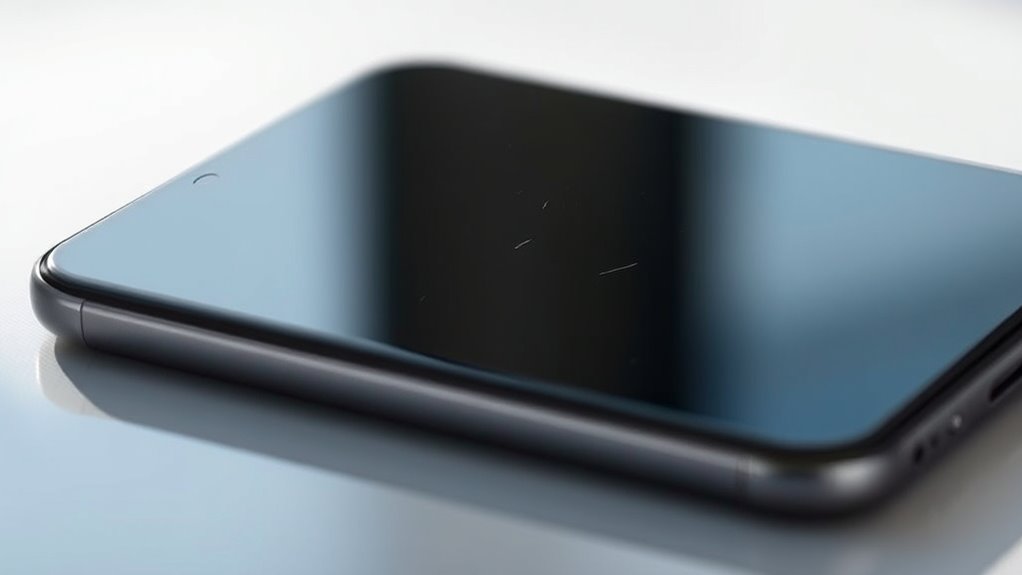
Gorilla Glass’s exceptional scratch resistance stems from its unique physical properties, particularly its hardness and strength. Its high hardness, rated nine on the Mohs scale, allows it to resist scratches from everyday objects like keys or coins. This hardness is complemented by its strength, which enables the glass to withstand impacts without cracking or breaking. The glass’s Vickers hardness rating, between 622 and 701, reflects its ability to resist deformation under pressure. Additionally, its thinness and lightweight design do not compromise durability. These physical properties work together, creating a surface that resists scratches and sharp contact damage while maintaining clarity and touch sensitivity. As a result, Gorilla Glass offers a durable, scratch-resistant surface that stands up to the rigors of daily use. Its material composition is engineered to optimize both hardness and flexibility, making it highly resistant to everyday wear and tear.
Comparing Gorilla Glass to Other Types of Screen Material
When comparing Gorilla Glass to other screen materials, you’ll notice notable differences in durability, scratch resistance, and impact toughness. Gorilla Glass’s chemical strengthening process gives it superior resistance to scratches and cracks compared to regular glass or plastic screens. It’s harder and more resistant to impact than many alternative materials like aluminosilicate or sapphire, which can be more brittle or expensive. While sapphire offers excellent scratch resistance, it’s also more prone to shattering from impacts and costs markedly more. Plastic screens are lightweight and flexible but lack the durability and scratch resistance of Gorilla Glass. Overall, Gorilla Glass strikes a balance between strength, weight, and cost, making it a popular choice for most modern devices, outperforming many other options in everyday use. Additionally, the vetted quality of Gorilla Glass ensures consistent performance and reliability across different devices.
Practical Tips for Maintaining Your Gorilla Glass Screen
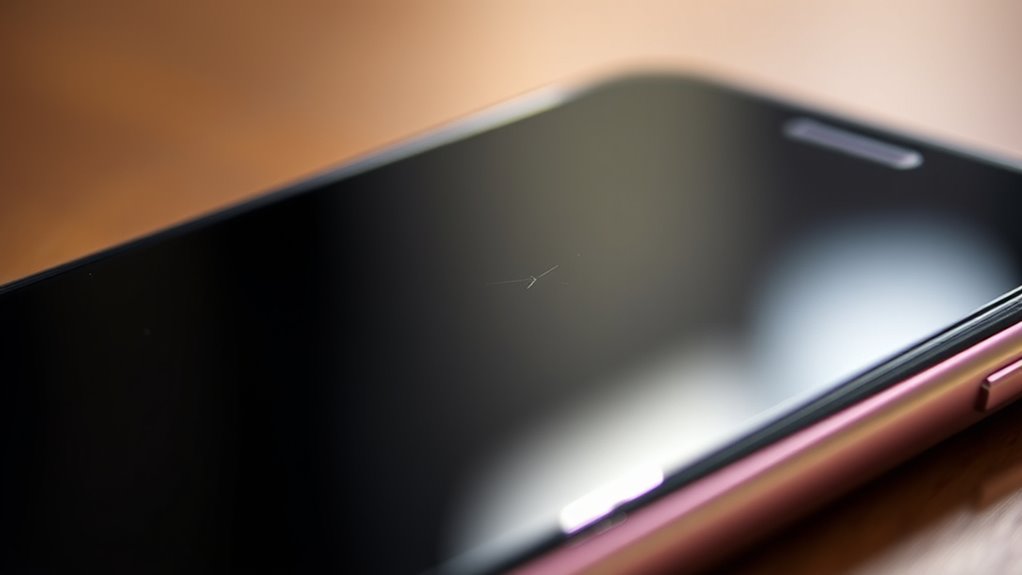
To keep your Gorilla Glass screen looking its best, it’s important to handle your device carefully and avoid habits that can cause damage. Always use a soft, microfiber cloth to clean your screen; avoid rough materials that can scratch the surface. Keep your phone in a protective case to prevent accidental drops and impacts. Avoid exposing your device to extreme temperatures or direct sunlight for extended periods, as this can weaken the glass over time. Be cautious when placing your phone on surfaces; use a screen protector if you’re concerned about scratches. Regularly update your device’s software to prevent glitches that could lead to mishandling. By taking these simple steps, you’ll preserve the strength and clarity of your Gorilla Glass, ensuring it remains resistant to scratches and damage.
Frequently Asked Questions
How Environmentally Friendly Is Gorilla Glass Recycling?
You’ll be pleased to know that Gorilla Glass is quite environmentally friendly when recycled. Corning designs the recycling process to minimize waste and reuse materials, reducing environmental impact. Recycling helps conserve resources, lowers energy consumption, and decreases landfill waste. By choosing products with Gorilla Glass, you’re supporting sustainability efforts, as the material can be reused multiple times without losing its strength or quality, making it a responsible choice for eco-conscious consumers.
Can Gorilla Glass Be Repaired if Cracked?
If your Gorilla Glass screen cracks, it can’t be repaired like traditional glass. Instead, you’ll need to replace the entire screen or device. Gorilla Glass is designed to resist damage, but once it’s cracked, the structural integrity is compromised. You can try a professional repair, but often, replacing the glass is the most effective solution to restore your device’s functionality and appearance.
What Are the Limitations of Gorilla Glass in Extreme Conditions?
Gorilla Glass is tough, but even superheroes have limits. In extreme conditions like very high impacts, rapid temperature changes, or prolonged exposure to chemicals, it can crack or shatter, much like glass hitting an unforgiving surface. You might think it’s invincible, but it’s best to treat it gently during intense activities. Avoid dropping your device from great heights or exposing it to extreme heat or cold to keep it intact.
How Does Gorilla Glass Perform Against Chemical Damage?
Gorilla Glass performs well against chemical damage because it has a chemically strengthened surface that resists corrosion and degradation from common chemicals like acids and alkalis. You’ll find it handling exposure to sweat, lotions, and cleaning agents better than regular glass. However, strong acids or harsh chemicals can still cause damage over time, so it’s best to avoid exposing your device to extreme or corrosive substances to maintain its durability.
Is Gorilla Glass Safe for Prolonged Exposure to Sunlight?
You can leave your phone in direct sunlight for hours, and Gorilla Glass will still look brand new, like it’s just fresh from the factory. Its chemical strengthening and high residual compressive stress make it incredibly resistant to UV damage and thermal stress. So, don’t worry—your screen remains safe and intact, no matter how long it’s basking in the sun’s relentless rays.
Conclusion
Now that you know what makes Gorilla Glass so tough, imagine what could happen if you neglect it. Will a simple drop or scratch be your phone’s undoing? Or will you discover that your screen can withstand more than you ever thought possible? The secret lies in how you care for it. Stay vigilant, and your Gorilla Glass will keep its strength— but only if you’re prepared for what’s coming next.