
An AMOLED display is a screen that produces vibrant colors and deep blacks by illuminating organic compounds directly at each pixel. Unlike LCD screens, it doesn’t need a backlight, making devices thinner and more flexible. This technology offers better contrast, faster response times, and improved power efficiency—especially with dark images. If you want to discover how AMOLED screens can enhance your viewing experience and what makes them stand out, keep exploring further.
Key Takeaways
- AMOLED displays use organic compounds that emit light individually, enabling true blacks and vibrant colors.
- They are thinner, more flexible, and can be curved or foldable, offering innovative device designs.
- Unlike LCDs, AMOLED screens do not require a backlight, resulting in better contrast and energy efficiency.
- They provide fast response times and high refresh rates, ideal for smooth videos and gaming experiences.
- The screen type impacts display quality, power consumption, device durability, and potential for flexible, modern designs.
Understanding the Basics of AMOLED Technology
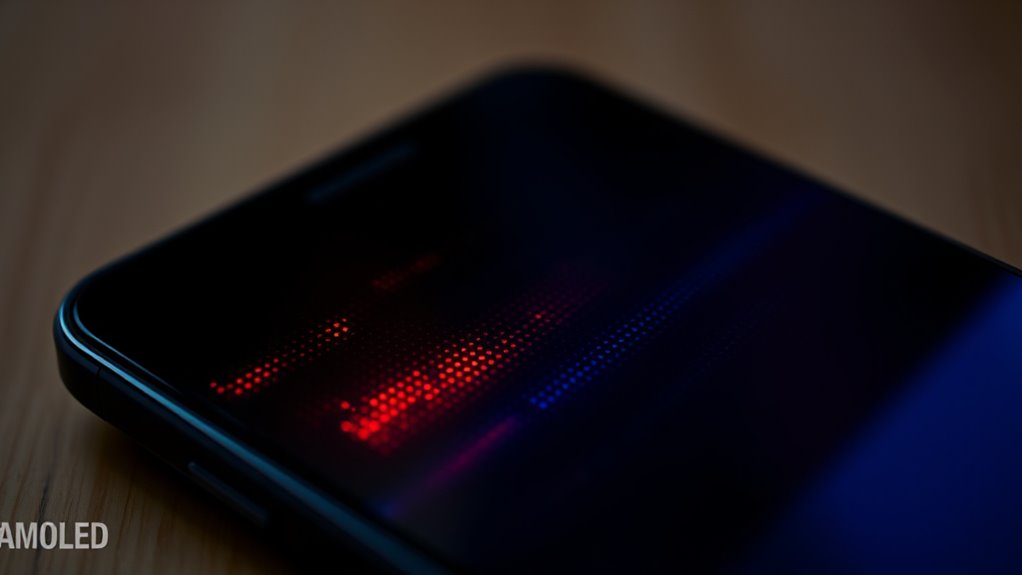
To understand AMOLED technology, it’s important to recognize that it stands for Active Matrix Organic Light Emitting Diode. This display type uses organic compounds that emit light when electricity flows through them. Unlike LCDs, AMOLED pixels self-illuminate without needing a backlight, so they can turn off individually for true blacks. The “Active Matrix” part refers to a layer of thin-film transistors (TFTs) that control each pixel precisely, enabling fast response times and vibrant colors. Each pixel contains red, green, and blue sub-pixels that combine to produce a full spectrum of colors. The organic layers are sandwiched between conductive layers, emitting light directly. This design results in thinner, more flexible screens that deliver high contrast, rich colors, and efficient power consumption, especially when displaying dark images. Additionally, AMOLED displays are known for their superior viewing angles and energy efficiency, making them ideal for modern smartphones and high-end screens.
How AMOLED Displays Differ From Other Screen Types
AMOLED displays stand out from other screen types primarily because they emit their own light, allowing for true blacks and infinite contrast ratios that LCDs and other backlit screens can’t match. Unlike LCDs, which rely on a separate backlight to illuminate pixels, AMOLED’s organic diodes turn off completely when displaying black, resulting in deeper blacks and better contrast. This self-emitting technology also enables slimmer, more flexible designs, perfect for curved or foldable devices. Colors appear more vibrant and saturated because each pixel independently controls its brightness and hue. Additionally, AMOLED screens consume less power when displaying dark content, extending battery life. Moreover, understanding display technology helps consumers make informed choices about their device screens. Overall, they deliver superior image quality, responsiveness, and design flexibility compared to traditional LCD or LED screens.
The Advantages of Using AMOLED Screens
One of the primary advantages of AMOLED screens is their ability to produce true blacks and achieve infinite contrast ratios. Because each pixel can turn off completely, your display shows deep blacks, making colors pop and details stand out. This results in richer images, better HDR performance, and a more immersive viewing experience. Additionally, AMOLED screens are thinner and more flexible, letting manufacturers create curved or foldable devices. Power efficiency improves when displaying dark themes, extending your device’s battery life. The fast response times reduce motion blur during fast-paced videos and gaming. Here’s a quick look at the benefits: energy-efficient displays align with the goals of sustainable technology advancements in modern devices.
Technical Principles Behind AMOLED Functionality

You can understand AMOLED’s operation by looking at how organic materials emit light when electrically stimulated. The active matrix layer with thin-film transistors precisely controls the current flowing to each pixel, affecting brightness and color. As a result, the display can produce vibrant images with accurate colors and deep blacks by regulating light at the pixel level. Additionally, essential oils used in aromatherapy can promote relaxation and reduce stress, which may indirectly enhance your overall experience with device usage.
Organic Light Emission Process
The organic light emission process in AMOLED displays relies on organic compounds that emit light when an electrical current passes through them. When you send a voltage across the organic layers, electrons and holes combine to produce photons, or visible light. This process happens within each pixel’s organic materials—no backlight needed. As a result, you get deeper blacks and vibrant colors. Here’s how it works:
- Organic molecules glow directly when energized, creating light on demand.
- Different organic compounds emit red, green, or blue light, forming full-color images.
- The light intensity varies based on the current, controlling brightness precisely.
- Because each pixel produces its own light, you get true blacks and high contrast.
- The self-emitting nature of AMOLED technology allows for thinner screens and more flexible designs.
This self-emitting process is key to AMOLED’s stunning visuals and energy efficiency.
Active Matrix Control
Active matrix control in AMOLED displays relies on a layer of thin-film transistors (TFTs) that individually regulate the electrical current supplied to each pixel. These transistors act as switches, turning pixels on or off rapidly, which allows for precise control over brightness and color. Each pixel’s TFT stores charge in a capacitor, maintaining its state between refresh cycles. This setup enables fast response times and reduces ghosting effects. Additionally, the power efficiency of AMOLED screens benefits from this matrix system, as it allows pixels to be turned off completely when displaying black, saving energy. Below is a table illustrating how these components work together:
| Component | Function |
|---|---|
| Thin-Film Transistor (TFT) | Controls current flow to pixel |
| Storage Capacitor | Maintains pixel state between refreshes |
| Organic Light Emitting Diode (OLED) | Emits light based on current flow |
This matrix system ensures smooth, accurate display performance.
Color and Brightness Regulation
Color and brightness regulation in AMOLED displays relies on precise control of the current flowing through each sub-pixel, which determines the emitted light intensity and hue. You can see how this control impacts image quality and power efficiency. When the current varies, it adjusts the brightness and color of each pixel at a microscopic level, allowing for vivid images and deep blacks. To achieve this, AMOLED screens use the active matrix layer with thin-film transistors that regulate current flow. Here’s what makes this work:
- Independent control of red, green, and blue sub-pixels for rich colors
- Varying current to adjust brightness dynamically
- Fast response times due to quick current regulation
- Low power consumption when displaying darker images
- Precise current regulation enables the creation of detailed and accurate images.
This precise regulation results in stunning visuals and efficient energy use.
Common Uses and Industry Applications of AMOLED
You’ll find AMOLED displays everywhere you look, from smartphones and tablets to high-end TVs, thanks to their vibrant colors and deep blacks. They’re also key to creating flexible screens for foldable phones and wearable devices, pushing design boundaries. With their sharp visuals and adaptable form factors, AMOLED technology continues to transform how industries approach display innovation. Additionally, their power efficiency makes them a popular choice for battery-powered devices requiring long-lasting screens.
Mobile Device Integration
AMOLED displays have become a popular choice for mobile devices because their vibrant colors, true blacks, and thin, flexible design enhance user experience and device aesthetics. You’ll find AMOLED screens in smartphones, tablets, and wearables, offering sharp visuals and smooth performance. Leading brands like Samsung and Apple use AMOLED for flagship models, prioritizing stunning displays. The technology’s flexibility also enables curved and foldable phones, giving you innovative form factors. You benefit from:
- Bright displays that perform well outdoors
- Fast response times perfect for gaming and videos
- Slim profiles for lightweight, sleek devices
- Energy efficiency, especially with dark themes
This integration makes your device more functional and visually appealing, elevating everyday use and multimedia consumption. AMOLED’s industry adoption continues to grow, shaping the future of mobile display technology, especially as Smart Home Technology increasingly incorporates high-quality screens for control interfaces and security displays.
High-Quality Visual Content
Thanks to their vibrant displays and deep blacks, AMOLED screens are the preferred choice for high-quality visual content across various industries. You’ll find them in premium smartphones, where their rich colors and sharp contrast enhance photos, videos, and apps. Television manufacturers use AMOLED to deliver immersive, lifelike images with superior color accuracy and contrast, making movies and gaming more engaging. Creative professionals rely on AMOLED displays for photo editing, graphic design, and digital artwork, thanks to their wide color gamut and precise color reproduction. In industrial settings, AMOLED screens provide clear visibility and fast response times for control panels and dashboards. Their ability to produce stunning visuals and handle fast-moving content makes AMOLED a top choice for any application demanding high-quality, vibrant images. Additionally, advances in display technology ensure that AMOLED screens continue to improve in durability and energy efficiency, making them suitable for a broader range of uses.
Flexible Display Innovations
Have you ever wondered how flexible displays are transforming the way we use electronic devices? With AMOLED technology, bending, folding, and rolling screens are now a reality. This innovation enables devices like foldable smartphones, rollable TVs, and curved wearables.
Some common uses include:
- Foldable smartphones that fit easily in your pocket but expand for better viewing
- Rollable TVs that tuck away when not in use
- Curved monitors providing immersive gaming and work experiences
- Flexible wearables that conform to your wrist or body shape
These advancements make devices more compact, portable, and stylish. By integrating AMOLED’s thin, bendable layers, manufacturers create sleek products that combine performance with innovative design—changing the way you interact with screens daily. Understanding display technology can help you appreciate the engineering behind these flexible innovations.
Variants and Enhancements in AMOLED Panels
Variants and enhancements in AMOLED panels aim to improve performance, flexibility, and user experience by integrating new technologies and design improvements. For example, Super AMOLED combines the touch layer with the display itself, reducing thickness and boosting responsiveness. Dynamic AMOLED enhances brightness, color accuracy, and HDR support, making visuals more vivid and true to life. Recent panels focus on reducing power consumption by optimizing organic materials and pixel driving techniques, which helps extend battery life. Flexible AMOLED uses polyimide substrates instead of glass, allowing screens to bend and fold without damage. Additionally, advancements target minimizing burn-in risks and improving lifespan, ensuring your device remains vibrant over time. These innovations help deliver sharper images, better durability, and more versatile device designs. Understanding display technology explains how these improvements impact overall device performance and user experience.
Key Performance Metrics That Matter
What makes an AMOLED display stand out regarding performance? It’s all about the key metrics that directly impact your viewing experience. First, contrast ratio is vital; AMOLEDs deliver ratios over 100,000:1, providing true blacks and vibrant colors. Response time matters too—milliseconds that ensure smooth motion without blurring during fast scenes. Power efficiency is another highlight, especially when displaying dark themes, helping extend your device’s battery life. Ultimately, wide viewing angles keep colors consistent regardless of your position. These factors combine to make AMOLED displays ideal for high-quality media consumption and gaming. Here’s what to look for:
- High contrast ratios (>100,000:1)
- Fast response times (milliseconds)
- Low power consumption on dark screens
- Wide, consistent viewing angles
Additionally, understanding the performance metrics helps you choose screens that offer the best visual experience.
The Impact of AMOLED on Device Design and User Experience
The impressive performance metrics of AMOLED displays directly influence how devices are designed and experienced. Because these screens can be incredibly thin and flexible, manufacturers create sleeker, more innovative devices, including curved and foldable phones. The high contrast and vibrant colors enhance visual appeal, making images sharper and more immersive. Faster response times improve gaming and video playback, reducing motion blur and lag. Power efficiency on dark themes extends battery life, allowing you to enjoy longer usage without frequent charging. Wide viewing angles mean your screen looks great from almost any perspective, increasing convenience. Additionally, AMOLED technology supports flexible displays, enabling the development of foldable and curved devices that further enhance user interaction. Overall, AMOLED technology empowers you to experience richer visuals and more stylish, versatile device designs that better align with modern lifestyles.
Future Trends and Developments in AMOLED Displays
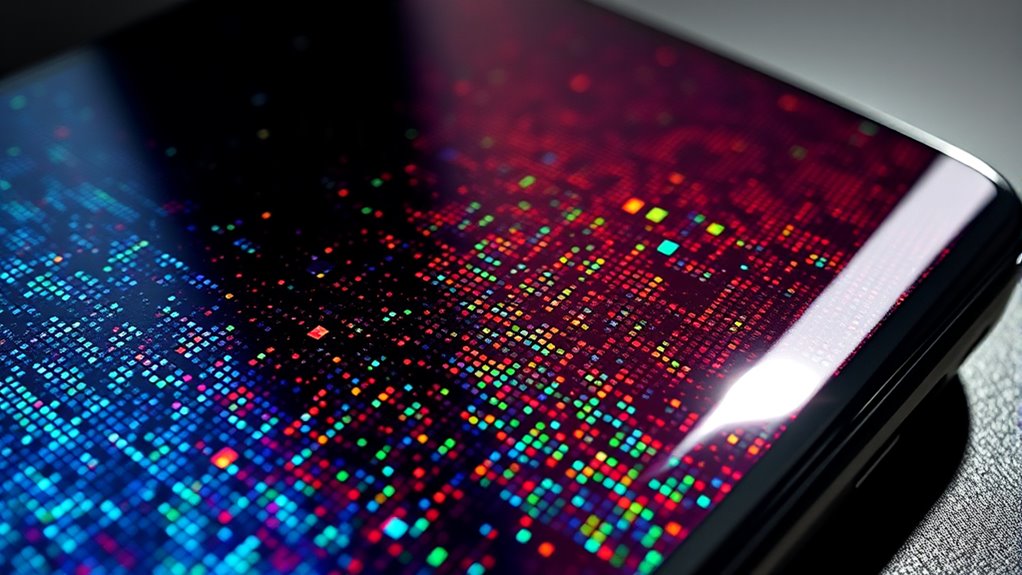
As AMOLED technology continues to evolve, manufacturers are focusing on enhancing display durability, efficiency, and versatility. You can expect innovations like increased resolution, longer organic material lifespan, and better power management. Future trends include:
- Developing flexible, foldable screens with even greater durability and responsiveness
- Improving energy efficiency to extend battery life, especially in high-performance devices
- Incorporating advanced materials for reduced burn-in and longer-lasting displays
- Enhancing color accuracy and HDR capabilities for more immersive visuals
- Advances in display materials are also expected to reduce manufacturing costs and improve overall quality.
These advancements aim to make your screens more resilient, vibrant, and adaptable to new device designs. As a user, you’ll benefit from brighter displays, lower power consumption, and more flexible form factors, ensuring AMOLED remains at the forefront of display technology.
Frequently Asked Questions
How Durable Are AMOLED Screens Over Long-Term Use?
You might find that AMOLED screens are quite durable over long-term use, especially if you take proper care. They resist scratches better due to their flexible, thin design, and modern panels are built to last with improvements in organic material longevity. However, you’ll want to avoid prolonged static images to prevent burn-in. Regular use and gentle handling help maintain their vibrant colors and overall performance over time.
What Causes Burn-In on AMOLED Displays?
Burn-in on AMOLED displays happens when static images stay on your screen for too long, causing pixels to wear unevenly. Over time, these pixels degrade faster, leaving a faint ghost image even when you switch to other content. You might notice this as persistent shadows or outlines of icons, especially with high-contrast or static images. To prevent burn-in, avoid leaving static images on your screen for extended periods.
Are AMOLED Screens More Energy-Efficient Than LCDS?
You’ll find AMOLED screens are often more energy-efficient than LCDs, especially when displaying darker images. This is because each pixel can turn off completely, saving power like a super-efficient engine. When you view dark themes or black backgrounds, your device’s battery lasts much longer. Plus, with their ability to display rich colors and deep blacks, AMOLEDs make your content pop while consuming less energy, giving you a longer-lasting device experience.
How Does Screen Flexibility Affect AMOLED Lifespan?
Flexibility in an AMOLED screen can impact its lifespan because bending or folding repeatedly stresses the organic layers and thin-film transistors, potentially causing microcracks or delamination over time. You might notice reduced brightness, color accuracy, or increased burn-in as the display ages. To maximize longevity, handle flexible AMOLED devices carefully, avoid excessive bending, and follow manufacturer guidelines, ensuring the organic materials stay intact and functional for as long as possible.
Can AMOLED Displays Be Repaired or Replaced Easily?
You can repair or replace AMOLED displays, but it’s not always easy. These screens are delicate, with organic layers that can be damaged during removal or installation. You’ll need specialized tools and skills, often requiring professional repair services. While replacement is possible, it’s typically costly and time-consuming due to the display’s thin, flexible design. So, handle them carefully and seek expert help for repairs to avoid further damage.
Conclusion
Choosing an AMOLED display is like selecting a window to a vibrant world—bright, vivid, and full of life. You’ll notice richer colors, deeper blacks, and faster response times that make everything feel more immersive. Just like upgrading your lens transforms your view, switching to AMOLED elevates your device experience. As technology advances, expect these screens to shine even brighter, offering you stunning visuals that truly stand out in a crowded digital landscape.