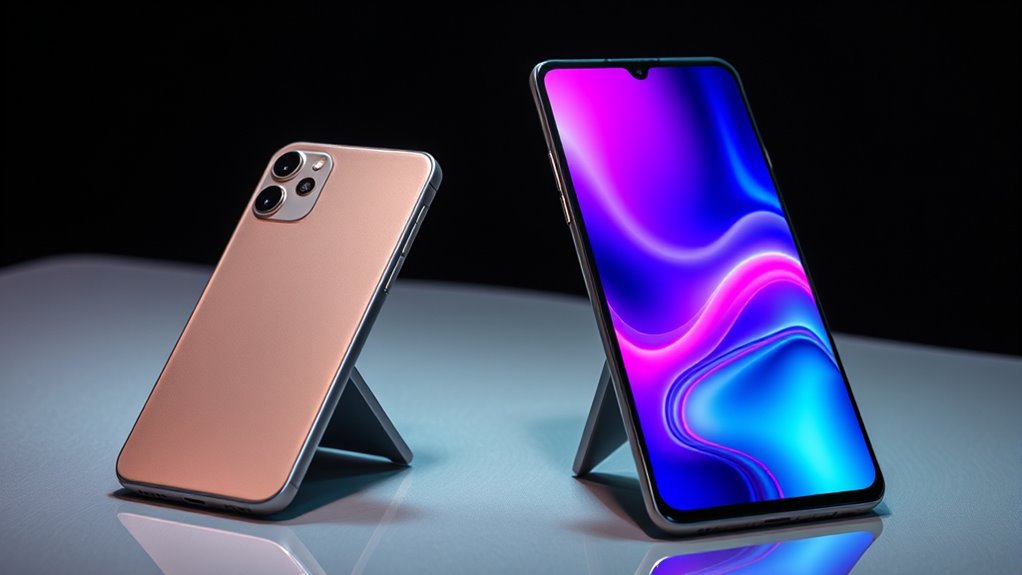

In the flagship showdown between the iPhone 17 and Samsung Galaxy S25, you’ll notice the iPhone excels with its brighter OLED display and seamless ecosystem, great if you value smooth user experience and security. On the other hand, the Galaxy S25 offers a faster display refresh rate and more customization options, ideal for responsiveness and flexibility. Want to see how their camera, battery, and design really compare? Keep exploring for all the details.
Key Takeaways
- iPhone 17 excels in brightness, durability, and seamless Apple ecosystem integration, while Galaxy S25 offers a high-refresh-rate AMOLED display and customization.
- The iPhone 17 features the powerful A17 Pro chip for fast performance; Galaxy S25 leverages 12 GB RAM for smooth multitasking.
- Both phones have advanced camera systems, with iPhone focusing on fast autofocus and warm tones, and S25 excelling in low-light and cooler color rendering.
- iPhone 17 provides longer battery life and faster charging, whereas Galaxy S25 emphasizes lighter design and affordability.
- Choice depends on ecosystem preference, display priorities, camera style, and budget, with iPhone suited for integration and S25 for flexibility and value.
Display Technology and Screen Quality Comparison
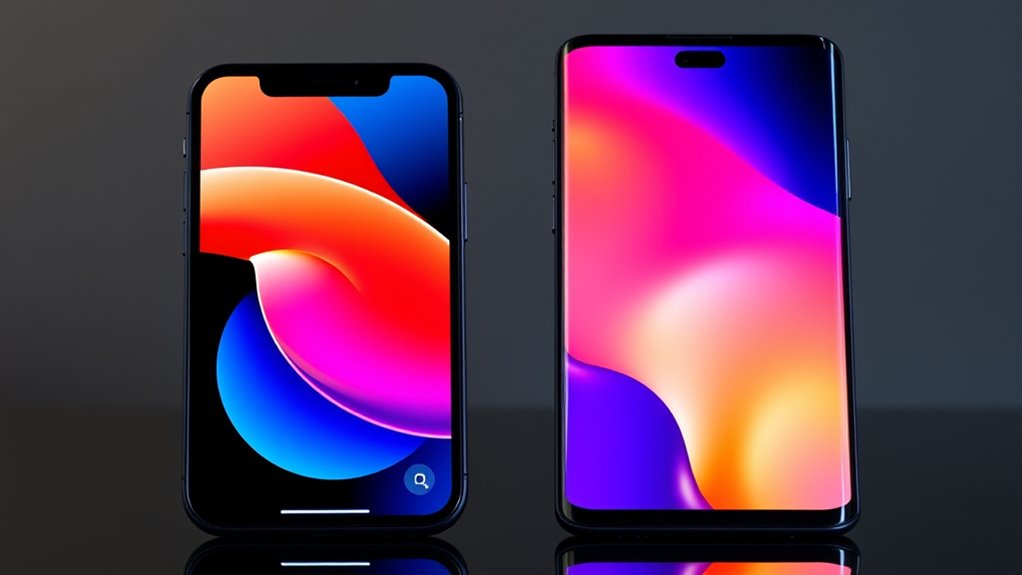
When comparing the display technology of the iPhone 17 and Samsung Galaxy S25, both deliver premium visual experiences, but their differences are notable. The iPhone 17 sports a 6.3-inch OLED screen that reaches up to 3,000 nits, making it exceptionally bright for outdoor viewing. In contrast, the S25 features a slightly smaller 6.2-inch AMOLED display with a smooth 120Hz refresh rate, providing ultra-fluid animations and scrolling. While the iPhone’s brightness gives you vivid, punchy visuals even in bright sunlight, the S25’s high refresh rate enhances responsiveness and fluid motion. Both screens offer sharp, vibrant images, but each excels in different aspects. The iPhone emphasizes brightness, while the S25 prioritizes smoothness and responsiveness for that seamless user experience. display technology plays a crucial role in delivering these impressive visual qualities.
Performance and Processing Power Analysis
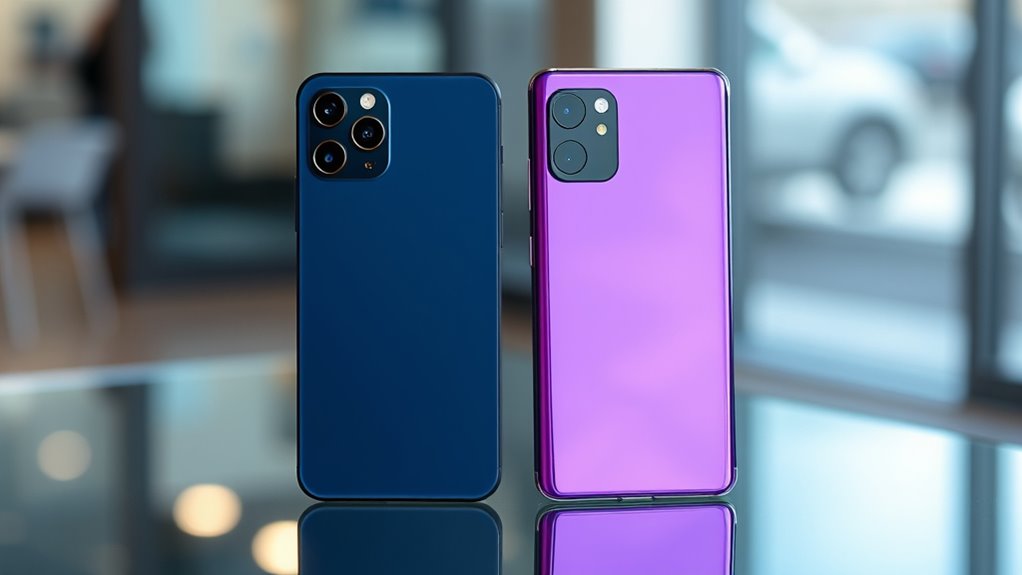
The impressive display qualities of the iPhone 17 and Samsung Galaxy S25 are complemented by their processing capabilities, which substantially influence user experience. You’ll notice faster app launches, smoother multitasking, and more responsive navigation on both devices. The S25’s 12 GB RAM allows for seamless multitasking, while the iPhone 17’s A17 Pro chip delivers lightning-fast app recovery and performance. The N1 chip also enhances Bluetooth stability, reducing interference in crowded environments. These differences shape your daily interactions, whether you’re gaming, browsing, or working. Processing power plays a crucial role in overall device performance and user satisfaction.
Camera Capabilities and Photography Features

When it comes to camera capabilities, you’ll notice that the iPhone 17’s autofocus performs better with moving subjects, making action shots clearer. Meanwhile, the Samsung Galaxy S25 Ultra captures images with cooler color tones, giving photos a distinct look. The new selfie camera on the iPhone 17 also delivers impressive image quality, ensuring your self-portraits stand out. Additionally, both devices incorporate advanced sensor technology that enhances image detail and low-light performance for more reliable photography in various conditions.
Autofocus in Action
Autofocus performance plays a crucial role in capturing sharp, detailed images, especially with moving subjects. With both the iPhone 17 and Samsung Galaxy S25, autofocus guarantees your photos are crisp and clear in real-time. The iPhone 17’s telephoto lens excels at quickly locking focus in dynamic scenes, thanks to its advanced sensors. Meanwhile, the Galaxy S25’s autofocus system adapts seamlessly across different lighting conditions, maintaining sharpness even in challenging environments. You’ll notice:
- Fast, accurate focus on moving objects
- Smooth tracking of subjects in motion
- Reduced focus hunting in low light
- Quick focus transitions during video recording
- Consistent sharpness across various scenes
- The use of free floating technology enhances autofocus precision, especially in complex scenes.
Both phones deliver industry-leading autofocus, but subtle differences can influence your shooting experience depending on your photography style.
Color Tone Differences
Color tone differences between the iPhone 17 and Samsung Galaxy S25 markedly impact how your photos appear, especially in various lighting conditions. The S25 tends to produce cooler, bluish hues, giving images a modern, sleek look. In contrast, the iPhone 17 captures warmer tones, resulting in natural, vibrant photos. These differences influence your overall editing style and how scenes are perceived. Here’s a quick comparison:
| Feature | iPhone 17 | Samsung Galaxy S25 |
|---|---|---|
| Color Temperature | Warmer, natural tones | Cooler, bluish tones |
| Scene Rendering | More vibrant, slightly saturated | Cooler, more subdued |
| Low-Light Performance | Warmer in artificial lighting scenes | Cooler in same conditions |
Understanding these tone differences helps you choose the device that aligns with your preferred style. Reconditioning batteries considerations, such as color accuracy and scene rendering, can also influence how you value these imaging features.
Selfie Camera Quality
The selfie cameras on the iPhone 17 and Samsung Galaxy S25 both deliver impressive image quality, but each offers unique features that cater to different user preferences. You’ll notice the iPhone 17’s front camera captures sharp, natural skin tones with excellent detail, ideal for portrait shots. Meanwhile, the Galaxy S25’s selfie camera excels in low-light conditions, thanks to advanced night mode and brighter sensor technology.
- iPhone 17 offers cinematic portrait effects with advanced bokeh control
- S25 includes real-time beauty filters and AR effects
- Both support 4K video recording for selfies
- Galaxy S25’s wider-angle lens enhances group shot capabilities
- iPhone 17’s autofocus ensures sharp focus on moving subjects
- The overall image quality is also influenced by color accuracy, which affects how true-to-life the photos appear.
These features make each device stand out, depending on your selfie style and photography needs.
Battery Life and Charging Speed Insights

Despite its smaller overall capacity, the iPhone 17 outperforms the Samsung Galaxy S25 in battery life, thanks to efficient hardware and software optimization. You’ll notice that the iPhone 17 lasts longer in daily use, even with a smaller battery, because Apple’s software manages power consumption cleverly. When charging, the iPhone 17 supports 40-watt fast charging, reaching 50% in about 20 minutes, so you spend less time plugged in. The Galaxy S25, on the other hand, offers a 25-watt charging speed, taking longer to recharge fully. While the S25 provides about 60% battery life in typical usage, the iPhone 17’s enhanced power efficiency guarantees it maintains longer endurance throughout your day. Both phones are competitive, but the iPhone’s quick charging and optimized battery performance give it an edge. Additionally, battery management technology in the iPhone 17 further extends its daily battery life.
Design, Build, and Ergonomics Evaluation
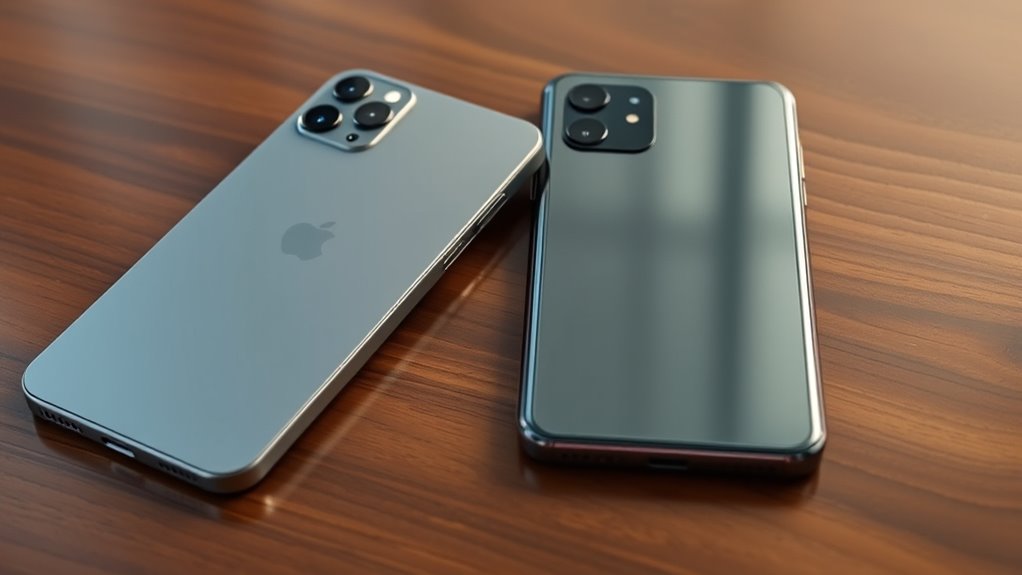
When comparing the design, build, and ergonomics of the iPhone 17 and Samsung Galaxy S25, you’ll notice that each phone emphasizes different strengths. The S25 Ultra weighs less, making it easier to handle with one hand, while the iPhone 17 Pro Max maintains a classic premium look with a solid build. Samsung’s design feels more understated but offers excellent ergonomics through its lighter weight. The iPhone’s robust construction offers a sleek, durable feel, but it’s heavier and less nimble. Both phones prioritize premium materials, yet their approach to comfort and usability diverges. Notably, the choice of dog beds for Golden Retrievers emphasizes the importance of ergonomic support and durable design, which can be paralleled to how smartphone ergonomics are tailored for comfort.
Operating System and User Experience
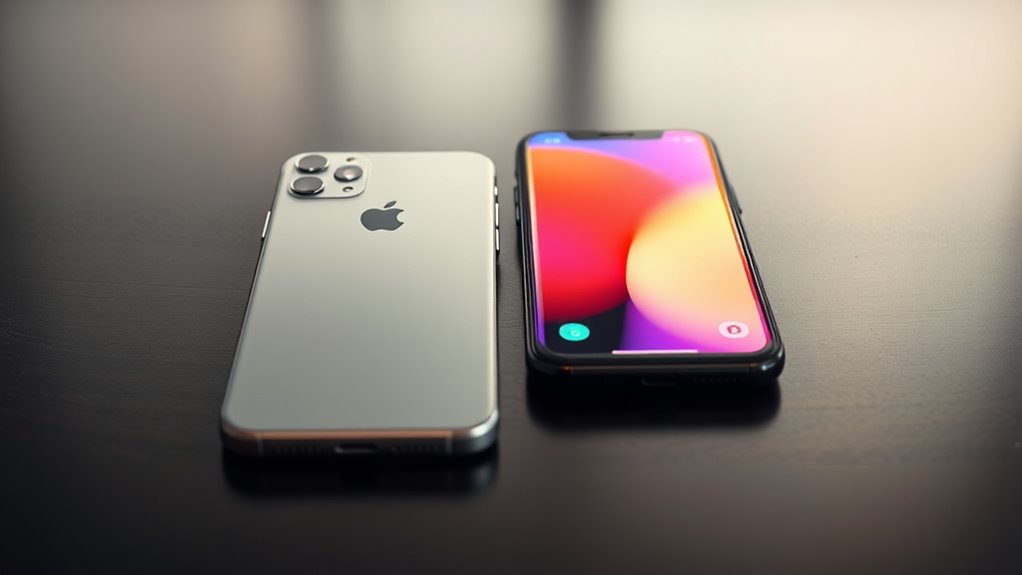
Choosing between the iPhone 17 and Samsung Galaxy S25 means considering how their operating systems shape your daily experience. iOS offers a smooth, intuitive interface with seamless integration across Apple devices, making multitasking and app management straightforward. You’ll enjoy consistent updates, strong security, and a curated app ecosystem that prioritizes quality. In contrast, Android provides more customization options, flexible app installation, and often more control over your device’s interface. The table below highlights key OS differences: User Interface provides a clear example of how customization and simplicity vary between platforms.
Pricing Strategies and Value for Money

You’ll notice that the Samsung Galaxy S25 offers a compelling balance of features at a lower price, making it a strong value option. In contrast, the iPhone 17 commands a premium by emphasizing custom chips and exclusive features, justifying its higher cost. Consider which device aligns best with your priorities and budget to determine true value for money. Additionally, understanding piercing materials and their impact on skin sensitivity can help you make more informed choices about your accessories and overall device compatibility.
Price vs. Features Balance
Despite their shared flagship status, the iPhone 17 and Samsung Galaxy S25 adopt contrasting pricing strategies that substantially influence their perceived value. You’ll find the S25 priced markedly lower, making it appealing for budget-conscious buyers who want top-tier features without the premium price. Meanwhile, the iPhone 17 commands a higher price, justified by its custom chip, iOS ecosystem, and premium build quality.
- S25 offers excellent features at a more affordable cost
- iPhone 17’s higher price reflects its proprietary technology
- The cost difference influences your overall value perception
- You get more features for less with the S25
- Apple’s premium pricing emphasizes exclusivity and brand prestige
This balance impacts your choice, depending on whether you prioritize affordability or premium experience.
Value Proposition Comparison
The value proposition of the iPhone 17 and Samsung Galaxy S25 hinges on their distinct pricing strategies, which directly influence how much you get for your money. The S25 offers a markedly lower price, making it attractive if you want flagship features without overspending. It provides excellent performance, a premium feel, and top-tier display quality, all at a more accessible cost. On the other hand, the iPhone 17 commands a higher price, justifying it with a powerful custom chip, advanced camera capabilities, and the seamless iOS ecosystem. If you prioritize cutting-edge processing and proprietary features, the extra expense might be worthwhile. Ultimately, your choice depends on whether you seek maximum value for your budget or prefer the premium experience associated with Apple’s ecosystem and hardware. Understanding pricing strategies can help you make a more informed decision based on your priorities.
Connectivity Features and Network Performance

When comparing the connectivity features and network performance of the iPhone 17 and Samsung Galaxy S25, it’s evident that both phones prioritize advanced wireless technology to deliver seamless communication. You’ll benefit from fast, reliable connections, whether you’re streaming, gaming, or making calls. The iPhone 17 supports 5G with enhanced mmWave and sub-6 GHz bands, ensuring high-speed data even in crowded areas. Meanwhile, the Galaxy S25 offers similar 5G capabilities, plus Wi-Fi 6E support for faster local network performance. Both devices feature Bluetooth 6, reducing interference and improving reliability. They also include NFC for contactless payments and modern GPS systems for precise navigation. Additionally, network compatibility ensures broad band support for various carriers and regions.
Additional Features and Ecosystem Integration
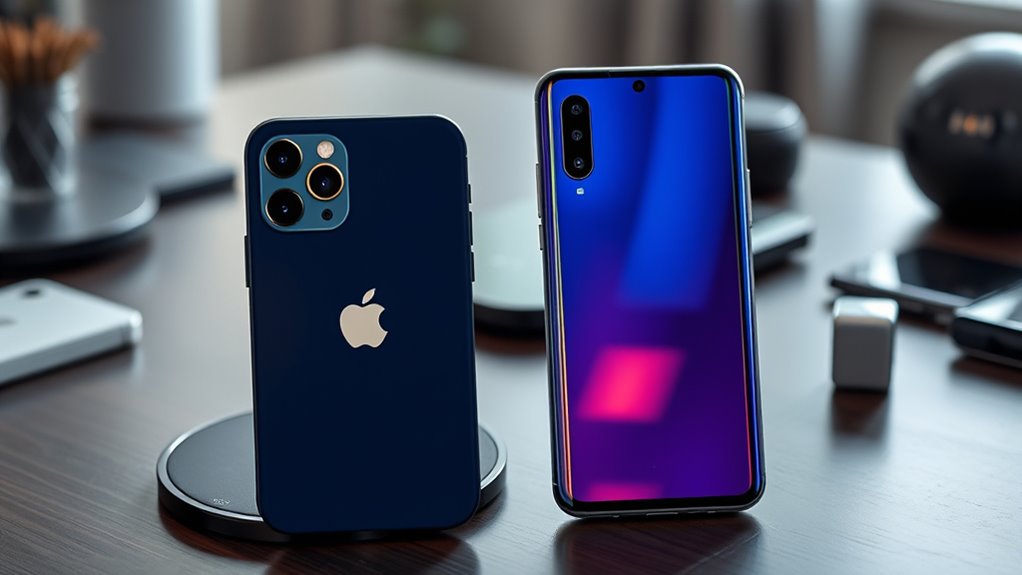
Both the iPhone 17 and Galaxy S25 excel in ecosystem integration, enhancing your overall user experience through seamless connectivity and exclusive features. With the iPhone 17, you benefit from tight integration with the Apple ecosystem, including iMessage, FaceTime, and iCloud, making device switching effortless. You can open your MacBook or iPad with your iPhone, and AirDrop simplifies file sharing. The Galaxy S25 offers robust compatibility within the Android ecosystem, supporting SmartThings for smart home control and Samsung DeX for desktop-like experiences. It easily syncs with Galaxy Wearables and other Samsung devices. Both phones support cross-platform features, but Apple’s ecosystem tends to deliver more unified, intuitive experiences, especially if you own multiple Apple devices. Additionally, encryption solutions across these platforms help safeguard your data and communications.
Final Thoughts and Recommendations

Choosing between the iPhone 17 and Samsung Galaxy S25 ultimately depends on your priorities and ecosystem preferences. If you value seamless integration, superior app ecosystems, and cutting-edge processing, the iPhone 17 is the way to go. On the other hand, if you prefer a more affordable device with a high-refresh-rate display and impressive customization options, the Galaxy S25 offers excellent value. Additionally, consider how each device supports smart home technology for integrated household control and privacy features.
Consider these factors:
- Ecosystem compatibility and user interface familiarity
- Performance needs for multitasking or gaming
- Photography preferences and camera styles
- Budget constraints and overall value
- Design and ergonomics suited to your use style
Ultimately, both phones deliver flagship performance, so choose based on what aligns best with your daily habits and ecosystem loyalty.
Frequently Asked Questions
How Do Software Update Policies Differ Between Iphone 17 and S25?
You’ll find that the iPhone 17 offers longer software support, with Apple providing updates for about 5 to 6 years, ensuring your device stays current and secure. In contrast, Samsung S25 typically gets around 3 to 4 years of updates, which is still good but shorter. Apple’s consistent updates help maintain performance and security, so you’ll enjoy a more future-proof experience with the iPhone 17.
Which Phone Offers Better Durability and Scratch Resistance?
You can’t judge a book by its cover, but durability and scratch resistance matter. The iPhone 17 features Ceramic Shield front cover and improved glass, making it more resistant to scratches and drops. The Samsung S25 uses Gorilla Glass Victus 2, offering strong protection, but it’s slightly more prone to scratches. Overall, the iPhone 17’s build feels more rugged, giving you peace of mind in everyday use.
What Are the Unique Ecosystem Benefits Exclusive to Each Device?
You’ll find that the iPhone 17 offers seamless integration with Apple’s ecosystem, including iMessage, FaceTime, and iCloud, making sharing and syncing effortless. On the other hand, the Samsung Galaxy S25 connects smoothly with Samsung’s ecosystem, such as SmartThings, Galaxy Buds, and DeX mode, enhancing smart home control and device interoperability. Both ecosystems boost your user experience, but your choice depends on whether you prefer Apple or Samsung’s integrated services.
How Do Audio Quality and Speaker Performance Compare?
You’ll find both phones deliver impressive audio quality, but the iPhone 17 offers a richer, more balanced sound experience thanks to its advanced stereo speakers and improved spatial audio support. Samsung S25 provides louder volume and deeper bass, ideal for multimedia consumption. If you prioritize clarity and immersive audio, the iPhone 17 has the edge, but for maximum volume and bass, the S25 performs better.
Which Device Provides Better Privacy and Security Features?
You’ll find that the iPhone 17 offers better privacy and security features. Apple’s strong focus on user privacy means you get advanced encryption, regular security updates, and features like App Tracking Transparency. The device also includes secure enclave technology for data protection. Samsung S25 has solid security measures too, like Knox security, but Apple’s ecosystem provides a more extensive privacy experience, making the iPhone 17 the safer choice overall.
Conclusion
Ultimately, choosing between the iPhone 17 and Samsung Galaxy S25 depends on what matters most to you. Do you value seamless ecosystem integration, cutting-edge camera features, or perhaps battery longevity? Both phones push boundaries in their own way, but only you can decide which aligns best with your lifestyle. So, are you ready to make the leap and elevate your smartphone experience to new heights? The choice is yours—what will it be?