If you prioritize superior sound quality, reliability, and zero latency, wired earphones are your best choice—they deliver uncompressed audio and stable connections. However, if convenience, portability, and modern features like active noise cancellation matter more, wireless earbuds suit daily use better. Keep in mind, wireless options tend to be pricier and require charging. To find out which type fits your needs best and uncover all the pros and cons, explore further details below.
Listen free for 30 days with Audible
Thousands of audiobooks and originals — cancel anytime.
As an affiliate, we earn on qualifying purchases.
Key Takeaways
- Wired earphones offer superior sound quality and zero latency, ideal for audiophiles and gaming.
- Wireless earbuds provide greater convenience, portability, and features like touch controls and active noise cancellation.
- Wired options are more durable, eco-friendly, and cost-effective with fewer electronic components.
- Wireless earbuds depend on batteries, can experience connectivity issues, and are more susceptible to interference.
- Choose wired if sound fidelity and reliability matter most; opt for wireless for ease of use and modern features.

KZ EDX Pro in Ear Monitor Headphones KZ IEM Earphones Dual DD HiFi Stereo Sound Stage Earphones Wired Noise Cancelling Gaming Earbuds for Musicians Singer Audiophiles
- HiFi Stereo Sound: 10mm composite magnetic dynamic driver
- Deep Bass Response: Low-frequency dive reaches 10Hz
- Durable Cable: 5N OFC anaerobic copper flat cable
As an affiliate, we earn on qualifying purchases.
As an affiliate, we earn on qualifying purchases.
Sound Quality and Audio Performance Differences

When comparing sound quality, wired headphones generally deliver superior audio performance because they transmit uncompressed audio signals through cables, preserving the full range and detail of the sound. This means you hear music exactly as it was recorded, with richer bass, clearer vocals, and more accurate instrument separation. Attention to detail distinguishes wired headphones in delivering precise sound reproduction. Wireless headphones, on the other hand, compress audio during transmission, which can cause a loss of detail and a slight decrease in sound fidelity. Although modern Bluetooth codecs have improved, they still can’t fully match the uncompressed quality of wired connections. Premium wireless models do a good job, but if you’re seeking the highest fidelity, wired headphones remain the better choice for audio purists who want pristine sound.

Apple AirPods Pro 3 Wireless Earbuds, Active Noise Cancellation, Live Translation, Heart Rate Sensing, Hearing Aid Feature, Bluetooth Headphones, Spatial Audio, High-Fidelity Sound, USB-C Charging
- Active Noise Cancellation: Removes up to 2x more noise
- Spatial Audio: Immersive three-dimensional sound
- High-Fidelity Sound: Enhanced bass and clear vocals
As an affiliate, we earn on qualifying purchases.
As an affiliate, we earn on qualifying purchases.
Latency and Real-Time Listening Considerations

Latency plays an essential role in real-time listening, especially during gaming, streaming, or watching videos. With wired headphones, you experience zero delay, ensuring sound aligns perfectly with visuals. This precision is critical for fast-paced gaming, where milliseconds matter, and for immersive movie experiences. Wireless earbuds, however, introduce some latency due to Bluetooth transmission. Even the best models can’t fully eliminate this delay, which can cause audio lag behind video or gameplay. This lag disrupts synchronization, making wireless options less ideal for activities requiring precise timing. While modern Bluetooth codecs have improved latency, they still can’t completely match wired headphones. If you’re into high-speed gaming or live streaming, wired headphones give you a clear advantage with their real-time responsiveness. Additionally, the refresh rate of the audio transmission can influence how seamless the listening experience feels during rapid movements or quick scene changes.

NUBWO Wireless Gaming Headset with Mic for Ps5 Ps4 PC, Zero Interference, 100-Hour Battery All-Day Play, 23ms Sync for Fortnite & Call of Duty/FPS Gamers, Triple Mode All Devices Compatible – Orange
- Zero-Latency Wireless Connection: Flawless 2.4GHz wireless gaming
- Interference-Free Gaming: No Wi-Fi or peripheral interference
- Long Battery Life: Up to 100 hours of playtime
As an affiliate, we earn on qualifying purchases.
As an affiliate, we earn on qualifying purchases.
Battery Life and Environmental Impact

Wireless earbuds depend on batteries, which require regular charging and can run out unexpectedly, disrupting your listening experience. This reliance means you might face mid-use power failures, especially if you forget to recharge. On the environmental front, manufacturing wireless earbuds involves lithium batteries, whose production and disposal pose sustainability concerns due to mining and waste issues. In contrast, wired earphones don’t need batteries, making them more eco-friendly and less wasteful. They also last longer because they have fewer components that can fail, reducing electronic waste. While wireless earbuds offer convenience, their battery dependence contributes to environmental harm and ongoing resource extraction. If sustainability matters to you, wired headphones provide a more eco-conscious choice, avoiding the environmental impacts associated with battery production and disposal. Additionally, Free Floating design in some models can reduce material use and environmental footprint.

Jrwaro Wireless Earbuds Bluetooth 5.4 Headphones IPX7 Waterproof Earbuds
- High-Fidelity Sound: Rich stereo sound with deep bass
- Clear Call Quality: Noise reduction and precise voice pickup
- Digital Power Display: Real-time battery level indicators
As an affiliate, we earn on qualifying purchases.
As an affiliate, we earn on qualifying purchases.
Reliability and Connectivity Stability
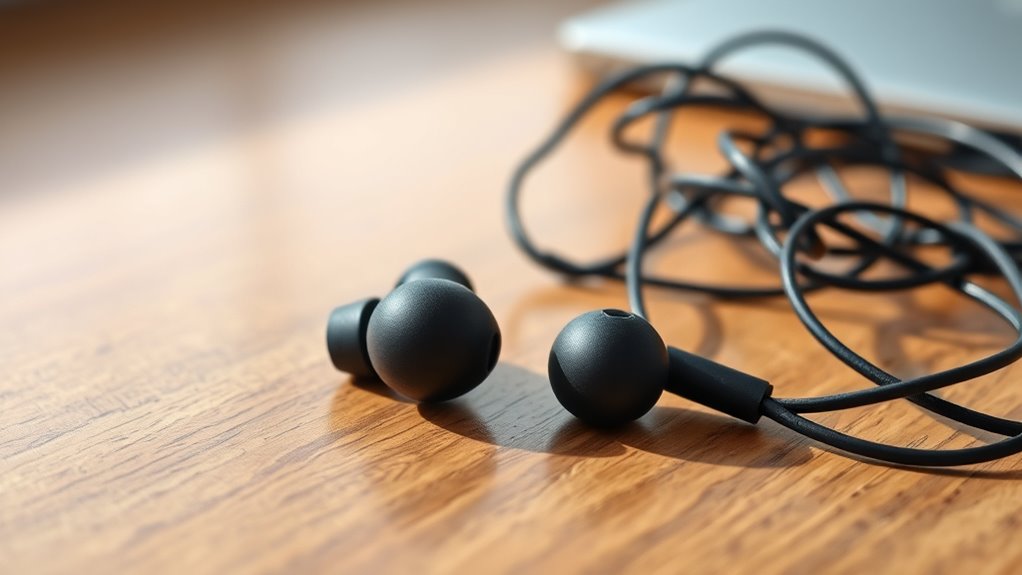
Wireless connections can be unreliable, with signal drops and interruptions happening unexpectedly. Interference from Wi-Fi networks or other Bluetooth devices often disrupts your audio, causing frustrating skips. In contrast, wired earphones provide a stable connection that’s unaffected by external signals or interference.
Connection Drop Risks
While wired headphones generally provide a more stable connection, wireless options are more prone to signal drops and interruptions. Bluetooth connections can be disrupted by obstacles, distance, or interference, leading to audio cutouts. Factors like walls, other wireless devices, or even your body can weaken the signal. Additionally, connection stability can vary depending on the device and environment.
Interference Susceptibility
Interference from other electronic devices can considerably affect the stability of Bluetooth connections, making your audio experience less reliable. Wireless earbuds often struggle in environments crowded with Wi-Fi routers, Bluetooth gadgets, or microwave ovens, which can cause signal drops, static, or skips. These disruptions are less common with wired earphones, as their connection isn’t affected by electromagnetic interference. If you frequently use your wireless earbuds in busy settings—like offices, gyms, or transit—expect occasional audio glitches. While modern Bluetooth technology has improved, interference remains a concern, especially in densely populated areas. Wired earphones, with their straightforward cable connection, offer a more consistent and dependable audio experience, free from signal interference issues that plague wireless options. Additionally, European cloud innovation emphasizes the importance of secure and reliable data transmission, highlighting how wired connections inherently provide more stability in critical applications.
Noise Cancellation and Additional Features
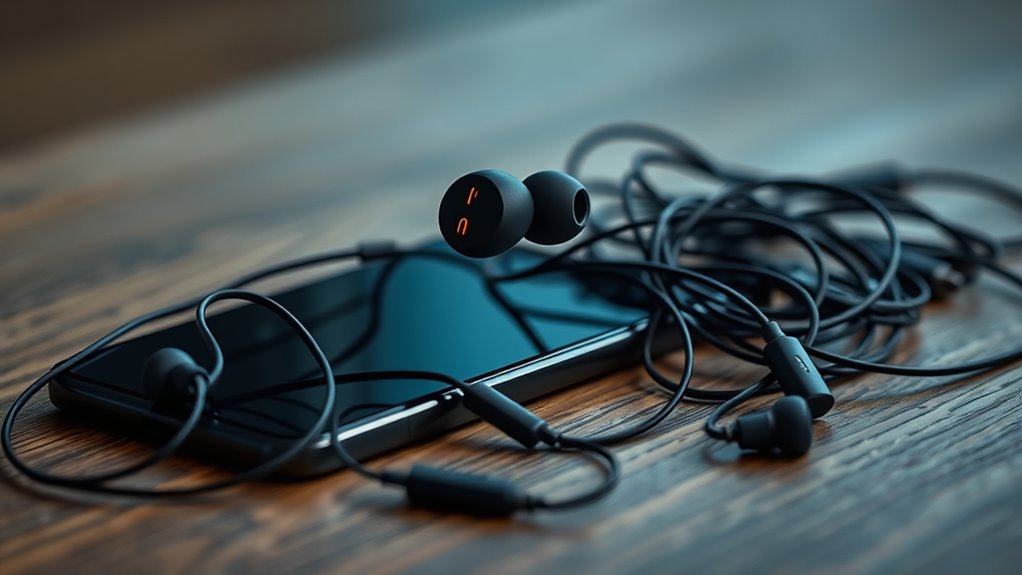
Active noise cancellation (ANC) has become a key feature in modern headphones, offering you a more immersive listening experience. Wireless earbuds often include ANC, allowing you to block out background noise during commutes or workouts. In contrast, wired headphones rarely feature ANC, focusing more on sound quality. Wireless models also provide additional features like multi-device pairing, touch controls, and voice assistant integration, enhancing convenience. Imagine seamlessly switching between your phone and laptop, controlling playback with a tap, or activating voice commands without touching your device. These features make wireless options more versatile. Meanwhile, wired headphones excel in sound fidelity but lack these modern extras. So, if you want convenience and noise control, wireless earbuds with ANC give you a clear advantage. Additionally, the integration of smart home technology can enable voice commands to control your earbuds or connected devices, further elevating the user experience.
Portability and User Convenience

Wireless earbuds let you move freely without worrying about cables catching or tangling, making them ideal for active lifestyles. Wired earphones, however, can restrict your movement due to their attached cables, especially during workouts or commutes. Plus, wireless models offer greater device compatibility, so you can easily switch between your phone, tablet, or laptop. Additionally, wireless earbuds often incorporate smart technology that enhances user experience through features like touch controls and adaptive sound.
Movement Freedom
When it comes to movement freedom, wireless earbuds clearly offer a significant advantage by eliminating cables that can snag or restrict your motion. You can move freely during workouts, commutes, or daily activities without worrying about tangled cords. Imagine going for a run, and your earbuds stay in place without pulling or catching on clothing. You won’t need to stop and untangle wires or adjust your setup constantly. Wireless earbuds give you the flexibility to focus on your activity without interruptions. Visualize yourself jumping, stretching, or dancing without cables holding you back. This freedom enhances your comfort and convenience, making wireless earbuds the ideal choice for dynamic lifestyles.
- No cables to catch on your clothing or equipment
- Easier to move naturally during exercise
- No need to untangle or manage cords
- Seamless progression between activities
- The lack of cords also reduces the risk of damage from wear and tear, prolonging the lifespan of your earbuds.
Cable Management
Cable management plays a crucial role in user convenience, as tangled cords can disrupt your daily routine and cause frustration. With wired earphones, you often deal with knots, tangles, and the hassle of untangling before use. This can waste time and ruin your focus, especially during quick shifts or busy mornings. Plus, cords can snag on clothing or objects, pulling your device out of place or causing damage. In contrast, wireless earbuds eliminate these issues altogether, offering instant, hassle-free access. You simply pop them in and go, without worrying about cords getting caught or tangled. This seamless experience makes wireless options especially appealing for active lifestyles, commutes, and workouts where convenience and speed are essential. Additionally, cable management solutions like cord organizers can help keep wired options more manageable when used regularly.
Device Compatibility
Device compatibility is a key factor that influences your overall user convenience, especially as technology evolves rapidly. Wireless earbuds often connect via Bluetooth, making them compatible with a wide range of devices like smartphones, tablets, and laptops. This flexibility allows you to switch devices seamlessly without unplugging anything. In contrast, wired earphones rely on a headphone jack or specialized adapters, which can limit compatibility with newer smartphones that lack audio ports.
Imagine:
- Wireless earbuds effortlessly pairing with your phone, tablet, or laptop
- Wired earphones requiring adapters or different connectors for each device
- Wireless models connecting instantly, ready for quick interchangeability
- Wired options needing cables swapped or adapters to fit different sources
Durability and Maintenance

Wired headphones tend to be more durable and easier to maintain because they have fewer electronic components and moving parts that can fail. Since they lack batteries and complex circuitry, you won’t worry about battery degradation or charging issues. The connection cable is the main wear point, but with proper care, it can last years. Repairs are straightforward; replacing a broken cable or ear tips is simple and inexpensive. Wired models are less prone to connectivity problems caused by interference or signal drops, which means fewer troubleshooting headaches. Regular cleaning of ear tips and cable connectors helps prolong lifespan. Overall, their simpler design makes wired headphones more resistant to everyday wear and tear, ensuring they stay functional longer with less hassle.
Cost and Overall Value

While wireless earbuds often come with a higher upfront cost, they can offer better overall value through added convenience and modern features. You get the freedom to move without tangled cords, quick device switching, and advanced features like active noise cancellation. Plus, many wireless models include touch controls, voice assistant compatibility, and customizable fit options. On the other hand, wired earphones are generally cheaper initially and don’t require charging, making them more budget-friendly. They tend to last longer with fewer repairs. Think about:
- No need to worry about batteries or charging
- Lower initial purchase price
- Fewer parts that can break or malfunction
- Easier and cheaper repairs when damaged
Ultimately, your choice depends on your budget and how much value you place on convenience.
Frequently Asked Questions
Can Wireless Earbuds Match the Sound Quality of Wired Headphones?
Wireless earbuds can’t fully match the sound quality of wired headphones yet. While modern wireless models have improved considerably, they still compress audio during transmission, which can reduce clarity and detail. Bluetooth technology limits bandwidth compared to wired connections, so you might notice a difference in richness and accuracy. However, premium wireless earbuds are closing the gap and offer acceptable sound quality for most listeners, but wired headphones still hold the edge.
How Significant Is the Latency Difference for Gaming and Video?
You’ll notice the latency difference immediately if you play fast-paced games or watch videos. Wired headphones offer zero latency, so your audio syncs perfectly with visuals, making gameplay seamless. In contrast, Bluetooth wireless earbuds still have some delay, often around 100 milliseconds, which can be distracting, especially during gaming or watching movies. That slight lag might cause frustration, so wired remains the better choice for real-time audio accuracy.
Are Wired Headphones More Eco-Friendly Than Wireless Options?
Wired headphones are more eco-friendly than wireless options because they don’t rely on batteries, which require mining and manufacturing processes that harm the environment. Without batteries, they produce less electronic waste and avoid the pollution linked to battery disposal. Plus, wired headphones tend to last longer, reducing the need for frequent replacements. If you’re environmentally conscious, choosing wired headphones helps minimize your carbon footprint and electronic waste.
What Are Common Issues Affecting Wireless Connection Stability?
You often face connection drops or stuttering with wireless earbuds, much like a phone signal fading in a tunnel. Common issues include Bluetooth interference from Wi-Fi networks or other devices, obstacles blocking the signal, and low battery levels causing unstable connections. Additionally, outdated firmware or incompatible devices can disrupt stability. To improve your experience, keep your devices close, update firmware regularly, and minimize interference from other wireless sources.
Do Wireless Earbuds Offer Better Durability for Active Use?
Wireless earbuds can be more durable for active use because they lack cables that can fray or break. Their compact, lightweight design reduces mechanical stress, making them less prone to damage during workouts or movement. Plus, many models have water and sweat resistance, which helps them withstand sweat and minor drops. However, their small parts can still be vulnerable, so choosing high-quality, rugged options is key for long-term durability.
Conclusion
Choosing between wireless earbuds and wired earphones is like picking your adventure—each has its own story. Wireless offers freedom and modern convenience, while wired delivers steady reliability and sound clarity. Think of it as the classic versus the cutting-edge. Consider your needs, preferences, and lifestyle—then make your choice. Whichever path you take, remember, the right audio gear can turn everyday moments into something truly memorable. The decision is yours—what’s your next step?
Back to school Picks
back to school
As an affiliate, we earn on qualifying purchases.