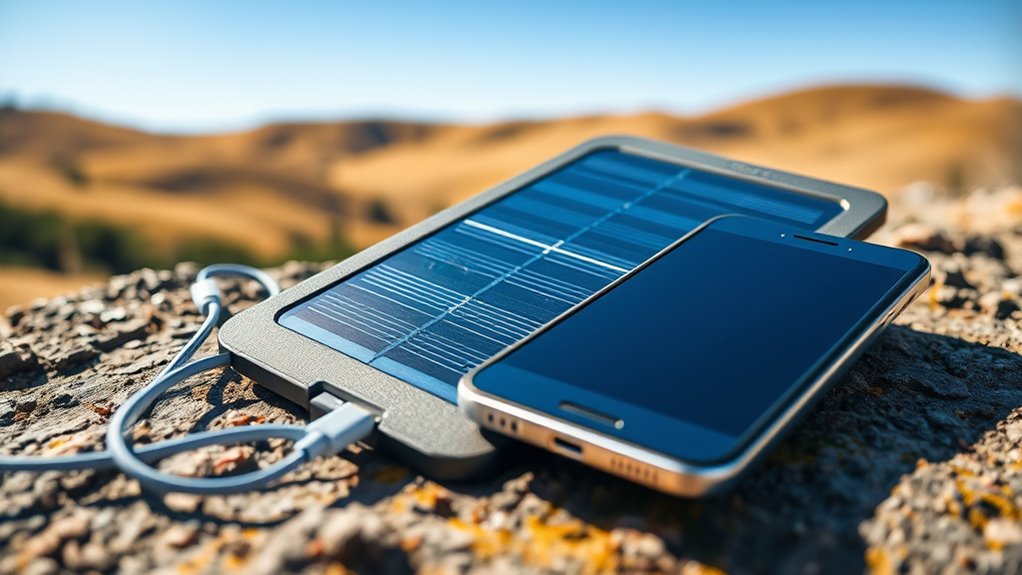

Yes, solar chargers are practical for travel because they provide reliable, eco-friendly power when you’re off-grid. They can keep your phone charged during hikes, camping, or long outdoor days, especially if they have a high capacity and fast-charging features. Weather and sunlight conditions matter, but with the right model, you’ll stay connected without relying on outlets. To find out how to choose the best one for your adventures, keep exploring the details ahead.
Key Takeaways
- Solar chargers enable off-grid device charging, ideal for outdoor travel and remote adventures.
- Higher battery capacity ensures multiple device charges during multi-day trips.
- Fast charging speeds reduce wait times, especially useful during tight schedules.
- Weather, panel angle, and device compatibility influence charging effectiveness.
- Balancing battery capacity and charging speed ensures reliable power for extended outdoor activities.

Have you ever found yourself without a power outlet when your phone’s battery is running low? If you’re an avid traveler or someone who spends a lot of time outdoors, this situation can be frustrating. That’s where solar chargers come into play. They’re designed to harness sunlight and convert it into usable power for your devices, making them a handy accessory when you’re off the grid. But before you decide if a solar charger is right for your adventures, it’s important to understand two key factors: battery capacity and charging speed. These elements determine how effective a solar charger will be in keeping your phone powered up during your travels.
Battery capacity refers to the amount of energy a solar charger can store or provide at once. This is usually measured in milliamp-hours (mAh). A higher capacity means your charger can supply more power, which is especially useful if you’re on a multi-day trip or relying heavily on your device for navigation, photos, or communication. For instance, if your phone has a battery capacity of 3,000 mAh, you’ll want a solar charger that can deliver at least that much energy in a single or multiple charges. Keep in mind, many solar chargers come with built-in batteries that store energy for later use, which can be a game-changer when sunlight isn’t abundant. This way, you won’t be entirely dependent on direct sunlight to charge your device; instead, you can charge the battery during sunny hours and use it later when needed. Additionally, understanding Free Floating systems can help you optimize your setup for different outdoor conditions.
Higher battery capacity means more power for multi-day trips and reliance on your device.
Charging speed is another critical aspect to contemplate. It indicates how quickly the solar charger can convert sunlight into usable power and transfer it to your device. The faster the charging speed, the less time you’ll spend waiting for your phone to juice up. Solar chargers with higher charging speeds typically feature multiple solar panels or more efficient technology to maximize sunlight conversion. However, keep in mind that actual charging speed can be affected by weather conditions, angle of the panels, and the device’s compatibility. If you’re on a tight schedule or need quick boosts of power, look for a solar charger that boasts rapid charging capabilities. Many models specify their output in volts and amps, which can give you an idea of how fast your device will charge when connected.
In the end, choosing a solar charger for travel depends on your specific needs—consider how much power you require and how quickly you need it. A model with a good balance of battery capacity and charging speed can keep your phone alive through long hikes, camping trips, or days without access to traditional power outlets. It’s a practical, eco-friendly solution that ensures you stay connected, even in remote locations.
Frequently Asked Questions
How Long Does a Typical Solar Charger Take to Fully Charge a Phone?
A typical solar charger takes about 4 to 8 hours to fully charge your phone, depending on its battery capacity and the charging speed of the device. If you’re in direct sunlight, charging will be faster, but cloudy weather or low sunlight can extend the process. Keep in mind that larger batteries require more time, so plan accordingly when relying on solar chargers during your travels.
Can Solar Chargers Power Devices Other Than Phones?
Think of your solar charger as a versatile garden hose—it’s not just for watering plants. Yes, solar chargers can power various devices, from tablets to small cameras, thanks to their alternative energy source. Just check the device compatibility before plugging in. This flexibility makes solar chargers a handy, eco-friendly option for travelers needing energy on the go, no matter what device you carry.
Are Solar Chargers Effective in Cloudy or Rainy Weather?
In cloudy or rainy weather, solar chargers are less effective because cloud cover and rainy conditions limit sunlight exposure, reducing their power output. You might still get some charge if the clouds aren’t too thick, but expect slower charging times. To stay prepared, carry a portable power bank as a backup, especially if you rely heavily on your phone during travel. Relying solely on solar chargers in bad weather isn’t practical.
What Is the Lifespan of a Solar Charger With Regular Use?
Your solar charger typically lasts between 2 to 5 years with regular use, depending on quality and care. Battery longevity influences how long it can efficiently power your devices, while charger durability determines how well it withstands travel conditions. To extend its lifespan, avoid exposing it to harsh weather and handle it gently. Regularly cleaning the solar panels also helps maintain peak performance and prolongs its overall usability.
Do Solar Chargers Require Any Special Maintenance or Storage?
You don’t need much to keep your solar charger in good shape. Regularly clean the solar panel with a soft cloth to remove dust and dirt, ensuring peak efficiency. Store it in a cool, dry place, avoiding extreme storage temperatures that could damage the internal components. By maintaining cleanliness and proper storage, you’ll extend your solar charger’s lifespan and keep it ready for your travels whenever you need it.
Conclusion
While solar chargers can be handy, they’re not always the most reliable for travel. Think of them as a lighthouse guiding you through foggy nights—hopeful but sometimes unpredictable. If you’re prepared with backup power, they’re a great eco-friendly option. Just remember, don’t put all your eggs in one basket. With the right planning, solar chargers can brighten your journey without leaving you in the dark. Stay prepared, and enjoy your adventures!


