
Privacy screen protectors help keep your sensitive information safe by limiting how others can see your screen from the sides. They prevent prying eyes but can make it harder for you to see clearly at certain angles. They might reduce screen brightness or cause color distortion and require adjustments sometimes. While great for privacy in public spaces, they can also interfere with your workflow. Want to explore more about their benefits and drawbacks? Keep going to uncover additional insights.

Get the latest gadgets delivered free with Prime
- Fast, free delivery on millions of items
- Prime Video, Amazon Music and more included
- Member-only deals all year
Key Takeaways
- Enhance data security by limiting screen visibility from side angles, preventing casual viewing in public spaces.
- Can slightly reduce screen brightness and color accuracy, affecting visual clarity and detailed work.
- Narrow viewing angles may require frequent adjustments or removal, impacting convenience and workflow.
- Installation challenges like bubbles or misalignment can affect usability and device performance.
- Ideal for environments prioritizing privacy, though may cause eye strain and limit sharing or collaboration.
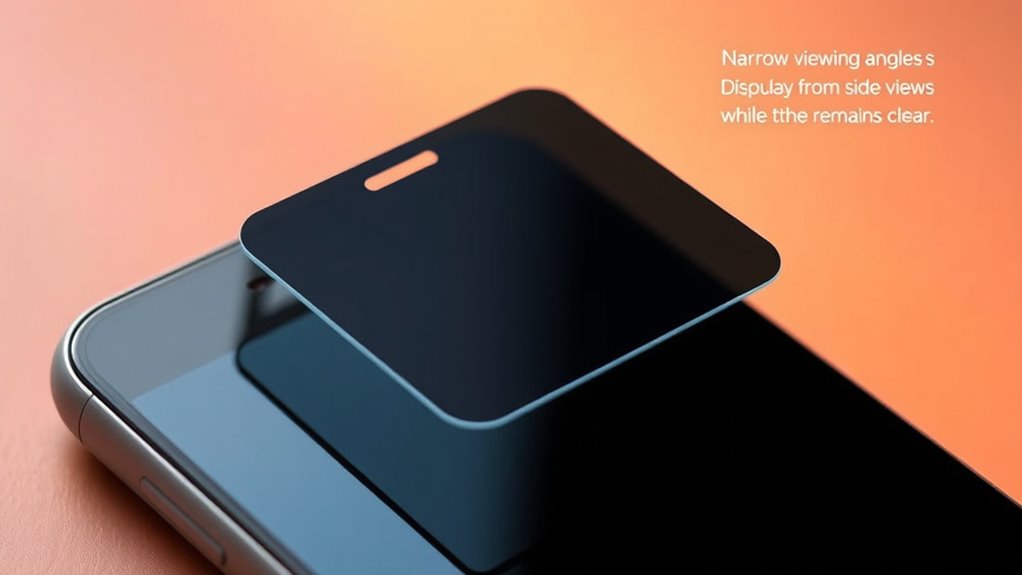
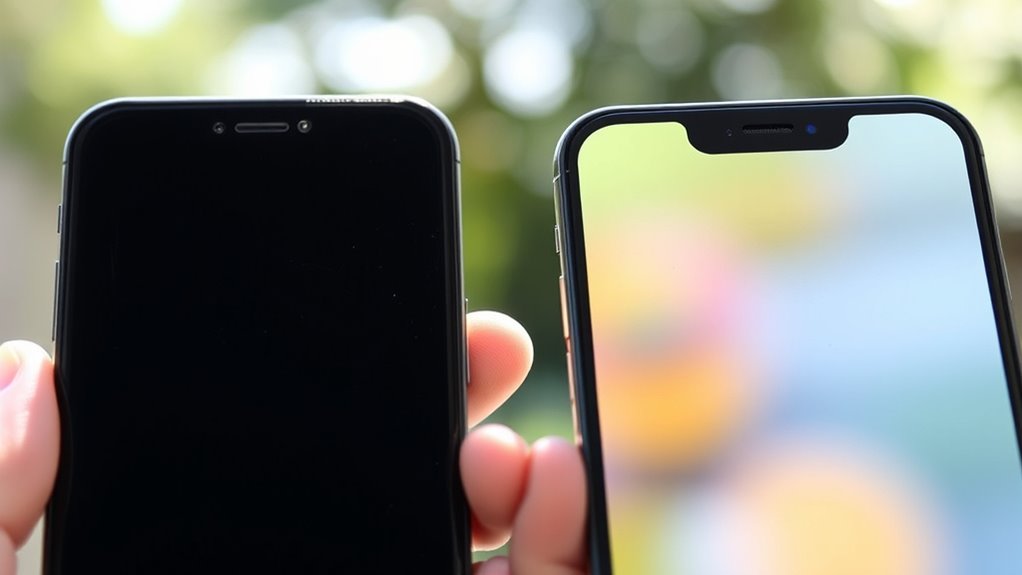
Have you ever worried about someone spying on your phone or laptop screen in a public place? If so, privacy screen protectors might seem like the perfect solution. These thin films or overlays are designed to improve data security by limiting who can see what’s on your screen. When you’re in a crowded café, on a busy train, or even in a noisy office, privacy screen protectors help you keep sensitive information private, ensuring that only you can see what’s displayed. They work by narrowing the viewing angle, so anyone trying to glance over your shoulder sees a darkened or blurred display. This feature considerably reduces the risk of data breaches caused by visual hacking. You no longer have to worry about casual observers, accidental glances, or curious coworkers compromising your confidential information.
Privacy screen protectors limit visibility to protect your data in public spaces.
However, while privacy screen protectors boost screen visibility for you, they also introduce some drawbacks. For example, the very feature that enhances your data security—narrowing the viewing angles—can make it more difficult for you to see the screen clearly from certain angles. If you’re used to sharing your screen with colleagues or collaborating on projects, you might find yourself constantly adjusting the device or removing the protector altogether. This can be inconvenient and disrupt your workflow. Additionally, some privacy screens slightly reduce screen brightness or alter color accuracy, which can be frustrating if you work with detailed graphics, photos, or color-sensitive tasks. Over time, these factors might cause eye strain or fatigue, especially during extended use.
Another consideration is the installation process. While many privacy screen protectors are easy to apply, some require precise placement to avoid bubbles or misalignment. If not installed properly, they can impair your viewing experience or peel off prematurely. Also, certain screen protectors can add a glossy or matte finish, which might impact your screen’s clarity. Some users prefer the original brightness and sharpness of their device and might find privacy filters diminish those qualities. Furthermore, with advancements in European cloud solutions, some users look for options that do not compromise screen quality while maintaining security.
Despite these cons, privacy screen protectors are a valuable tool for maintaining data security in public or shared environments. They help you control who can see your screen, giving you peace of mind and safeguarding sensitive information. Yet, they also demand some trade-offs in screen visibility and convenience. Deciding whether to use one depends on your environment, your workflow, and how much you value privacy versus visual clarity. Ultimately, if protecting your data is a priority, privacy screen protectors can be an effective addition to your digital security arsenal—just be prepared for some minor compromises in screen performance.
privacy screen protector for laptop
As an affiliate, we earn on qualifying purchases.
As an affiliate, we earn on qualifying purchases.
Frequently Asked Questions
Do Privacy Screen Protectors Affect Touch Sensitivity?
Privacy screen protectors can subtly affect touch sensitivity, making your device feel less responsive at times. However, high-quality protectors minimize this impact, so your screen clarity remains sharp and clear. If you notice decreased responsiveness, try cleaning your screen or adjusting the protector. Overall, choosing a well-designed privacy filter helps balance maintaining your screen’s clarity while keeping your sensitive information private without considerably compromising touch sensitivity.
Are Privacy Screens Compatible With All Device Sizes?
Like Cinderella’s slipper, privacy screens vary in size, so they aren’t compatible with all devices. You need to check device size compatibility before purchasing, as some privacy screen variety is designed specifically for certain models. While many come in universal sizes, others are tailored for smartphones, tablets, or laptops. Always verify the measurements to guarantee a snug fit, avoiding frustration and ensuring your privacy stays intact.
How Do Privacy Screens Impact Screen Brightness?
Privacy screen protectors often cause a slight screen brightness reduction, making your display dimmer than usual. You might notice decreased visibility in bright light, especially outdoors, because they limit the viewing angle. While they enhance privacy, you’ll need to adjust your device’s brightness settings to compensate. Keep in mind that the impact varies by product quality; some protectors cause minimal brightness reduction, while others are more noticeable.
Can Privacy Screen Protectors Be Easily Removed?
Yes, privacy screen protectors can be easily removed, but you might face installation challenges and reusability concerns. If you don’t carefully follow removal instructions, you could damage the protector or your screen. While some protectors are reusable if handled gently, others lose clarity or adhesion after removal. Be cautious during removal to avoid scratches or residue, and consider whether reusing is worth the risk or if replacement is better.
Are There Any Health Concerns With Privacy Screen Filters?
You might wonder if privacy screen filters pose health concerns. While they’re generally safe, some people worry about potential eye strain from prolonged use or reduced screen clarity. The slight decrease in brightness and contrast can cause your eyes to work harder, leading to fatigue. Though no major health implications are linked to these filters, it’s wise to take regular breaks and adjust screen settings to protect your eye health.
privacy screen protector for smartphone
As an affiliate, we earn on qualifying purchases.
As an affiliate, we earn on qualifying purchases.
Conclusion
Privacy screen protectors can be a game-changer for safeguarding your sensitive info, especially if you often work in public. Did you know that 60% of people have accidentally shared private information in public spaces? While they might slightly reduce screen brightness or clarity, their ability to keep your data safe is worth considering. Weigh the pros and cons carefully to decide if a privacy screen protector fits your needs—your privacy is worth it.
As an affiliate, we earn on qualifying purchases.
privacy screen protector with easy installation
As an affiliate, we earn on qualifying purchases.
As an affiliate, we earn on qualifying purchases.
Fall Picks
fall essentials
As an affiliate, we earn on qualifying purchases.