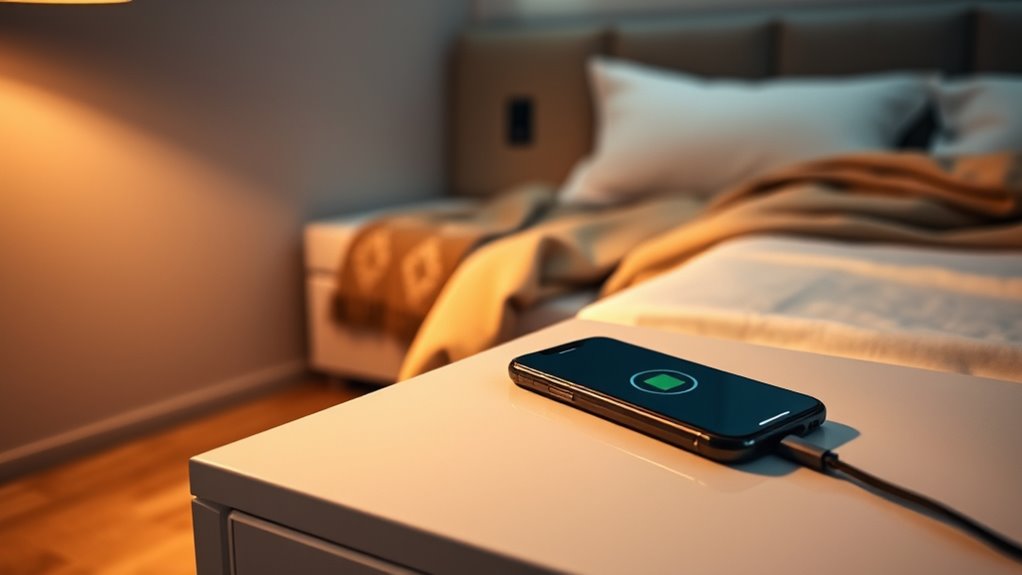

Charging your phone overnight isn’t as risky as it used to be thanks to modern safety features that stop or slow charging once it reaches 100%. These technologies protect your battery from overcharging and overheating, reducing long-term damage. However, keeping your device in cooler environments and avoiding extreme temperatures still helps preserve battery health. If you want to learn more about safe charging habits and myths, keep exploring these important tips.
Key Takeaways
- Modern smartphones have safety features that prevent overcharging, making overnight charging generally safe.
- Charging devices to 100% overnight is less harmful than before, but keeping battery between 20-80% is ideal.
- Using certified chargers and avoiding extreme temperatures during overnight charging helps preserve battery health.
- Features like optimized charging learn routines and pause at 80%, reducing long-term battery stress.
- Consistent routines and unplugging once fully charged can extend your battery’s lifespan, even with overnight charging.
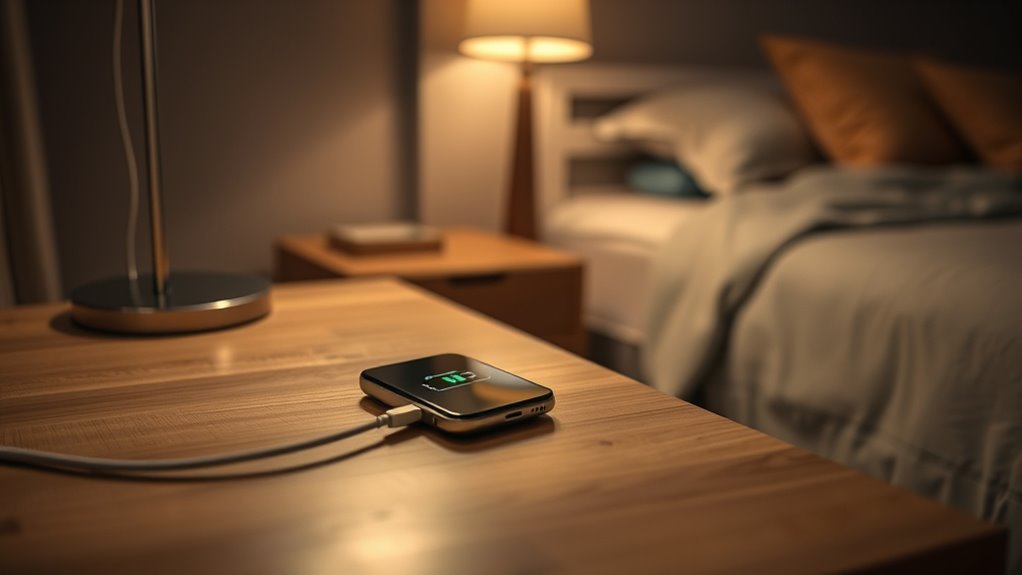
Many people wonder whether charging their phones overnight is safe or simply a myth. It’s a common concern because many worry that leaving a device plugged in for hours might damage the battery or reduce its lifespan. The truth is, modern smartphones are designed with safety features that help manage charging, but understanding how charging habits affect your battery health is important. If you’re someone who frequently charges overnight, it’s helpful to know what actually impacts your phone’s battery over time.
When you plug in your phone overnight, it’s true that the battery reaches full capacity while you’re sleeping. However, most newer phones have built-in safeguards that prevent overcharging. Once the battery hits 100%, the device typically stops charging or slows down the flow of power to prevent damage. This means that leaving your phone plugged in for a few extra hours isn’t as harmful as it once was. Still, maintaining good charging habits can help preserve your battery’s health over the long run.
Most smartphones stop charging after reaching 100%, making overnight charging less harmful than before.
One key to protecting your battery is avoiding frequent deep discharges and keeping your battery level in a moderate range, ideally between 20% and 80%. Charging habits like unplugging your phone once it hits 100% or not letting it drop below 20% can extend your battery’s overall lifespan. If you consistently keep your phone charged overnight, it’s best to use features like optimized charging, which some smartphones automatically enable. This feature learns your charging routine and pauses charging at 80% until it detects you’re about to start using your device again, minimizing stress on the battery.
Another aspect to regard is ambient temperature. Charging your phone in very hot or cold environments can accelerate battery wear regardless of your charging habits. Keeping your phone in a cool, dry place during charging is wise. Additionally, avoid using cheap or uncertified chargers, as they may not have safety features that protect your device’s battery health. Proper temperature management can significantly influence battery longevity.
While charging overnight isn’t inherently bad, it’s a good idea to develop consistent charging routines that prioritize your battery’s longevity. Using your phone’s built-in features, avoiding extreme temperatures, and unplugging once fully charged can help keep your battery healthy for years. Remember, modern technology has improved safety and battery management, so for most users, leaving the phone plugged in overnight won’t cause immediate harm. Still, being mindful of your charging routines can make a noticeable difference in how well your battery performs over time.
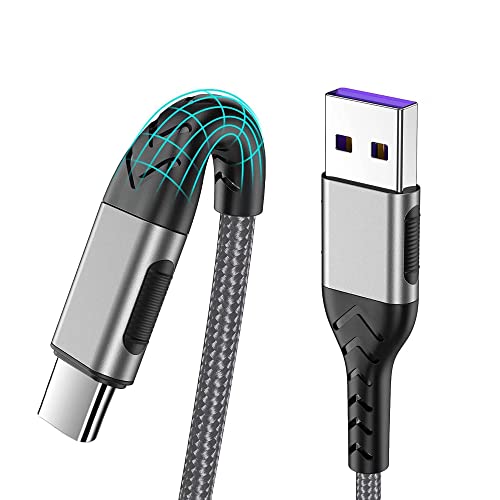
Durcord USB C Cable, Upgarded 2Pack 10ft Fast USB Type C Charging Cable for Android/Phone/Pad/Laptop, Type C Charger Braided USB Cable Compatible withi Phone 17/16/15/Pro/Plus/Max/Sam.Sung-Silver
🚀【SPEACIAL POINTS & SUITABLE LENGTH】: The connecting part is designed with anti-slippery tread which settles the inconvenience when…
As an affiliate, we earn on qualifying purchases.
As an affiliate, we earn on qualifying purchases.
Frequently Asked Questions
Does Leaving My Phone Plugged in Damage the Battery Long-Term?
Leaving your phone plugged in can contribute to battery degradation over time, but modern devices manage this well. When you stay plugged in, it may increase charging cycles slightly, which can impact long-term battery health. However, most phones have built-in safeguards to prevent overcharging. To maximize your battery’s lifespan, avoid constant overnight charging and unplug once it reaches 100%. This way, you reduce unnecessary stress on the battery and prolong its overall health.
Can Overnight Charging Cause Overheating or Fire Hazards?
Charging your phone overnight can cause battery overheating, which increases fire risks. Modern devices have safety features, like temperature sensors and automatic shut-offs, to prevent this. However, if your charger is faulty or the phone gets unusually hot, overheating might occur, raising fire hazards. To stay safe, avoid using damaged chargers and don’t leave your phone charging in bed or on flammable surfaces for extended periods.
Is It Better to Unplug Immediately After the Phone Reaches 100%?
You should unplug your phone immediately after it reaches 100%, as it helps maintain battery health. Did you know that over 300 charging cycles can reduce your battery’s capacity by about 20%? Unplugging prevents unnecessary charging cycles and improves battery calibration, ensuring accurate battery percentage readings. Keeping your device plugged in constantly can cause wear, so unplugging at full charge supports longer-lasting battery performance.
How Do Smart Chargers Prevent Overcharging?
Smart chargers prevent overcharging by automatically stopping the power supply once your phone reaches 100% battery. They monitor your device’s battery health and control charging cycles, which helps reduce stress on the battery. This feature minimizes unnecessary charging, extending your battery’s lifespan. By managing charging cycles efficiently, smart chargers guarantee your phone charges safely without damaging the battery, keeping it healthier longer and preventing overcharge-related issues.
Are There Specific Phone Models More Prone to Battery Damage From Overnight Charging?
Some phone models are more prone to battery damage from overnight charging due to their battery technology and device compatibility. Older devices or those with less advanced battery management systems may experience faster battery degradation. To protect your battery health, check your phone’s manufacturer guidelines and use smart chargers. Modern smartphones typically have safeguards that minimize risks, but understanding your device’s specific needs helps guarantee better longevity and ideal battery performance.
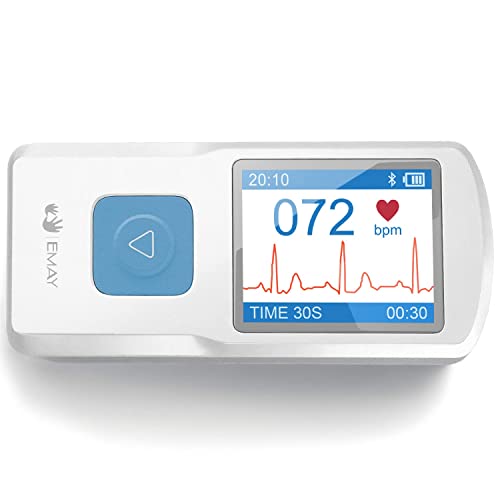
EMAY Portable ECG Monitor | Record ECG and Heart Rate | Compatible with Smartphone and PC
Record and store Lead I ECG signals, and display heart rate for home health care use.
As an affiliate, we earn on qualifying purchases.
As an affiliate, we earn on qualifying purchases.
Conclusion
In the end, charging your phone overnight isn’t necessarily harmful if your device has modern safety features. For example, a recent case study showed that a person’s phone with built-in safeguards remained safe after overnight charging, even with occasional overnights. Just remember, using quality chargers and avoiding damaged cables can prevent issues. So, while it’s generally safe, staying mindful helps keep your phone and data secure.

GUUSMART Type C Charger 2-Pack 25W Type C Fast Charging Block with 6ft USB C Charger Cable Compatible with Galaxy S26 S25 S24 S23 S22 S21/Phone 17/16/16 Pro Max/15/15 Pro Max/15 Plus-Black
Superior Safety Type C Fast Charger :PD3.0 Technology ensures an optimized and rapid safe charging experience(25W) for S26…
As an affiliate, we earn on qualifying purchases.
As an affiliate, we earn on qualifying purchases.

10W Fast Charging Pad with Soft for Cellphone (for Android)
[FAST CHARGING]: Our charging pad features a built-in magnetic disk for fast and harmless charging without radiation.
As an affiliate, we earn on qualifying purchases.
As an affiliate, we earn on qualifying purchases.