To fast-charge your EV on the go, locate nearby DC fast chargers using apps like PlugShare or ChargePoint. Plug in the right connector, such as CCS or CHAdeMO, and start charging when your battery hits around 20-30%. Maximize your time by planning stops at convenient locations, monitoring station availability, and following safety tips. Want to learn more about optimizing your fast-charging experiences? Keep exploring to become a confident EV charger.
Key Takeaways
- Understand different charging levels, with DC fast chargers offering the quickest 80% charge in 20-60 minutes.
- Know your vehicle’s connector type (CCS, CHAdeMO, Tesla NACS) and use adapters if needed for compatibility.
- Use apps like PlugShare or Electrify America to locate and plan charging stops along your route.
- Start fast charging when your battery is around 20-30% for optimal speed and efficiency.
- Follow safety guidelines, ensure correct connector use, and disconnect promptly after charging is complete.
Understanding Different Charging Levels for Electric Vehicles

To understand how electric vehicles (EVs) get their power, it’s important to know the different charging levels available. Level 1 chargers use a standard 120V AC socket, making them the slowest option. You’ll typically need 8-20 hours to fully charge your EV with this method. Level 2 chargers require a 240V connection, delivering between 7.2 and 19.2 kW, and can charge your vehicle faster—usually in 4-10 hours. They’re common at home, workplaces, and public stations. DC Fast Charging, or Level 3, is the quickest option, providing rapid energy transfer at 50 kW to 500 kW. It can charge your EV to 80% in about 20-60 minutes, ideal for long trips or emergencies. Each level suits different needs, from overnight charging to quick stops on the road. Emerging charging technologies continue to improve charging speeds and accessibility for electric vehicle users.
The Technology Behind Fast Charging

DC Fast Charging technology relies on direct current to rapidly transfer energy directly into your vehicle’s battery, bypassing the slower AC conversion process used in Level 1 and Level 2 chargers. Most fast chargers operate at high voltages, typically between 400 and 1000 volts, allowing for much higher power delivery—ranging from 50 kW to 500 kW. This enables your EV to gain 80% capacity in just 20 minutes to an hour. The system uses a converter to supply direct current directly to the battery, eliminating the need for onboard inverters. Vehicle Battery Management Systems (BMS) monitor and regulate charging, ensuring safety and optimizing speed. This technology makes rapid charging feasible, especially during long trips or urgent needs. European cloud infrastructure supports the development of advanced charging networks by providing scalable and secure data management solutions.
Common Types of Charging Connectors and Their Uses
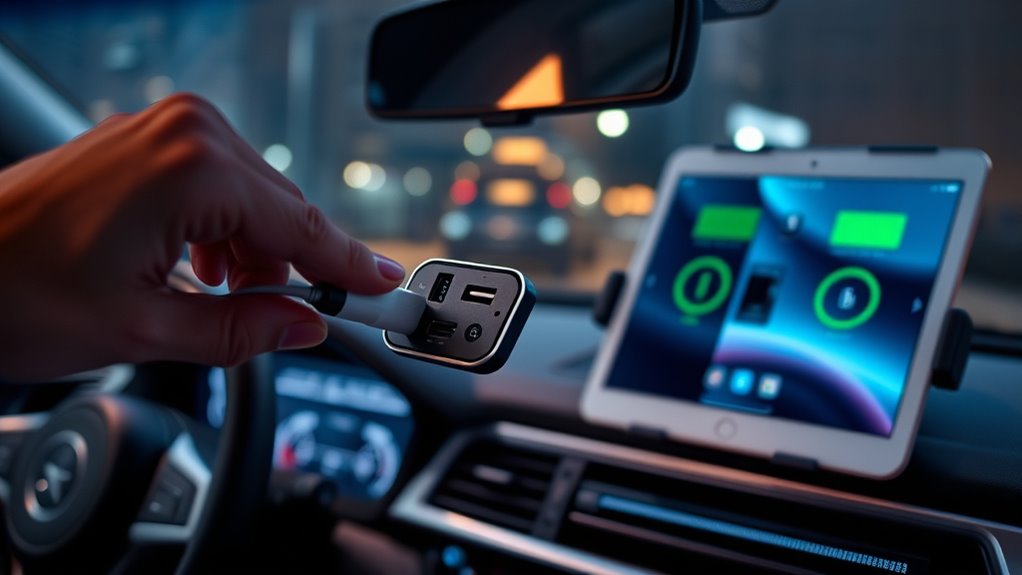
Charging connectors vary depending on your vehicle and charging speed needs. The standard J1772 port works for most Level 1 and Level 2 charging, while fast chargers use different connectors like CCS, CHAdeMO, or Tesla’s NACS. Knowing which adapters or cables you might need guarantees you can charge your EV safely and efficiently wherever you go. Additionally, understanding modern charging standards helps you stay updated with the latest advancements in electric vehicle infrastructure.
Standard J1772 Ports
Have you ever wondered what connects most electric vehicles to their chargers? That’s where the standard J1772 port comes in. It’s the most common charging connector for Level 1 and Level 2 charging across many EV models. This port guarantees compatibility with a wide range of public and home chargers, making everyday charging simple. The J1772 connector is designed for safety and reliability, providing a secure connection between your vehicle and the charger. It supports charging at various power levels, up to about 19.2 kW. Most non-Tesla EVs, including Nissan Leaf and Chevrolet Bolt, use this port. Its widespread adoption makes it a vital component for consistent, accessible EV charging infrastructure. Standardization is key to ensuring seamless compatibility across different electric vehicle brands and charging stations.
Fast Charging Connectors
You’ll find several types of connectors designed for fast charging, each tailored to different vehicle models and regions. The most common is the CCS (Combined Charging System), widely used in North America and Europe, allowing rapid charging up to 350 kW. CHAdeMO, mainly found on older Asian vehicles like Nissan LEAF and Mitsubishi i-MiEV, supports fast charging but is gradually being phased out. Tesla’s proprietary NACS connector is used on Tesla vehicles, offering high-speed charging at Supercharger stations. Many DC fast chargers now feature both CHAdeMO and CCS ports to serve diverse EVs. These connectors are designed to handle high currents and voltages, enabling quick energy transfer. Choosing the right connector depends on your vehicle’s make and region, ensuring you can access fast charging when needed. Additionally, understanding the role of connector technology helps optimize charging efficiency and compatibility.
Compatibility and Adapters
Different EVs are equipped with various charging connectors, which can impact how and where you charge. Knowing which adapters you might need guarantees smooth charging experiences. For example, if your vehicle has a J1772 port, you can use most Level 1 and Level 2 chargers. For DC fast charging, compatibility depends on the connector type—CCS or CHAdeMO—requiring specific adapters. Tesla owners often use NACS connectors or adapters for Superchargers. Keep in mind:
- J1772 is standard for most non-DC fast chargers
- CCS is common for fast DC charging in North America and Europe
- CHAdeMO is mainly used by older Asian models
- Tesla uses proprietary connectors but offers adapters
- Multiple connectors at stations accommodate different vehicles
- Understanding sticking wall decor options can help you optimize your charging setup and space
Being aware of these options ensures you can access the right chargers with minimal hassle.
Where to Find Fast Charging Stations on the Go
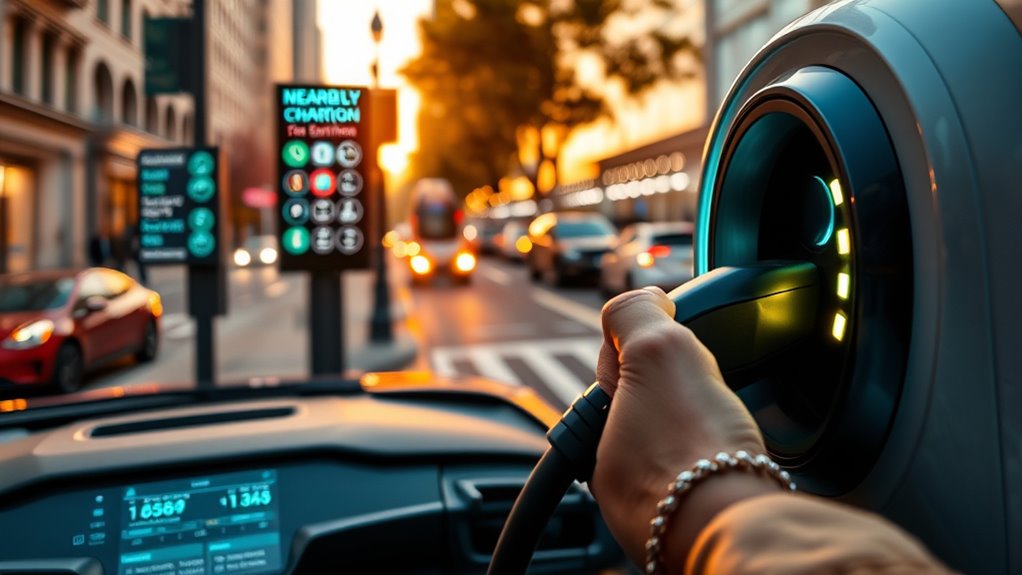
You can find fast charging stations at public networks located along major highways, shopping centers, and travel hubs. These stations are strategically placed for convenience, making long trips easier and quicker. Knowing where to look helps you save time and keeps your EV ready to go. Additionally, utilizing home energy integration strategies can optimize your charging routine and reduce reliance on public chargers.
Public Charging Networks
Public charging networks have expanded rapidly, making fast charging stations more accessible during travel. You can find them at key locations like highways, shopping centers, and rest stops, supporting long-distance journeys. To locate stations quickly, use apps and websites such as PlugShare, ChargePoint, or Electrify America. Many networks offer maps and real-time availability updates, helping you plan your route efficiently. Look for stations with multiple connectors, including CCS and CHAdeMO, to ensure compatibility. Some networks also partner with retail chains, allowing you to combine charging with shopping or dining. Keep these ideas in mind:
- Mobile apps with station locators
- Network memberships for faster access
- Stations at popular travel corridors
- Multi-connector charging points
- Real-time availability updates
- Smart planning tools can help optimize your charging stops based on your route and current station status.
These tools make on-the-go fast charging more convenient and dependable.
Location Convenience
Wondering where to find fast charging stations when you’re on the move? You’ll find them mainly along major highways, in shopping centers, and at rest stops. These locations are strategically placed for quick access during road trips or errands, minimizing downtime. Many public charging networks map out station locations through dedicated apps or GPS systems, making it easy to plan your route. Some stations are also located at popular destinations like gyms, restaurants, and hotels, offering convenient charging while you take a break. Keep in mind that DC fast chargers are often found at high-traffic locations, ensuring you can top off your vehicle quickly without detours. Planning ahead and using charging station apps will help you locate the nearest fast chargers whenever you need them.
Compatibility Tips for Fast-Charging Your EV

Ensuring your EV is compatible with fast-charging stations is essential to take full advantage of rapid charging times. Not all vehicles support DC fast charging, so check your owner’s manual or manufacturer specs. Look for the charging port type—most non-Tesla vehicles use CCS or CHAdeMO, while Tesla models use NACS or Superchargers. Confirm your vehicle’s battery capacity and BMS compatibility, as high currents may not be safe for smaller batteries. Also, verify if your vehicle requires adapters for different connectors. Ultimately, stay aware of charging station options in your area, ensuring your EV’s compatibility aligns with available infrastructure. Understanding vehicle compatibility is key to avoiding charging issues and maximizing efficiency.
How to Maximize Charging Time During Road Trips

Maximizing your charging time on road trips requires strategic planning and knowing how to make the most of available fast-charging options. Begin by mapping out charging stations along your route, prioritizing locations with DC Fast Chargers that match your vehicle’s connector type. Aim to start charging at around 20-30% battery to enhance charging speed and minimize wait times. When connecting, ensure your vehicle’s battery is cooled or at an ideal temperature, as this can influence charging efficiency. Use charging apps to monitor real-time station availability and wait times, avoiding stations that are overcrowded. If possible, plan to charge during breaks or meals, so you utilize downtime effectively. Staying flexible and prepared helps you maximize charging efficiency and keeps your trip running smoothly. Additionally, understanding how battery temperature affects charging speed can help you optimize your charging sessions further.
Safety and Best Practices for Fast Charging in Public

When using public fast chargers, safety should be your top priority to prevent accidents and protect your vehicle. Always inspect the charger and surrounding area before connecting your vehicle. Make certain the charging station is in good condition, free of damage or debris. Use only compatible connectors and avoid forcing incompatible plugs. Be cautious of exposed wiring or sparks. Follow posted instructions and stay attentive during charging. Additionally, be aware of the vetted products to ensure your charging accessories are safe and reliable. Keep a safe distance from the charger during operation. Disconnect your vehicle promptly once charging is complete.
Planning Your Charging Strategy for Longer Journeys

Planning your charging stops is key to a smooth long-distance EV trip. Start by mapping your route and identifying available charging stations along the way. Prioritize high-speed DC Fast Chargers for quick top-ups, especially if you’re running low on range. Know your vehicle’s charging capabilities—some EVs can handle 350 kW chargers, while others are limited to lower speeds. Plan to charge at around 80% capacity; charging beyond that slows down notably. Consider scheduling breaks at convenient locations like rest areas or shopping centers, making the stop more efficient. Keep a backup plan in case chargers are busy or out of service. Additionally, understanding the total ownership costs of charging options can help you choose the most economical stations for your trip. With proper planning, you’ll minimize downtime and keep your journey seamless and enjoyable.
Frequently Asked Questions
Can All Electric Vehicles Use DC Fast Chargers?
Not all electric vehicles can use DC fast chargers. You need to check if your EV has the compatible charging port, like CCS or CHAdeMO, and if its battery system can handle the high current. Some vehicles, especially older models or plug-in hybrids, don’t support fast charging. Always verify your vehicle’s specifications before trying to use a DC fast charger to avoid potential damage or charging issues.
How Does Weather Affect Fast Charging Performance?
You might think weather doesn’t impact fast charging, but it actually does. Cold temperatures slow down battery chemistry, reducing charging speed and efficiency, especially below freezing. Hot weather can cause batteries to overheat, triggering protective measures that limit charging. To get the best performance, avoid charging in extreme cold or heat, and if possible, wait for your battery to warm up or cool down before plugging in.
Are There Any Health Risks With Fast Charging Stations?
You generally don’t need to worry about health risks with fast charging stations. They’re designed with safety features like grounding and protective enclosures to prevent electrical hazards. The main concerns are minimal exposure to low-level electromagnetic fields (EMFs), which are considered safe by health authorities. Just follow the instructions, avoid touching components during charging, and make sure the station is properly maintained. Overall, fast chargers are safe for everyday use.
What’s the Cost Difference Between Level 2 and Fast Charging?
You’ll find Level 2 charging typically costs less per hour than DC fast charging, making it more budget-friendly for regular use. While fast chargers offer quick top-ups, they often charge at higher rates because of their advanced technology and higher power output. However, the difference isn’t massive, and using Level 2 chargers at home or work can save you money in the long run, especially if you don’t need rapid charging daily.
How Do I Find Compatible Fast Chargers for My EV Model?
To find compatible fast chargers for your EV, first check your vehicle’s charging port type, like CCS or CHAdeMO. Visit manufacturer websites or use charging station apps to locate stations with the right connectors. Confirm your vehicle supports fast charging, as not all EVs do. Look for stations labeled as DC Fast Charging, and consider using apps like PlugShare or ChargePoint to filter compatible stations near you.
Conclusion
Now that you know the ins and outs of fast charging, you might wonder if frequent use could harm your battery. notably, studies show that modern EV batteries are designed to handle regular fast charges without significant degradation. So, rest assured—you can enjoy quick top-ups on the go without compromising your vehicle’s longevity. With the right planning and safety practices, you’ll keep your EV powered up and ready for every adventure.