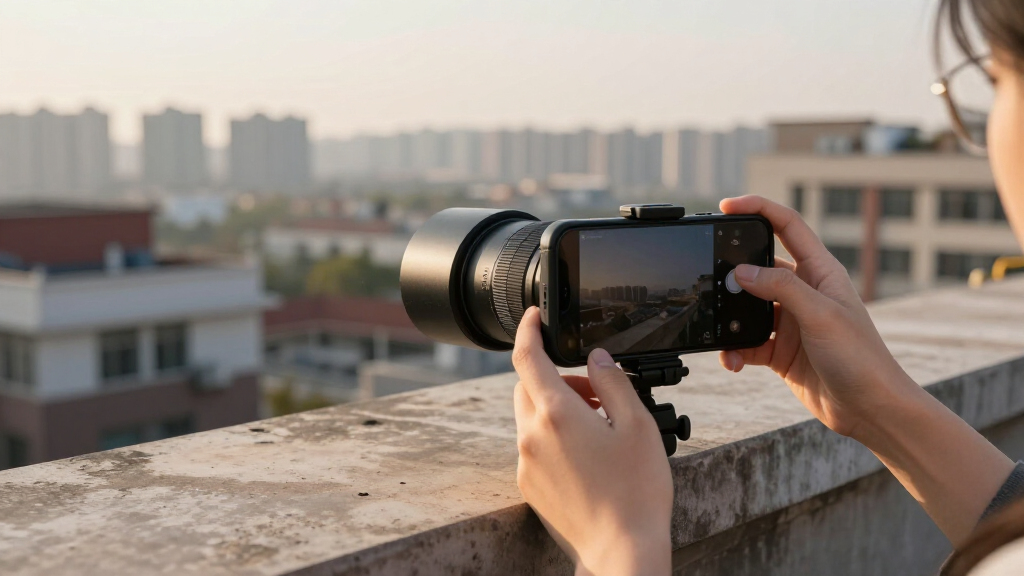

The best smartphone camera attachments depend on what your phone cannot do well on its own: reach distant subjects, capture tiny details, or add a wider view. The MIAO LAB 10X Telephoto & 200mm Macro Kit is my best overall pick for its mix of close-up and long-reach options, while the Xenvo Pro Lens Kit stands out for straightforward macro and wide-angle shooting with a light. For steadier long-distance framing, the Evil Eye 18X Telephoto includes a tripod, while the Freewell 1.7X Telephoto takes a more specialized case-mounted approach. The central tradeoff is versatility versus simplicity: multi-lens kits offer more ways to shoot, but a dedicated lens can be easier to align and use. Read on for how the 11 options differ and which type of attachment fits your phone and photography habits.

Get the latest gadgets delivered free with Prime
- Fast, free delivery on millions of items
- Prime Video, Amazon Music and more included
- Member-only deals all year
Complete the kit



Key Takeaways
- Versatility separates the lead pick: MIAO LAB’s 10X telephoto and 200mm macro combination serves both distant and close subjects, unlike single-purpose telephoto options.
- More lenses do not automatically mean better results: the 11- and 14-in-1 kits offer variety, but buyers should weigh setup and lens switching against a simpler dedicated attachment.
- Long-reach lenses need support: the Evil Eye 18X includes a tripod, an advantage for framing distant subjects compared with handheld telephoto use.
- Phone compatibility changes the buying decision: Freewell’s 17mm mount approach is less universal than clip-on kits and makes most sense for buyers with a compatible case.
- The spotting-scope adapter serves a different job: it connects a phone to an existing scope rather than acting as a standalone phone lens, so it suits scope owners more than casual mobile photographers.
| MIAO LAB 10X Telephoto & 200mm Macro Phone Lens Kit with Universal Clip |  | Best Two-in-One Telephoto and Macro Pick | Lens options: 10x telephoto and 200mm macro | Focus type: Manual | Lens design: Fixed focus | VIEW LATEST PRICE | See Our Full Breakdown |
| MIAO LAB 28x HD Telephoto Lens for Smartphone |  | Best for Maximum Reach | Magnification: 28x | Compatibility: iPhone, Samsung, Huawei, Xiaomi, OPPO, Vivo, and most smartphones | Lens material: High-quality glass | VIEW LATEST PRICE | See Our Full Breakdown |
| Phone Camera Lens Kit (11 Lenses) for Smartphones with Travel Case |  | Best for Lens Variety | Number of lenses: 11 | Lens types: Fisheye, macro, and wide angle | Compatible devices: iPhone, Android smartphones, and tablets | VIEW LATEST PRICE | See Our Full Breakdown |
| Evil Eye 18X Telephoto Phone Lens with Tripod for Smartphone |  | Best Telephoto Kit with Tripod | Focal length: 240 mm | Zoom ratio: 18x | Aperture: f/1.5 | VIEW LATEST PRICE | See Our Full Breakdown |
| Freewell 1.7X Telephoto Lens for 17mm Mount Phone Case |  | Best for 17mm Mount Systems | Zoom ratio: 1.7x | Lens mount: 17 mm | Minimum focusing distance: 65 cm | VIEW LATEST PRICE | See Our Full Breakdown |
| Cell Phone Camera Lens Kit, 11-in-1 Universal Mobile Photography Set for iPhone and Smartphones (Black) |  | Best for Lens Variety | Lenses included: 20x telephoto, 0.63x wide-angle, 15x macro, 198° fisheye, 2x telephoto, kaleidoscope, star filter, CPL filter | Compatibility: Most smartphones with camera center-to-edge distance greater than 2.2 cm | Accessories: Tripod, universal clip, eyecup, storage bag | VIEW LATEST PRICE | See Our Full Breakdown |
| Xenvo Pro Lens Kit for iPhone and Android, Macro and Wide Angle Lens with LED Light and Travel Case | 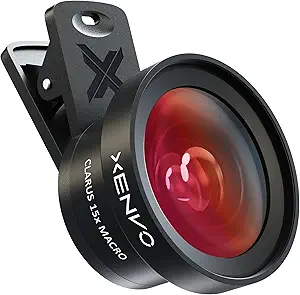 | Best for Everyday Versatility | Compatibility: All smartphones and tablets | Wide-angle focal length: 4.1 mm | Macro focal length: 0.45 mm | VIEW LATEST PRICE | See Our Full Breakdown |
| Godefa Phone Camera Lens Kit, 14-in-1 Lenses with Selfie Light for Smartphones |  | Best for Creative Effects | Number of lenses: 14 | Lens types: Wide-angle, macro, fisheye, telephoto, kaleidoscope, starburst, radial filter, CPL filter | Compatible devices: Listed iPhone models, Samsung Galaxy, HTC, Sony, LG, Google Pixel, and other Android smartphones | VIEW LATEST PRICE | See Our Full Breakdown |
| KEYWING 3-in-1 Phone Camera Lens Kit for iPhone |  | Best Compact Starter Kit | Included lenses: 120° wide angle, 198° fisheye, 20X macro | Compatible models: iPhone, Samsung, Google phones, and most smartphones | Focus type: Manual focus | VIEW LATEST PRICE | See Our Full Breakdown |
| APEXEL 10X Tele-Macro Pro Dual Lens for iPhone |  | Best for Tele-Macro Travel | Lens type: Telephoto and macro | Magnification: 10X | Macro focus distance: 8 inches | VIEW LATEST PRICE | See Our Full Breakdown |
| Universal Spotting Scope Phone Adapter, Double Grip, Made in USA |  | Best for Spotting Scope Digiscoping | Compatible devices: Smartphones | Phone compatibility: Universal | Attachment: Spring-loaded grip with adjustable compression rings | VIEW LATEST PRICE | See Our Full Breakdown |
| smartphone camera attachment | Focus type |
|---|---|
| MIAO LAB 10X Telephoto & 200mm | Manual |
| MIAO LAB 28x HD Telephoto Lens | — |
| Phone Camera Lens Kit | Manual |
| Evil Eye 18X Telephoto Phone L | Manual |
| Freewell 1.7X Telephoto Lens f | Manual |
| Cell Phone Camera Lens Kit | — |
| Xenvo Pro Lens Kit for iPhone | — |
| Godefa Phone Camera Lens Kit | Auto focus |
| KEYWING 3-in-1 Phone Camera Le | Manual focus |
| APEXEL 10X Tele-Macro Pro Dual | — |
| Universal Spotting Scope Phone | — |
More Details on Our Top Picks
MIAO LAB 10X Telephoto & 200mm Macro Phone Lens Kit with Universal Clip
The MIAO LAB pairs a 10x telephoto with a 200mm macro lens, making it the most flexible choice here for someone who wants to switch between distant subjects and close details without carrying separate kits. Its aluminum body and multi-layer coatings are a more focused setup than the 11-lens Phone Camera Lens Kit, which offers more lens types but also more pieces to manage. The tradeoff is that this kit uses fixed focus: it may suit deliberate, carefully aligned shots better than quick, changing scenes. Macro work can also be limited at very close distances, and the clip needs accurate positioning over the phone camera for clear results. I’d choose it for two specific kinds of photography, not as an all-purpose replacement for a phone’s native camera system.
Pros:- Combines 10x telephoto and 200mm macro options in one kit
- Multi-layer coatings are designed to improve clarity
- Aerospace-grade aluminum construction
- Universal clip supports use with most smartphones
Cons:- Fixed-focus design limits flexibility across changing subject distances
- Accurate clip and lens alignment is needed for best results
- Macro performance may be limited at very close distances
Best for: Phone photographers who want one clip-on kit for occasional long-distance shots and close-up subjects such as plants or small objects.
Not ideal for: People who need fast autofocus, dependable handheld results, or a lens kit that works without careful alignment.
- Lens options:10x telephoto and 200mm macro
- Focus type:Manual
- Lens design:Fixed focus
- Zoom ratio:10x
- Maximum aperture:f/1.5
- Material:Aerospace-grade aluminum
- Weight:145 g
- Color:Black
Our verdict“Choose this kit if you want dedicated telephoto and macro options in one compact setup and can work around fixed focus.”
MIAO LAB 28x HD Telephoto Lens for Smartphone
With 28x magnification, this MIAO LAB is the reach-first option in this group, suited to subjects that a standard phone camera cannot frame closely. Its wider-view design is meant to make framing easier than a narrow high-magnification view, and the lens can also serve as a monocular telescope when it is not attached to a phone. Compared with the Evil Eye 18X Telephoto Phone Lens, it offers greater stated magnification, while the Evil Eye includes a tripod for added support. That difference matters: at high magnification, small movements and imperfect alignment can make a shot harder to hold steady. Results also depend on the phone model, and reduced edge darkening is not guaranteed across every setup. I’d pick this for distant viewing rather than general everyday photography.
Pros:- 28x magnification targets distant subjects
- Wider view is intended to help with framing
- Can also be used as a monocular telescope
- Lightweight design and broad smartphone compatibility
Cons:- Phone results can vary by device and camera alignment
- Edge darkening may remain on some phone setups
- No tripod is listed, so steady framing may take extra effort
Best for: Birdwatchers and outdoor observers who want a high-magnification phone attachment that can also be used as a monocular.
Not ideal for: People who primarily shoot close subjects, need simple point-and-shoot framing, or want a bundled tripod for stability.
- Magnification:28x
- Compatibility:iPhone, Samsung, Huawei, Xiaomi, OPPO, Vivo, and most smartphones
- Lens material:High-quality glass
- Field of view:Wide view
- Edge darkening:Designed to reduce it
- Additional use:Monocular telescope
- Design:Portable and lightweight
Our verdict“Pick this lens for maximum stated reach and dual phone-or-monocular use, but favor the Evil Eye 18X if a bundled tripod matters more.”
Phone Camera Lens Kit (11 Lenses) for Smartphones with Travel Case
This kit earns its place through breadth rather than specialization: its 11 lenses include fisheye, macro, and wide-angle options, giving curious phone photographers several ways to change a composition. The 110-degree view angle is useful for fitting more into a frame, while the MIAO LAB 10X Telephoto and Macro Kit is a better match for buyers who specifically want long-distance reach alongside close-up photography. The tradeoff here is the swapping process. Keeping multiple lenses organized in the travel case adds versatility, but changing lenses can slow a spontaneous shot, and the universal clip may not sit securely on every device. The listing also gives limited durability information. I’d treat this as an experimentation kit for varied subjects, rather than a dependable telephoto solution or a streamlined everyday attachment.
Pros:- Includes 11 lenses for varied shooting styles
- Fisheye, macro, and wide-angle options support different compositions
- Multi-coated optical glass is designed to reduce reflections and distortion
- Universal clip is listed as compatible with smartphones and tablets
Cons:- Swapping among lenses can interrupt quick shooting
- Clip fit may be less secure on some devices
- Durability details are not specified
Best for: Beginners and hobbyists with different smartphone subjects who want to experiment with wide-angle, fisheye, and macro effects.
Not ideal for: Wildlife or sports shooters seeking strong telephoto reach, or anyone who needs quick lens changes and a consistently secure fit.
- Number of lenses:11
- Lens types:Fisheye, macro, and wide angle
- Compatible devices:iPhone, Android smartphones, and tablets
- Lens material:Optical glass
- Focal length:50 mm
- Lens coating:Multi-coated
- View angle:110 degrees
- Focus type:Manual
Our verdict“Choose this set to experiment with several lens effects, but look to a dedicated telephoto attachment for distant subjects.”
Evil Eye 18X Telephoto Phone Lens with Tripod for Smartphone
The Evil Eye balances 18x reach with a bundled tripod, making it a more supported setup for distant subjects than the MIAO LAB 28x lens, which lists higher magnification but no tripod. That support can help reduce shake while framing a faraway scene or recording video, though it does not replace image stabilization—the lens has none. Its fixed-focus design and manual adjustments call for patience, so this is better for planned shots than quick action. The compact 120 g build helps keep the kit portable, but the phone case must be no thicker than 0.98 inches for compatibility. I’d choose it when steadier positioning matters more than maximum magnification, while skipping it if your phone case or shooting style makes careful setup impractical.
Pros:- 18x magnification for distant subjects
- Includes a tripod for steadier positioning
- Portable 120 g design
- Compatibility listed for several major smartphone brands
Cons:- No image stabilization is listed
- Manual focus and fixed-focus design require careful adjustment
- Phone case thickness must be 0.98 inches or less
Best for: Outdoor phone photographers who want a telephoto attachment with a tripod for planned wildlife, scenic, or distant-subject shots.
Not ideal for: Action shooters who need stabilization or fast focus, and phone owners whose cases exceed the listed thickness limit.
- Focal length:240 mm
- Zoom ratio:18x
- Aperture:f/1.5
- Lens design:Fixed focus
- Focus type:Manual
- Material:Polymer and optical glass
- Weight:120 g
- Included accessories:Tripod and storage bag
- Case compatibility:Phone case thickness up to 0.98 in
Our verdict“Choose the Evil Eye if a bundled tripod matters more than the MIAO LAB 28x lens’s greater stated magnification.”
Freewell 1.7X Telephoto Lens for 17mm Mount Phone Case
Unlike the clip-on MIAO LAB and Evil Eye telephoto lenses, the Freewell is built for a 17mm mount, so its main advantage is a more specific, mount-based setup rather than universal attachment. Its 1.7x optical magnification is comparatively modest beside those high-reach lenses; that makes it a better fit for portraits and nearer outdoor subjects than for pulling in distant wildlife. Aluminum construction and multi-layer coatings are intended to help with durability and glare control, while the stated 65 cm minimum focusing distance sets a practical limit for close work. Manual focus and no image stabilization also make it less convenient for handheld video. I’d shortlist it only if your phone case already has the required mount and you prefer a lower-magnification optical add-on.
Pros:- 1.7x optical magnification for a modest framing adjustment
- 17mm mount design fits compatible phone-case systems
- Aluminum alloy construction
- Multi-layer coating is designed to reduce glare and improve contrast
Cons:- Compatibility is limited to phones or cases with a 17mm mount
- No image stabilization is listed
- Manual focus and a 65 cm minimum focusing distance limit convenience
Best for: Smartphone photographers with a compatible 17mm mount case who want modest optical reach for portraits and nearer outdoor subjects.
Not ideal for: Phone owners without a 17mm mount, close-up photographers, or anyone seeking stabilized handheld telephoto video.
- Zoom ratio:1.7x
- Lens mount:17 mm
- Minimum focusing distance:65 cm
- Lens design:Prime
- Focus type:Manual
- Image stabilization:No
- Aperture:f/1
- Water resistance:Not water resistant
- Video resolution:4K
Our verdict“Choose the Freewell only if you already use a 17mm mount and want modest optical reach rather than the greater magnification of clip-on alternatives.”
Cell Phone Camera Lens Kit, 11-in-1 Universal Mobile Photography Set for iPhone and Smartphones (Black)
This kit is the broadest creative toolkit in this group: its lineup ranges from 20x and 2x telephoto to macro, fisheye, kaleidoscope, star, and CPL options. That makes it a better fit for experimenting with different looks than the KEYWING 3-in-1, which sticks to fisheye, wide-angle, and macro. The included tripod, clip, eyecup, and storage bag also give it more shooting support and storage than the APEXEL 10X Tele-Macro Pro.
The tradeoff is extra setup. The macro and wide-angle lenses screw together, and the clip needs careful alignment; the listed camera placement requirement may also rule out some phones. Removing a case can improve stability, but makes quick shots less convenient. Choose this set for creative range, not the simplest everyday attachment.
Pros:- Includes telephoto, wide-angle, macro, fisheye, and several effect or filter lenses.
- Tripod and eyecup add support for more deliberate shooting.
- Storage bag keeps the lenses and accessories together.
- Offers more lens variety than the simpler KEYWING 3-in-1 kit.
Cons:- Macro and wide-angle lenses screw together, adding setup friction.
- A phone case may need to come off for steadier alignment.
- Compatibility depends on the phone’s camera position and dimensions.
Best for: Phone photographers who want multiple specialty effects and telephoto options in one kit, and are willing to adjust the clip and lens setup.
Not ideal for: People who want a fast, case-friendly attachment or need a guaranteed fit without checking their phone’s camera placement.
- Lenses included:20x telephoto, 0.63x wide-angle, 15x macro, 198° fisheye, 2x telephoto, kaleidoscope, star filter, CPL filter
- Compatibility:Most smartphones with camera center-to-edge distance greater than 2.2 cm
- Accessories:Tripod, universal clip, eyecup, storage bag
- Kit format:11-in-1 mobile photography set
- Color:Black
- Material:Not specified
Our verdict“Pick this kit if creative lens variety matters more than quick setup and case-on convenience.”
Xenvo Pro Lens Kit for iPhone and Android, Macro and Wide Angle Lens with LED Light and Travel Case
The Xenvo takes a more focused approach than the 11-in-1 Cell Phone Camera Lens Kit: it pairs a 0.45x wide-angle lens with a 15x macro lens, then adds a rechargeable LED light and travel case. That narrower selection is useful if you want two practical perspectives rather than a drawer full of special-effect lenses. Its stated compatibility with smartphones and tablets is broader than the Cell Phone kit’s camera-placement condition, though the clip still needs to sit over the correct camera.
Aircraft-grade aluminum and optical glass give the hardware a sturdier construction profile than a basic clip-on set, while the light helps with nearby subjects and dim scenes. The tradeoffs are manual focusing, close working distance for macro, and no water resistance. Compared with the Godefa 14-in-1, Xenvo offers fewer effects but a more restrained kit with dedicated lighting.
Pros:- Combines wide-angle and macro lenses for two distinct everyday uses.
- Rechargeable LED light can add illumination for close subjects and selfies.
- Aircraft-grade aluminum body and optical glass.
- Travel case helps organize the lenses and accessories.
Cons:- Manual focus and very close macro shooting can take patience.
- Not water resistant.
- Offers fewer focal and special-effect options than the Godefa 14-in-1 kit.
Best for: Phone owners who want dependable wide and close-up options, a fill light, and a case for carrying a compact lens kit.
Not ideal for: Photographers seeking telephoto reach, lots of novelty effects, weather-resistant gear, or effortless macro focusing.
- Compatibility:All smartphones and tablets
- Wide-angle focal length:4.1 mm
- Macro focal length:0.45 mm
- Zoom ratio:15x
- Lens material:Optical glass
- Lens body material:Aircraft-grade aluminum
- Lens coating:Nano coating
- Included accessories:Rechargeable LED light, lens clip, travel case
- Water resistance:Not water resistant
Our verdict“Choose Xenvo for a compact wide-and-macro pairing with its own light, rather than a large collection of effects.”
Godefa Phone Camera Lens Kit, 14-in-1 Lenses with Selfie Light for Smartphones
Godefa’s main appeal is sheer choice: its 14-in-1 assortment includes wide-angle, macro, fisheye, telephoto, kaleidoscope, starburst, radial, and CPL-style options, with an adjustable selfie light alongside. It suits someone who wants to try different visual treatments without buying separate attachments. Compared with the Xenvo Pro Lens Kit, Godefa puts more emphasis on effects and lens variety; Xenvo is the tidier choice for a simpler wide-and-macro setup with a travel case.
The clip-on format is convenient across many listed phone families, but the kit has no image stabilization, so handheld results still depend on a steady grip. Some lenses may introduce edge distortion or vignetting, and the unit is not water resistant. I’d favor Godefa for playful experimentation and illuminated selfies, not for consistent framing or shooting in rough conditions.
Pros:- Broad selection of lens types and special effects in one clip-on kit.
- Adjustable selfie light adds illumination when ambient light is limited.
- Designed for compatibility with a wide range of smartphone models.
- More effect options than the focused Xenvo wide-and-macro kit.
Cons:- No image stabilization for handheld shooting.
- Some lenses can cause vignetting or distortion near the frame edges.
- Not water resistant, so outdoor use calls for care.
Best for: Creative smartphone shooters who want a broad set of visual effects and an adjustable light for selfies or nearby subjects.
Not ideal for: People who need stabilized handheld shots, predictable edge-to-edge image quality, or an attachment suitable for wet conditions.
- Number of lenses:14
- Lens types:Wide-angle, macro, fisheye, telephoto, kaleidoscope, starburst, radial filter, CPL filter
- Compatible devices:Listed iPhone models, Samsung Galaxy, HTC, Sony, LG, Google Pixel, and other Android smartphones
- Focal length range:0.63 mm to 100 cm
- Lens design:Prime
- Focus type:Auto focus
- Image stabilization:None
- Included light:Selfie light with adjustable brightness
- Water resistance:Not water resistant
Our verdict“Choose Godefa if experimenting with effects and adding selfie light matter more than stabilization and consistent corners.”
KEYWING 3-in-1 Phone Camera Lens Kit for iPhone
KEYWING keeps the choice simple: a wide-angle lens, fisheye lens, and 20X macro cover three distinct looks without the many attachments in the Godefa 14-in-1 or the 11-in-1 Cell Phone kit. That smaller lineup makes sense for a beginner who wants to learn what clip-on lenses can do before managing a larger set. The universal clip and storage bag add basic portability, and the stated optical glass and HD coating are intended to reduce reflections and ghosting.
Its simplicity does not remove the alignment work. The product data warns against using the phone’s zoom function because it may not line up with the main camera, and a case can interfere with the lens effect. It also lists manual focus and no water resistance. Compared with Xenvo, KEYWING adds fisheye but lacks an included LED light, making it a leaner choice for daylight experimentation.
Pros:- Three clearly differentiated lenses cover wide, fisheye, and macro photography.
- Clip-on design works with many smartphone models.
- Optical glass and HD coating are intended to limit reflections and ghosting.
- Smaller selection is less involved than the Godefa 14-in-1 kit.
Cons:- Best results may require removing the phone case and carefully aligning the clip.
- The listed manual focus can make close-up framing less straightforward.
- No included LED light or telephoto lens.
Best for: First-time attachment buyers who want a small, easy-to-understand set for wide scenes, fisheye images, and close-up subjects.
Not ideal for: Phone users who need a built-in light, telephoto reach, case-on use, or a highly forgiving setup across camera layouts.
- Included lenses:120° wide angle, 198° fisheye, 20X macro
- Compatible models:iPhone, Samsung, Google phones, and most smartphones
- Focus type:Manual focus
- Lens coating:HD coating
- View angle:198°
- Focal length:1.31 inches
- Image stabilization:Optical, as listed
- Included accessories:Universal clip, storage bag, user’s manual
- Water resistance:Not water resistant
Our verdict“Pick KEYWING as a simple introduction to clip-on wide, fisheye, and macro photography, provided you can align it without a case.”
APEXEL 10X Tele-Macro Pro Dual Lens for iPhone
Unlike the multi-effect kits in this group, the APEXEL combines just two jobs: 10X telephoto and macro. That focused design is a stronger match for travel photographers who want to frame distant details and then switch to close subjects without carrying a broad lens set. Its 5.12-ounce weight supports that portable use, while the stated compatibility covers most phones and Samsung Galaxy models. Compared with the Cell Phone 11-in-1 kit, APEXEL trades special effects and included accessories for a more targeted dual-lens purpose.
The key limitation is that good results depend on precise alignment with the phone camera, so it is less casual than a simple built-in camera switch. Macro focus is specified at 8 inches, which may not suit buyers seeking extreme close-ups. There is no carrying case or accessory bundle, unlike Xenvo or the Cell Phone kit, so plan for separate storage.
Pros:- Combines telephoto and macro functions in one attachment.
- 10X magnification supports framing distant subjects.
- Lightweight at 5.12 ounces for travel use.
- Stated compatibility covers most phones and Samsung Galaxy models.
Cons:- Requires accurate camera alignment for best results.
- Macro focus distance is limited to 8 inches.
- No carrying case or accessories are included.
Best for: Travelers who want one lightweight attachment for distant details and macro subjects, and are comfortable aligning it carefully.
Not ideal for: Buyers seeking a full creative lens collection, very close macro focus, or a ready-to-carry kit with a case and accessories.
- Lens type:Telephoto and macro
- Magnification:10X
- Macro focus distance:8 inches
- Weight:5.12 oz
- Compatibility:Most phones and Samsung Galaxy models
- Optical design:High-quality optical elements designed to reduce glare and distortion
- Included case:None specified
- Included accessories:None specified
Our verdict“Choose APEXEL for a portable telephoto-and-macro pairing, but skip it if you want the effects and accessories of a larger kit.”
Universal Spotting Scope Phone Adapter, Double Grip, Made in USA
This adapter is the specialist pick for photographing distant wildlife through a spotting scope, rather than adding a standalone lens to a phone. Its spring-loaded grip speeds up attachment, while adjustable compression rings accommodate a range of eyepiece diameters; together, those features help align a phone camera with the scope’s view. Compared with the MIAO LAB 28x HD Telephoto Lens, this option relies on a spotting scope you already own instead of supplying its own telephoto lens. The tradeoff is that compatibility depends on matching your phone and scope eyepiece, and some phone cases may need adjustment or removal. Its machined aluminum and stainless steel construction favors a secure outdoor setup, but the 10-ounce adapter is less convenient than a small clip-on lens for casual carry.
Pros:- Spring-loaded grip allows quick attachment and removal.
- Adjustable compression rings fit a range of spotting-scope eyepiece diameters.
- Machined aluminum and stainless steel construction supports a secure outdoor setup.
- Universal smartphone fit offers flexibility across compatible phones.
Cons:- Requires a spotting scope; it does not provide magnification on its own.
- Phone cases or particular eyepiece sizes may require fit adjustments.
- At 10 ounces, it is heavier than a simple phone lens clip.
Best for: Birders and wildlife photographers who already own a spotting scope and want to connect a compatible smartphone for digiscoping.
Not ideal for: Phone photographers seeking a self-contained telephoto lens or a quick, case-free setup across different phones and scopes.
- Compatible devices:Smartphones
- Phone compatibility:Universal
- Attachment:Spring-loaded grip with adjustable compression rings
- Enclosure material:Aluminum
- Item dimensions:7 x 3.5 x 2.25 inches
- Item weight:10 ounces
- Color:Black
- Water resistance:Listed as waterproof
- Unit count:1
Our verdict“Choose this adapter if you already own a spotting scope and want a sturdy phone connection for wildlife photos; skip it if you need a standalone telephoto attachment.”

How We Picked
I ranked these smartphone camera attachments by how clearly each one solves a real shooting need, including telephoto reach, macro detail, wider framing, and scope-based photography. I also weighed phone fit and mounting method, the practical value of included accessories such as tripods or lights, and whether the product’s role is easy to understand before buying. A broad kit can serve more situations, but only when its variety is useful rather than a source of extra setup.
The order favors useful versatility and a clear buyer fit over the largest lens count or biggest stated magnification. Dedicated telephoto models rank for reach, while multipurpose kits earn consideration for covering different styles of shooting. Mount-specific designs and scope adapters rank lower for general use because they depend on compatible equipment or a narrower purpose, not because those needs are unimportant. Since phone camera layouts and cases vary, I treat compatibility as a central part of the ranking rather than an afterthought.
| smartphone camera attachment | Focus type |
|---|---|
| MIAO LAB 10X Telephoto & 200mm | Manual |
| MIAO LAB 28x HD Telephoto Lens | — |
| Phone Camera Lens Kit | Manual |
| Evil Eye 18X Telephoto Phone L | Manual |
| Freewell 1.7X Telephoto Lens f | Manual |
| Cell Phone Camera Lens Kit | — |
| Xenvo Pro Lens Kit for iPhone | — |
| Godefa Phone Camera Lens Kit | Auto focus |
| KEYWING 3-in-1 Phone Camera Le | Manual focus |
| APEXEL 10X Tele-Macro Pro Dual | — |
| Universal Spotting Scope Phone | — |
Factors to Consider When Choosing Best Smartphone Camera Attachments
Before choosing an attachment, match its optical role and mounting system to the photos you actually take. A lens that promises greater reach may be a poor fit if it is difficult to align with your phone, while an all-in-one kit can leave you carrying pieces you rarely use. These factors help narrow the field beyond the product-by-product comparisons.
Choose the Optical Job Before the Kit Size
Start by naming the limitation you want to solve: distance, tiny subjects, a wider scene, or a connection to a spotting scope. Telephoto and macro are different jobs, even when one product combines them, and neither automatically improves every phone photo. Broad kits can look attractive because they include several lens types, but each added attachment means another item to store and align. A common mistake is choosing by lens count instead of checking whether the kit includes the one lens you will use most. If you mainly photograph flowers or small objects, a macro-focused option may be more useful than a collection dominated by effects lenses. Pick a specialist when the use is clear; choose a multi-lens kit when you genuinely switch between subjects.
Check Mounting and Camera-Lens Alignment
A phone attachment must sit over the correct camera module, and newer phones often have multiple rear cameras with different positions and functions. Universal clip does not mean effortless fit: a thick case, camera bump, or unusually placed lens can make alignment awkward. Before buying, check the attachment method, the phone models or case types it supports, and whether removing a case may be necessary. Avoid assuming that a lens will work equally well across every camera on your phone; some attachments need to line up with one specific camera. A case-mounted system can feel more repeatable for someone who owns compatible hardware, but it offers less flexibility when upgrading phones. Fit is part of image quality because poor alignment can cause dark corners or an obstructed view.
Treat Magnification Claims as a Starting Point
Numbers such as 10X or 28X describe a reach claim, not a guarantee of sharp, usable photos. Stability and alignment matter more as magnification rises, because even slight hand movement becomes more visible in the frame. A tripod or firm support can make a long-reach attachment easier to aim, while a handheld setup favors convenience over consistent framing. Check whether you can keep the phone’s main camera centered behind the lens and whether focusing remains practical at the distances you shoot. For distant wildlife or outdoor details, plan for support and bright conditions rather than expecting magnification alone to deliver clear results. If you mostly take casual travel photos, a moderate reach may be easier to use than an extreme telephoto attachment.
Decide How Much Setup You Will Tolerate
Every extra lens, clip, light, and support piece adds a decision before the shutter is pressed. Convenience can matter more than a long accessory list when moments are brief or you want to carry the kit daily. A dedicated attachment reduces choices, while a multi-piece kit provides more options at the cost of swapping and storage. Think about where you will shoot: a planned close-up session gives you time to fit a lens, but a fast-moving street scene may not. Check whether the kit includes a travel case and whether its parts can be kept together between outings. The best setup is the one you can mount correctly and will actually bring with you.
Know When a Scope Adapter Makes More Sense
A spotting-scope phone adapter is not interchangeable with a clip-on phone lens. It uses an existing spotting scope to capture a phone image through the scope’s eyepiece, making it relevant to birders, wildlife observers, or anyone who already owns that equipment. If you do not have a compatible scope, the adapter adds little value compared with a standalone telephoto attachment. Double-grip support can help hold the phone in position, but scope and phone alignment still shape the result. Check the adapter’s fit range against your scope and phone before choosing it. Buyers should pay for this specialized route when they want to document scope views, not simply because it sounds like a powerful phone zoom.
Spend More for a Better-Matched System, Not More Pieces
Paying more makes sense when it gets you a mount that matches your phone, steadier support for long reach, or a lens designed for the subjects you photograph often. Accessory count alone is a weak reason to upgrade, especially if several pieces duplicate effects your phone already provides. Compare the cost of added complexity in time, carrying space, and compatibility as well as the feature list. A case-based mount may be worthwhile for a committed mobile photographer who wants a repeatable setup, while a casual user may prefer a simpler universal kit. Also factor in whether a phone upgrade could leave a proprietary mount behind. A good purchase fits both your current phone and the way you expect to use it.
Frequently Asked Questions
Will a universal clip-on lens fit my phone with its case still on?
Not always. Case thickness, raised camera rings, and the position of the phone’s lenses can prevent a clip from sitting flat or centering correctly. Check the product’s stated compatibility and mounting range, then compare that with your phone and case before ordering. Some setups work best with the case removed, which can make spontaneous shooting less convenient. If you want a repeatable fit and own compatible gear, a mount designed for a specific case system may be a better match.
Should I choose a 28X telephoto lens or a kit with several lens types?
Choose the dedicated telephoto if distant subjects are your main reason for buying an attachment and you are prepared to handle alignment and camera shake. A multi-lens kit suits someone who expects to switch between different effects, such as close-ups and wider framing, rather than pursuing maximum reach. The higher magnification number does not by itself tell you how easy the lens is to use or how sharp a handheld photo will be. Think about your subjects, support options, and how often you want to change attachments. If your needs are mixed, a kit with fewer but relevant lenses may be more practical than the largest bundle.
Do I need a tripod for a smartphone telephoto attachment?
A tripod is not mandatory, but support becomes more helpful as magnification increases. Long-reach framing makes small hand movements more obvious, which can make a distant subject hard to keep centered. A tripod also helps when you have time to compose a still scene, though it adds bulk and slows setup. For casual travel photography, a lower-magnification attachment may be easier to use handheld. If you plan to photograph wildlife or distant details regularly, prioritize a stable mounting option alongside the lens itself.
Is a spotting-scope phone adapter a substitute for a telephoto phone lens?
No. A scope adapter holds a phone to a spotting scope so the phone can record the view through the scope; a standalone telephoto attachment mounts directly to the phone camera. The adapter makes the most sense if you already own a compatible scope and want to document what you observe. Without a scope, it does not provide the same standalone use as a clip-on telephoto. Check both the scope’s eyepiece dimensions and the phone holder’s fit before buying, since compatibility depends on the full setup.
Are multi-lens smartphone kits a good choice for a first attachment?
They can be a useful start if you are still deciding whether macro, wide-angle, or other effects suit your photography. Their main tradeoff is that more attachments bring more swapping, alignment, and storage, and some included lens types may see little use. A focused option such as a macro-and-wide-angle kit can be easier to learn than a large bundle with many overlapping pieces. Before choosing, identify two or three photo situations you want to improve and check that the kit addresses them. If you already know you mainly want distant subjects, a dedicated telephoto is a clearer first purchase.
Conclusion
For the broadest mix of close and distant shooting, I recommend the MIAO LAB 10X Telephoto & 200mm Macro Kit as best overall. The best value-style choice for buyers who want several ways to experiment is a multipurpose set such as the Phone Camera Lens Kit or KEYWING 3-in-1, though the extra pieces only help if you will use them. The best premium-leaning choice is the Freewell 1.7X for a buyer who already has a compatible 17mm mount case and prefers a purpose-built system over a universal clip. For beginners, I would start with the Xenvo Pro Lens Kit, whose macro and wide-angle focus is easier to understand than a large assortment. Choose the Evil Eye 18X for long-distance framing with included tripod support, or the Universal Spotting Scope Phone Adapter when you already own a compatible scope. Match the mount to your phone first, then choose the optical role you will use most often.