Whether you need a screen protector depends on your habits and environment. It can shield your device from scratches, impacts, and daily wear, saving you repair costs later. However, some protectors may affect touch sensitivity or cause glare. If you’re often outdoors, handle your device roughly, or want to keep it looking new, a protector’s worth considering. To discover more about the benefits, drawbacks, and how to choose the right one, keep exploring the details.

Get the latest gadgets delivered free — and shop member deals
- Fast, free delivery on millions of items
- Access to Prime Big Deal Days deals on October 6–7
- Prime Video, Amazon Music and more included
Key Takeaways
- Screen protectors help prevent scratches, cracks, and impacts, extending device lifespan and maintaining resale value.
- They may slightly reduce touch sensitivity or clarity if low-quality or improperly installed.
- High-quality protectors preserve display responsiveness and can add extra features like anti-glare or blue light filtering.
- Not all devices require protectors; some screens are scratch-resistant or durable enough without additional coverage.
- Proper application and maintenance are essential to maximize benefits and avoid issues like bubbles or misalignment.
What Are Screen Protectors and How Do They Work?
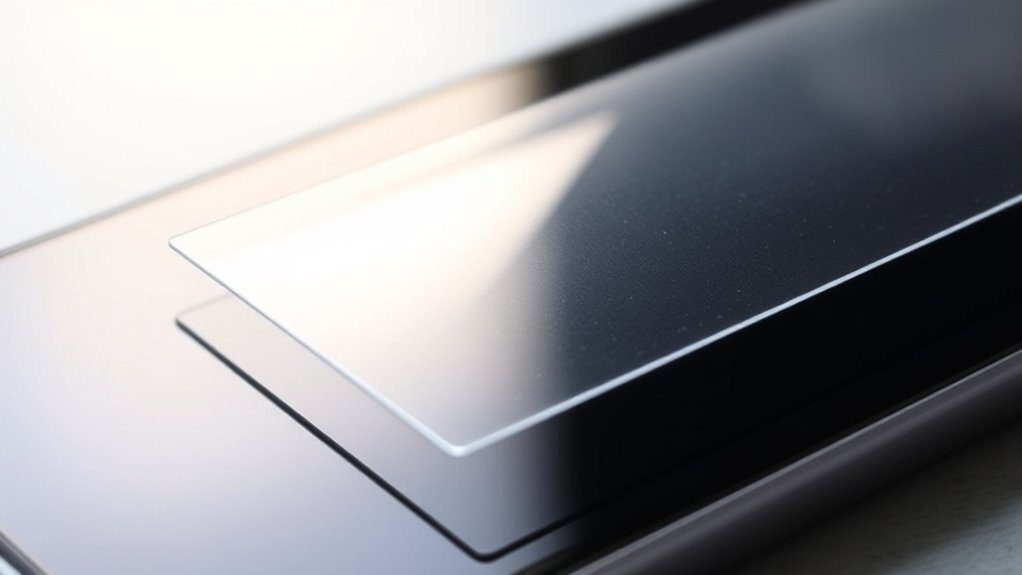
Have you ever wondered how a simple layer of material can protect your smartphone screen? Screen protectors are thin sheets made from glass or plastic that adhere directly to your device’s display. They act as a barrier, absorbing impacts from drops, preventing scratches from keys or coins, and shielding against everyday wear and tear. Tempered glass protectors are popular because they’re durable, hard (usually 9H rating), and maintain high clarity, so your screen stays sharp. Plastic options like PET or TPU are softer and less protective but still offer basic defense. Some protectors include special coatings, such as oleophobic for oil resistance or anti-glare for outdoor visibility. Essentially, these layers serve as the first line of defense, helping your screen stay pristine longer. Moreover, understanding the importance of durable materials can guide you in selecting the most effective screen protector for your device’s longevity.
The Advantages of Using a Screen Protector
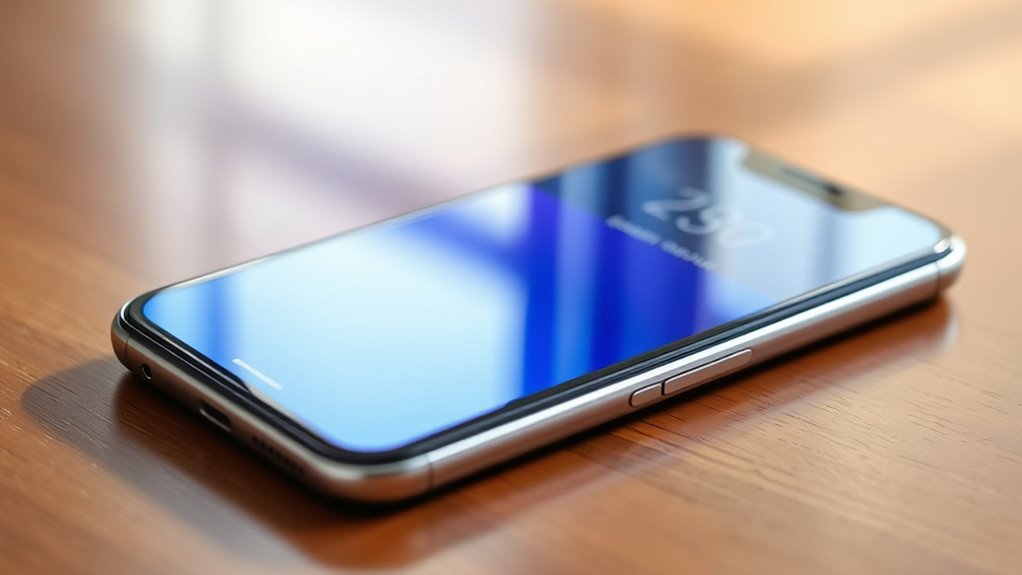
Using a screen protector boosts your device’s durability by shielding it from scratches and impacts. It’s a cost-effective way to avoid expensive repairs or replacements down the line. Plus, quality protectors keep your display looking crystal clear and responsive, so your user experience stays smooth. Additionally, choosing the right projection technology can significantly influence the overall image quality and viewing experience.
Enhanced Screen Durability
A screen protector substantially enhances your device’s durability by providing an extra layer of defense against scratches, impacts, and daily wear. It absorbs the force from accidental drops or bumps, reducing the risk of costly damage to your screen. Tempered glass protectors, with their high hardness ratings, effectively resist scratches from keys, coins, and other abrasives. They also help prevent cracks and chips from impacts, preserving your device’s integrity. By shielding the screen’s surface, a protector maintains clarity and touch sensitivity, ensuring your device functions smoothly. This added durability extends your device’s lifespan, helping it stay in pristine condition longer. Ultimately, a high-quality screen protector acts as a safeguard, keeping your screen safe from the hazards of everyday use. Choosing the right protector material can further optimize your device’s protection and longevity.
Cost-Effective Protection
Investing in a screen protector is a smart way to save money by preventing costly repairs or replacements. A good protector shields your screen from scratches, cracks, and other damage, reducing the need for expensive repairs. Tempered glass protectors, for example, cost a fraction of what replacing a phone screen would. Additionally, many screen protectors include UV filters that help prevent sun damage to your device’s display.
Maintains Display Quality
Because screen protectors are made from high-quality tempered glass or specialized films, they help preserve your display’s clarity and responsiveness. When applied correctly, they maintain up to 99.9% transparency, ensuring your screen’s sharpness remains intact. Tempered glass protectors, in particular, offer excellent tactile feedback, so you won’t notice any lag or difference in touch sensitivity. They also resist smudges and fingerprints better than plastic alternatives, keeping your display clear and easy to read. Anti-glare and anti-fingerprint coatings further enhance visibility, especially outdoors or in bright environments. By shielding your screen from scratches and minor impacts, a good protector helps keep your display in pristine condition, providing a seamless visual experience without compromising image quality or responsiveness. Additionally, material durability ensures that the protector can withstand daily wear and tear, extending the lifespan of your device’s screen.
Common Types of Screen Protectors and Their Benefits
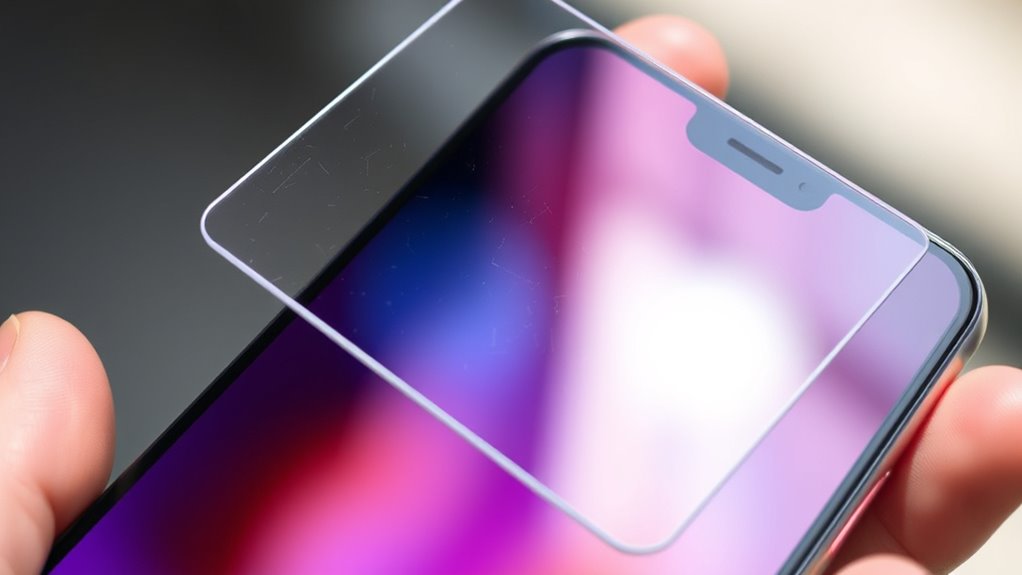
Among the most common types of screen protectors, tempered glass leads the market due to its superior protection, clarity, and tactile feel. It offers high-impact resistance with a 9H hardness rating, maintaining your screen’s integrity against drops and scratches. Plastic options like PET and TPU are cheaper but less protective and clearer. Specialized coatings—such as oleophobic for oil resistance, anti-glare for outdoor use, and privacy filters for data security—add extra functionality. Additionally, screen durability is a key consideration when choosing a protector, as it influences how well the screen withstands daily wear and tear. Here’s a quick comparison:
| Type | Benefits | Drawbacks |
|---|---|---|
| Tempered Glass | High protection, clarity | Slightly thicker, costlier |
| PET Film | Affordable, lightweight | Less durable, lower clarity |
| TPU Film | Flexible, shock absorption | Less scratch-resistant |
Potential Drawbacks and Limitations of Screen Protectors
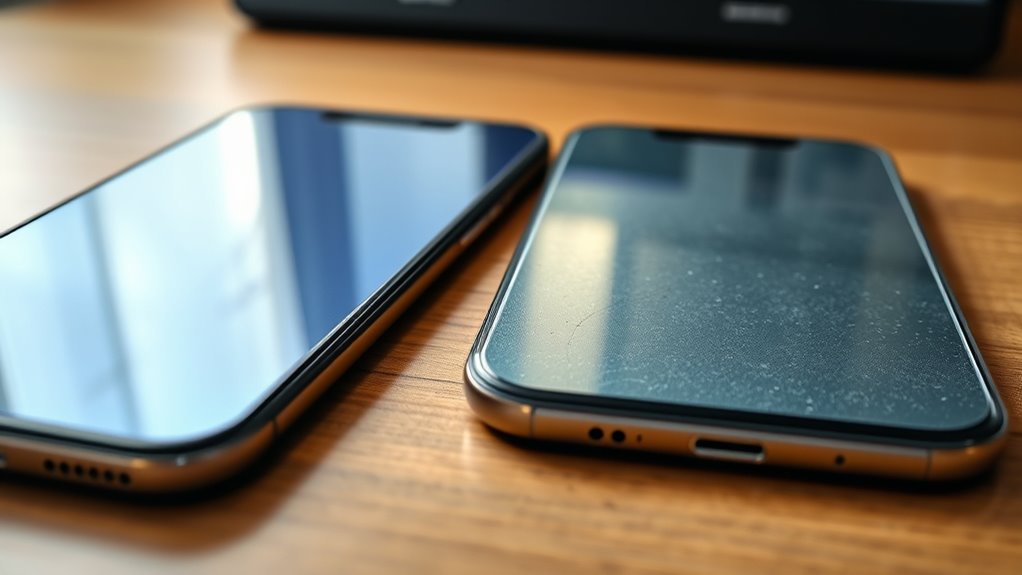
While screen protectors offer valuable protection, they can sometimes affect your device’s touch sensitivity or display quality if not chosen carefully. Installation issues like bubbles or poor adhesion can also ruin the look and feel of your screen. Additionally, not all protectors fit perfectly, which can cause compatibility problems with cases or gestures.
Impact on Touch Sensitivity
Although screen protectors are designed to preserve your device’s display, they can sometimes hinder touch sensitivity. Low-quality protectors or those not properly installed may cause your screen to respond less accurately or require more pressure for input. This can lead to frustrating delays when scrolling, typing, or using gestures. Thicker or plastic film protectors often have a slight lag compared to bare screens, especially if they don’t match your device’s specifications perfectly. Additionally, some protectors with matte or anti-glare finishes can dull the touch response or alter the feel of your screen. While high-quality tempered glass protectors usually maintain excellent touch sensitivity, cheaper options might compromise the smooth, responsive experience you expect.
Installation Challenges and Bubbles
Installing a screen protector can be tricky, and even a small mistake can lead to bubbles or misalignment. If you don’t clean the screen thoroughly, dust particles can get trapped, causing bubbles and uneven adhesion. Applying the protector too quickly or unevenly can also create air pockets that are hard to remove. Sometimes, the edges won’t align perfectly with curved or beveled screens, making installation more frustrating. Low-quality protectors are more prone to bubbling because of inferior adhesives or poor manufacturing standards. Additionally, some protectors require precise positioning, and a slight misplacement can mean starting over or dealing with visible imperfections. All these challenges can diminish the visual appeal and reduce the overall effectiveness of your screen protector. Moreover, using a flat iron bike as a metaphor, just like a bike needs proper tuning for optimal performance, a screen protector requires careful handling to ensure it performs its protective role effectively.
Fitment and Compatibility Issues
Despite their benefits, screen protectors often face fitment and compatibility issues that can compromise their effectiveness. You might find that some protectors don’t align perfectly with your device’s edges or curves, leaving gaps that expose vulnerable areas. Curved or edge-to-edge screens can be especially tricky, as many protectors are flat and may not fully cover the curved surfaces. Additionally, some protectors interfere with cases, causing lifting or bubbling at the edges. Compatibility issues also arise with certain device models, where protectors designed for one version don’t fit newer or slightly different variants. Poor fitment can reduce the protector’s touch sensitivity or cause unwanted glare and reflections, ultimately negating some of the benefits you’re seeking. Properly matching your device and choosing high-quality protectors can help minimize these problems. Screen protector fitment challenges can also impact the overall durability and effectiveness of the shield over time.
When Is a Screen Protector Most Necessary?

A screen protector becomes most essential when you’re frequently exposed to environments where your device is vulnerable to scratches, impacts, or dirt. If you work outdoors, commute daily, or handle your phone in crowded places, the risk of accidental drops or scratches increases. People with active lifestyles, such as athletes or outdoor enthusiasts, benefit greatly from extra protection. Additionally, if you’re prone to forgetting where you put your phone or often place it on rough surfaces, a protector can prevent costly damage. In environments like construction sites or workshops, the likelihood of scratches and impacts is high, making a screen protector almost mandatory. Overall, whenever your device faces frequent exposure to potential hazards, a screen protector is a wise safeguard. Attention to detail in selecting the right screen protector ensures optimal protection and longevity for your device.
How to Choose the Right Screen Protector for Your Device
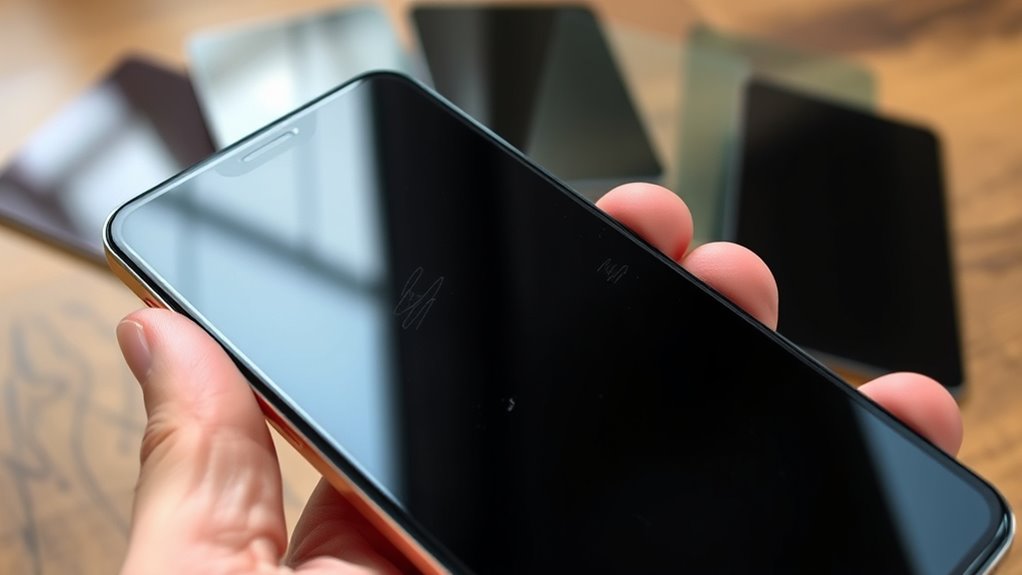
How do you choose the right screen protector for your device? First, consider your device type—smartphone, tablet, or foldable—since each requires specific protectors. Next, decide on the material; tempered glass offers superior protection, clarity, and touch sensitivity, making it ideal for most users. If privacy is a concern, look for privacy screen protectors that block side views without sacrificing clarity. For outdoor use, anti-glare and matte finishes reduce reflections and fingerprints. Also, check compatibility with your device’s size and design, ensuring a perfect fit without interfering with cases or gestures. Finally, consider additional features like blue light filtering or antimicrobial coatings, depending on your needs. Prioritize quality and reviews to select a protector that balances protection, usability, and durability. Ensuring you select a quality screen protector can maximize your device’s potential for every adventure.
The Impact of Screen Protectors on Touch Sensitivity and Clarity
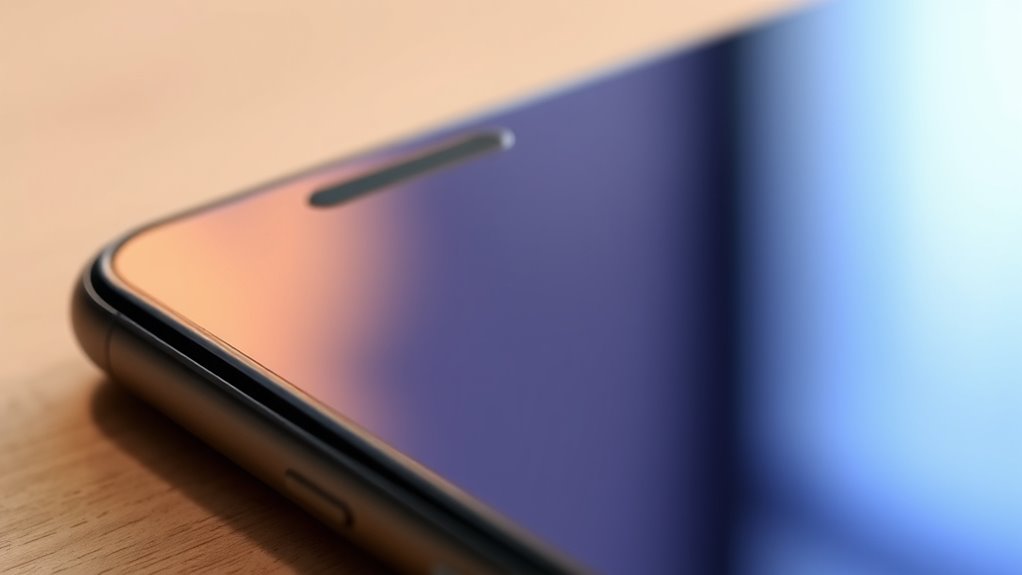
Screen protectors can affect how your device responds to touch and how clear the display appears. Well-made tempered glass protectors usually preserve 99.9% of screen sensitivity and clarity, but lower-quality options might cause lag or reduce sharpness. Understanding how different protectors impact these factors helps you choose one that keeps your experience smooth and crisp. Additionally, selecting a reliable screen protector designed with quality materials can help maintain optimal device performance over time.
Touch Response Integrity
When applying a screen protector, maintaining touch response integrity is crucial because it directly affects how smoothly and accurately your device reacts to your input. A high-quality protector, especially tempered glass, preserves the screen’s original responsiveness, ensuring taps, swipes, and gestures feel natural. However, low-quality or poorly installed protectors can cause lag or dead zones, frustrating your experience. Thin, ultra-clear protectors are designed to minimize any impact on touch sensitivity. Additionally, some protectors feature special coatings that enhance responsiveness. Keep in mind, even the best protectors may slightly reduce sensitivity if they aren’t fitted properly. To maintain peak touch response, choose reputable brands and ensure proper installation, so your device remains intuitive and responsive. Proper installation techniques can help maintain touch sensitivity and overall device performance.
Visual Clarity Maintenance
Ever wonder if a screen protector will distort the clarity of your display? Many high-quality tempered glass protectors are designed to maintain 99.9% of your screen’s clarity, ensuring sharp images and vibrant colors. However, cheaper or poorly applied protectors can cause blurriness, reduce brightness, or introduce glare. To help you choose, here’s a quick comparison:
| Feature | Impact on Clarity |
|---|---|
| Tempered Glass | Minimal, preserves high transparency |
| Plastic Films | Slight reduction, may cause haze |
| Anti-Glare Coatings | Can dull brightness, reduce clarity |
| Privacy Filters | Slight tint, can obscure screen view |
Choosing the right protector and applying it properly guarantees your display remains crisp, clear, and responsive.
Innovations and Trends Shaping Screen Protector Technology

Innovations in screen protector technology are rapidly transforming how you safeguard your devices, driven by consumer demand for better clarity, durability, and functionality. You’ll notice more edge-to-edge, ultra-clear protectors that enhance your device’s aesthetics while providing seamless coverage. Anti-glare coatings are becoming standard, improving outdoor readability and reducing reflections. Blue light filtering protectors are gaining popularity, helping to minimize eye strain during long screen time. Antimicrobial coatings offer hygiene benefits, especially in public spaces. Privacy protectors now combine high touch sensitivity with effective side-view blocking, ensuring your data stays private. As foldable and curved screens become common, tailored protector designs are emerging to accommodate new device forms. These trends make screen protection more sophisticated, convenient, and aligned with your device’s evolving technology. Additionally, innovations in protection materials are continually improving the overall resilience and user experience of screen protectors.
Do Premium Devices Still Need Screen Protectors?

Although premium devices often feature advanced glass technology like Gorilla Glass or ceramic coatings, they still benefit from screen protectors. These protectors add an extra layer of defense against scratches, impacts, and accidental drops that even tough glass can’t fully withstand. High-end screens are more expensive to repair, and a protective layer can save you significant costs. Plus, screen protectors help preserve touch sensitivity and clarity, ensuring your device functions smoothly. They also maintain resale value by keeping the screen pristine. While premium devices are designed to be durable, they aren’t invincible. Investing in a quality screen protector offers peace of mind, especially when you consider the increasing value of flagship smartphones and the rising costs of repairs. Additionally, home improvement tips can help you choose the best protection options to safeguard your devices effectively.
Practical Tips for Applying and Maintaining Screen Protectors

Applying a screen protector correctly is essential to guarantee it functions effectively and remains free of bubbles or dust. To do this, start with a clean, dust-free environment. Follow these tips to ensure a perfect application:
- Clean your hands and device screen thoroughly using alcohol wipes or a microfiber cloth.
- Align the protector carefully with your device’s edges and cutouts before peeling off the backing.
- Apply the protector slowly, starting from one edge, and press out air bubbles with a card or squeegee.
- Check for dust or debris and lift the protector gently if needed, then reapply.
To maintain it, regularly clean the surface with a soft cloth and avoid harsh chemicals. Proper care extends the lifespan of your protector.
Frequently Asked Questions
Are There Eco-Friendly or Biodegradable Screen Protectors Available?
Yes, eco-friendly or biodegradable screen protectors are available now. You can find options made from sustainable materials like plant-based plastics or biodegradable polymers designed to break down more easily. These protectors offer similar protection against scratches and impacts as traditional glass ones while reducing environmental impact. Look for brands emphasizing eco-conscious manufacturing and certifications to guarantee you’re choosing a biodegradable option that meets your device protection needs.
How Do Antimicrobial Coatings on Screen Protectors Work?
Antimicrobial coatings on screen protectors actively fight germs by creating a surface that inhibits bacterial growth. While they don’t eliminate all pathogens, they reduce the risk of contamination, especially in shared or high-touch environments. You benefit from a cleaner screen that stays more hygienic over time, but remember, these coatings don’t replace regular cleaning. They’re a helpful barrier, yet maintaining good hygiene practices remains essential for your safety.
Can a Screen Protector Improve or Worsen Screen Glare?
A screen protector can both improve or worsen glare depending on its material and coating. Anti-glare protectors are designed to diffuse reflections, reducing glare and making screens easier to see in bright environments. However, some protectors with glossy finishes or reflective coatings may increase glare, causing discomfort or difficulty viewing. Choose a matte or anti-glare protector if you want to minimize reflections and improve screen visibility outdoors or in bright light.
Do Foldable or Curved Screens Require Special Protectors?
Yes, foldable or curved screens need special protectors, and skipping them risks damaging your device. You might worry about compatibility or aesthetics, but quality tailored protectors safeguard delicate edges and flexible surfaces effectively. Without these, your expensive device is vulnerable to scratches, impacts, and screen failure. Investing in a custom protector offers peace of mind, keeps your device looking sleek, and ensures its longevity, especially given the high costs of repairs.
How Often Should I Replace or Reapply My Screen Protector?
You should replace or reapply your screen protector whenever it shows signs of damage, such as cracks, scratches, or decreased clarity. If you notice bubbles, peeling, or reduced touch sensitivity, it’s time for a new one. Regularly inspect your protector, especially after drops or impacts. Generally, replacing every 6 to 12 months keeps your screen well-protected, but high-quality protectors can last longer if maintained properly.
Conclusion
Ultimately, understanding the upsides and downsides helps you decide if a screen protector is worth your while. While they can shield your screen from scratches and smudges, they might slightly affect sensitivity and clarity. If you’re prone to drops or own a pricey device, protection pays off. Weigh the worries and wonders wisely—because safeguarding your screen is a smart, simple step toward preserving your device’s pristine perfection. Protect wisely, and enjoy worry-free, wonder-filled use!
Fall Picks
fall essentials
As an affiliate, we earn on qualifying purchases.