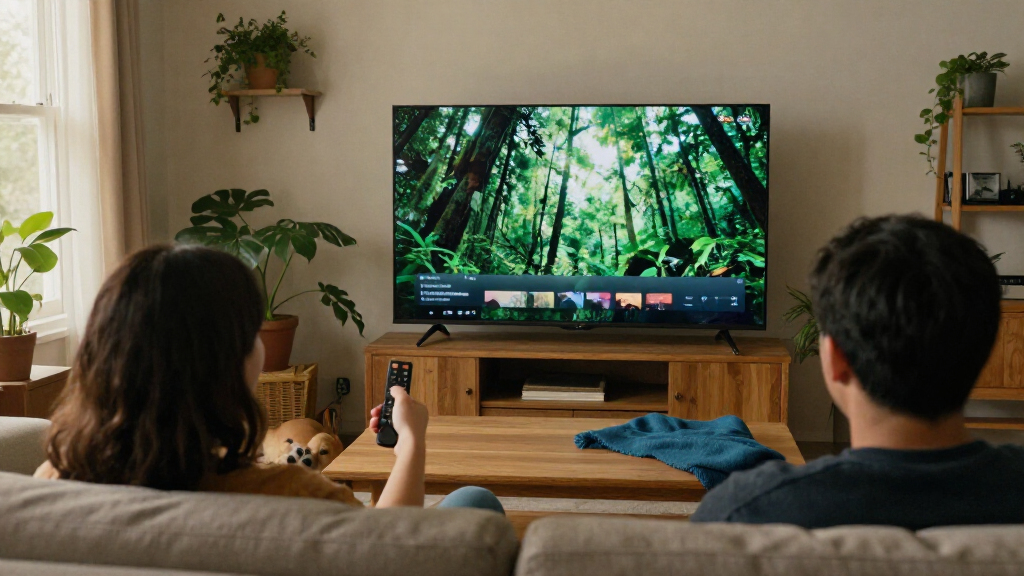
For shoppers comparing 4K smart TVs, my best overall pick is the Samsung 55-Inch M70H Series Mini LED, which balances advanced display technology with a versatile screen size. The Roku Select Series 50-Inch QLED is a strong alternative for viewers who want a simple streaming platform, while the Insignia F50 models offer a straightforward Fire TV option across several sizes. The main tradeoffs are display technology, screen size, and which smart platform best fits your viewing habits. A larger screen is not automatically a better choice if your room is small or your seating is close. Read on for the full breakdown and help matching a model to your setup.

Get the latest gadgets delivered free with Prime
- Fast, free delivery on millions of items
- Prime Video, Amazon Music and more included
- Member-only deals all year
Complete the kit



Key Takeaways
- Samsung’s M70H models stand apart on display technology: their Mini LED panels give them a different picture-quality proposition from the LED Insignia F50 and QLED Roku Select options.
- Screen size changes the shortlist: these picks span 43 to 75 inches, so the right choice depends on viewing distance and room layout, not just the largest available option.
- The Roku Select QLED models combine QLED and Roku’s streaming interface: they offer a distinct middle ground between the Mini LED Samsungs and the more basic LED Insignia options.
- Platform preference is a practical differentiator: Roku and Fire TV users can choose a familiar interface, while Samsung’s smart platform may suit households already oriented around Samsung devices and services.
- Several products are size variants rather than distinct feature choices: comparing the 43-, 50-, 55-, and 65-inch versions helps buyers focus on room fit without mistaking size alone for a technology upgrade.
| Samsung 55-Inch M70H Series 4K Mini LED Smart TV (2026) |  | Best Overall | Screen size: 55 inches | Resolution: 4K | Display technology: Mini LED | VIEW LATEST PRICE | See Our Full Breakdown |
| Samsung 65-Inch M70H Series 4K Mini LED Smart TV (2026) | | Best for Bright, Big-Screen Viewing | Screen size: 65 inches | Resolution: 4K | Display technology: Mini LED | VIEW LATEST PRICE | See Our Full Breakdown |
| Roku Select Series 43-Inch 4K HDR Smart TV |  | Best Compact Pick | Screen size: 43 inches | Resolution: 4K (2160p) | Display technology: LED with Direct LED backlight | VIEW LATEST PRICE | See Our Full Breakdown |
| Insignia 50-Inch F50 Series 4K UHD LED Smart Fire TV with Alexa Voice Remote |  | Best for Fire TV Households | Screen size: 50 inches | Resolution: 4K UHD (2160p) | Display technology: LED | VIEW LATEST PRICE | See Our Full Breakdown |
| Insignia 65-Inch F50 Series 4K UHD LED Smart Fire TV with Alexa Voice Remote |  | Best Large-Screen Fire TV | Screen size: 65 inches | Resolution: 4K UHD (2160p) | Display technology: LED with Direct LED backlight | VIEW LATEST PRICE | See Our Full Breakdown |
| Insignia 43-Inch F50 Series 4K UHD LED Smart Fire TV with Alexa Voice Remote |  | Best for Compact Fire TV Setups | Screen size: 43 inches | Display: LED | Resolution: 4K UHD (2160p) | VIEW LATEST PRICE | See Our Full Breakdown |
| Roku Select Series 50-Inch 4K QLED Smart TV |  | Best for Flexible Listening | Screen size: 50 inches | Display: QLED, LED | Resolution: 4K UHD (2160p) | VIEW LATEST PRICE | See Our Full Breakdown |
| Roku 55-Inch Select Series 4K QLED Smart TV |  | Best for a Larger Roku Screen | Screen size: 55 inches | Display: QLED, LED | Resolution: 4K UHD | VIEW LATEST PRICE | See Our Full Breakdown |
| Insignia 55-Inch F50 Series 4K UHD LED Smart Fire TV with Alexa Voice Remote | | Best for a Straightforward Large Fire TV | Screen size: 55 inches | Display: LED | Resolution: 4K UHD (2160p) | VIEW LATEST PRICE | See Our Full Breakdown |
| Samsung 43-Inch M70H Series 4K Mini LED Smart TV (2026) | | Best Compact Mini LED Pick | Screen size: 43 inches | Display technology: Mini LED | Resolution: 4K | VIEW LATEST PRICE | See Our Full Breakdown |
| Insignia 75-Inch F50 Series 4K UHD LED Smart Fire TV with Alexa Voice Remote |  | Best for Big-Screen Streaming | Screen size: 74.5 inches (75-inch display size class) | Display technology: LED | Resolution: 4K UHD (2160p) | VIEW LATEST PRICE | See Our Full Breakdown |
| 4K smart TV | Screen size | Resolution | Refresh rate | HDR format |
|---|---|---|---|---|
| Samsung 55-Inch M70H Series 4K | 55 inches | 4K | 60 Hz; DLG up to 120 Hz with reduced sharpness | HDR10+ |
| Samsung 65-Inch M70H Series 4K | 65 inches | 4K | 60 Hz; DLG up to 120 Hz | HDR10+ |
| Roku Select Series 43-Inch 4K | 43 inches | 4K (2160p) | 60 Hz | HDR10 |
| Insignia 50-Inch F50 Series 4K | 50 inches | 4K UHD (2160p) | 60 Hz | HDR10 |
| Insignia 65-Inch F50 Series 4K | 65 inches | 4K UHD (2160p) | 60 Hz | HDR10 |
| Insignia 43-Inch F50 Series 4K | 43 inches | 4K UHD (2160p) | 60 Hz | HDR10 |
| Roku Select Series 50-Inch 4K | 50 inches | 4K UHD (2160p) | 60 Hz | — |
| Roku 55-Inch Select Series 4K | 55 inches | 4K UHD | 60 Hz | — |
| Insignia 55-Inch F50 Series 4K | 55 inches | 4K UHD (2160p) | 60 Hz | HDR10 |
| Samsung 43-Inch M70H Series 4K | 43 inches | 4K | 60 Hz | HDR10+ |
| Insignia 75-Inch F50 Series 4K | 74.5 inches (75-inch display size class) | 4K UHD (2160p) | 60 Hz | HDR10 |
More Details on Our Top Picks
Samsung 55-Inch M70H Series 4K Mini LED Smart TV (2026)
The 55-inch M70H is my best overall pick here because its Mini LED backlight and listed 1,000-nit brightness give HDR viewing more highlight potential than the LED Insignia F50 models. Its 55-inch size also fits more rooms than the 65-inch M70H, while keeping the same 4K resolution and HDR10+ support. That bright-screen advantage comes with a qualification: dimming is software-based, not full-array hardware dimming, so buyers should not assume the same backlight control as a higher-end Mini LED set. The panel is rated at 60 Hz; DLG can reach 120 Hz, but the source notes reduced sharpness. Samsung TV Plus and the Gaming Hub add useful built-in options, though network services require internet and a Samsung account.
Pros:- Mini LED display with HDR10+ and listed brightness up to 1,000 nits
- Software-based dimming and color enhancement support vivid, high-contrast viewing
- Gaming Hub, motion enhancement, and Samsung TV Plus are built in
- Smaller and lighter than the 65-inch M70H while retaining the same core display features
Cons:- Native refresh rate is 60 Hz; DLG up to 120 Hz may reduce image sharpness
- Software-based dimming is not full-array hardware dimming
- Network-based smart services require internet access and a Samsung account
Best for: Viewers seeking a mid-size 4K TV with brighter HDR highlights and Samsung streaming and gaming features.
Not ideal for: Competitive gamers who want native 120 Hz at full sharpness, or viewers who prefer smart features without a Samsung account.
- Screen size:55 inches
- Resolution:4K
- Display technology:Mini LED
- Refresh rate:60 Hz; DLG up to 120 Hz with reduced sharpness
- HDR format:HDR10+
- Maximum brightness:1,000 nits
- Connectivity:Bluetooth, HDMI, USB, Wi-Fi
- Dimensions:7.8 × 48.2 × 29.9 inches (D × W × H)
- Weight:22.5 lb; 21.8 lb without stand
Our verdict“Choose the 55-inch M70H if you want brighter Mini LED HDR in a manageable size and can accept its 60 Hz panel limits.”
Samsung 65-Inch M70H Series 4K Mini LED Smart TV (2026)
For buyers who want a larger screen without giving up the M70H’s brighter HDR approach, the 65-inch M70H offers the strongest size-and-brightness combination in this group. Its Mini LED panel, HDR10+, and listed 1,000-nit brightness set it apart from the 65-inch Insignia F50, which uses standard LED lighting and is listed at 250 nits. The larger Samsung is better suited to a spacious living room, but it is also heavier and needs more wall or stand space than the 55-inch M70H. The refresh-rate caveat is shared across both Samsung sizes: the display is 60 Hz, and DLG’s 120 Hz mode can soften detail. Software-based dimming also makes this a less exacting choice than buyers seeking hardware-based full-array control.
Pros:- 65-inch Mini LED screen with HDR10+ and listed brightness up to 1,000 nits
- Color enhancement and dimming features aim for vivid colors and deeper contrast
- Includes Gaming Hub and Samsung TV Plus channels
- Offers a brighter HDR specification than the 65-inch Insignia F50
Cons:- 60 Hz native refresh rate; DLG up to 120 Hz can reduce sharpness
- Dimming is software-based rather than full-array hardware-based
- Larger footprint and 31.7-pound weight require more room and support
Best for: Households wanting a 65-inch 4K screen with brighter HDR capability for a larger living room.
Not ideal for: Small-room buyers, or gamers who need native 120 Hz motion without a sharpness compromise.
- Screen size:65 inches
- Resolution:4K
- Display technology:Mini LED
- Refresh rate:60 Hz; DLG up to 120 Hz
- HDR format:HDR10+
- Maximum brightness:1,000 nits
- Connectivity:Bluetooth, HDMI, USB, Wi-Fi
- Dimensions:8.7 × 56.9 × 34.7 inches (D × W × H)
- Weight:31.7 lb; 31.1 lb without stand
Our verdict“Pick this Samsung over the 65-inch Insignia F50 when brighter Mini LED HDR matters more than a simpler LED setup.”
Roku Select Series 43-Inch 4K HDR Smart TV
The 43-inch Roku Select is the most room-friendly option in this batch, pairing 4K resolution with a straightforward Roku interface, voice remote, and AirPlay 2. Compared with the 50-inch Insignia F50, it takes up less space and adds Bluetooth headphone mode, a useful feature for late-night viewing. Its 250-nit maximum brightness, however, is modest beside the Samsung M70H’s listed 1,000 nits, so HDR highlights are less suited to bright rooms or viewers chasing a more forceful HDR effect. The 60 Hz panel also lacks motion enhancement, making this a better fit for everyday shows and films than fast-paced gaming. Four HDMI ports give it flexibility for a compact set, while clear-speech features help dialogue stand out.
Pros:- Compact 43-inch 4K screen with built-in Roku streaming
- Voice remote, AirPlay 2, and Miracast support
- Bluetooth headphone mode and clear-speech features aid private and dialogue-focused listening
- Four HDMI ports and table or wall mounting options
Cons:- 250-nit maximum brightness is far below the Samsung M70H models
- 60 Hz refresh rate with no motion enhancement technology
- HDR support is limited to HDR10
Best for: Apartment dwellers, bedroom-TV buyers, and viewers who want a compact 4K set with Roku streaming and AirPlay.
Not ideal for: Bright-room viewers seeking strong HDR highlights, or gamers wanting motion enhancement and a higher refresh rate.
- Screen size:43 inches
- Resolution:4K (2160p)
- Display technology:LED with Direct LED backlight
- Refresh rate:60 Hz
- HDR format:HDR10
- Maximum brightness:250 nits
- HDMI ports:4
- Wireless and screen mirroring:Wi-Fi, Bluetooth 5.2, AirPlay 2, Miracast
- Weight:13 lb; 12.8 lb without stand
Our verdict“Choose the Roku Select for a smaller room and easy streaming, but look to the Samsung M70H for brighter HDR viewing.”
Insignia 50-Inch F50 Series 4K UHD LED Smart Fire TV with Alexa Voice Remote
The 50-inch Insignia F50 makes the most sense for viewers who already use Alexa or want Fire TV’s streaming layout built into a mid-size 4K screen. HDR10 and 4K upscaling cover the basics for newer and older video, while HDMI eARC and DTS Virtual:X give it useful home-theater connections. Compared with the Roku Select 43-inch, this Insignia offers a larger screen and Alexa smart-home control, but it lacks the Roku model’s AirPlay 2 and Bluetooth headphone features. Its 300-nit brightness is still modest beside the Samsung M70H’s Mini LED panel, so HDR impact will be more restrained. The 60 Hz refresh rate suits ordinary viewing better than high-refresh gaming, and some streaming services require separate subscriptions.
Pros:- 50-inch 4K UHD screen with HDR10 and upscaling for lower-resolution video
- Fire TV streaming interface and Alexa voice remote with smart-home controls
- HDMI eARC and DTS Virtual:X support home-theater connections
- Ethernet and several legacy audio and video inputs are included
Cons:- 300-nit maximum brightness is limited compared with the Samsung M70H
- 60 Hz refresh rate does not target high-refresh gaming
- Streaming access may require paid subscriptions, and availability can vary
Best for: Fire TV users and Alexa households wanting a 50-inch 4K set with eARC for a basic home-theater setup.
Not ideal for: Viewers prioritizing bright HDR, native high-refresh gaming, or Roku-style AirPlay and Bluetooth headphone features.
- Screen size:50 inches
- Resolution:4K UHD (2160p)
- Display technology:LED
- Refresh rate:60 Hz
- HDR format:HDR10
- Maximum brightness:300 nits
- Operating system:Fire OS
- Audio:Stereo with DTS Virtual:X
- HDMI ports:3, including HDMI eARC support
Our verdict“Choose the Insignia F50 if Fire TV and Alexa convenience matter more than the brighter HDR performance of the Samsung M70H.”
Insignia 65-Inch F50 Series 4K UHD LED Smart Fire TV with Alexa Voice Remote
This 65-inch Insignia F50 is the large-screen choice for buyers who want Fire TV and Alexa built into a straightforward 4K set. It includes HDR10, direct LED lighting, and upscaling, so older video can fill the screen at 4K output. Against the similarly sized Samsung M70H, though, the tradeoff is clear: the Insignia is listed at 250 nits and uses standard LED, while the Samsung offers Mini LED and up to 1,000 nits. That makes the Insignia a less compelling match for bright rooms or HDR-focused viewing, even as its Alexa remote, DTS Virtual:X, Ethernet, and varied inputs cover everyday convenience. A 60 Hz refresh rate keeps it geared toward general TV and film viewing rather than high-refresh gaming.
Pros:- 65-inch 4K UHD display with HDR10 and upscaling
- Fire TV apps and Alexa voice control are built in
- DTS Virtual:X and multiple home-theater connections, including Ethernet and optical audio
- Direct LED lighting and a VESA 400 × 300 mounting pattern
Cons:- 250-nit maximum brightness is substantially below the 65-inch Samsung M70H
- Standard LED display lacks the Samsung model’s Mini LED backlight
- 60 Hz refresh rate is not suited to buyers seeking high-refresh gaming
Best for: Fire TV and Alexa households that want a 65-inch 4K screen for everyday streaming and TV viewing.
Not ideal for: Viewers seeking strong HDR brightness, Mini LED contrast features, or high-refresh gaming performance.
- Screen size:65 inches
- Resolution:4K UHD (2160p)
- Display technology:LED with Direct LED backlight
- Refresh rate:60 Hz
- HDR format:HDR10
- Maximum brightness:250 nits
- Audio:DTS Virtual:X
- HDMI ports:3
- Wall mount pattern:VESA 400 × 300
Our verdict“Pick this Insignia for a large Fire TV screen with Alexa, but choose the Samsung M70H if brighter HDR is a priority.”
Insignia 43-Inch F50 Series 4K UHD LED Smart Fire TV with Alexa Voice Remote
For a smaller room, this 43-inch Insignia pairs 4K resolution with the familiar Fire TV interface, Alexa voice control, and HDR10 support. Its three HDMI ports leave room for devices such as a game console and soundbar, while HDMI eARC can simplify audio connections. Compared with the 55-inch Insignia F50, this model is easier to fit on a compact stand, but gives up screen size and has a higher listed brightness of 375 nits than the larger model’s 300 nits. The 60 Hz refresh rate is a limit for viewers seeking higher-refresh gaming, and HDR10 does not provide the broader format support found on the Roku Select QLED TVs. I’d choose it for a modest room and an Alexa-centered setup, not for a cinematic big-screen experience.
Pros:- 4K UHD resolution with HDR10 and upscaling for lower-resolution video
- Fire TV streaming apps and access to free ad-supported content
- Alexa voice control and compatible smart-home device support
- Three HDMI ports plus eARC for connecting external audio
Cons:- 60 Hz refresh rate is less suited to high-frame-rate gaming
- HDR support is limited to HDR10
- Some streaming services and content require subscriptions
Best for: Viewers furnishing a bedroom, den, or compact apartment who want Fire TV, Alexa, and several HDMI connections in a 43-inch set.
Not ideal for: Buyers prioritizing a larger screen, higher-refresh gaming, or the QLED display and broader HDR format support of the Roku Select Series models.
- Screen size:43 inches
- Display:LED
- Resolution:4K UHD (2160p)
- Refresh rate:60 Hz
- HDR format:HDR10
- Maximum brightness:375 nits
- HDMI ports:3
- Audio:DTS Virtual:X; HDMI eARC
- Voice assistant:Alexa
Our verdict“Choose this Insignia for a compact Alexa-friendly Fire TV setup; pick the 55-inch F50 or a Roku QLED if you want a larger screen or broader HDR support.”
Roku Select Series 50-Inch 4K QLED Smart TV
This 50-inch Roku is the lineup’s listening-friendly QLED pick: it combines a 4K QLED screen with Auto Speech Clarity and Bluetooth Headphone Mode. Those features suit shared homes, where clearer dialogue or private listening can matter more than motion-focused extras. It also offers four HDMI ports, two USB ports, Ethernet, AirPlay 2, and voice control compatible with Roku Voice, Siri, Alexa, and Google Assistant. Compared with the 55-inch Roku Select QLED, it takes up less space while retaining the same listed 250-nit brightness and 60 Hz refresh rate. The tradeoff is that neither Roku model supports motion enhancement, and this set’s brightness may be limiting in a bright room. I’d favor it over the Insignia F50 if flexible listening and Roku’s interface are priorities, but not for faster-refresh gaming.
Pros:- QLED 4K display with HDR10, HDR10+, and HLG support
- Auto Speech Clarity and Bluetooth Headphone Mode support different listening needs
- Four HDMI ports, two USB ports, and Ethernet
- AirPlay 2 and voice control compatibility with several assistants
Cons:- 60 Hz refresh rate and no motion enhancement technology
- Listed maximum brightness is 250 nits, a constraint in bright rooms
- Larger than a 43-inch set for compact spaces
Best for: Households sharing a TV room, especially viewers who want clearer dialogue, Bluetooth headphone listening, and broad voice-assistant compatibility.
Not ideal for: Gamers seeking motion enhancement or a refresh rate above 60 Hz, and viewers who need a brighter screen for a sunlit room.
- Screen size:50 inches
- Display:QLED, LED
- Resolution:4K UHD (2160p)
- Refresh rate:60 Hz
- HDR formats:HDR10, HDR10+, HLG
- Maximum brightness:250 nits
- HDMI and USB ports:4 HDMI; 2 USB
- Wireless connectivity:Wi-Fi; Bluetooth 5.2
- Audio features:Auto Speech Clarity; Bluetooth Headphone Mode
Our verdict“Pick this 50-inch Roku if shared-room listening features and plentiful connections matter more than screen brightness or advanced motion handling.”
Roku 55-Inch Select Series 4K QLED Smart TV
The 55-inch Roku Select QLED makes the most sense for viewers who want a larger 4K screen without leaving Roku’s straightforward home screen. QLED and support for HDR10, HDR10+, and HLG give it broader HDR format coverage than either Insignia F50, while Roku’s free live TV, app shortcuts, and remote finder simplify everyday viewing. Compared with the 50-inch Roku Select QLED, the extra screen area is the main gain; the listed brightness stays at 250 nits, and both models have a 60 Hz refresh rate without motion enhancement. Its glossy finish may also reflect windows or lamps, so room placement matters. I’d pick it over the 50-inch Roku for a larger seating area, but the smaller Roku is the better fit when space is tight.
Pros:- 55-inch 4K QLED display with HDR10, HDR10+, and HLG
- Roku home screen includes streaming apps and free live TV
- Voice remote has app shortcuts and a lost remote finder
- AirPlay support and voice control with Roku Voice, Siri, Alexa, and Google Assistant
Cons:- 60 Hz refresh rate and no motion enhancement technology
- 250-nit listed maximum brightness may be limiting in bright rooms
- Glossy screen finish can reflect surrounding light
Best for: Roku fans setting up a medium-sized living room who want a 55-inch QLED screen, free live TV, and a voice remote with shortcuts.
Not ideal for: Viewers with strong light sources facing the screen, or gamers seeking motion enhancement or refresh rates above 60 Hz.
- Screen size:55 inches
- Display:QLED, LED
- Resolution:4K UHD
- Refresh rate:60 Hz
- HDR formats:HDR10, HDR10+, HLG
- Maximum brightness:250 nits
- Screen finish:Glossy
- HDMI and USB ports:4 HDMI; 2 USB
- Wireless connectivity:Wi-Fi; Bluetooth 5.2
Our verdict“Choose this model over the 50-inch Roku if you want more screen area and have a room where its glossy finish and modest listed brightness are manageable.”
Insignia 55-Inch F50 Series 4K UHD LED Smart Fire TV with Alexa Voice Remote
This Insignia brings Fire TV and Alexa to a 55-inch 4K screen, making it a practical choice for viewers who want a larger set without stepping up to the QLED Roku models. HDR10 and 4K upscaling cover common viewing needs, while DTS Virtual:X and Dolby Digital offer built-in audio processing. Three HDMI ports and eARC allow connections to external devices and compatible audio gear. Compared with the 43-inch Insignia F50, this model trades the smaller set’s higher listed brightness—300 versus 375 nits—for a room-filling screen. Compared with the 55-inch Roku Select QLED, it has less expansive HDR format support and an LED rather than QLED display. Its built-in speakers are rated at 10 watts, so viewers who want fuller sound may prefer a separate audio system.
Pros:- 55-inch 4K UHD display with HDR10 and 4K upscaling
- Fire TV apps and free ad-supported content
- Alexa voice control and compatible smart-home features
- Three HDMI ports and HDMI eARC
Cons:- HDR support is limited to HDR10 compared with the Roku Select QLED models
- Built-in speakers have a maximum output of 10 watts
- Some streaming services and content require subscriptions
Best for: Fire TV and Alexa users who want a 55-inch screen for a living room, plus eARC for connecting a soundbar.
Not ideal for: Buyers seeking QLED color and HDR10+ or HLG support, or viewers who expect strong built-in speaker output.
- Screen size:55 inches
- Display:LED
- Resolution:4K UHD (2160p)
- Refresh rate:60 Hz
- HDR format:HDR10
- Brightness:300 nits
- Operating system:Fire OS
- HDMI ports:3
- Audio:DTS Virtual:X; Dolby Digital; 10-watt maximum speaker output
Our verdict“Choose this Insignia if you want a large Fire TV with Alexa and eARC, but favor the 55-inch Roku Select QLED for broader HDR support.”
Samsung 43-Inch M70H Series 4K Mini LED Smart TV (2026)
Among these compact TVs, the Samsung M70H is the distinctive choice for buyers interested in Mini LED picture technology and Samsung’s connected features. Its 4K display supports HDR10+ and Motion Xcelerator, while Samsung TV Plus adds free streaming channels and Gaming Hub gathers console, cloud, and app games in one place. Compared with the 43-inch Insignia F50, it swaps Fire TV and Alexa for Samsung’s software ecosystem and gaming hub; compared with the Roku 50-inch QLED, it is easier to place in a smaller room but has a 43-inch screen. The stated brightness is 350 nits, and the 60 Hz native refresh rate means this is not a high-refresh gaming set. Network-based smart services also require internet access and a Samsung account, a less convenient setup for buyers who prefer fewer account dependencies.
Pros:- Mini LED display with 4K resolution and HDR10+
- Samsung TV Plus includes free streaming channels
- Gaming Hub combines console, cloud, and app games
- Motion Xcelerator processing is included
Cons:- Native refresh rate is 60 Hz; the listed DLG 120 Hz mode reduces image sharpness
- Network-based smart services require internet access and a Samsung account
- Glossy screen finish may reflect room lighting
Best for: Samsung-device owners or compact-room viewers who want Mini LED, HDR10+, Samsung TV Plus, and a built-in gaming hub.
Not ideal for: Buyers who want smart services without a Samsung account, a larger screen, or a native refresh rate above 60 Hz.
- Screen size:43 inches
- Display technology:Mini LED
- Resolution:4K
- Refresh rate:60 Hz
- HDR format:HDR10+
- Maximum brightness:350 nits
- Motion processing:Motion Xcelerator
- Screen finish:Glossy
- Weight:14.8 pounds
Our verdict“Choose the Samsung M70H for a compact Mini LED set with Samsung’s gaming and streaming hub, but skip it if account-free smart features or higher native refresh rates are priorities.”
Insignia 75-Inch F50 Series 4K UHD LED Smart Fire TV with Alexa Voice Remote
The 75-inch screen gives this Insignia a clear role: filling a larger living room with 4K streaming without adding the more advanced display hardware found in the Samsung M70H Series 4K Mini LED TVs. Its Fire TV interface and Alexa Voice Remote make app searches and playback control straightforward, while HDR10 supports compatible content. Three HDMI ports leave room for common add-ons such as a console and streaming device, and Ethernet offers a wired connection if Wi-Fi is unreliable.
The tradeoff is a 60 Hz refresh rate, which is less suited to buyers seeking higher-refresh gaming, and the built-in audio may not satisfy viewers who want fuller sound without a separate system. Compared with the smaller Insignia F50 models, this version prioritizes screen size over easier placement; measure the room and wall before choosing it.
Pros:- Large 74.5-inch display class suits a spacious viewing area
- 4K UHD resolution and HDR10 support compatible content
- Fire TV and Alexa Voice Remote enable voice-based app and playback control
- Three HDMI ports, Ethernet, and Wi-Fi provide useful device and network options
Cons:- 60 Hz refresh rate is a limitation for buyers seeking higher-refresh gaming
- Built-in sound may not suit viewers who want a more substantial audio setup without a soundbar or receiver
- Large cabinet needs substantial space for placement or wall mounting
Best for: Households furnishing a spacious living room and prioritizing a large 4K screen, Fire TV apps, and Alexa voice control.
Not ideal for: Competitive gamers seeking a higher refresh rate, or apartment viewers with limited wall or stand space.
- Screen size:74.5 inches (75-inch display size class)
- Display technology:LED
- Resolution:4K UHD (2160p)
- Refresh rate:60 Hz
- HDR format:HDR10
- Smart platform:Fire TV with Alexa Voice Remote
- Audio:DTS Virtual-X
- Connections:3 HDMI ports, 1 USB port, Wi-Fi, and Ethernet
- Mounting:VESA 400 × 300
Our verdict“Choose this Insignia if a very large 4K Fire TV screen matters more than higher-refresh gaming or compact placement.”
How We Picked
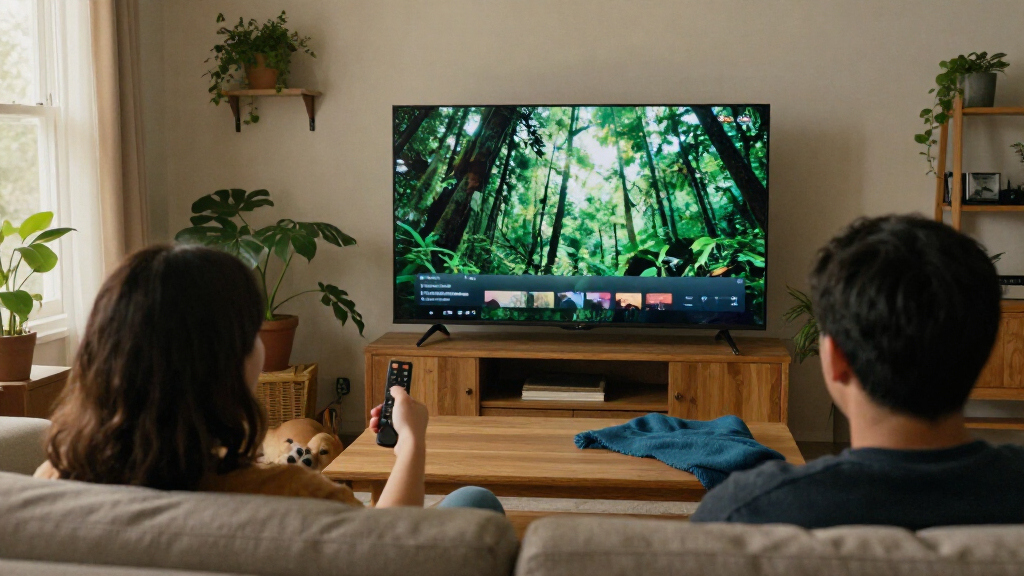
I organized the roundup around the choices that most affect everyday ownership: display technology, screen size, and smart-TV platform. The Samsung M70H series earns the lead because Mini LED makes it the clearest step up in display hardware among these listings. Roku’s QLED Select models follow for shoppers who want a different display approach paired with Roku’s streaming interface. Insignia’s F50 models remain useful options for straightforward 4K viewing and Fire TV access, with their ranking shaped more by size and platform fit than by display sophistication.
I also treated same-series screen sizes as different room-fit choices, not separate performance classes. A 43-inch set may be the smarter purchase for a bedroom, while a 75-inch set can make sense in a larger viewing area, but size alone does not establish better picture quality. Since the provided product details do not specify factors such as refresh rate, HDMI port count, or audio performance, I do not assume advantages in those areas. The order favors models with a clearer differentiator, then considers how well each option serves buyers prioritizing simplicity, platform familiarity, or a particular screen size.
| 4K smart TV | Display technology | HDR format |
|---|---|---|
| Samsung 55-Inch M70H Series 4K | Mini LED | HDR10+ |
| Samsung 65-Inch M70H Series 4K | Mini LED | HDR10+ |
| Roku Select Series 43-Inch 4K | LED with Direct LED backlight | HDR10 |
| Insignia 50-Inch F50 Series 4K | LED | HDR10 |
| Insignia 65-Inch F50 Series 4K | LED with Direct LED backlight | HDR10 |
| Insignia 43-Inch F50 Series 4K | — | HDR10 |
| Roku Select Series 50-Inch 4K | — | — |
| Roku 55-Inch Select Series 4K | — | — |
| Insignia 55-Inch F50 Series 4K | — | HDR10 |
| Samsung 43-Inch M70H Series 4K | Mini LED | HDR10+ |
| Insignia 75-Inch F50 Series 4K | LED | HDR10 |
Factors to Consider When Choosing 4K Smart TVs
Before choosing among these 4K smart TVs, I would settle the room and usage questions first. A useful shortlist starts with where the set will sit, what you watch, and which streaming interface your household prefers. These factors can matter more day to day than the 4K label shared across the lineup.
Match Screen Size to Viewing Distance
Start by measuring the wall or furniture space and the distance between the screen and your usual seat. A large television can feel immersive in a spacious room but overwhelming at close range, while a compact set may be easier to place in a bedroom or office. Do not pick a screen size based only on what looks impressive in a store or listing image. Think about subtitles, split viewing, and whether people will watch from off-center seats. If the room layout may change, leave room for the set’s stand or wall mount as well as connected devices. The 43-inch options suit tighter spaces more naturally, while the 75-inch Insignia calls for a room that can accommodate a much larger screen.
Understand the Difference Between LED, QLED, and Mini LED
The shared 4K resolution tells you how many pixels a TV has, but it does not tell you how its picture will look in your room. The lineup includes standard LED models, Roku QLED sets, and Samsung Mini LED models, so the display technology is a meaningful point of comparison. QLED and Mini LED describe different approaches to the display; do not treat the terms as interchangeable or assume a label alone guarantees a specific result. Room brightness, viewing habits, and picture settings all affect what you notice. If you watch a lot of varied content, prioritize the display approach that best fits your expectations rather than choosing by resolution alone. Also check the full product specifications for features not listed here, such as refresh rate and HDR format support.
Choose a Smart Platform Your Household Will Use
A smart platform affects how quickly you can find shows, switch between services, and manage voice controls. Roku Select models use Roku’s interface, while the Insignia F50 sets are Fire TVs with an Alexa Voice Remote; Samsung models use Samsung’s smart-TV environment. Your preferred services and existing devices can make one platform feel more convenient than another. Before buying, check that the apps you rely on are supported and consider whether household members already know the interface. A familiar system can reduce setup friction, especially for a shared TV. Avoid choosing solely by voice-assistant branding if you rarely use voice commands.
Decide When a Display Upgrade Is Worth It
Paying attention to display technology makes sense when picture quality is a priority and the TV will be used often for films, sports, or varied lighting conditions. The Samsung Mini LED models offer the most distinct display hardware in this group, while Roku’s QLED choices provide another step beyond the standard LED Insignia series. If most viewing is casual streaming in a secondary room, a simpler model may cover the need without paying for a feature set you will rarely notice. Compare full specifications before deciding, since this roundup’s product names do not provide every picture-quality detail. A higher-end display also cannot fix poor placement, distracting reflections, or content that is not available in 4K.
Check Connections and Placement Before Ordering
Built-in streaming does not remove the need to plan for game consoles, soundbars, cable boxes, or other devices. Check the exact model’s HDMI inputs, eARC support, Wi-Fi details, and stand dimensions against your setup before committing. Those details are not established by the product names in this roundup, so verify them on the listing or manufacturer specification sheet. Measure the furniture carefully, including its width and depth, and confirm that the stand will fit safely. Wall mounting calls for checking the mounting pattern and leaving room for cables. These checks can prevent a TV that seems right on screen from becoming awkward once it arrives.
Frequently Asked Questions
Is the Samsung M70H Mini LED worth choosing over a Roku QLED model?
I would favor the Samsung if display technology is the main reason for upgrading, since Mini LED is the lineup’s most distinct display approach. The Roku QLED models make more sense if Roku’s interface is a stronger priority or you want a different balance of platform and picture technology. The product names alone do not establish details such as refresh rate, HDR formats, or local dimming performance, so compare the full specifications for the exact size before deciding. Also consider whether the TV will be a primary screen or a secondary set used mostly for casual streaming. That usage context can make a simpler choice more sensible.
Should I choose a larger 4K TV or a smaller model with a different display type?
Choose based on both seating distance and the picture features you care about. A larger screen can make viewing more immersive, but it may not suit a small room or close seating. A smaller Mini LED or QLED model may be a better fit if you value the display approach and do not have space for a larger set. Measure the available area and your usual viewing distance before comparing sizes. If you are uncertain, prioritize a comfortable fit over choosing the largest screen in the lineup.
Which smart TV platform should I choose if my household already uses streaming devices?
First check which services and controls your household already uses, then decide whether you want the TV interface to match them. The Roku models may feel familiar to people who already use Roku, while the Insignia F50 pairs Fire TV with an Alexa Voice Remote. Samsung provides a separate smart-TV environment, which may suit households already using its ecosystem. A TV can still work alongside an external streaming device, so a platform mismatch is not always a dealbreaker. Check app availability and connection needs before relying on that workaround.
Is a 4K TV a good choice if most of my content is not in 4K?
It can still be a practical choice, since a 4K screen can display lower-resolution content, but the result depends on the TV’s processing and the source quality. The 4K label does not turn older or low-quality streams into native 4K video. Check whether your streaming services, devices, and internet connection can deliver the resolution you want. If most viewing comes from broadcast or older sources, picture processing may matter more to you than the resolution headline. Compare the detailed specifications and consider your actual content mix before paying extra for a display upgrade.
What should I verify before buying one of these TVs for a console or soundbar?
Look up the exact model’s HDMI port count, supported gaming features, and eARC or other audio connection support. Those details are not given in the product names, and features can differ by series or screen size. Confirm that you can connect the console, soundbar, and any other devices at the same time without relying on a switch. Check the stand dimensions or mounting requirements as well, since a soundbar can block part of the screen or remote sensor on some setups. Verifying these points before ordering can prevent an otherwise suitable TV from creating connection or placement problems.
Conclusion
Best overall: I recommend the Samsung 55-Inch M70H for buyers seeking the lineup’s clearest display upgrade in a versatile size. Best value: the Insignia F50 series is the straightforward pick for shoppers who want 4K and Fire TV across several screen sizes without prioritizing advanced display technology. Best premium: choose a Samsung M70H, with the 65-inch version for a larger room and the 55-inch model for a more flexible fit. Best for beginners: Roku Select is a sensible starting point for shoppers who prefer a simple streaming interface, while the Insignia Fire TV is a good fit for Alexa households. For compact rooms, compare the 43-inch models; for a large viewing area, consider the 75-inch Insignia after checking placement. My final advice is to choose the screen size and platform first, then decide whether QLED or Mini LED justifies moving beyond standard LED.


